
餐饮服务

Search documents
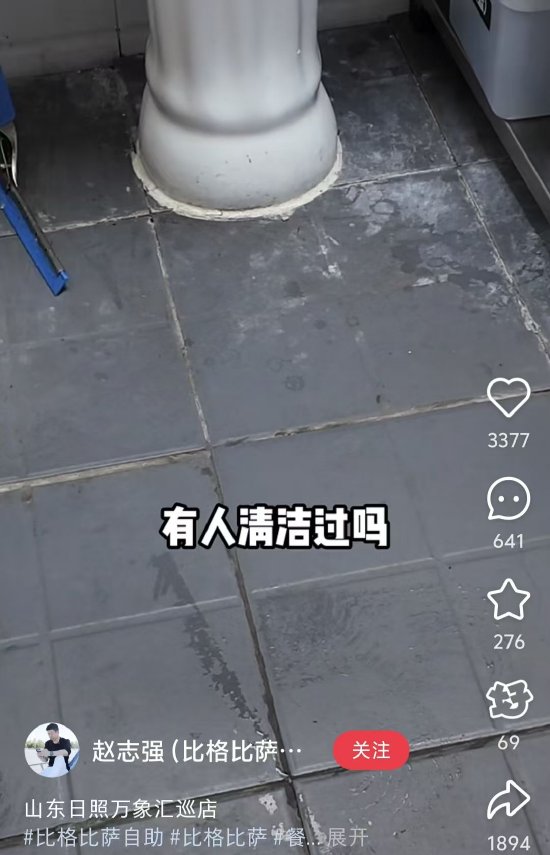
食物残渣未清、设备故障,比格比萨创始人发布视频痛批门店管理
Xin Lang Cai Jing· 2025-11-30 14:55
他向该店工作人员表示,"先给你们2个小时时间,基本这些东西都能彻底清洁出来,你们先整改,等你 们整改好了,我再来看你们。你们现在这个情况确实跟我们店面要求差距特别大,客观原因有很多,但 很多还是主观从我们自身去找原因,我给你们一次机会,你们通过一段时间整改好,如果下次再这样的 话,那咱们没有任何借口。" 炒股就看金麒麟分析师研报,权威,专业,及时,全面,助您挖掘潜力主题机会! 11月30日,昨日,比格比萨创始人赵志强在个人社交账号发布一则巡店视频。视频中,赵志强在山东日 照万象汇店发现椅子上有多重污渍、装修痕迹未清理、巧克力机器故障等多重问题。 在巡店过程中,赵志强直言不讳的讲,"这个店有人做过清洁吗?你们干什么了,你这个店铺跟报废是 一样的吗?""昨天顾客吃的食物残渣还在上面,你这个店的卫生有人去做过吗?" 276 69 1894 新浪声明:新浪网登载此文出于传递更多信息之目的,并不意味着赞同其观点或证实其描述。文章内容 仅供参考,不构成投资建议。投资者据此操作,风险自担。 有人精洁过吗 赵志强(比格比萨 ·· 关注 山东日照万象汇巡店 #比格比萨自助 #比格比萨 #餐,展开 3377 641 责任编辑:常 ...

维力生活科技发布中期业绩,净利润928.3万港元
Zhi Tong Cai Jing· 2025-11-30 11:29
Core Insights - The company reported a revenue of HKD 131 million for the six months ending September 30, 2025, representing a year-on-year increase of 32.2% [1] - The net profit reached HKD 9.283 million, a significant turnaround from a loss of HKD 16.629 million in the same period last year [1] - Basic earnings per share were HKD 0.0081, indicating a recovery in financial performance [1] Revenue Growth - The increase in revenue was primarily attributed to the gradual recovery of Chinese restaurants and the operation of new tea restaurants [1] - The successful implementation of new restaurant concepts contributed to the revenue growth [1] Profitability Improvement - The company achieved profitability due to revenue growth combined with effective cost control measures [1] - There was a successful reduction in employee compensation and property rental expenses while maintaining a stable food cost ratio [1] - The operational efficiency improvements played a significant role in the company's recovery from the previous year's losses [1]
当高冷文物遇上人间烟火 “文化+美食”创新跨界藏着多少惊喜?
Yang Shi Wang· 2025-11-30 08:23
Core Insights - Recent trend of museums in China opening cafeterias featuring creative dishes has attracted many visitors, enhancing the cultural experience [1][5][10] Group 1: Museum Cafeteria Offerings - The Anyang Yin Ruins Museum in Henan has introduced "Oracle Bone Noodles," achieving daily sales of 500 to 600 portions on weekends and holidays since its opening [5][8] - The Hebei Museum's "Changxin Palace Lantern" noodle dish, made with steamed egg, has become a popular item, drawing long queues of visitors [3][10] - Hubei Museum's "Bell Beef Noodles," featuring a replica bell-shaped egg, has quickly sold out its initial daily limit of 200 bowls since launch [10] Group 2: Cultural Integration and Visitor Experience - The integration of cultural elements into food offerings, such as the use of oracle bone characters on noodles, enhances visitors' understanding of ancient cultures [8][14] - The Hunan Museum has collaborated with cultural and culinary institutions to create desserts inspired by artifacts, such as the "Mifan" mousse cake and "Su Sha Can Yi" dessert, which are visually appealing and flavorful [12][14] - Advanced technologies like high-precision scanning and 3D modeling are used to create food items that reflect cultural heritage while appealing to modern aesthetics [16]

治理餐饮浪费,除了餐桌还要关注供应链
Jing Ji Ri Bao· 2025-11-29 10:07
应鼓励餐饮企业在采购端借助动态预测系统,将高损耗食材控制在安全库存临界点。推广"一菜多吃", 合理利用边角料,减少非必要丢弃。在服务端,则需根据顾客实际用餐情况合理备餐,主动引导消费者 克制点餐、满意用餐。实现这些转变,就要用好数据支持、创新经营理念,以"滴灌式"管理替代粗放经 营,这不仅是动态治理浪费的必要举措,也有助于餐饮企业降本增效,提升经营水平。 今年6月份,商务部、国家发展改革委联合发布的《餐饮业促进和经营管理办法》正式实施。其中特别 细化了反食品浪费的有关要求,对餐饮从业人员防止浪费提出了多项具体举措,例如,餐饮服务经营者 在经营管理中不得以任何方式诱导、误导消费者超量点餐;通过在菜单上标注食品的分量、口味、建议 消费人数等方式,为消费者提供点餐提示等。 明确餐饮机构在反浪费中的主体责任,既倡导了健康合理的消费观念,也推动了餐饮经营的科学性与可 持续性。相关法规在落地执行层面也要突出精细化——无论是商务主管部门的监测分析,还是执法部门 对浪费行为的处罚,都应全面覆盖、不留死角,实现从"抽查式执法"向"算法式治理"转变,真正激发餐 饮企业精打细算的内生动力。 近日,湖南省等多地发布关于制止餐饮浪费的 ...
成都市成华区食素为天馒头店(个体工商户)成立 注册资本2万人民币
Sou Hu Cai Jing· 2025-11-29 06:12
天眼查App显示,近日,成都市成华区食素为天馒头店(个体工商户)成立,法定代表人为张海强,注 册资本2万人民币,经营范围为许可项目:餐饮服务(不产生油烟、异味、废气);食品销售;食品互 联网销售。(依法须经批准的项目,经相关部门批准后方可开展经营活动,具体经营项目以相关部门批 准文件或许可证件为准)一般项目:技术服务、技术开发、技术咨询、技术交流、技术转让、技术推 广;餐饮管理;市场营销策划;互联网销售(除销售需要许可的商品)。(除依法须经批准的项目外, 凭营业执照依法自主开展经营活动)。 ...
12月起一批新规将施行 涉及食品安全、“旧国标”电动自行车等多项内容
Yang Shi Wang· 2025-11-29 02:53
Group 1: Food Safety Regulations - The new revised Food Safety Law will take effect on December 1, requiring transport operators to prominently display food-specific labels on containers and to clean them regularly, prohibiting the transport of non-food items [2] - A new regulation for chain restaurants will also be implemented on December 1, mandating that the headquarters of chain enterprises take responsibility for food safety management across all branches, ensuring compliance with food safety standards [3] Group 2: Electric Bicycle Standards - Starting December 1, all electric bicycles sold must comply with the new mandatory national standard, GB17761-2024, leading to the complete cessation of sales for those meeting the "old national standard" [4] Group 3: Medical Mask Standards - A revised mandatory national standard for medical protective masks will be implemented on December 1, stipulating that disposable masks should not have breathing valves and must include clear labeling regarding usage and expiration [5] Group 4: Resource Tax Policy - A new announcement from the Ministry of Finance and the State Taxation Administration regarding resource tax policies will take effect on December 1, clarifying that certain mined products used for construction projects will not be subject to resource tax [6] Group 5: Credit Repair Management - The Market Supervision Administration's Credit Repair Management Measures will come into effect on December 25, expanding the scope for credit repair and optimizing the process to enhance efficiency for businesses seeking to restore their credit status [7]
赏之味(08096)发布中期业绩 股东应占亏损188.3万港元 同比收窄45.52%
智通财经网· 2025-11-28 15:21
Core Insights - The company, Shangzhiwei (08096), reported a revenue of HKD 12.775 million for the six months ending September 30, 2025, representing a year-on-year growth of 2.23% [1] - The loss attributable to shareholders narrowed to HKD 1.883 million, a decrease of 45.52% compared to the previous year [1] - The loss per share was recorded at HKD 0.0098 [1]
百胜中国11月27日斥资1947.87万港元回购5.18万股
Zhi Tong Cai Jing· 2025-11-28 09:52
百胜中国(09987)发布公告,该公司于2025年11月27日斥资1947.87万港元回购5.18万股股份,每股回购 价格为372.8-378.8万港元。 ...
中山兴中集团:产业赋能兴农,激活城乡经济
Nan Fang Du Shi Bao· 2025-11-28 07:04
Group 1 - The "Zhongshan Praise List" is an important research product launched by Southern Metropolis Daily and the Southern Metropolis High-Quality Development Research Institute (Zhongshan Branch), focusing on collecting excellent cases that promote the "Hundred Million Thousand Project" since 2025 [1] - This year, the initiative will also collect and evaluate cases in categories such as "Bay Area Integration Excellent Cases," "14th Five-Year Plan Livelihood Benchmark Cases," "AI Governance Application Excellent Cases," and "Beneficial Governance Communication Excellent Cases," aiming to provide reference paths for urban governance transformation from "unidirectional management" to "collaborative governance" [1] Group 2 - The "Zhongshan Xiangnong" regional brand has participated in numerous trade fairs, showcasing local high-quality products, with 62 enterprises and 100 products included in the brand catalog, covering popular categories such as fruits, aquatic products, poultry, and cured meats [6] - "Zhongshan Xiangnong" has established a comprehensive industrial chain from production to processing, promoting agricultural standardization, branding, and market development, leveraging the advantages of the Guangdong-Hong Kong-Macao Greater Bay Area [8] - The brand actively utilizes both online and offline channels for sales, including e-commerce platforms like JD.com and Douyin, as well as various offline exhibitions, enhancing brand visibility and integrating into the Greater Bay Area consumer market [8] Group 3 - The Zhongshan Food Industry Park, set to be completed in June 2025, will cover an area of 33,700 square meters and feature food-grade clean workshops and automated production systems, establishing a robust "smart defense" for food safety [9] - During the 15th National Games, the park is expected to supply approximately 40 tons of ingredients, with nearly 2,100 batches tested, ensuring daily meal service for 770 people without any food safety incidents [11] Group 4 - Xingzhong Group has been actively empowering the development of typical villages, such as Caobian Village, by creating a "catering + brand" consumption ecosystem and investing in various projects, including a 1.68 MW photovoltaic project that generates 1.7 million kWh annually, saving 506.34 tons of standard coal and increasing village revenue by approximately 390,000 yuan per year [12] - The group has organized a series of cultural and tourism events to enhance local engagement and promote economic development [12][14]

蜜雪冰城试点卖早餐,企查查:近三成早餐相关企业位于华东
Qi Cha Cha· 2025-11-28 06:26
Core Insights - The core focus of the article is on the breakfast initiative by Mixue Ice City, which is currently being trialed in select cities with a low-priced product offering, while the overall breakfast-related enterprise landscape in China is highlighted. Group 1: Breakfast Initiative by Mixue Ice City - Mixue Ice City has launched a breakfast survey and is testing a "breakfast plan" in cities like Dalian, Xi'an, Nanning, and Hangzhou, offering products such as breakfast coconut milk at a price of 5 yuan each [1] - There is currently no plan for a large-scale rollout of the breakfast initiative, but public support for the low-priced breakfast concept is evident [1] Group 2: Overview of Breakfast-Related Enterprises - As of November 28, there are 284,800 breakfast-related enterprises in China, with the majority (42.83%) established between 5 to 10 years ago [2] - The distribution of these enterprises is primarily in the East China region (29.90%) and Central China (25.38%), with South China and Southwest China following at 15.82% and 12.26% respectively [3] Group 3: City-Level Distribution of Enterprises - Breakfast-related enterprises are predominantly located in third and fourth-tier cities, accounting for 29.01% and 28.15% respectively, while first-tier cities only represent 2.77% of the total [4] - In terms of registration, 35,800 breakfast-related enterprises are expected to be registered in 2024, with 28,100 already registered this year [4]