
早餐椰椰奶

Search documents
2025新茶饮复盘:告别野蛮生长,存量博弈下的生死时速
新消费智库· 2026-02-09 13:03
Core Insights - The Chinese new tea beverage market is experiencing a significant slowdown, with the growth rate dropping from 24.9% (2017-2022) to 6.4% in 2024, indicating a shift from expansion to competition in a saturated market [4][34][37] - The market is projected to reach a size of 3547.2 billion yuan in 2024, with growth rates stabilizing between 5%-7% in the first three quarters of 2025, marking the transition to a phase of stock competition [4][37] - The competitive landscape is characterized by a concentration of market share among leading brands, with smaller brands struggling to survive [5][49] Group 1: Industry Trends - The new tea beverage industry has officially transitioned from a high-growth phase to a period of meticulous management and profitability focus, moving away from rapid store openings and population growth [4][34] - The number of new tea beverage stores opened in the past year was 118,000, while 157,000 closed, resulting in a net decrease of 39,000 stores, highlighting the intense competition and market saturation [5][47] - The health trend in the industry is deepening, with the use of sugar substitutes in milk tea reaching 61.3%, and the application of plant-based ingredients increasing from 18.9% in 2024 to 26.4% in 2025 [7] Group 2: Brand Dynamics - Leading brands like Mixue Ice City and Bawang Chaji are expanding rapidly, with Mixue Ice City surpassing 53,000 global stores and Bawang Chaji increasing to 7,038 stores, reflecting a trend of head brand concentration [5][44] - Mid-tier brands are facing significant challenges, with companies like Nayuki's Tea reporting a revenue decline of 4.7% and a net loss of 919 million yuan in 2024 [6][49] - The market is witnessing a "one super, many strong" structure, with Mixue Ice City holding a dominant position and other brands like Bawang Chaji and Gu Ming rapidly gaining ground [55] Group 3: Market Strategies - Brands are increasingly focusing on emotional marketing, with Bawang Chaji positioning itself as a solution for emotional needs among young consumers [10] - The exploration of overseas markets has become a core strategy for leading brands, with Bawang Chaji's overseas GMV exceeding 300 million yuan in Q3 2025, marking a 75.3% year-on-year growth [8] - The industry is shifting towards value competition, moving away from price wars, as brands like Xicha announce a return to user and brand focus, halting low-price competition [14] Group 4: Consumer Behavior - The rise of the "one-person economy" is driving demand for smaller, high-quality products, as consumers prefer moderate consumption over large quantities [25][26] - The focus on seasonal products has become a fixed rhythm, with multiple brands launching offerings based on seasonal fruits, indicating a trend towards timely innovation [22] - The consumer landscape is stabilizing, with shopping and afternoon tea becoming dominant consumption scenarios, limiting the expansion of new consumption contexts [38]


消费者服务行业周报(20251208-20251212):关注中央经济工作会议“扩内需”相关政策,看好服务消费空间-20251214
Huachuang Securities· 2025-12-14 09:43
Investment Rating - The report maintains a "Recommend" rating for the consumer services industry, highlighting optimism about service consumption potential [1]. Core Viewpoints - The Central Economic Work Conference emphasized the importance of domestic demand and plans to implement measures to boost consumption, including a focus on enhancing the supply of quality goods and services [4]. - The report suggests that service consumption is expected to be a key driver for domestic demand in 2026, with potential growth in holiday policy optimization and consumption voucher issuance [4]. - Key investment targets include hotels, human resources services, duty-free sectors, gaming companies, internet platforms, integrated tea dining, innovative tourism sites, and the sports sector [4]. Industry Basic Data - The consumer services industry comprises 55 listed companies with a total market capitalization of 498.804 billion yuan and a circulating market capitalization of 457.081 billion yuan [1]. Relative Index Performance - The consumer services sector experienced a decline of 0.76% this week, while the overall A-share market rose by 0.27% and the CSI 300 index fell by 0.08% [7]. - The sector's performance over the past month shows a relative underperformance compared to the CSI 300 index [2][7]. Weekly Industry Insights - The report notes that the social services sector's stock performance was mixed, with notable gains in companies like China High-Tech and China Oriental Education, while others like Haidilao and Wanda Hotel Development faced declines [4][19]. - The report also highlights significant announcements from various companies, including share buybacks and management changes [34]. Upcoming Shareholder Meetings - Several companies in the consumer services sector have scheduled shareholder meetings in the coming month, including Long White Mountain and Chongqing Department Store [35].
打工人的早餐,被餐饮品牌们卷成了“兵家必争之地”
东京烘焙职业人· 2025-12-09 08:33
Core Viewpoint - The breakfast scene has become a new battleground for tea drinks, chain coffee, and light meal brands, with companies like Mixue Ice City exploring various breakfast options to leverage their extensive store network and supply chain advantages [1][4]. Group 1: Market Dynamics - The competition for "breakfast scene definition" has begun, revealing strategic blind spots in the baking industry [1][3]. - Cross-industry players are entering the breakfast market with different business logic, creating innovative scenarios [3]. - The breakfast market is characterized by high frequency, necessity, and low customer spending, with consumers typically willing to spend under 10 yuan for breakfast [16][19]. Group 2: Company Strategies - Mixue Ice City's breakfast strategy focuses on utilizing its large store scale and supply chain to create low marginal cost incremental business, offering pre-packaged breakfasts delivered from a central factory [4][19]. - Starbucks and M Stand are pursuing an "experience upgrade" strategy, extending their coffee offerings to include breakfast, thus increasing customer spending [6][8]. - M Stand's combination of beef pancakes and salty coffee demonstrates that breakfast can be a high-margin market rather than a low-margin one [8]. Group 3: Challenges for Bakeries - Many bakeries do not primarily focus on breakfast as a consumption scene, which is contrary to the perception that they are naturally suited for it [10][18]. - There is a clear mental separation among consumers between breakfast and bakery scenes, with breakfast associated with quick, cheap options and bakeries linked to leisurely consumption [12][13]. - The cost and pricing challenges in the breakfast market create a "trilemma" for bakeries, making it difficult to cover operational costs while maintaining brand integrity [15][16]. Group 4: Recommendations for Bakeries - Bakeries need to reconstruct their business logic to compete in the breakfast market, focusing on local, quick-to-prepare options that can be served efficiently during peak hours [20][22]. - Regional chains should develop a standardized breakfast matrix that combines universal items with local specialties to appeal to consumers [23][24]. - Boutique bakeries should create signature breakfast items that enhance brand recognition and customer loyalty, transforming breakfast into a brand entry point [28][30]. Group 5: Operational Insights - The success of breakfast offerings relies more on operational rhythm than on new product development, with precise timing and efficiency being crucial [30][31]. - Implementing a structured approach to breakfast service can help bakeries manage peak demand and reduce waste, while a dual pricing strategy can attract a broader customer base [31][34].
茶饮咖啡业从跑马圈地到售卖体验感,资本重燃信心
Di Yi Cai Jing· 2025-12-03 13:36
Core Insights - The tea and coffee industry has experienced rapid growth, with six brands already listed on the capital market, while many unlisted brands operate thousands of stores, leading to intense competition [1][2] - The industry is transitioning from a phase of market expansion to one focused on value competition and operational efficiency, particularly for tea brands, while coffee brands are expected to focus on scale [2][5] Industry Trends - The market is witnessing a shift from aggressive expansion and price wars to maximizing store resources and consumer engagement during peak hours [2][3] - Brands are exploring new product offerings, such as breakfast items, to enhance store utilization during off-peak hours [3][4] - Companies are increasingly focusing on creating unique consumer experiences through multi-sensory engagement rather than relying solely on taste [3][4] Market Projections - The coffee market in China reached a size of 623.5 billion yuan in 2023, with expectations to exceed 1 trillion yuan by 2025 and 1.39 trillion yuan by 2029 [5][6] - The ready-to-drink tea market is projected to surpass 300 billion yuan by 2025, with hundreds of brands emerging [5] - Industry experts predict that milk tea will become a significant global representative of Chinese culture, with a comprehensive innovation upgrade in the supply chain [5][6] Investment Sentiment - Despite a slowdown in investment activity in recent years, there is renewed confidence in the tea and coffee sectors, with expectations of new listings and market growth [5][6] - The number of investment projects has decreased significantly, but the outlook for the industry remains positive, with predictions of six new listed companies in the next 5-10 years [6]
福建发布12条惠台政策措施,食品饮料ETF天弘(159736)昨日成交额超1500万元,机构:食品饮料行业明年主线是底部回暖复苏
2 1 Shi Ji Jing Ji Bao Dao· 2025-12-03 01:24
Group 1 - The market experienced fluctuations on December 2, with all three major indices closing lower. The Tianhong Food and Beverage ETF (159736) saw a trading volume exceeding 150 million yuan, with several constituent stocks such as Xiwang Food, Babi Food, and Yanjing Beer rising [1] - The Tianhong Food and Beverage ETF tracks the CSI Food and Beverage Index, focusing on leading stocks in the high-end and sub-high-end liquor sectors, while also covering leading stocks in beverages, dairy, condiments, and beer. The top ten weighted stocks include Moutai, Wuliangye, and Yili [1] - Fujian Province has recently formulated policies to support cross-strait integration development, including measures to assist Taiwanese residents in opening Shaxian snack stores [1] Group 2 - In November, the food and beverage index continued to recover, achieving excess returns compared to the broader market, driven by a shift in market style and a positive CPI growth rate. Within the sector, pre-processed foods, baked goods, and dairy products saw the highest increases [2] - Looking ahead to 2026, the core view is that new consumption will remain sustainable but will experience internal rotation, while traditional consumption is expected to see bottom improvement [2] - Since early 2025, the food and beverage sector has significantly underperformed the broader market due to changes in the consumption environment and market style. However, the sector's fundamentals are at a low point, and the valuation has declined, indicating no need for pessimism. The expectation for 2026 is a recovery in the food and beverage industry, with hopes for resilient consumer spending and increased business activity [2]

早餐套餐开卖,蜜雪冰城太想进步了
3 6 Ke· 2025-12-02 10:57
Core Insights - The entry of the chain restaurant brand into the breakfast market indicates that it is not yet saturated, as evidenced by the recent testing of breakfast items in various cities [1][10] - The breakfast offerings include a combination of drinks and staple foods, with prices set at competitive levels compared to other market players [5][8] Company Strategy - The company is conducting a broad survey and small-scale trials to assess consumer interest in breakfast items, indicating a formal launch of its breakfast plan [1][10] - The breakfast menu features a mix of familiar items, such as drinks priced at 5 yuan and staple foods at 2.9 yuan each, aiming to attract a wide customer base [5][6] Market Positioning - The breakfast products are designed to fill a market gap, providing a cleaner and more affordable option compared to street vendors while being cheaper than premium coffee shops [8][9] - The company aims to extend operational hours to maximize store utilization and maintain a presence in the high-frequency morning consumption period [9][10] Competitive Landscape - The breakfast segment is highly competitive, with established brands like KFC and McDonald's also expanding their breakfast offerings, highlighting the importance of this market [11] - The company’s strategy may involve testing the overall viability of breakfast sales to enhance store efficiency and stimulate sales, rather than focusing solely on specific product performance [10][12] Future Considerations - The success of the breakfast initiative will depend on the ability to provide suitable services in appropriate locations, as not all stores may be ideal for breakfast sales [11][12] - The company is exploring ways to increase sales volume and improve store efficiency, which is critical in a market where breakfast is often a low-margin business [12]
蜜雪冰城要卖早餐了?知情人士:在尝试
Xin Jing Bao· 2025-11-28 15:59
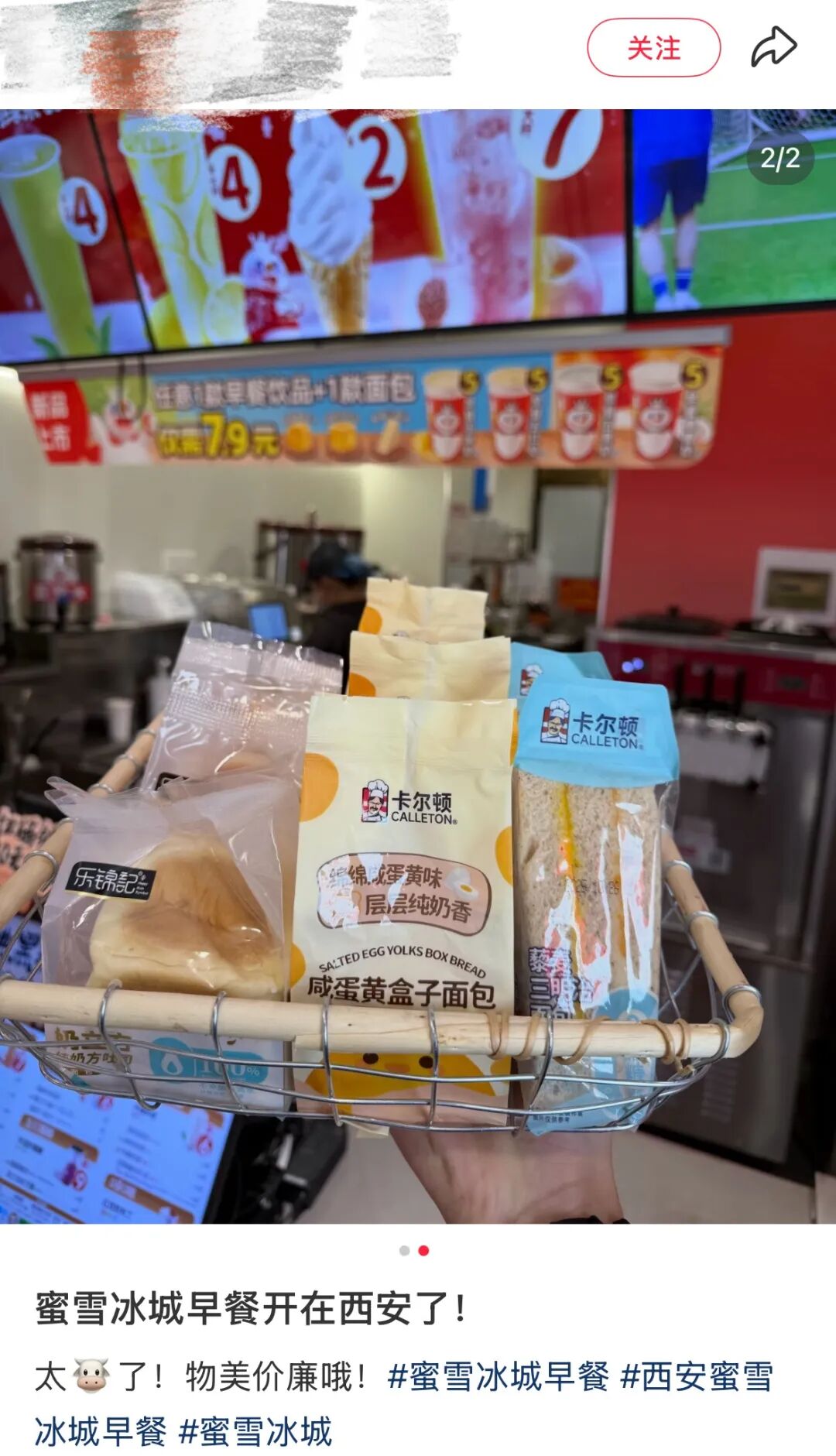
Core Viewpoint - Recently, Mixue Ice City is reported to be expanding into the breakfast business, currently testing products in select cities [1] Group 1: Business Expansion - Mixue Ice City is piloting its "breakfast plan" in cities such as Dalian, Xi'an, Nanning, and Hangzhou [1] - The breakfast offerings include four dairy products, such as breakfast coconut milk, with a price point of 5 yuan each [1] - There are currently no plans for a large-scale rollout of the breakfast business [1]
蜜雪冰城进军“平价”早餐
Zhong Guo Jing Ying Bao· 2025-11-28 08:57
Group 1 - The core point of the article highlights the significant growth of the company, with its global store count reaching 53,014 by June 30, 2025, and its coffee brand, Luckin Coffee, surpassing 10,000 stores globally [1] - The beverage industry, particularly coffee and tea companies, is showing a strong interest in "all-day consumption," with many brands exploring breakfast offerings [1] - Notable brands such as Heytea, Nayuki, and Gu Ming have launched breakfast products, while Starbucks and Luckin Coffee have introduced breakfast combo meals [1] Group 2 - Recently, the company launched breakfast products, including four dairy items like coconut milk, priced at 5 yuan each [3] - The breakfast initiative is currently being tested in select cities such as Dalian, Xi'an, Nanning, and Hangzhou, with no plans for widespread rollout at this time [3] - The company previously sought to hire for breakfast-related procurement roles, indicating a strategic focus on expanding its breakfast offerings [3]

市值1568亿!蜜雪冰城半年净赚27亿,5元早餐低调上线
Jin Rong Jie· 2025-11-28 06:30
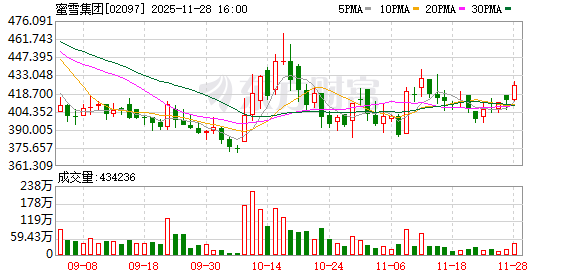
Core Viewpoint - The secondary market is closely monitoring the movements of new tea beverage giants, with Mixue Group's stock closing at HKD 413 per share on November 27, resulting in a market capitalization of HKD 156.8 billion. This performance is attributed to the company's low-key testing of new business growth points, including a "breakfast plan" currently trialed in select cities [1][3]. Group 1: Breakfast Strategy - The company has initiated a low-price strategy targeting the breakfast consumption scene, with a recent survey on consumer preferences for breakfast items like soy milk and coffee. A "breakfast series" has been launched in certain areas, featuring products priced at RMB 5 [3]. - The breakfast product lineup includes four types of milk, such as "breakfast coconut milk," with no large-scale promotional plans currently in place. This is not the first attempt by the brand to expand into the morning consumption period, as previous tests included a "coffee + baking" combo sold at RMB 10 [3]. Group 2: Store Network and Financial Performance - The new business trials are supported by the company's extensive offline network and solid financial data, with a reported revenue of RMB 14.87 billion for the first half of 2025, a year-on-year increase of 39.3%, and a net profit of RMB 2.72 billion, up 44.1% [4]. - As of June 30, 2025, Mixue Group has expanded its global store count to 53,014, while its coffee business, Luckin Coffee, has surpassed 10,000 stores, positioning itself as a significant player in the domestic coffee chain market [4]. Group 3: Multi-Category Expansion and Operational Efficiency - In addition to breakfast and coffee, the company is extending its product range through acquisitions, having invested approximately RMB 297 million to acquire a 53% stake in Fresh Beer Fulu, thereby entering the fresh beer market [5]. - The company's profitability remains relatively strong within the industry, with a net profit margin of 18.27% for the first half of 2025, outperforming competitors like Tea Baidao and Bawang Tea Ji. The low-price breakfast initiative is seen as a strategy to leverage existing supply chain advantages and enhance single-store value [5].

蜜雪冰城试点卖早餐,企查查:近三成早餐相关企业位于华东
Qi Cha Cha· 2025-11-28 06:26
Core Insights - The core focus of the article is on the breakfast initiative by Mixue Ice City, which is currently being trialed in select cities with a low-priced product offering, while the overall breakfast-related enterprise landscape in China is highlighted. Group 1: Breakfast Initiative by Mixue Ice City - Mixue Ice City has launched a breakfast survey and is testing a "breakfast plan" in cities like Dalian, Xi'an, Nanning, and Hangzhou, offering products such as breakfast coconut milk at a price of 5 yuan each [1] - There is currently no plan for a large-scale rollout of the breakfast initiative, but public support for the low-priced breakfast concept is evident [1] Group 2: Overview of Breakfast-Related Enterprises - As of November 28, there are 284,800 breakfast-related enterprises in China, with the majority (42.83%) established between 5 to 10 years ago [2] - The distribution of these enterprises is primarily in the East China region (29.90%) and Central China (25.38%), with South China and Southwest China following at 15.82% and 12.26% respectively [3] Group 3: City-Level Distribution of Enterprises - Breakfast-related enterprises are predominantly located in third and fourth-tier cities, accounting for 29.01% and 28.15% respectively, while first-tier cities only represent 2.77% of the total [4] - In terms of registration, 35,800 breakfast-related enterprises are expected to be registered in 2024, with 28,100 already registered this year [4]