人工智能产业

Search documents
多维度感知中国活力 各领域“拔节向上”绘就高质量发展万千气象
Yang Shi Wang· 2025-12-11 06:39
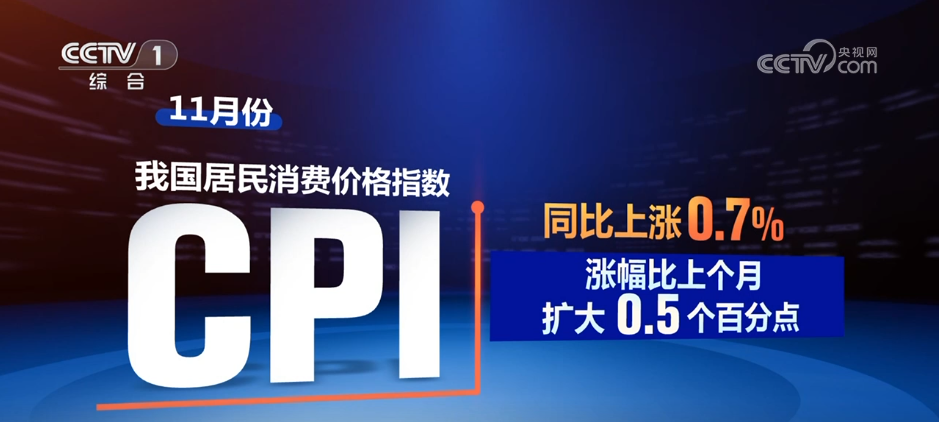
Economic Indicators - In November, China's Consumer Price Index (CPI) rose by 0.7% year-on-year, an increase of 0.5 percentage points from the previous month [3] - The core CPI, excluding food and energy, increased by 1.2% year-on-year, maintaining a growth rate above 1% for three consecutive months [3] - The Producer Price Index (PPI) rose by 0.1% month-on-month in November, marking two consecutive months of increase [3] Light Industry Performance - In the first ten months, revenue of large-scale light industry enterprises reached 19 trillion yuan, a year-on-year increase of 1.9%, with profits of 1.14 trillion yuan, up 1.6% [7] - The added value of large-scale light industry grew by 5.8% year-on-year, with significant growth in battery and plastic furniture manufacturing [7] - Retail sales of 11 categories of light industry products exceeded 7.1 trillion yuan, growing by 9.8% year-on-year, with home appliances and audio-visual equipment sales increasing by 20.1% [9] Robotics and AI Development - The robotics industry has seen rapid development, with service robot production exceeding 13.5 million units in the first three quarters of the year [17] - AI applications have surged, with the number of AI applications reaching 657, a year-on-year increase of 61.8%, and mobile user scale surpassing 700 million [21] - China's AI industry has surpassed 900 billion yuan, with over 6,000 companies contributing to a competitive technological landscape [21] Low-altitude Economy - The State Council has issued guidelines to promote the application of low-altitude economy, including the use of unmanned systems across various sectors [23] - In cities like Jingdezhen and Anyang, low-altitude applications are being utilized for tourism, emergency services, and urban management, significantly improving efficiency [25][27] - By 2024, over 140 new low-altitude logistics routes are expected to be established, with the drone logistics market projected to exceed 1 trillion yuan by 2035, maintaining an annual growth rate of around 20% [29]

中央政治局会议解读:培育壮大新动能 充分发挥资本市场枢纽功能
Zheng Quan Ri Bao· 2025-12-10 23:40
Group 1 - The core viewpoint emphasizes the importance of innovation-driven development and the cultivation of new growth drivers in China's economy [1][2] - Key emerging industries identified include artificial intelligence, commercial aerospace, and biomanufacturing, which are becoming internationally competitive due to their unique technological advantages [1] - The integration of technology and industry innovation is crucial for transforming scientific achievements into productive forces, with a focus on breakthroughs in core technologies [2] Group 2 - The new growth drivers also encompass renewable energy, new materials, and high-end equipment manufacturing, which are essential for sustainable development and industrial upgrades [2] - The capital market is highlighted as a vital link between policy, industry, and technology, providing long-term capital for technological innovation and supporting the transition of traditional industries [3] - Recent policy measures have been implemented to enhance the capital market's ability to serve the real economy, including the establishment of the Sci-Tech Innovation Board and reforms in various market segments [3]
合肥新站高新区专项赛圆满举行
Jing Ji Ri Bao· 2025-12-10 22:17
Group 1 - The 2025 National General Artificial Intelligence Innovation Application Competition's Hefei New Station High-tech Zone Special Competition focuses on the "AI + Metaverse" track, held on December 10 at the Shaoquan Lake Science and Technology Innovation Center [1] - The competition is organized by the China Computer Federation and the Anhui Provincial Department of Science and Technology, with support from various local institutions [1] - The event targets innovative teams without established companies and high-growth technology startups with independent intellectual property, focusing on wearable devices, digital twins, digital humans, data labeling, components, and basic software in the metaverse and AI sectors [1] Group 2 - Prizes for the special competition include a maximum of 500,000 yuan for first place, 300,000 yuan for second place, and 200,000 yuan for third place, with additional funding from the Hefei New Station High-tech Zone [1] - The total prize for the finals can reach up to 1 million yuan at the provincial level and 500,000 yuan at the district level [1] - Winning projects that register in Anhui will benefit from local policies promoting high-quality development in the AI industry and support for the metaverse industry [1] Group 3 - A project landing negotiation meeting, scenario release conference, and business environment promotion meeting will be held on the same day as the competition, with over 200 participants from government, academia, enterprises, investment, media, and other sectors [2] - The aim is to explore the innovative value of AI + Metaverse and assist Hefei in becoming a national hub for artificial intelligence and metaverse innovation [2]
广西新质生产力发展势头正盛
Guang Xi Ri Bao· 2025-12-10 03:11
Group 1: High-Tech Industry Growth - The sales revenue of high-tech industries in Guangxi increased by 14.3% year-on-year from January to November, with high-tech manufacturing and high-tech services growing by 12.6% and 15.3% respectively [1] - High-tech enterprises in the region benefited from a total corporate income tax reduction of 1.7 billion yuan, indicating strong development momentum in technology research and market transformation [1] Group 2: Artificial Intelligence Industry Expansion - Sales revenue for integrated circuits, industrial robots, drones, and special operation robots grew by 25.6%, 28.3%, 100%, and 290% respectively from January to November, reflecting rapid growth in the AI sector [2] - The company Ubtech Robotics in Liuzhou saw a 69.1% increase in sales revenue, highlighting the rich application scenarios for AI in Guangxi [2] - The development model in Guangxi emphasizes market-driven technology implementation and industrial clustering, creating a virtuous cycle of technology landing, market validation, industrial growth, and tax revenue increase [2] Group 3: Steady Development of High-End Manufacturing - The intelligent manufacturing equipment and rail transit equipment industries grew by 11.2% and 20.4% year-on-year, while new energy sectors like photovoltaic equipment, lithium-ion batteries, and new energy vehicles saw sales revenue increases of 24.6%, 15.8%, and 16% respectively [3] - Guangxi Fudi Battery Co., Ltd. reported a production value of 18 billion yuan from January to October, a 33% increase year-on-year, with exports rising by 34% [3] - The tax data from the high-end manufacturing sector indicates a transition from policy incentives to substantial industry contributions, enhancing economic resilience and reducing reliance on traditional industries [3] Group 4: Deepening Digital and Real Economy Integration - The core digital economy industries in Guangxi experienced a 9.9% year-on-year increase in sales revenue, with digital product manufacturing and digital factor-driven industries growing by 14.2% and 9.5% respectively [4] - The company Jiejia Run Technology Group reported a 16% increase in sales revenue, driven by its AI model for precision agriculture, serving over 2 million acres globally [4] - The growth of the digital economy is seen as an upgrade to traditional industries, creating new economic growth spaces and achieving both economic and social benefits [4]
十次提及“人工智能”!广东“十五五”规划建议发展智能经济
Nan Fang Du Shi Bao· 2025-12-08 10:48
Group 1 - The core viewpoint of the document emphasizes the importance of artificial intelligence (AI) in building a strong manufacturing province and a digital Guangdong, advocating for the development of an intelligent economy and society [2][3] - The document outlines the strategic opportunities and challenges faced by Guangdong during the 14th Five-Year Plan period, highlighting the need to leverage disruptive technologies like AI to foster new industries and business models [2] - It calls for the establishment of a modern industrial system with international competitiveness, focusing on high-quality manufacturing and the creation of large-scale industrial clusters in AI and robotics [2][4] Group 2 - The document proposes advancing the construction of a digital Guangdong by integrating data, computing power, algorithms, and applications, and emphasizes the need for a robust data market and high-quality data sets [3] - It highlights the importance of building a comprehensive intelligent computing network across the province and fostering innovation in algorithm technology to support the development of native technologies and services [3][4] - The document stresses the need for a coordinated approach to high-quality development and safety, including enhancing national security capabilities in emerging fields such as AI and data [5]
践行新发展理念 中国经济行稳致远|创新引领 新质生产力蓬勃生长
Yang Shi Xin Wen Ke Hu Duan· 2025-12-08 01:09
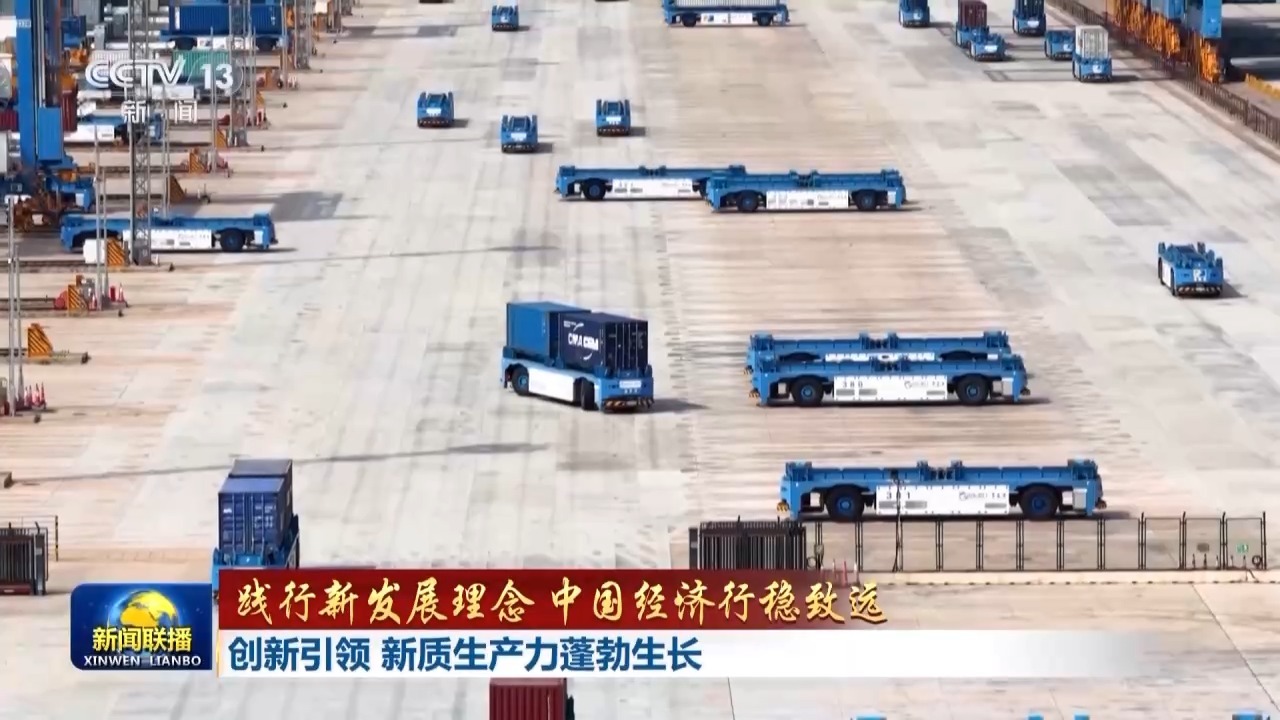
Core Viewpoint - The year 2025 is pivotal for China's economic development, marking the end of the "14th Five-Year Plan" and the beginning of the "15th Five-Year Plan," with a focus on high-quality growth and technological innovation [2][26]. Group 1: Technological Innovation - The emergence of new productive forces is transforming China through rapid technological advancements, with over a hundred large models integrated into various industries [2][6]. - Significant breakthroughs in technology include the successful testing of the CR450 high-speed train at 400 km/h and advancements in space exploration and energy extraction [6][12]. - The development of artificial intelligence and quantum technology is prioritized, with a national AI framework established to guide future innovations [10][12]. Group 2: Economic Growth and Structure - China's high-tech manufacturing sector saw a 9.3% year-on-year increase in value added, with exports of electric vehicles, photovoltaics, and lithium batteries experiencing double-digit growth [17][20]. - The integration of new industries, such as biomanufacturing and embodied intelligence, is expected to significantly contribute to the economy, with the latter projected to capture nearly 30% of the global market [17][19]. - Traditional industries are undergoing transformation through digitalization and the adoption of new technologies, leading to increased energy efficiency and reduced emissions [20][24]. Group 3: Policy and Strategic Initiatives - The Chinese government is implementing reforms to enhance the economic and technological systems, aiming to create a high-standard market environment [10][15]. - A series of strategic initiatives are being launched to foster innovation and support the development of new productive forces, including talent cultivation in key sectors [10][12]. - The focus on localized development of new productive forces is emphasized, aligning with the broader national strategy for sustainable economic growth [26].
彭博行业研究报告:中国人工智能战略有望提升经济生产力
彭博Bloomberg· 2025-12-03 06:04
中国务实的 '人工智能+'战略极有可能推动整个经济的生产力提升。与单纯追求人工智能发展不 同,中国更注重软件优化和低成本模型,这使其在人工智能的实际应用方面具备良好优势。" 然而,彭博行业研究的自研市场预测模型显示,中国民营科技企业由于优先服务国家战略目标,而 非单纯追求利润最大化,因此在实现投资回报方面将面临挑战。 报告指出,中美在人工智能战略上的分化日益明显,全球人工智能产业正呈现 "双雄竞赛" 格局。 美国预计将继续在基础技术和先进硬件领域保持领先,而中国则优先发展软件和提升模型效率,推 动小型、高效模型的大规模部署,以实现整体经济的效率提升。 彭博行业研究高级中国科技分析师、《中国人工智能2026展望》报告主要作者Robert Lea 表示: " 彭博行业研究(BI)近日发布 《中国人工智能2026展望》报告 ,预测中国自上而下的人工智能 (AI)战略将推动其庞大经济体系的生产力提升。报告指出,在全球人工智能竞争日益激烈的背 景下,中国正专注于全国范围内快速部署AI,利用低成本、开源模型实现生产力增长。 根据彭博经济研究,中国包括人工智能在内的技术实力不断增强,预计高科技产业在GDP中的占 比将从20 ...
利好来了!刚刚,浙江重磅发布!
券商中国· 2025-12-03 01:26
Core Viewpoint - The article discusses the "15th Five-Year Plan" for Zhejiang Province, emphasizing high-quality development and the establishment of a common prosperity demonstration zone, aiming for significant progress by 2030 in economic strength, technological capability, and overall competitiveness [1][2]. Group 1: Economic and Technological Development - The plan aims for major breakthroughs in innovation, establishing a modern industrial system, and enhancing global competitiveness in sectors like advanced manufacturing and artificial intelligence [2][3]. - By 2030, the per capita GDP of Zhejiang is expected to approach that of developed economies, with a focus on reducing urban-rural income disparities and improving residents' quality of life [1][2]. Group 2: Artificial Intelligence and Digital Economy - The plan includes the creation of an artificial intelligence innovation hub, promoting the integration of AI with various sectors, including manufacturing and social governance [3][4]. - It emphasizes the importance of a robust data infrastructure and the establishment of a new computing power system to support AI development [3]. Group 3: Emerging Industries and Investment - The plan highlights the development of emerging industries such as AI, new materials, and biomedicine, with a focus on creating future industry pilot zones [4][6]. - It aims to improve investment quality and efficiency, particularly in high-tech and strategic emerging industries, while enhancing the participation of private enterprises in major projects [6][7]. Group 4: Consumer Market and Domestic Demand - The strategy focuses on expanding domestic demand and enhancing consumer capabilities through various initiatives, including the promotion of new consumption models and the development of service industries [5][6]. - It aims to create a favorable consumption environment and support cities like Hangzhou and Ningbo in becoming international consumption centers [5]. Group 5: Marine Economy - The plan includes initiatives to strengthen the marine economy, focusing on modern marine industry systems and the sustainable development of marine resources [7]. - It aims to enhance marine ecological protection while participating in global marine governance [7].

彭博报告:人工智能战略将推动中国生产力提升
Zhong Guo Xin Wen Wang· 2025-12-02 05:19
中新社上海12月2日电 (记者姜煜)彭博社旗下专业研究部门彭博行业研究(Bloomberg Intelligence)2日发 布《中国人工智能2026展望》报告,预测中国的人工智能(AI)战略将推动其庞大经济体系的生产力提 升。 报告称,中国包括人工智能在内的技术实力不断增强,预计高科技产业在GDP中的占比将从2023年的 14.3%提升至2026年的近19%。中国于2024年推出"人工智能+"行动计划,旨在加速全国范围的人工智能 应用,确保其效益惠及整个经济体系。中国已明确多项重点投资领域,包括先进装备、半导体、人工智 能、制造业及通信设备,以推动"新质生产力"的发展。 中国庞大的开发者人才储备,结合强大的开源社区,正在加速人工智能产业的迭代与发展。开源模型在 中国的普及,与其他地区常见的封闭、自有系统形成鲜明对比。报告认为,这一模式不仅加快中国国内 应用,还使中国技术成为新兴市场的高性价比解决方案。 彭博行业研究高级中国科技分析师、《中国人工智能2026展望》报告主要作者罗伯特·李(Robert Lea)表 示:"中国务实的'人工智能+'战略极有可能推动整个经济的生产力提升。与单纯追求人工智能发展不 同, ...
深圳龙华:数字经济五年完成三级跳,一个工业强区的跃升密码
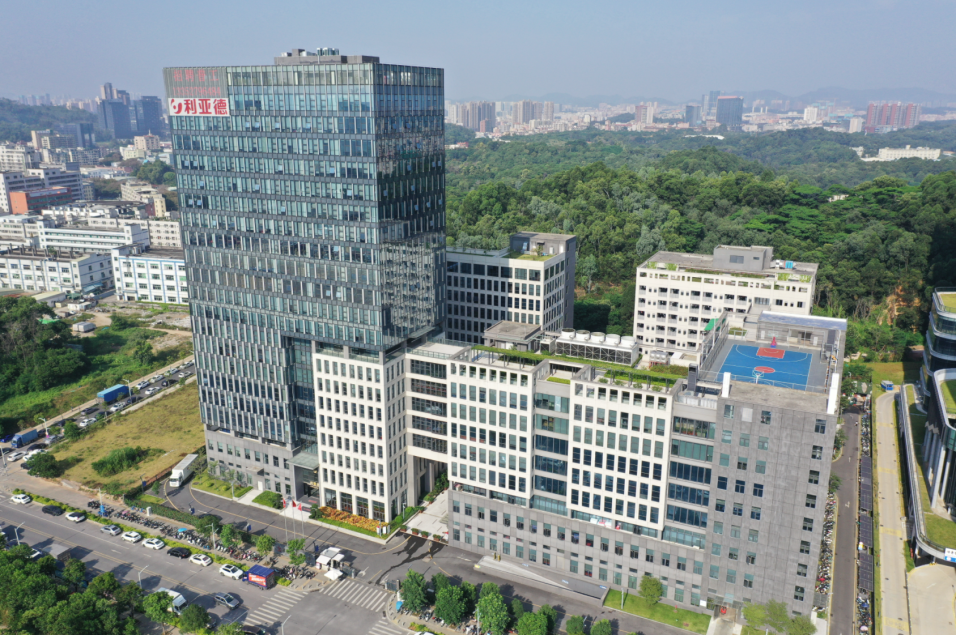
Xin Lang Cai Jing· 2025-12-01 23:45
Group 1: Digital Economy Development in Longhua - Longhua District has transformed from a traditional manufacturing hub to a core area of digital economy within five years, becoming a key engine for regional development [1][2] - In 2024, the core industries of the digital economy in Longhua are projected to achieve a total output of 563.88 billion yuan, maintaining an output scale above 500 billion yuan for three consecutive years [2] - The smart terminal industry dominates the digital economy in Longhua, accounting for over 90% of the core industry scale, alongside significant contributions from the network and communication, software and information technology services, and artificial intelligence sectors [2] Group 2: Industrial Upgrading and Policy Support - Longhua's industrial development has evolved from traditional manufacturing to a focus on electronic information, with a significant push towards digital transformation driven by market demands [4][5] - In 2020, Longhua was designated as a "core urban area" of Shenzhen, aiming to establish a high ground for emerging industries and a new city of fashion [6] - The district has implemented a comprehensive digital economy policy framework, including a three-year work plan and over 30 billion yuan budget for various industry-specific policies [7] Group 3: Digital Transformation Case Studies - Liard, a leading LED display manufacturer, has integrated digital transformation into its operations, significantly enhancing management efficiency through IoT and data analytics [10][11] - Shenzhen Guodian Technology Communication Co., Ltd. has successfully doubled its production capacity and reduced delivery cycles by 53% post-digital transformation, evolving from a producer to a provider of intelligent manufacturing solutions [12] - Yipu Technology has developed a proprietary industrial software system for the semiconductor industry, breaking the monopoly of foreign technologies and addressing local manufacturing needs [14][16] Group 4: Future Prospects and AI Integration - Longhua is set to leverage AI to further enhance the digital transformation of its manufacturing sector, with initiatives like the "AI + Manufacturing" action plan [17] - Companies like Yipu Technology and Shenzhen Guodian are already experimenting with AI applications in quality inspection and operational efficiency [17] - The district aims to double its GDP in the next five years, indicating strong confidence in its transition from manufacturing to intelligent manufacturing [18]