
Snacks

Search documents
U.S. Stocks Rebound Amid Nvidia Anticipation and Key Earnings on November 19, 2025
Stock Market News· 2025-11-19 19:07
Core Viewpoint - U.S. equity markets are rebounding as investors await Nvidia's quarterly earnings, with technology and communication services sectors leading the recovery [1][3]. Major Index Performance - The S&P 500 Index is up 0.2% to 0.4%, aiming to end a four-session losing streak [2] - The Nasdaq Composite is showing gains between 0.3% and 0.8%, recovering from two consecutive days of declines [2] - The Dow Jones Industrial Average is slightly lower by 0.1% to 0.2%, also looking to break a four-day losing streak [2] - The S&P 500 has faced recent shakiness due to concerns over elevated stock valuations and uncertainty regarding future Federal Reserve interest rate cuts [2]. Afternoon Trading Activity and Sector Performance - Afternoon trading reflects cautious optimism, driven by Nvidia's upcoming earnings report, seen as a crucial test for the AI sector [3] - Technology and communication services sectors are leading, while consumer defensives, energy, and utilities sectors are lagging [3] - The real estate market showed recovery in Q3 2025, with multifamily and office sectors leading growth [3]. Key Company News and Stock Movements - Nvidia (NVDA) stock is up approximately 1.7% to 3.2% ahead of its earnings report, which is expected to assess the AI industry's health [4] - Alphabet (GOOGL) shares jumped over 3% to an all-time high following the announcement of its AI model, Gemini 3 [4] - Lowe's (LOW) shares surged nearly 5% to 6% after a strong Q3 profit report and raised sales projections [4] - Target (TGT) stock dipped 0.5% to 1.5% despite a stronger profit due to weaker-than-expected revenue [4] - Constellation Energy (CEG) rallied 5.2% to 6.1% after a $1 billion loan announcement from the U.S. Department of Energy [4] - Amazon (AMZN) stock slipped 0.8% after a previous drop of 4.4% due to a rating cut [4] - Adobe (ADBE) announced an acquisition of Semrush Holdings Inc. for approximately $1.9 billion [4] - Medtronic plc (MDT) shares jumped 4.7% after reporting better-than-expected earnings [4] - Amer Sports, Inc. (AS) shares surged 8.5% after surpassing earnings estimates [4]. Upcoming Market Events - The September jobs report is scheduled for release on November 20, following a delay due to a government shutdown [6] - Federal Reserve minutes are expected to provide insights into inflation and labor market conditions [6] - Walmart (WMT) is set to report earnings on November 20, which will offer insights into consumer spending [6].




THE RITZ® BRAND CONFIRMS A SALTY BIG GAME RETURN IN 2026
Prnewswire· 2025-11-19 15:00
Core Insights - RITZ Crackers will return to the Big Game on February 8, 2026, with a 30-second advertisement during the third quarter, marking the third consecutive year for a Mondelz International snack brand to appear in this event [1][2][3] - The brand will launch a new football-shaped cracker ahead of the Big Game, maintaining its signature salty, buttery flavor in a playful new design, available in stores starting December 1, 2025 [2][5] - The 2026 advertisement aims to build on the success of the previous year's campaign, which introduced the RITZ Salty Club, and will feature a refreshed creative direction [3][4] Company Strategy - The RITZ Brand emphasizes its commitment to cultural relevance and impactful advertising, leveraging the Big Game as a platform to connect with consumers [4] - The new advertisement is part of a broader 360º multichannel campaign that includes paid media, social media, public relations, and retail strategies [4] Financial Context - Mondelz International reported net revenues of approximately $36.4 billion in 2024, positioning itself as a leader in the global snacking market with a diverse portfolio of iconic brands [7]


Hershey Completes Acquisition of LesserEvil, Expanding Consumer Choice
Prnewswire· 2025-11-19 13:35
Core Insights - The Hershey Company has completed the acquisition of LesserEvil, enhancing its portfolio of better-for-you snacks and expanding its manufacturing capacity [1][3][4] Group 1: Acquisition Details - The acquisition of LesserEvil adds a high-growth brand known for organic snacks that align with consumer demand for healthier options [1][2] - LesserEvil's product line includes organic popcorn and puffs made with premium ingredients, categorized as USDA Organic and non-GMO [2][4] - The acquisition is part of Hershey's strategy to diversify its offerings and meet the growing consumer preference for better-for-you snacking [5][6] Group 2: Strategic Fit - LesserEvil complements Hershey's existing brands, including its well-known confectionery products and salty snack brands like SkinnyPop and Dot's Homestyle Pretzels [4][6] - The salty snack portfolio has shown significant growth, expanding 1.5 times faster in 2024 compared to the previous three years, indicating a strategic focus on this category [4] Group 3: Leadership and Operations - The leadership team at LesserEvil will remain in place to continue driving innovation and maintaining product quality [6] - The combined teams will focus on delivering growth and insights to ensure the right products are available to consumers at the right time [6] Group 4: Company Overview - The Hershey Company generates over $11.2 billion in annual revenues and operates in approximately 70 countries, with a diverse portfolio of iconic brands [8][9] - Hershey has a long-standing commitment to responsible operations and community support, dating back over 130 years [9]


UTZ Brands (NYSE:UTZ) FY Conference Transcript
2025-11-18 17:02
Summary of UTZ Brands FY Conference Call (November 18, 2025) Company Overview - **Company**: UTZ Brands (NYSE:UTZ) - **Industry**: Packaged Food and Beverage, specifically focusing on salty snacks Key Points California Expansion - **Investment Impact**: The California expansion involves a modest upfront investment estimated at $4-$6 million in the first year, which is considered a startup cost rather than an ongoing expense [3][4][5] - **Market Size**: California represents 10% of the overall salty snack category, and the company aims to achieve a 16% margin target despite the initial investment [3][4] - **Sales Performance**: Current sales in California are $79 million, primarily through direct-to-warehouse channels, with expectations to grow as distribution expands [5][6] Metrics for Success - **Distribution Gains**: Key metrics include distribution gains, top-line growth, market share increases, and margin recovery over the next 12-24 months [8][9][10] - **Consumer Awareness**: Initial investments will focus on consumer awareness and execution in stores, with a lag expected between investment and return [8][9] Financial Performance - **Cash Flow and Leverage**: The minimal cash outlay for California will not affect the company's leverage targets, which aim to approach three times by year-end [11][12] - **CapEx Reduction**: Preliminary CapEx for 2026 is projected to be $60-$70 million, down from $100 million in previous years, with a focus on improving free cash flow [12][66] Market Share and Growth - **Outperformance**: UTZ has outperformed the salty snacks category for nine consecutive quarters, driven by maintaining market share in core areas and expanding into new markets [13][14] - **Brand Performance**: The company's "power four" brands (Utz, Boulder Canyon, Zapps, On the Border) are key drivers of growth, with successful distribution and marketing strategies [22][28] Pricing and Consumer Trends - **Pricing Strategy**: The company has experienced a modest pricing headwind of about 1%, attributed to targeted promotions and a rational pricing environment [17][18] - **Consumer Focus**: Affordability remains a key focus, with ongoing adjustments to pricing and product offerings to meet consumer demand [17][18][52][53] Innovation and Marketing - **Innovation Pipeline**: The company is focused on introducing new flavors and healthier options, leveraging existing brands to minimize investment while maximizing consumer appeal [29][30][31] - **Marketing Strategy**: Investment in marketing has increased, with a focus on both push and pull strategies to enhance brand awareness and consumer engagement [38][39][41] Operational Efficiency - **Productivity Initiatives**: The company has achieved significant productivity savings, with expectations to maintain a 3-4% improvement in COGS moving forward [54][55] - **Supply Chain Transformation**: Ongoing supply chain improvements are expected to enhance operational efficiency and support growth initiatives [62][64] Capital Allocation - **Debt Management**: The company prioritizes reducing leverage while considering share buybacks and maintaining a modest dividend [66][68] - **Growth Investments**: Future capital allocation will focus on growth opportunities, particularly in California and other expansion markets [66][70] Overall Outlook - **Future Prospects**: The company is optimistic about its growth trajectory, supported by a modernized supply chain, strong brand portfolio, and favorable market conditions [69][70] This summary encapsulates the key insights and strategic directions discussed during the UTZ Brands FY conference call, highlighting the company's focus on expansion, financial health, and market positioning within the salty snacks industry.

J & J Snack Foods(JJSF) - 2025 Q4 - Earnings Call Transcript
2025-11-17 16:02
Financial Data and Key Metrics Changes - Adjusted EBITDA for Q4 was $57.4 million on sales of $410.2 million, a 3.9% decline in sales compared to the previous year [5][18] - For the full year, adjusted EBITDA was $180.9 million, with net sales increasing by 0.5% to $1.58 billion [5][19] - Operating expenses increased by 24% to $118.8 million, which is 29% of sales, including $24.8 million of non-recurring charges related to Project Apollo [17] Business Line Data and Key Metrics Changes - Food service segment net sales declined by 1.1% to $259.3 million, while soft pretzel sales increased by 3.6% [14] - Retail segment net sales declined by 8.1%, primarily due to lower frozen novelty volumes, partially offset by higher pretzel volume [15] - Frozen beverage segment sales declined by 8.3%, attributed to lower beverage volume in the quarter [15] Market Data and Key Metrics Changes - Box office sales for the period aligned with fiscal 2025 were up 10% compared to the prior year, with projections for a 9% increase in North America box office sales for fiscal 2026 [12] - The theater industry is expected to continue its rebound in 2026, supported by a strong lineup of movies [12] Company Strategy and Development Direction - The company initiated Project Apollo, aimed at generating sustainable efficiencies and cost savings, with expected annualized operating income of at least $20 million once fully implemented [7][8] - The company is focusing on consolidating its manufacturing network and optimizing its distribution system to reduce expenses [8][9] - A robust innovation pipeline is planned for fiscal 2026, including new product launches and commercial activities [10][11] Management's Comments on Operating Environment and Future Outlook - Management expressed cautious optimism regarding consumer sentiment and operational execution as they move into fiscal 2026 [31] - The company anticipates benefits from Project Apollo and expects to see improvements in both top-line growth and margins [32][66] - Management highlighted the importance of addressing challenges faced in fiscal 2025, including commodity cost inflation and foreign exchange impacts [32] Other Important Information - The company has approximately $106 million in cash and no long-term debt, maintaining a strong financial position [12][18] - Share repurchases totaled $3 million in the quarter, with plans to accelerate buybacks in the current quarter [13][38] Q&A Session Summary Question: Impact of portfolio optimization on sales - Management indicated that portfolio optimization could lead to a 1%-1.5% impact on overall sales growth, with expectations of mid-single-digit growth year over year [25][26] Question: Macro environment and 2026 outlook - Management noted cautious consumer sentiment but expressed positive momentum entering 2026, with expectations for improved performance [31][32] Question: Timeline for Project Apollo and automation - The second phase of Project Apollo focusing on automation and efficiencies is expected to be implemented in 2027, with initial benefits seen in 2026 [46] Question: Challenges in the frozen novelty business - Management acknowledged challenges in the frozen novelty segment but is optimistic about recovery through increased marketing and trade spend [49][51] Question: Gross margin potential post-Apollo - Management aims to improve gross margins above 30% toward the mid-30s, leveraging savings from Project Apollo [65][66]

Cheez-It® Citrus Bowl to Welcome the Return of Prince Cheddward with Epic Homecoming Celebration
Prnewswire· 2025-11-17 14:00
Core Insights - The beloved mascot Prince Cheddward will make his return at the 2025 Cheez-It Citrus Bowl on December 31, 2025, after a three-year hiatus, marking a significant event for college football fans [2][4] - The return of Prince Cheddward is a response to fan demand, highlighting the strong connection between the Cheez-It brand and college football culture [5][8] - The event promises an entertaining game day experience with the collaboration of Prince Cheddward and Ched-Z, featuring a spectacular mascot entrance and in-game surprises [5][6] Company Overview - Kellanova, the parent company of Cheez-It, reported net sales of approximately $13 billion for 2024, indicating a strong market presence in the snacking industry [9] - Kellanova aims to create better days through its trusted food brands and is focused on sustainable and equitable access to food, with a goal to positively impact 4 billion people by 2030 [10] Event Details - The 2025 Cheez-It Citrus Bowl will be broadcast live on ABC at 3 p.m. ET on December 31, encouraging fans to engage with the event and the Cheez-It brand [6][8] - Fans can look forward to merchandise related to Prince Cheddward, including a shirt available for purchase next month [6]


Doritos and Cheetos go 'naked' with removal of artificial dyes and flavors
NBC News· 2025-11-14 03:30
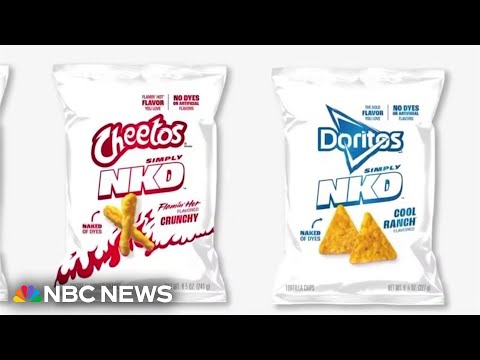
Two Morgan two iconic snacks getting a makeover. >> We're ready. Introducing Simply Naked.PepsiCo. Removing the artificial dyes from Cheetos and Doritos, making them totally colorless. NBC News business and economy reporter Emily Lor joins us.Uh, what can we expect from this new roll out, Em. Hey guys, the idea here from the company is that they are reinventing some of its most iconic snacks, Doritos and Cheetos, two types each, and they're basically removing some of those artificial dyes and flavors. They ...

PepsiCo rolls out 'naked' Cheetos and Doritos free from artificial colors and flavors
NBC News· 2025-11-13 21:49
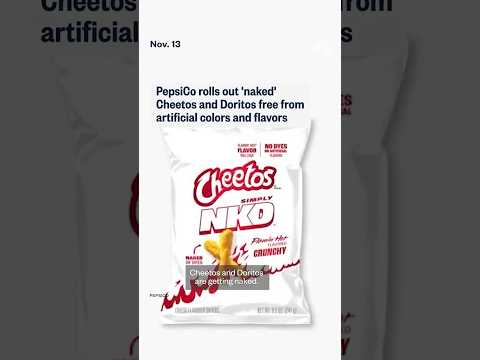
Cheetos and Doritos are getting naked. PepsiCo is rolling out a new version of some of its most iconic snacks called Simply Naked. The new line is made without any artificial flavors or dyes.The flavors include nacho cheese and cool ranch Doritos. Also, the puffs and flamin' Hot Cheetos. They're now available for pre-order and customers can find them in stores starting on December 1st. ...
直通进博会|来伊份董事长施永雷:五大核心品牌覆盖多元消费需求构建“出海+进口”双循环
Xin Lang Cai Jing· 2025-11-08 12:09
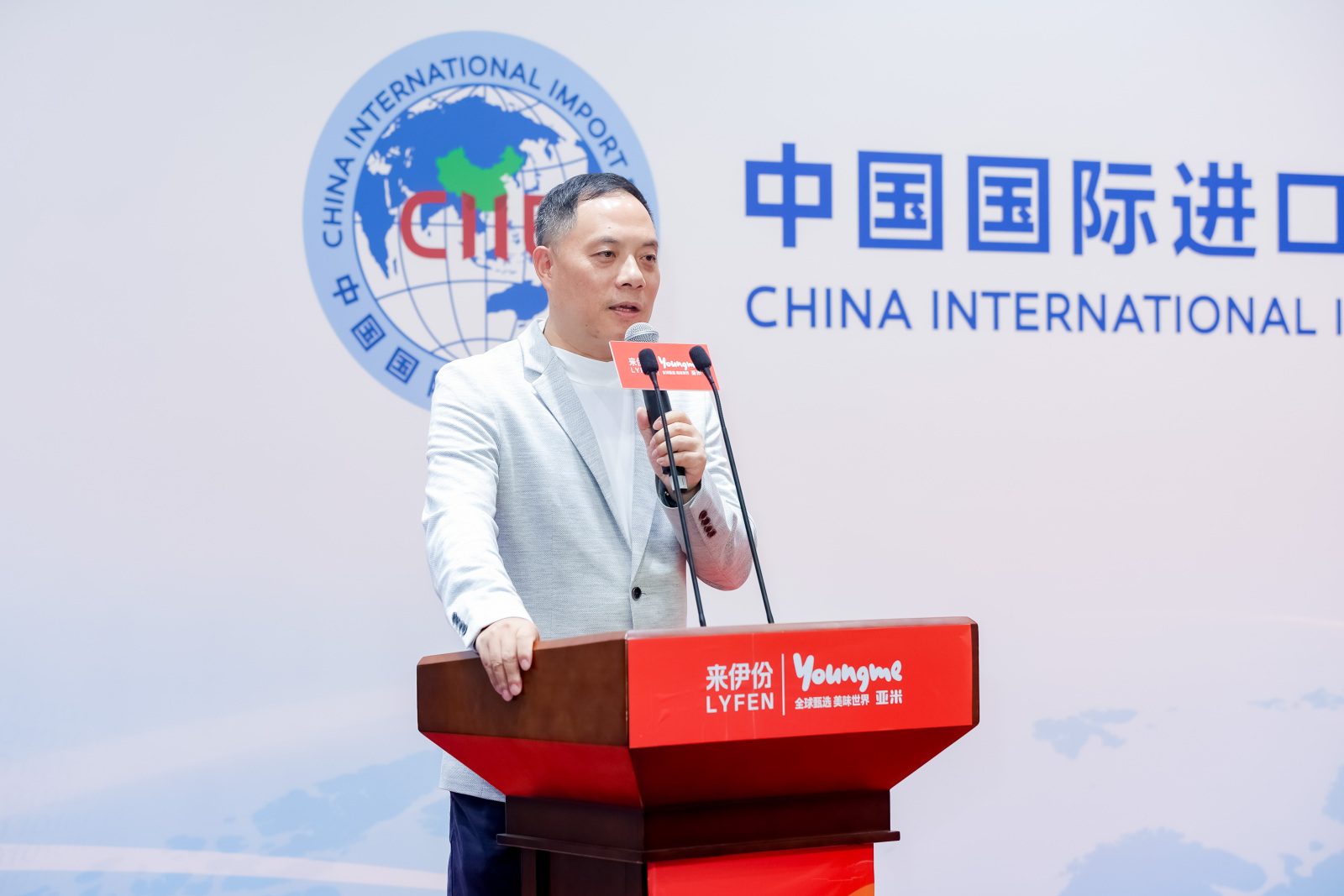
Core Insights - The snack industry is undergoing a significant transformation as consumers increasingly prioritize the ingredients and nutritional value of snacks, leading to a rise in health-focused snack products [2][4] - At the 8th China International Import Expo (CIIE), the company Laiyifen showcased a unique health food matrix, attracting numerous professional visitors [2] - Laiyifen's strategic upgrade includes five core brands that cover various consumer scenarios and demographics, enhancing internal collaboration and creating a symbiotic ecosystem [2] Financial Highlights - Laiyifen achieved a record high procurement signing amount of 250 million yuan at the CIIE, reflecting strong confidence in solidifying its global supply chain [2] - The company has transitioned from a participant to a co-builder at the CIIE over the past eight years, indicating a shift in its operational strategy [2] Strategic Initiatives - Laiyifen's collaboration with global partners extends beyond procurement to include joint gift box development and co-creation of new products, showcasing a strategic partnership model [2] - The company aims to deepen its "going global + importing" business model, leveraging the CIIE as a powerful international platform to enhance brand visibility [4]

Utz Brands eyes ‘big opportunity’ in California with acquisition
Yahoo Finance· 2025-11-03 11:00
Core Insights - Utz Brands is acquiring logistics infrastructure assets to enhance its presence in California, the largest market for salty snacks in the U.S. [1][2] - The acquisition includes direct store delivery routes from Insignia International, positioning California as a key growth area for Utz, which currently holds a 2% market share in the state [2][5]. Group 1: Acquisition Details - The acquisition involves direct store delivery routes across California and additional assets in the Midwest, although the purchase amount remains undisclosed [2][3]. - California's retail sales of salty snacks amount to $4.1 billion, representing approximately 10% of the U.S. market [2]. Group 2: Market Position and Growth Potential - Utz's CEO, Howard Friedman, expressed optimism about the company's growth momentum and plans to accelerate its market presence in California by 2026 [3]. - The company aims to leverage its expanded scale to compete more effectively against larger snack manufacturers like Hershey and PepsiCo's Frito-Lay [5]. Group 3: Financial Performance - In the third quarter, Utz reported a 3.4% increase in net sales, reaching $377.8 million, and has seen consistent growth in volume share for nine consecutive quarters [6]. - Utz's retail sales grew by 3%, outperforming the overall salty snack market, which experienced a 1.2% decline [6].