
Semiconductor

Search documents
MU and SNDK: Analysts Pound the Table on These 2 Top Semiconductor Stocks
Yahoo Finance· 2026-02-11 17:08
Industry Overview - The memory chip market is experiencing a significant boom, primarily driven by the increasing demand from AI, which requires substantial amounts of fast and reliable memory for complex models [1] - HBM DRAM is in high demand for its ultra-fast speeds in GPUs and AI accelerators, while NAND flash offers large, cost-effective storage solutions [1] Supply and Demand Dynamics - The demand for advanced memory is surpassing supply, resulting in widespread shortages and creating a seller's market [2] - Companies and cloud providers are competing to secure the necessary memory to support sophisticated AI workloads [2] Company Performance - Semiconductor memory specialists like Micron and SanDisk have seen substantial gains, with their shares increasing significantly over the past year due to soaring sales [3] - Micron's shares have risen by 300% in the past year, indicating a strong up cycle, which is distinct from previous cycles due to the AI-driven demand [5] Micron's Market Position - Micron has reported that all its HBM is fully booked through 2026, reflecting the intense demand from AI data centers [6] - The demand-supply imbalance has led to significant price increases in the memory market [6] Financial Performance - In its fiscal first quarter, Micron reported revenue of $13.64 billion, exceeding estimates by $760 million, with adjusted EPS of $4.78, surpassing expectations by $0.82 [7] - For the fiscal second quarter, Micron guided for revenue of $18.7 billion and adjusted EPS of $8.42, significantly above the Street's expectations of $14.23 billion and $4.49, respectively [7]

Credo Technology (CRDO) Climbs 9% as Firm Eyes ‘More-Than-Triple’ Revenue Growth in Next 2 Years
Yahoo Finance· 2026-02-11 16:48
Core Viewpoint - Credo Technology Group Holding Ltd (NASDAQ:CRDO) is experiencing significant stock performance driven by a strong revenue growth outlook, particularly in the AI sector, with expectations of revenues more than tripling year-on-year [1][2]. Group 1: Revenue Growth Expectations - The company anticipates revenue growth of "more than 200 percent year-over-year" due to increasing demand from the AI sector [2]. - Preliminary results for the third quarter ending January 31 indicate expected revenues between $404 million and $408 million, surpassing previous guidance of $335 million to $345 million [2][3]. Group 2: Product Development and Compliance - Credo Technology's PCIe 6.0 technology-capable Toucan PCIe retimer has achieved PCI-SIG compliance, enhancing its product offerings [3]. - The product ensures interoperability, signal integrity, and low-power performance across industry-standard platforms, facilitating customer deployment and easing compatibility issues with legacy systems [3].

Why Amazon's $6.5 billion chip deal with Astera Labs is a ‘double-edged sword'
MarketWatch· 2026-02-11 16:22
Core Viewpoint - Astera Labs' shares declined despite exceeding fourth-quarter earnings expectations, as investors expressed skepticism regarding the value of a significant deal with Amazon [1] Group 1: Earnings Performance - Astera Labs reported a fourth-quarter earnings beat, indicating stronger-than-expected financial performance [1] Group 2: Investor Sentiment - Investors raised concerns about the rationale behind the large deal with Amazon, leading to a drop in share prices [1]




Tower Semiconductor(TSEM) - 2025 Q4 - Earnings Call Transcript
2026-02-11 16:02
Financial Data and Key Metrics Changes - The company reported Q4 2025 revenue of $440 million, reflecting an 11% quarter-over-quarter growth and a 14% year-over-year growth, meeting the target for sequential growth [6][37] - Q4 net profit was $80 million, representing an 18% net margin, up from 11% in Q1 2025, 13% in Q2 2025, and 14% in Q3 2025, indicating value-based growth driven by technology mix enrichment [6][38] - Full year 2025 revenue reached $1.566 billion, a $130 million or 9% increase compared to 2024 [7][40] Business Line Data and Key Metrics Changes - RF infrastructure revenue increased by 75% year-over-year, driven by hyperscaler adoption of silicon photonics in 800G and 1.6T pluggable transceivers [9] - Silicon germanium and silicon photonics revenues accounted for 27% of corporate revenues, totaling $421 million, up from $241 million in 2024 [10] - Power Management grew 20% year-over-year, representing 16% of corporate revenues in 2025 [23] - Sensors and displays grew 10% year-over-year, also representing 16% of corporate revenue [25] Market Data and Key Metrics Changes - RF mobile represented 23% of corporate revenue in 2025, with a 15% year-over-year decline due to a strategic shift towards higher value optical and RF offerings [20] - The company is experiencing strong demand for silicon photonics, with over 70% of total SiPho capacity reserved or in the process of being reserved through 2028 [28] Company Strategy and Development Direction - The company is increasing its CapEx plan for 2026 to accommodate stronger customer demand, with a total investment of $920 million aimed at expanding capacity [28][46] - The updated financial model targets $2.84 billion in annual revenue by 2028, reflecting a significant increase from 2025 levels [34][51] - The company is focusing on partnerships with leading customers, such as NVIDIA, to enhance technology offerings and manufacturing agility [12] Management's Comments on Operating Environment and Future Outlook - Management expressed confidence in achieving the updated financial model by 2028, citing strong customer demand and operational execution as key factors [80][87] - Concerns were raised regarding potential memory shortages impacting the mobile market, but management emphasized proactive planning and flexibility in production [92] Other Important Information - The company achieved a gross profit of $118 million in Q4 2025, a 26% increase from the previous quarter [38] - The effective tax rate for Q4 2025 was exceptionally low at 2% due to a non-recurring tax benefit [39] Q&A Session Summary Question: Clarification on NVIDIA collaboration - The company clarified that its role involves output parameters for photonics and alignment of supply needs, rather than direct shipping to NVIDIA [57] Question: Capacity increase related to NVIDIA demand - Management confirmed that the planned capacity increase is in response to total demand, including from NVIDIA [58] Question: Power business capabilities for high voltage - The company indicated it does not currently have an 800-volt platform on an IC but has higher voltage IC capabilities [63] Question: Shipping through resellers to NVIDIA - It was confirmed that the company ships through module makers or integrators rather than directly to NVIDIA [66] Question: CPO and end-to-end offerings - The company is working on multiple architectures for co-packaged optics but is not directly packaging CPUs [69] Question: Timeline for CapEx rollout - Management expects the majority of the $920 million CapEx to be online by Q3 2026, with full qualification targeted by December [72] Question: Silicon photonics contribution visibility - Management expressed confidence in the demand for silicon photonics and the operational execution needed to meet it [80][87] Question: Concerns about memory shortages - Management acknowledged concerns about memory shortages but emphasized close collaboration with customers to mitigate risks [92]

Tower Semiconductor(TSEM) - 2025 Q4 - Earnings Call Transcript
2026-02-11 16:00
Financial Data and Key Metrics Changes - Company revenue for Q4 2025 was $440 million, reflecting an 11% quarter-over-quarter growth and a 14% year-over-year growth, meeting the target for sequential growth [3][4] - Full year revenue for 2025 was $1.566 billion, a $130 million or 9% increase compared to 2024 [4][23] - Net profit for Q4 2025 was $80 million, or an 18% net margin, up from 11% in Q1 2025, indicating a value-based growth driven by technology mix enrichment [4][22] - Gross profit for Q4 2025 was $118 million, a 26% increase compared to the prior quarter [22] Business Line Data and Key Metrics Changes - RF infrastructure revenue increased by 75% year-over-year, driven by the rapid adoption of silicon photonics [5] - Silicon germanium and silicon photonics revenues represented 27% of corporate revenues, totaling $421 million, up from $241 million in 2024 [6] - Power Management grew 20% year-over-year, representing 16% of corporate revenues in 2025 [13] - Sensors and displays grew 10% year-over-year, representing 16% of corporate revenue [15] Market Data and Key Metrics Changes - RF mobile represented 23% of corporate revenue in 2025, with a 15% year-over-year decline due to a shift towards higher value optical and RF mix [12] - The company is experiencing strong demand for silicon photonics, with over 70% of total SiPho capacity reserved or in the process of being reserved through 2028 [17] Company Strategy and Development Direction - The company is increasing its CapEx plan for 2026 to accommodate strong customer demand, with a total investment of $920 million aimed at expanding silicon photonics and silicon germanium capacity [9][26] - The updated financial model targets $2.84 billion in annual revenue by 2028, reflecting a significant increase from 2025 [20][29] - The company is focusing on partnerships with lead customers to enhance its technology offerings and manufacturing capabilities [8][19] Management's Comments on Operating Environment and Future Outlook - Management expressed confidence in achieving the revised financial model by 2028, citing strong customer demand and partnerships [19][62] - The company acknowledged potential concerns regarding memory shortages in the mobile market but emphasized proactive planning to mitigate risks [66] Other Important Information - The company announced a one-time tax benefit in Q4 2025, resulting in a 2% effective tax rate [22] - A lease extension for the Newport Beach facility was secured, extending the lease until the end of 2030 [81] Q&A Session Summary Question: Clarification on NVIDIA collaboration - The company clarified that it does not ship directly to NVIDIA but through resellers, focusing on output parameters for photonics [32][42] Question: Capacity increase for silicon photonics - The company confirmed that the planned capacity increase includes demand from NVIDIA and partners [34] Question: Concerns about high voltage capabilities for AI servers - The company stated it does not currently have an 800-volt platform on an IC but has higher voltage IC capabilities [39] Question: Timeline for CapEx investments - Management indicated that the majority of the $920 million investment should be online by the third quarter of 2026, with some growth expected earlier [50][60] Question: Expectations for silicon photonics contribution - The company expressed confidence in meeting demand and operational execution for silicon photonics in 2026 and 2027 [56][62]
Seeking Clues to MKS (MKSI) Q4 Earnings? A Peek Into Wall Street Projections for Key Metrics
ZACKS· 2026-02-11 15:16
Core Insights - MKS (MKSI) is expected to report quarterly earnings of $2.51 per share, reflecting a 16.7% increase year-over-year, with revenues projected at $1.03 billion, a 10.2% increase compared to the previous year [1] Revenue Estimates - Analysts project 'Net Revenues- Semiconductor' to reach $421.37 million, indicating a 5.3% increase from the prior-year quarter [4] - 'Net Revenues- Specialty Industrial' is expected to be $285.23 million, showing a 1.5% increase year-over-year [4] - 'Net Revenues- Electronics and Packaging' is estimated at $298.92 million, reflecting a 17.7% year-over-year change [4] - 'Net Revenues- Products' is forecasted to be $866.43 million, indicating a 5.2% increase from the previous year [5] - 'Net Revenues- MSD (Materials Solutions Division)' is expected to reach $327.51 million, showing a 9.2% increase year-over-year [5] - 'Net Revenues- PSD (Photonics Solutions Division)' is projected at $266.08 million, reflecting a 1.6% increase from the prior year [6] - 'Net Revenues- Services' is forecasted to be $126.87 million, indicating a 14.3% year-over-year change [6] - 'Net Revenues- VSD (Vacuum Solutions Division)' is estimated at $399.70 million, reflecting a 7.5% increase year-over-year [6] Stock Performance - MKS shares have increased by 30.7% in the past month, contrasting with the Zacks S&P 500 composite's decline of 0.3%, indicating strong market performance [6] - MKS holds a Zacks Rank 1 (Strong Buy), suggesting it is expected to outperform the overall market in the near term [6]

nLIGHT (NasdaqGS:LASR) FY Conference Transcript
2026-02-11 15:17
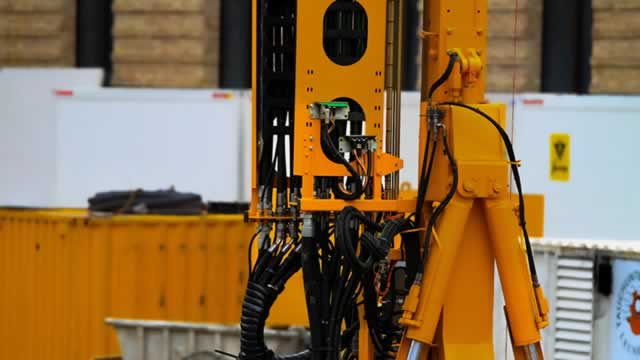
Summary of nLIGHT Conference Call Company Overview - nLIGHT is a founder-led defense laser technology company with a vertically integrated platform based in the U.S. [1] - The company specializes in high-power semiconductor lasers, with applications in both commercial and defense sectors [2][4]. - nLIGHT is headquartered in the Pacific Northwest, near major semiconductor fabs like Intel and TSMC, and has a site in Colorado [2]. Core Technologies and Applications - nLIGHT's technology stack includes semiconductor chips that produce tens of watts of power, which can be scaled to high-power laser systems [3][4]. - The company focuses on three core areas: directed energy, sensing, and advanced manufacturing [5][12]. Directed Energy - Directed energy applications utilize high-power lasers to damage or destroy various threats, including drones and missiles [5][6]. - nLIGHT claims to have the highest power laser in the world at over 300 kW, with plans to scale to 1 MW [9]. - The company emphasizes the importance of coherent beam combining for higher power applications, which offers advantages in brightness and atmospheric compensation [8][10]. Sensing - Sensing applications involve using pulse lasers for range finding and LiDAR, providing high-resolution data in a stealthy manner [11]. - nLIGHT has been involved in programs for over a decade and is currently deployed on various missiles [11]. Advanced Manufacturing - The company is engaged in laser additive manufacturing, which is crucial for producing complex parts for hypersonics and rocket engines [12][13]. - nLIGHT's technology is also applied in the automotive sector, with lasers used in the production of high-performance vehicles [28]. Market Dynamics - The defense sector is currently the core market driving nLIGHT's growth, with a strong alignment with the Department of Defense's priorities [5]. - The industrial market has seen significant growth, particularly in China, which is now the largest market for industrial lasers [29]. - However, the company has faced challenges due to excess capacity in the industrial market stemming from China [30]. Financial Position and Growth Strategy - nLIGHT recently raised $200 million to strengthen its balance sheet, which now exceeds $250 million [23][24]. - The capital will be used for product development, capital expenditures, and potential mergers and acquisitions [26][27]. - The company aims to invest ahead of program records to capitalize on known applications in directed energy [25]. Vertical Integration - nLIGHT's vertical integration strategy allows for rapid adaptation to technological changes and reduces transaction costs associated with external partnerships [34]. - The acquisition of Nutronics enhanced nLIGHT's capabilities in coherent beam combining and atmospheric correction, demonstrating the benefits of vertical integration [35][36]. Future Outlook - nLIGHT is optimistic about growth in the sensing and directed energy markets, which are expected to expand significantly [38]. - The company is also focused on addressing challenges in the U.S. Indo-Pacific Command, where both directed energy and sensing technologies are critical [39]. Additional Insights - The management highlighted the importance of thermal management in laser systems, which is critical for performance [18]. - nLIGHT is exploring partnerships with various government agencies and primes in both sensing and directed energy sectors [20].

Micron: Valuation Is Still In The Dust (NASDAQ:MU)
Seeking Alpha· 2026-02-11 15:12
Core Viewpoint - Micron Technology (NASDAQ: MU) is identified as a strong buy, supported by the latest earnings report which confirms the positive outlook since the last analysis [1]. Company Summary - The company is positioned as a GARP-themed investment, focusing on aggressive growth prospects that are expected to lead to high profitability within 1-2 years [1]. - The investment philosophy emphasizes long-term discipline and consistent alpha generation, while also acknowledging the presence of risk [1]. Analyst Background - The analysis is conducted by an associate of Kennedy Njagi, who is a seasoned investor with a focus on financial literacy and empowering underprivileged communities [1].
江波龙(301308.SZ):产品广泛应用于机器人、AI眼镜等各类新形态智能终端,展现出较强的市场竞争力
Ge Long Hui· 2026-02-11 13:16
Group 1 - The company, Jiangbolong (301308.SZ), has indicated that its products are widely used in various new forms of smart terminals, including robots and AI glasses, demonstrating strong market competitiveness [1] - However, the business related to robots and AI glasses is still in the early stages of development, and its contribution to the company's actual performance remains low [1]

SGA U.S. Large Cap Growth Strategy Bets on Broadcom (AVGO), a Leading Semiconductor and Infrastructure Software Company
Yahoo Finance· 2026-02-11 12:56
Core Insights - SGA's U.S. Large Cap Growth Strategy reported a Q4 2025 portfolio return of 0.3% (Gross) and 0.2% (Net), underperforming the Russell 1000 Growth Index (1.1%) and the S&P 500 Index (2.7%) [1] - The portfolio faced significant challenges in 2025, marking the most difficult year since the firm's inception in 2003, but remains optimistic about growth potential and relative valuation [1] - The strategy is positioned to benefit from a shift away from high momentum dynamics in U.S. markets and a broadening of market leadership [1] Company Focus: Broadcom Inc. (NASDAQ:AVGO) - SGA established a below-average weight position in Broadcom Inc. during Q4 2025, which is a leading semiconductor and infrastructure software solutions company [2][3] - As of February 10, 2026, Broadcom's stock closed at $340.44 per share, with a one-month return of 0.16% and a 12-month increase of 44.04% [2] - Broadcom's transformation from custom ASICs to full rack-scale solutions is enhancing its strategic positioning, validated by recent product launches and increased customer commitments [3] - The company is diversifying its customer base, expanding from three to five qualified customers, and accelerating production timelines for future clients [3] - The shift in AI demand from training to inferencing is creating more stable revenue streams for Broadcom, driven by innovations in long context windows and agentic workloads [3]
