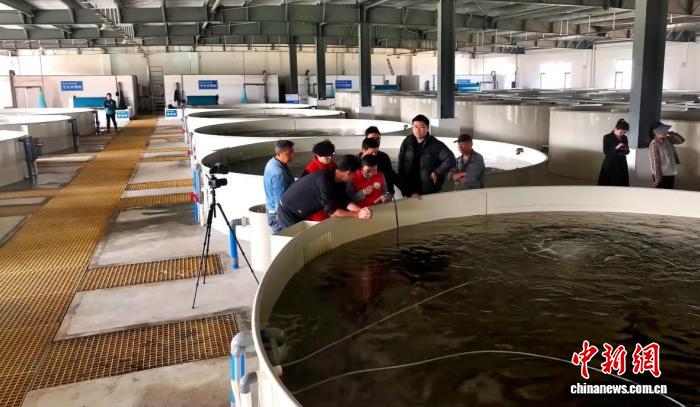
水产养殖

Search documents
成就丰收热土!“丰收节经济”带火铁岗村,带旺高桂虾
Nan Fang Nong Cun Bao· 2025-10-15 11:04
Core Insights - The "Harvest Festival Economy" has significantly boosted the tourism and agricultural sales in Tiegang Village, with record visitor numbers and sales of local products [6][7][19]. Group 1: Tourism Impact - During the "Double Festival" period, Tiegang Community received over 22,000 visitors, marking a 225% increase year-on-year, achieving a historical high [3][4]. - Daily average visitor traffic reached over 2,800, despite adverse weather conditions, indicating strong interest in rural tourism [10][11]. - The community's "Rooftop Coffee" project saw a 56% increase in revenue, with visitors staying an average of over 2 hours, highlighting the appeal of local experiences [20][21]. Group 2: Agricultural Sales - The sales volume of the local "Luo Shi Shrimp" is projected to reach 55,000 tons this year, a 6% increase compared to the previous year, driven by the Harvest Festival [45]. - Daily trading volume of Luo Shi Shrimp surged from 7,000-8,000 pounds to 40,000-50,000 pounds post-festival, with transaction values increasing from 280,000 yuan to 1.75 million yuan, reflecting a 600% growth [52][53]. - The "High Gui Shrimp" became a central theme during the Harvest Festival, linking agricultural display with cultural tourism experiences [43][68]. Group 3: Community Development - Tiegang Community has revitalized over 100 idle farmhouses and ancient villages, creating a model for harmonious rural development [14][15]. - The community's efforts have attracted attention from both local and international visitors, including tourists from Brazil, indicating a growing interest in rural tourism [31][32][30]. - The integration of agriculture and tourism has created a composite consumption model, appealing to younger demographics and families seeking short-term getaways [34][36].


粤海饲料:拟注销子公司广东粤海碣石水产养殖有限公司
Ge Long Hui· 2025-10-15 09:55
Core Viewpoint - Guangdong Yuehai Feed (001313.SZ) announced the decision to deregister its wholly-owned subsidiary, Guangdong Yuehai Qieshi Aquaculture Co., Ltd., due to the failure to implement a strategic cooperation with the Lufeng Municipal Government and local state-owned enterprises, aiming to streamline management and reduce costs [1] Group 1 - The strategic cooperation with Lufeng Municipal Government and local state-owned enterprises could not be specifically implemented [1] - The decision to deregister the subsidiary is part of an effort to integrate internal resources and simplify the management structure [1] - The company conducted a thorough review before making the decision to deregister [1]

粤海饲料(001313.SZ):拟注销子公司广东粤海碣石水产养殖有限公司
Ge Long Hui A P P· 2025-10-15 09:50
Core Viewpoint - Guangdong Yuehai Feed (001313.SZ) announced the decision to deregister its wholly-owned subsidiary, Guangdong Yuehai Qieshi Aquaculture Co., Ltd., due to the failure to implement a strategic cooperation with the Lufeng Municipal Government and local state-owned enterprises, aiming to streamline management and reduce costs [1] Group 1 - The strategic cooperation with Lufeng Municipal Government and local state-owned enterprises was not implemented [1] - The decision to deregister the subsidiary is part of an effort to integrate internal resources and simplify the management structure [1] - The company conducted careful research before making the decision to deregister [1]
高温致大闸蟹品质打折扣 大闸蟹月底或将降价
Jing Ji Guan Cha Wang· 2025-10-15 06:46
经济观察网 据央视财经消息,记者从宁波水产品批发市场了解到,大闸蟹普通蟹价格较去年同期明显 回落。 经营户普遍表示,目前在售的大闸蟹多产自江苏兴化、阳澄湖等产区。不过受今年高温天气影响,大闸 蟹蜕壳时间推迟,整体上市时间比往年偏晚,产量和品质受到一定影响。市场工作人员表示,目前市场 内大闸蟹每天的交易量稳定在2万斤左右。10月中下旬,大闸蟹成熟度更高,供应量增加,价格有望进 一步下降。 ...
Mowi ASA (OSE:MOWI): Q3 2025 Trading update
Globenewswire· 2025-10-15 04:30
Core Insights - The total harvest volume for Q3 2025 reached an all-time high of 166.0 thousand tonnes, surpassing the previous record of 161.0 thousand tonnes in Q3 2024 [1] - Mowi had previously guided a total harvest volume of 160.0 thousand tonnes for Q3 2025 [1] Harvest Volumes - Harvest volumes by region for Q3 2025 are as follows: - Farming Norway: 99.5 thousand tonnes - Farming Scotland: 17.5 thousand tonnes - Farming Chile: 22.5 thousand tonnes - Farming Canada: 15.5 thousand tonnes - Farming Ireland: 3.0 thousand tonnes - Farming Faroes: 2.5 thousand tonnes - Farming Iceland (Arctic Fish): 5.5 thousand tonnes [1] Financial Performance - Operational EBIT for the Group was approximately EUR 112 million in Q3 2025 [3] - Blended farming cost decreased to EUR 5.42 per kg, down from EUR 5.72 in Q3 2024 [3] - Operational EBIT per kg by region was as follows: - Norway: EUR 1.10 - Scotland: EUR 1.55 - Chile: EUR 0.55 - Canada: EUR (2.00) - Ireland: EUR 0.20 - Faroes: EUR 0.55 - Iceland: EUR (1.10) [3] Additional Financial Metrics - Operational EBIT in Consumer Products was EUR 66 million [3] - Operational EBITDA in Feed was EUR 26 million in Q3 2025 [3] - Reported financial net interest-bearing debt (NIBD) for the group was approximately EUR 1,760 million at the end of the quarter [3]

济宁市太白湖新区金融办:好品金融 助力乡村振兴
Qi Lu Wan Bao· 2025-10-15 03:00
Core Insights - The "Golden Service" volunteer team effectively bridges the gap in financial services for rural revitalization, providing support without compensation [1][2] Group 1: Financial Support for Rural Industry Revitalization - The "Golden Service" team provided a credit loan of 600,000 yuan to a local organic peach farm, which increased its annual production to 300,000 jin and revenue to over 2 million yuan [2] - The team actively conducts loan surveys in villages, establishing green channels for priority loan approval and disbursement to eligible farmers [2] Group 2: Financial Support for Rural Talent Revitalization - The team collaborated with the Women's Federation to launch a special loan product for women entrepreneurs, addressing funding shortages and information barriers [3] - Various banks introduced "Rural Talent Loans" targeting large-scale farmers, returning college students, and veterans, emphasizing both financial support and humanistic care [3] Group 3: Financial Support for Rural Ecological Revitalization - The team assisted a village in transforming abandoned land into a 300-acre high-quality ecological rice field, promoting a symbiotic relationship between crabs and rice [4]
福建天马科技集团股份有限公司2025年9月鳗鱼出池情况简报
Shang Hai Zheng Quan Bao· 2025-10-14 20:05
Group 1 - The core point of the announcement is the disclosure of the eel output situation for September 2025, indicating a total output of approximately 1,564.15 tons, with 128.71 tons for export and 1,435.44 tons for self-use [1][4] - The cumulative eel output from January to September 2025 is reported to be approximately 13,485.74 tons, with 7,798.35 tons for export and 5,687.38 tons for self-use, maintaining a similar size specification range of 1P to 5P [1][2] - The sales price range for eels in September 2025 is between 51,000 yuan/ton and 130,000 yuan/ton, reflecting the price fluctuations due to a small amount of live eel exports to Japan and South Korea [1][3] Group 2 - The data provided is based on internal statistics and is unaudited, serving as a reference for investors to understand the company's eel farming business operations [2][4] - The announcement emphasizes that the disclosed data does not guarantee any future operational performance of the company [4]

今秋第一批吃蟹的,成了大冤种?
36氪· 2025-10-14 10:43
Core Viewpoint - The article highlights the disappointing experiences of consumers purchasing hairy crabs this season, particularly focusing on issues related to product quality and the difficulties in redeeming crab cards, which have led to widespread dissatisfaction and complaints against brands like "Crab Lady" [5][10][36]. Group 1: Consumer Experience - Many consumers reported receiving crabs of poor quality, with issues such as empty shells, bitter taste, and unformed crab roe and fat [5][10][12]. - The brand "Crab Lady" has been particularly criticized, with customers finding the crabs they received to be lacking in meat and flavor, contrary to the advertised quality [10][12][36]. - Complaints about receiving dead crabs and discrepancies in weight have also been prevalent, further exacerbating consumer frustration [19][21][36]. Group 2: Redemption Issues - Consumers have faced significant challenges in redeeming crab cards, with many reporting that the redemption process is akin to a "battle," often encountering fully booked slots and unresponsive customer service [22][24]. - The disparity between the ease of purchasing crab cards and the difficulty of redeeming them has raised concerns about the business model of brands like "Crab Lady," which appears to prioritize sales over fulfillment [24][26]. - The article notes that the crab card system, while intended to manage supply and quality, has led to consumer losses due to unfulfilled orders and expired cards [26][29]. Group 3: Industry Complaints and Regulations - The article mentions that complaints regarding crab quality and redemption issues are not new, with a cumulative total of 5,459 complaints recorded on third-party platforms [35]. - "Crab Lady" has faced repeated scrutiny and was even suspended from the local crab industry association due to allegations of false advertising and quality issues [36][38]. - Regulatory measures have been introduced to address the sale of crab cards and ensure better consumer protection, including requirements for businesses to maintain a certain operational history and financial guarantees [39][40].
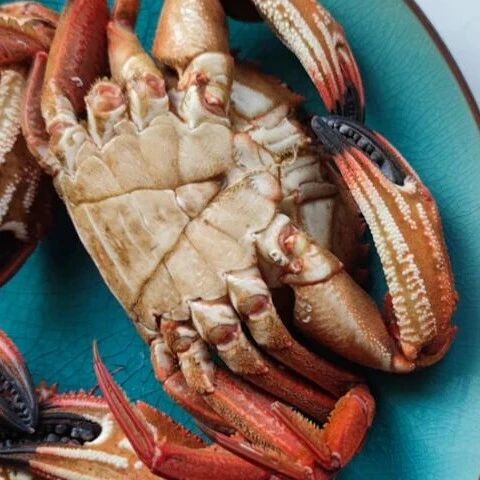
研判2025!中国梭子蟹行业政策汇总、产量、进出口、竞争格局和未来趋势分析:1-8月行业进出口数量分别同比下降30.1% 、66.5% [图]
Chan Ye Xin Xi Wang· 2025-10-14 00:44
Core Insights - The demand for seafood products, particularly Chinese mitten crabs, has surged due to rapid economic development in China, leading to a significant increase in domestic crab catch, which has now exceeded production levels [1][7] - The Chinese government has implemented fishing bans to protect marine environments, resulting in a continuous decline in domestic crab catch since 2014, despite rising market demand [1][7] - China has become a major importer of mitten crabs globally, with imports recovering to 922.55 tons in 2024 after a significant drop during the pandemic [1][7] - The export of mitten crabs has decreased, with projections showing a decline to 79.09 tons in 2024 [1][7] Industry Overview - The mitten crab, known for its delicious taste and high economic value, is primarily found in China's coastal waters, with the most common species being the Portunus trituberculatus [3][11] - The industry is characterized by a large number of small to medium-sized enterprises, with major companies concentrated in resource-rich regions like Zhejiang, Fujian, and Jiangsu [11] Import and Export Trends - In 2022, the import of live, fresh, or chilled mitten crabs fell by 54.1% to 260.68 tons due to pandemic impacts, while exports rose by 57.7% to 293.96 tons [1][7] - By 2025, the import amount for the first eight months was 568.83 tons, a decrease of 30.1% year-on-year, while exports dropped by 66.5% to 10.88 tons [1][8] Market Dynamics - The mitten crab industry is experiencing a shift towards high-end and diversified consumer demands, with a growing preference for organic and high-quality products [13][14] - Technological advancements, including IoT and AI, are expected to enhance precision in crab farming, improving product quality and yield stability [15] - Sustainable practices are becoming mainstream, with a focus on eco-friendly farming techniques and certifications that enhance product value [16] Related Companies - Major companies in the mitten crab industry include Shandong Haodangjia Ocean Development Co., Ltd., and Zhuangzi Island Group Co., Ltd., which are involved in various aspects of crab farming, processing, and trade [11][12]


(乡村行·看振兴)“鱼虾共舞” 江西彭泽绘出乡村振兴好“丰”景
Zhong Guo Xin Wen Wang· 2025-10-13 12:44
Core Viewpoint - The innovative mixed farming model of "Pengze crucian carp + Macrobrachium rosenbergii" in Pengze County, Jiangxi Province, has achieved significant economic benefits, enhancing local aquaculture and contributing to rural revitalization [1][3]. Summary by Sections Aquaculture Model - The "Pengze crucian carp + Macrobrachium rosenbergii" mixed farming model has been successfully implemented, leading to a clean and high-quality product that has received positive market feedback [1][3]. - The model allows for dual harvests, increasing profits by approximately 30% compared to traditional farming methods [1]. Economic Impact - The yield data indicates that the mixed farming model produces about 1,720 pounds of Pengze crucian carp and nearly 70 pounds of Macrobrachium rosenbergii per acre, with a net profit increase of around 2,000 yuan per acre compared to traditional methods [3][4]. - This economic success supports the transformation and upgrading of local aquaculture industries [3]. Technological Support - Pengze County has established a national-level modern agricultural industrial park and multiple technology service centers to enhance the development of local specialty aquaculture [3]. - The county has built three national-level technology service centers, two provincial-level, and five municipal-level centers, which contribute to the growth of the local aquaculture industry [3]. Future Development - Ongoing research collaborations with universities will focus on breeding and ecological disease prevention to further support high-quality development in the fishing industry across Pengze and the province [4].