
高等教育

Search documents
明年5月部分开放!同济赤峰路项目打造未来社区“上海样板”
Guo Ji Jin Rong Bao· 2025-12-01 05:30
Core Perspective - The "NICE2035 Chifeng Road Organic Renewal Project" aims to create an innovative urban community that integrates university campuses, technology parks, and public communities, promoting a new lifestyle and serving as a model for future urban innovation [1][3] Group 1: Project Overview - The project is a collaboration between Tongji University and Yangpu District, focusing on the physical and conceptual transformation of the Chifeng Road area [3][6] - The first phase of the project is expected to partially open by May next year, coinciding with the 119th anniversary of Tongji University [1] Group 2: Project Goals and Vision - The project aims to establish a "living laboratory" that showcases the latest advancements in university disciplines and facilitates the conversion of technological achievements into practical applications [3][5] - It seeks to create a vibrant community that supports innovation and entrepreneurship for students and global talent, contributing to the "Tongji Knowledge Economy Circle" [3][6] Group 3: Key Components - The project includes three main experimental areas: the Extreme Environment Construction Future Laboratory, the Smart Construction Future Housing Experimental Field, and the Chifeng Road Future Prototype Street [5] - The Extreme Environment Construction Future Laboratory will focus on research and application of construction technologies in extreme environments, while the Smart Construction Future Housing Experimental Field will involve domestic and international design teams to create exemplary housing and community models [4][5] Group 4: Strategic Collaboration - The project represents a significant step in deepening the collaboration between the district and the university, aiming for continuous upgrades of the "Tongji Knowledge Economy Circle" [6] - Both parties expressed commitment to enhancing strategic alignment and achieving more benchmark results in their cooperation [6]


新时代广西高校思政课生态文明教育的创新路径探析
Yang Shi Wang· 2025-12-01 02:33
Core Viewpoint - The article emphasizes the importance of integrating ecological civilization education into ideological and political courses in Guangxi universities, highlighting the need for innovative teaching methods and local case studies to enhance student engagement and understanding of ecological issues [1]. Group 1: Curriculum Reconstruction - Strengthening ecological civilization education within ideological courses by embedding specialized content and topics, utilizing a multi-dimensional teaching model that combines legal texts, local case studies, and technical simulations [2]. - Forming interdisciplinary collaborative mechanisms by integrating knowledge from ecology, geography, and environmental science to enhance the teaching of ecological civilization [2]. - Developing micro-courses on ecological policy analysis using data from the Guangxi ecological big data platform to create a comprehensive curriculum chain that links theory, technology, and practice [2]. Group 2: Innovative Case Teaching - Implementing localized situational teaching models that focus on local realities, addressing local issues, and preserving local culture, thereby enhancing students' recognition of green and low-carbon development [3]. - Using specific local ecological practices, such as the governance of the Lijiang River, to provide students with tangible examples of ecological protection efforts and their outcomes [3]. - Analyzing the ecological economic transformation through local tourism development cases, highlighting the balance between ecological preservation and economic development [3]. Group 3: Upgrading Practical Systems - Establishing a "political course + ecological practice" model to deepen the integration of theoretical learning and ecological practice through student participation in environmental research and volunteer services [5]. - Collaborating with natural reserves and environmental enterprises to create practical teaching bases that allow students to engage in real-world ecological conservation efforts [6]. - Enhancing students' social responsibility and action through project-based learning that connects theoretical foundations with practical applications [5]. Group 4: Technology Empowerment - Utilizing immersive teaching methods, such as VR/AR technologies, to simulate real ecological restoration scenarios, allowing students to experience and understand ecological principles in a practical context [7]. - Expanding the reach and flexibility of ecological education through online courses and cloud-based learning platforms, facilitating cross-institutional collaboration and discussions [7]. - Applying AI technology in environmental protection to provide dynamic teaching materials and enhance students' understanding of technological innovations in green development [8].
港股异动 | 新高教集团(02001)绩后跌近10% 全年纯利同比增加9.67% 不派末期息
智通财经网· 2025-12-01 01:39
智通财经APP获悉,新高教集团(02001)绩后跌近10%,截至发稿,跌9.91%,报1港元,成交额267.29万 港元。 消息面上,新高教集团发布截至2025年8月31日止年度业绩,该集团期内取得收入25.99亿元(人民币, 单位下同),同比增加7.78%;公司拥有人应占溢利8.29亿元,同比增加9.67%;每股基本盈利0.49元。此 外,公告指出,董事会认为当下需保留资金作为集团高质量业务发展和营运需要,决议不建议派付截至 2025年8月31日止年度的末期股息。 ...
日本一知名大学计划大幅提高留学生学费
Yang Shi Xin Wen· 2025-11-30 09:12
日本东北大学计划上涨外国留学生的学费,从目前的每年约53.58万日元(约合人民币2.4万元)上涨至 90万日元(约合人民币4.1万元),涨幅约为1.7倍。值得注意的是,该校日本学生的学费将维持不变。 东北大学位于宫城县仙台市,是日本一所知名国立大学。据悉,这也是日本国立大学首次提出仅针对留 学生上涨学费的措施。 (文章来源:央视新闻) ...
第一个吃螃蟹的人!上交成立全球首个具身智能专业
具身智能之心· 2025-11-30 07:06
参考丨上海交大、量子位等 点击下方 卡片 ,关注" 具身智能之心 "公众号 首个吃螃蟹的高校来啦!本月,上海交通大学发布公告正式拟增具身智能本科专业(不再是机器人工程等相关专业)。具身是一个交叉学科,涉及的 内容非常多,此时推出具身专业可以看出教育领域已经开始注意到相关产业的高速发展和人才的供不应求。不出意外,具身智能的风很快将吹遍大多 高校。 本专业将隶属于人工智能学院计算机类,授予工学学位,修读年限为四年。预计年度招生人数30人,其中升学人数25人,占比约83%。专业的带头人 将会由卢策吾老师担任,他本人现为上海交通大学人工智能学院副院长。 保姆级 具身智能方向论文辅导来啦! 我们提供的辅导服务 顶会 / 顶刊 / SCI / EI / 中文核心 毕业论文 / 申博辅导 / 比赛辅导等 不会选方向? 无人辅导 OR 科研能力不够? 具身智能之心提供保姆级的论文 辅导服务,一键上岸! >> 点击进入→ 具身 智能之心 技术交流群 更多干货,欢迎加入国内首个具身智能全栈学习社区: 具身智能之心知识星球(戳我) ,这里包含所有你想要的! 添加小助理微信 oooops-life咨询更多 二) 具身智能社区 具身智 ...

2018年,叫嚣让儿子当“101%美国人”的中国教授,今下场大快人心
Sou Hu Cai Jing· 2025-11-29 16:46
Core Insights - The article narrates the life-changing journey of a once-prominent Chinese economics professor who decided to immigrate to the United States, leading to significant personal and professional challenges [1][2]. Group 1: Background and Initial Success - The individual was a rising star in the Chinese academic community, achieving professorship at a young age and enjoying a comfortable life in Beijing [1]. - He developed a strong interest in Western economics, which began to influence his teaching style and classroom discussions [1]. Group 2: Decision to Immigrate - In 2017, after attending an international economic forum, he made the drastic decision to sell all his assets and move to the U.S., despite his wife's objections [1]. - He sold his property in Beijing at a price below market value and took all his savings to start anew in America [1]. Group 3: Struggles in the U.S. - Upon arrival, he faced harsh realities, as his Chinese qualifications were not fully recognized, leading to unsuccessful job applications at several prestigious universities [2]. - His savings quickly diminished due to high living costs, including rent and medical expenses, forcing him to take a job washing dishes in a Chinese restaurant [3]. Group 4: Psychological Impact and Cultural Reflection - The drastic change in circumstances led to feelings of humiliation, especially after being recognized by former students while working in a low-status job [4]. - In an attempt to seek validation, he expressed extreme views online, denigrating his cultural background and praising Western ideals, which did not earn him the respect he sought [4][6]. - Eventually, he recognized that true cultural confidence comes from understanding and embracing one's own culture rather than outright rejection or blind admiration of another [7]. Group 5: Conclusion and Broader Implications - After a series of setbacks, he returned to China, reflecting on the importance of balancing cultural confidence with openness in a globalized world [9].
中国春来(01969.HK)公布2025年年度业绩:在校人数稳步攀升,业务实现强劲增长
Ge Long Hui· 2025-11-28 13:21
Group 1 - The company reported a revenue of RMB 1,790.6 million for the year ending August 31, 2025, representing a year-on-year growth of 9.8% [1] - The gross profit was RMB 970.7 million, with a growth of 1.6% year-on-year, and the net profit reached RMB 835.5 million, reflecting a 7.4% increase [1] - The overall net profit margin stood at 46.7% [1] Group 2 - The total enrollment for the 2024/2025 academic year increased by 6.4% to 109,952 students, up from 103,301 in the previous year, with a total enrollment rate of 96.9% [3] - The Health College saw a significant increase in enrollment, with a 43.2% growth to 9,743 students, while the Anyang College's original campus recorded a 20.9% increase to 13,045 students [3][4] - Other colleges also experienced growth, with enrollment increases of 15.5% for Jingzhou College, 4.5% for Shangqiu College, and 2.2% for Shangqiu College of Applied Technology [3] Group 3 - The expansion of student enrollment has led to revenue growth across multiple colleges, with Health College achieving RMB 137.8 million in revenue, a 42.5% increase [4] - Anyang College's original campus reported revenue of RMB 215.7 million, up 21.7%, while Jingzhou College's revenue reached RMB 341.3 million, reflecting a 16.4% increase [4] - Shangqiu College and Shangqiu College of Applied Technology reported revenue growth of 8.3% and 4.2%, respectively, with revenues of RMB 416.1 million and RMB 260.4 million [4] Group 4 - The company emphasizes the importance of industry-education integration to cultivate application-oriented talents, enhancing school-enterprise cooperation and exploring diverse talent training models [6] - The company is actively developing AI education and applications, planning to integrate the DeepSeek R1 model into its AI education platform in collaboration with Beijing Gravity Internet Technology Co., Ltd [8] - Strategic partnerships have been established with Australian and New Zealand educational institutions to promote educational diversification and internationalization [8] Group 5 - The company has recognized improvements in education industry policies since 2025, leading to increased demand and opportunities for growth [8] - The company aims to expand college capacity, increase total student enrollment, and recruit outstanding teachers to enhance teaching outcomes and employment rates [8] - The focus on AI applications in education is expected to drive sustainable development and maximize shareholder value [8]
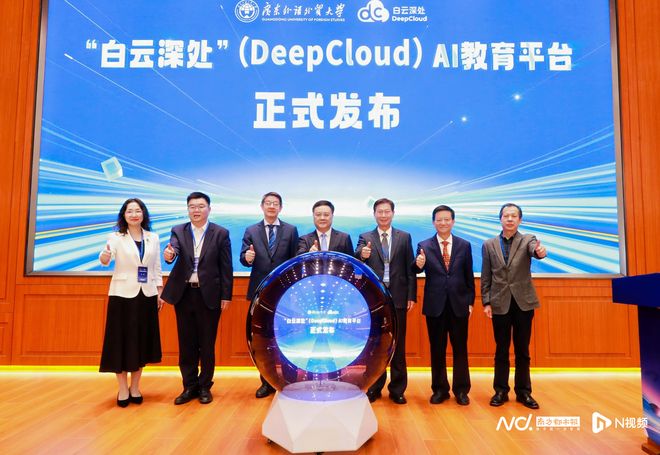
广东外语外贸大学发布“白云深处”AI教育平台
Nan Fang Du Shi Bao· 2025-11-28 13:03
据悉,本次活动由广东外语外贸大学英语语言文化学院主办,未来人文实验室、未来人文与中外文明交 流互鉴研究院承办。 采写:南都N视频记者 孙小鹏 通讯员 杨欣 南都讯 日前,"白云深处"(DeepCloud) AI教育平台发布会暨"人工智能时代的文学教育范式转型"学术研 讨会在广东外语外贸大学白云山校区举行。作为未来人文实验室核心成果,该平台构建"学、教、研、 创"一体化智能体系,下设问学、问教、治学、创作四大模块,整合知识图谱、声音克隆等前沿技术, 可提供个性化学习路径、多语种文本分析、虚拟仿真交互等核心功能,实现从"技术辅助"到"范式革 新"的跨越。 广东外语外贸大学党委书记石佑启指出,"白云深处"AI教育平台的发布是学校"科技赋能人文"的标志性 成果。广外将以建校60周年为新起点,持续探索人工智能与人文教育融合发展的新路径,为构建高素质 国际化人才培养新范式、推动中华文化国际传播、促进中外文明交流互鉴贡献力量。 广外外国语言文学学科建设云山工作室首席专家、未来人文实验室主任聂珍钊教授表示,"白云深处"AI 教育平台作为广东外语外贸大学60周年校庆的重要献礼成果,深度响应国家"人工智能+教育"战略部 署,以" ...
中国春来(01969.HK)年度纯利为8.37亿元 同比增加5.9%
Ge Long Hui· 2025-11-28 12:32
Core Viewpoint - China Spring's financial performance for the year ending August 31, 2025, shows a significant revenue of RMB 179.1 billion and a gross profit of RMB 9.71 billion, indicating a strong operational capacity despite a slight decline in gross margin compared to the previous year [1] Financial Performance - Revenue for the year ending August 31, 2025, reached RMB 179.1 billion, while the gross profit was RMB 9.71 billion [1] - The gross margin for the year was 54.2%, down from 58.6% in the previous year [1] - Net profit for the year was RMB 836 million, an increase from RMB 778 million in the previous year [1] - The net profit margin for the year was 46.7%, compared to 47.7% in the previous year [1] - Adjusted net profit was RMB 837 million, reflecting an increase of RMB 47 million or 5.9% from the previous year [1] - The adjusted net profit margin for the year was 46.7%, down from 48.4% in the previous year [1] - The increase in adjusted net profit was primarily driven by an expansion in student enrollment, which boosted revenue [1]
新高教集团(02001)发布年度业绩 股东应占溢利8.29亿元 同比增加9.67%
智通财经网· 2025-11-28 10:45
Core Insights - New Higher Education Group (02001) reported a revenue of 2.599 billion RMB for the fiscal year ending August 31, 2025, representing a year-on-year increase of 7.78% [1] - The profit attributable to shareholders was 829 million RMB, an increase of 9.67% year-on-year, with basic earnings per share at 0.49 RMB [1] Employment Quality and Graduate Outcomes - The employment quality and rate for graduates remained high, with a final graduate placement rate of 98.03% for the 2024 cohort, marking the fifth consecutive year above 95% [1] - The initial placement rate for the 2025 graduates reached 98.22%, an increase of 3.13 percentage points compared to the previous year, with 53.94% of high-quality employment positions filled by graduates, and a significant increase of 110.32% in employment at prestigious companies [1] Student Enrollment and Academic Growth - For the 2025/2026 academic year, the total number of students across the group's schools is approximately 133,000, with an increasing proportion of undergraduate students [1] - The number of new undergraduate students grew by 3.9% year-on-year, and the proportion of undergraduates among total students increased by 4.5 percentage points [1] - The group has been enhancing its brand competitiveness through a rising proportion of cross-province admissions and increasing minimum admission scores across multiple schools [1]