
Banking

Search documents
Goldman CEO, NYSE President Attend Trump-Backed World Liberty Crypto Event - Goldman Sachs Group (NYSE:GS)
Benzinga· 2026-02-18 17:39
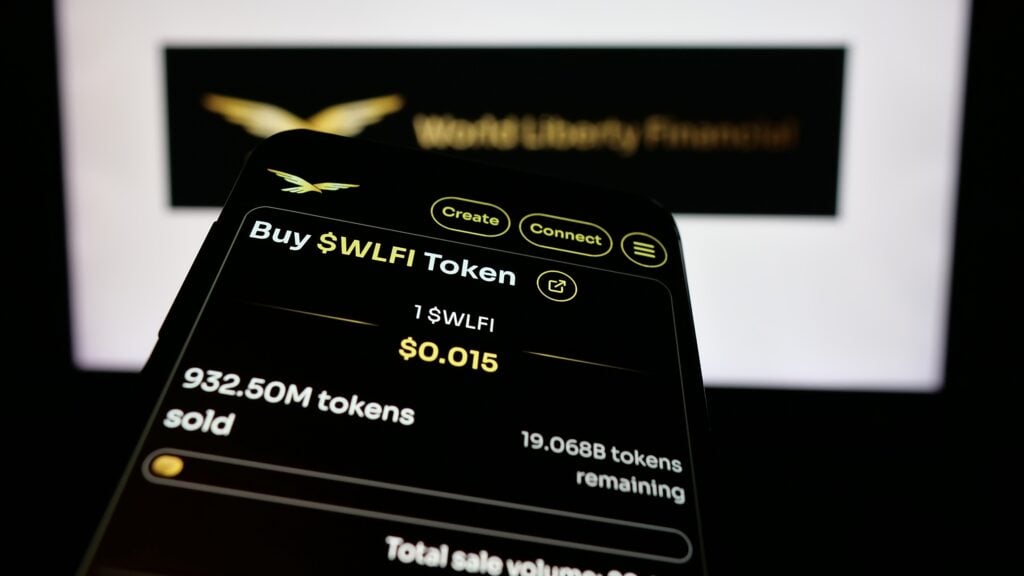
Group 1: Market Developments - World Liberty Financial (WLFI) surged 17% following remarks from Goldman Sachs CEO David Solomon and NYSE President Lynn Martin at the inaugural World Liberty Forum, indicating Wall Street's growing acceptance of tokenization [1] - Solomon emphasized the importance of tokenization in shaping market evolution, stating that large-scale technology platforms will play a central role [3] - The NYSE is developing tokenization technology and feels a responsibility to engage in this area as blockchain-based finance gains traction [5] Group 2: Regulatory Environment - Solomon noted that Goldman's limited involvement in crypto is due to prohibitive regulations, which have recently begun to loosen, suggesting a potential reevaluation of their stance on digital assets [3] - He criticized overregulation, claiming it has extracted capital from the financial system and negatively impacted market efficiency over the past five years [4] - CFTC Chairman Michael Selig expressed a desire to collaborate with both incumbents and new entrants in developing new financial tools, indicating a shift in regulatory attitudes [7] Group 3: Technical Analysis of WLFI - WLFI's price broke through key moving averages, challenging the 200 EMA at $0.12743 after consolidating in the $0.095-$0.117 range [7] - The price action is characterized as bullish, with immediate resistance identified at $0.127-$0.130, and potential targets of $0.14 and $0.15-$0.17 if the resistance is breached [8] - Support levels have shifted to $0.113-$0.117, with the rally remaining intact as long as WLFI holds above $0.113 on pullbacks [8]



JPMorgan announces Bitcoin mining leader
Yahoo Finance· 2026-02-18 17:19
Core Insights - A new leader has emerged in the public Bitcoin mining sector, with Bitdeer surpassing MARA in self-mining hash rate, now at 63.2 EH/s compared to MARA's 60.4 EH/s [1] Group 1: Company Performance - Bitdeer added 8 EH/s in January, attributed to the deployment of its proprietary SEALMINER rigs, marking an impressive growth [5] - Bitdeer mined 668 BTC in January, representing a 430% year-over-year increase [6] - Bitdeer reported a total hash rate under management of 78.1 EH/s, including 13.0 EH/s for hosted operations [6] Group 2: Industry Trends - Bitcoin mining has become more challenging due to rising network difficulty, post-halving reward reductions, and volatile energy prices, squeezing margins for miners [3] - Many Bitcoin miners are pivoting to artificial intelligence, Ethereum staking, or shutting down operations [4] - MARA has shifted its focus from aggressive Bitcoin mining to broader digital infrastructure and AI workloads for customers, making direct output comparisons more difficult [6][7]

Bitcoin price will hit a new record as AI destroys jobs, Arthur Hayes says
Yahoo Finance· 2026-02-18 16:48
Core Viewpoint - The rise of artificial intelligence (AI) is expected to displace white-collar workers, leading to a financial downturn that could ultimately drive Bitcoin to new all-time highs [1][2]. Group 1: Impact of AI on Employment and Economy - AI tools from companies like OpenAI and Anthropic are predicted to replace office workers, resulting in widespread job losses and inability to repay debts [1][4]. - Estimated losses for banks due to loan defaults from displaced workers could reach approximately $527 billion, threatening the stability of smaller banks [4]. Group 2: Federal Reserve's Response - The anticipated financial crisis will likely compel the Federal Reserve to intervene by printing money to prevent deflation from spiraling out of control [2][5]. - This intervention is expected to create favorable conditions for Bitcoin and other cryptocurrencies, as they are seen as fiat credit-sensitive assets [2]. Group 3: Market Predictions and Historical Context - The current situation is compared to the regional bank crisis of early 2023, which resulted in the collapse of three banks within two weeks [4][5]. - Historical patterns suggest that the Federal Reserve's monetary interventions have previously led to bullish trends in Bitcoin, with predictions of similar outcomes in the future [7].
AI capex surge drives higher US investment grade issuance forecast
Yahoo Finance· 2026-02-18 15:00
Core Insights - UBS raised its 2026 US investment grade issuance forecast to $1.8 trillion, citing increased hyperscaler capital expenditure [1] - The bank's US investment grade technology supply estimate increased to $360 billion, reflecting a significant rise in capital spending from major tech companies [1][2] - UBS maintained its forecasts for US high yield, European investment grade, and European high yield, while reducing its US leveraged loan projection [1][3] Investment Grade Issuance - The forecast for US investment grade issuance was increased due to stronger technology issuance and a rise in mergers and acquisitions, indicating a year-on-year growth of 22% [3] - Year-to-date US investment-grade issuance reached $296 billion, which is 31% higher than the previous year, with technology issuance more than doubling as a share of total supply [4] Hyperscaler Capital Expenditure - Aggregate hyperscaler capital expenditure guidance for 2026 rose by approximately $145 billion, leading to an expected public debt issuance increase of $40 billion to $50 billion [2] - Major companies like Amazon, Meta, and Google significantly raised their capital expenditure guidance, driving total projected hyperscaler capex to around $770 billion, which is about 23% higher than previous estimates [2] Leveraged Loans and Defaults - UBS reduced its leveraged loan forecast to $360 billion, citing concerns over artificial intelligence disruption risks being underpriced in loan and private credit markets [3] - The bank anticipates a marginal rise in leveraged loan defaults by roughly 2% and a spread widening to 610 basis points by the end of 2026, which may dampen refinancing and leveraged buyout activity [4] Reverse Yankee Issuance - UBS expects an increase in reverse yankee issuance, where US technology companies issue bonds in currencies like sterling and Swiss francs to diversify funding sources [5] - Despite hedged yields indicating that US dollar funding remains cheaper, particularly for longer maturities, this strategy is seen as a way to access different investor bases [5] Market Absorption and Positioning - The investment-grade market is believed to be able to absorb the additional supply, supported by muted sovereign and emerging market issuance and relatively tight spreads in structured credit [6] - UBS maintains a short position on US investment-grade technology versus the broader index, cautioning that spreads could widen despite strong demand [6]
Mohamed El-Erian Sounds Alarm As China's US Treasury Share Hits 15-Year Low At 7%
Yahoo Finance· 2026-02-18 12:31
Core Viewpoint - Renowned economist Mohamed El-Erian indicates a significant structural shift in global finance as China's share of the U.S. Treasury market has dropped to a 15-year low, raising concerns about future demand for American debt [1]. Group 1: China's Holdings of U.S. Treasuries - China's holdings of U.S. Treasuries now account for only 7% of the total market share, a dramatic decline from the 28% peak recorded 15 years ago [2]. - The total value of China's U.S. Treasury holdings has decreased to approximately $682.6 billion, marking the lowest level since 2008 [2][3]. Group 2: Broader Economic Context - The decline in China's Treasury holdings is exacerbated by the steady issuance of new securities by the U.S. government, further reducing China's share of total U.S. Treasury holdings [3]. - This retreat aligns with China's broader strategy to decrease reliance on the U.S. dollar amid increasing geopolitical tensions [6]. Group 3: Shift in Investment Strategy - As the U.S. national debt approaches $39 trillion, Beijing has advised domestic banks to limit exposure to Treasury securities and instead focus on gold and other hard assets [6]. - China's gold reserves have increased for 15 consecutive months, reaching a record of 2,308 tonnes [6].
Interest Rates Were Cut — What Will Mortgage Rates Look Like in 2026?
Yahoo Finance· 2026-02-18 12:25
Group 1 - The Federal Reserve cut its key interest rate by 25 basis points, placing the overnight borrowing rate in the 3.5%-3.75% range [1] - Experts believe that mortgage rates are influenced by various factors beyond interest rate decisions, including tariffs, inflation, and stagnant wages [2] - The Mortgage Bankers Association reported a 3.8% decline in total mortgage application volume for the week ending December 12 compared to the previous week [4] Group 2 - Financial experts predict that mortgage rates will not change significantly in 2026, with minimal rate cuts expected [5] - The recent Fed meeting saw a non-unanimous vote, indicating a lack of alignment among board members regarding interest rate decisions [5] - As of December 19, the average interest rate for a 30-year fixed-rate conventional loan was 6.208%, reflecting a slight decrease of 0.04% from the previous week [5]
Markets bet on spring rate cut as inflation falls
Yahoo Finance· 2026-02-18 12:03
Core Viewpoint - The recent decline in inflation in the UK has led to increased expectations for a potential interest rate cut by the Bank of England, with many economists predicting a cut in April rather than March due to persistent inflation concerns in certain sectors [1][3][5]. Inflation Trends - Inflation fell to 3% in January, down from 3.4% in December, marking the lowest rate since March of the previous year [5][14]. - The consumer prices index (CPI) is expected to reach the Bank of England's target of 2% by April, driven by lower energy bills and moderated price increases in various sectors [25][26]. Economic Forecasts - Economists predict that the Bank of England may implement two 25-basis-point cuts in interest rates between now and autumn, with the first cut anticipated in April [6][35]. - The market currently estimates an 84% chance that the Bank will reduce rates from 3.75% to 3.5% in March [5]. Sector-Specific Insights - Lower airfares contributed significantly to the decline in inflation, with a reported 46.4% drop in airfares from December to January [7]. - Food inflation decreased to 3.6% in January, down from 4.5% in December, indicating a slowdown in price rises for essential goods [23][29]. Business Sentiment - Despite the overall decline in inflation, businesses continue to face cost pressures, with 56% of firms expressing concern over inflation in a recent survey [11][12]. - The persistence of underlying cost pressures suggests that inflation may not fall as far or remain low for long, raising caution among economists [12][20].
Global Markets Brief: SoftBank Leads $33B U.S. Energy Deal; ECB Details Digital Euro Fees
Stock Market News· 2026-02-18 09:38
Group 1: SoftBank and Energy Investment - SoftBank Group is leading a consortium to invest in a $33.3 billion gas-fired power project in the U.S., involving major players like Panasonic, Murata Manufacturing, Mizuho Financial Group, and Goldman Sachs [2] - The project aims to provide electrical capacity for AI-focused data centers and is part of a broader $550 billion investment commitment from Japan to the U.S. to enhance economic security and infrastructure [3] Group 2: Digital Euro Development - The European Central Bank (ECB) is developing a Digital Euro with a transaction fee model intended to be lower than international card costs but potentially higher than some domestic payment schemes [4] - The Digital Euro will function as "digital cash" with offline transaction capabilities, and pilot programs are set to begin in 2027, with a full launch targeted for 2029 or 2030 [5] Group 3: Geopolitical Tensions and Economic Implications - The Kremlin supports China's rejection of U.S. allegations regarding a secret nuclear test, which has heightened diplomatic tensions following the expiration of the New START treaty [6][7] - The National Bank of Romania has maintained its key interest rate at 6.5% amid persistent inflation, forecasting a drop to 3.7% by the end of 2026, but warns that this does not account for potential impacts from extended gas price caps [10]


From invisibility to inclusion: Fixing the hidden barriers in credit access
Yahoo Finance· 2026-02-18 09:05
Core Insights - The informal economy's participation is not adequately captured by traditional credit scoring models, which primarily rely on credit history, making it unsuitable for many individuals in the global south [1][4] - Financial exclusion is prevalent not only in developing countries but also in advanced economies, with significant unbanked populations in the US (5.6 million) and the EU (13 million) [3] - The barriers to financial inclusion extend beyond credit history, including cumbersome onboarding processes, limited digital infrastructure, and institutional risk aversion [4][6] Group 1: Financial Exclusion Dynamics - Financial exclusion is driven by a lack of visibility, particularly in developing markets where cash transactions dominate and many individuals work in the informal economy [2][5] - The lack of access to credit prevents unbanked individuals from building credit histories, yet the absence of credit history is not the sole barrier to financial inclusion [5][12] - Digital activity among unbanked individuals presents opportunities for credit access, but traditional lending models fail to leverage this potential [7][8] Group 2: Barriers and Solutions - High-friction onboarding processes and inadequate digital infrastructure hinder access to financial services, especially for rural and low-income urban populations [9][10] - Mobile-first fintech solutions are emerging to bypass traditional systems, offering easier onboarding and alternative verification methods [11] - Collaboration between financial institutions and tech companies is essential to bridge the trust gap and improve visibility into consumers' financial behaviors [15][16] Group 3: Rethinking Creditworthiness - Creditworthiness can be assessed through alternative data sources, such as mobile activity and transaction behavior, rather than solely relying on traditional credit history [14] - Financial institutions must adopt flexible trust models that utilize digital footprints to make informed lending decisions [16] - A redefined approach to creditworthiness can foster an inclusive financial ecosystem, benefiting both consumers and financial institutions globally [16]
Matrix Capital Markets acquired by Citizens Financial
Yahoo Finance· 2026-02-18 08:56
Core Insights - Citizens Financial Group has acquired Matrix Capital Markets Group, an advisory firm specializing in the energy and convenience retail sectors, as announced on Tuesday [1] Group 1: Acquisition Details - Matrix has advised on over 70 M&A transactions since 2021, including notable deals such as Jernigan Oil's acquisition by Sunoco and C&J Cox Corporation's sale to Anabi Oil [2] - The acquisition is an all-cash deal, with details undisclosed, and is expected to close in the first quarter of 2026 [5] Group 2: Strategic Intent - Citizens aims to combine Matrix's advisory expertise in the convenience store sector with its commercial banking capabilities to support retailers in growth and strategic needs [3] - Matrix will continue to operate as a trusted advisor to convenience retailers post-acquisition [2] Group 3: Sector Expertise - In addition to the convenience store sector, Matrix has experience in advising companies in the automotive aftermarket and outdoor recreation and marine sectors [3] - Citizens Financial Group offers a wide range of financial products and services, including retail, private banking, and commercial banking [4]
