数据库

Search documents
国产崖山数据库核心技术取得重大突破
Xin Hua She· 2025-08-22 16:35
Group 1 - The 崖山 database system V23 has successfully passed the "Security and Reliability Assessment" certification by the China Information Security Evaluation Center, marking a historic leap in the independent controllability and security reliability of domestic databases [1] - The 崖山 database system, developed by the Shenzhen Institute of Computing Sciences, meets the high-performance, strong stability, and high security requirements of critical industries such as government, finance, telecommunications, and energy [1][2] - The system incorporates original theories such as resource-constrained computing and adaptive parallel transaction scheduling, achieving full-chain independent intellectual property rights [1] Group 2 - The technology has been recognized for its high difficulty and strong innovation, with overall technology reaching an internationally advanced level [2] - The 崖山 database has been implemented in several national financial facilities, large bank core systems, and major urban livelihood projects, demonstrating its high performance and stability [2] - The system has effectively addressed traditional challenges in business restructuring and cost reduction, ensuring reliable performance while lowering costs [2]
达梦数据:专注核心技术,以创新驱动发展
Zhong Guo Chan Ye Jing Ji Xin Xi Wang· 2025-08-22 05:26
Core Insights - The article highlights the journey of Dameng Data, led by founder Feng Yucai, emphasizing the importance of innovation and social responsibility instilled during his time at Huazhong University of Science and Technology [1][2][3] Company Development - Dameng Data has successfully developed a series of database products with independent intellectual property rights, including CRDS, DM4, DM7, and DM8, showcasing continuous technological iteration and innovation [3][4] - The company was listed on the Shanghai Stock Exchange's Sci-Tech Innovation Board on June 12, marking a significant milestone in its growth trajectory [3][4] Market Position and Strategy - The digital economy's growth presents unprecedented opportunities for database technology, but Dameng Data faces challenges from both domestic and international competitors [4][5] - The company is committed to independent research and development, focusing on core technologies to reduce external dependencies, and plans to invest in clustered, distributed, and cloud database products [4][5][6] Future Outlook - Dameng Data aims to utilize the funds raised from its IPO to enhance its technological capabilities in big data, cloud computing, and artificial intelligence, thereby driving product upgrades and innovation [6] - The company is optimistic about expanding its international market presence, particularly in light of China's economic rise and the Belt and Road Initiative [5][6]
滴滴等多家网约车平台降低抽成;货车司机月均净收入10512元,超过网络主播;7月全社会用电量超1万亿度丨每经早参
Mei Ri Jing Ji Xin Wen· 2025-08-21 23:14
Group 1 - Didi Chuxing, Cao Cao Mobility, and T3 Mobility have announced a reduction in commission rates, with Didi and T3 lowering their maximum commission to 27% and Cao Cao reducing it to 22.5% [19] - Gaode Dache has also stated that it will work with partners to ensure that the commission rate for at least 80 ride-hailing platforms does not exceed 27% [19] - The average net income of truck drivers is reported to be 10,512 yuan per month, making it the highest among six new employment groups [10][11] Group 2 - The total electricity consumption in China reached 1.02 trillion kilowatt-hours in July, marking a historic first and a year-on-year increase of 8.6% [11] - This figure is equivalent to the total annual electricity consumption of ASEAN countries and has doubled compared to ten years ago [11] - The increase in electricity consumption is attributed to high temperatures and stable industrial production [11] Group 3 - The Hong Kong Stock Exchange is considering extending trading hours but emphasizes the need for caution due to the potential impact on the market [6] - The National Development and Reform Commission plans to conduct central frozen pork reserve storage to stabilize the pork market amid price fluctuations [7] - The State Council has approved a plan for the Jiangsu Free Trade Zone to promote the open innovation development of the biopharmaceutical industry [8] Group 4 - The National Foreign Exchange Administration is launching a pilot program for green foreign debt in 16 provinces and cities to support green finance development [9] - The CEO of Zhiyuan Robotics expects to complete a Series C financing round by the end of the year, aiming to attract more international investment [20] - Xiaopeng Motors' CEO He Xiaopeng has purchased 3.1 million shares at an average price of 80.49 HKD, signaling confidence in the company's future [21] Group 5 - Sinopec plans to repurchase A-shares worth between 5 billion and 10 billion yuan, which is expected to enhance earnings per share and boost stock prices [22] - WanTai Biologics has received approval for its nine-valent HPV vaccine, marking a new revenue growth point for the company [25] - NIO has launched the new ES8 model with a starting price of 416,800 yuan, indicating a strong market presence in the electric SUV segment [26]






特朗普预告:两周后 俄乌问题见结果;美司法部计划调查美联储理事库克;泡泡玛特王宁:今年营收300亿很轻松丨每经早参
Mei Ri Jing Ji Xin Wen· 2025-08-21 22:28
Group 1 - The Hong Kong Stock Exchange (HKEX) is considering extending trading hours but emphasizes the need for caution due to potential market impacts [9] - The National Development and Reform Commission (NDRC) plans to conduct central frozen pork reserve storage to stabilize the pork market amid price fluctuations [10] - The State Council has approved the "Jiangsu Free Trade Zone Biopharmaceutical Industry Chain Open Innovation Development Plan," aiming to enhance the biopharmaceutical sector's global competitiveness [11] Group 2 - The State Administration of Foreign Exchange (SAFE) is launching pilot green foreign debt business in 16 provinces to support green finance development [12] - The China Index Academy reported that 20 distressed real estate companies have approved debt restructuring totaling over 1.2 trillion yuan [14] - China's electricity consumption reached a historic high of 1.02 trillion kilowatt-hours in July, marking an 8.6% year-on-year increase [15] Group 3 - Pop Mart's new product series has generated significant pre-sale interest, with a projected revenue of 30 billion yuan for the year, reflecting strong market demand [22] - Didi, Cao Cao Mobility, T3 Mobility, and Gaode Taxi have collectively announced a reduction in commission rates to attract more drivers and enhance service quality [23] - Zhiyuan Robotics is expected to complete its C-round financing by the end of the year, aiming to attract more international investment [24] Group 4 - Xiaopeng Motors' CEO has purchased 3.1 million shares at an average price of 80.49 HKD, signaling confidence in the company's future [26] - Sinopec plans to repurchase A-shares worth between 5 billion to 10 billion yuan, which is expected to enhance shareholder value [27] - WanTai Biologics has received approval for its nine-valent HPV vaccine, marking a new revenue growth point for the company [30]

“国产数据库第一股”达梦数据,三天两位高管被立案调查
Guan Cha Zhe Wang· 2025-08-21 15:19
Core Viewpoint - The company, Dameng Data, is facing significant leadership challenges as two of its senior executives, including the general manager, have been placed under investigation by local authorities, raising concerns about governance and operational stability [1][2]. Group 1: Executive Investigations - Dameng Data announced that its vice general manager, Chen Wen, is under investigation by the Hubei Provincial Supervisory Committee, following the earlier announcement regarding the general manager, Pi Yu, who is also under investigation and has been detained [1]. - This marks the second announcement within three days regarding high-level executives being investigated, indicating potential governance issues within the company [1]. Group 2: Company Operations and Market Reaction - Despite the investigations, the company stated that its daily operations and business activities are proceeding normally, and it will continue to monitor the situation closely [1]. - Following the news of the general manager's detention, Dameng Data's stock price fell sharply by 8.44% on August 20 but rebounded by 3.97% on August 21, closing at 236.86 yuan per share, with a market capitalization of 26.8 billion yuan [2]. - Dameng Data, established in 2000, is recognized as the "first domestic database stock" and provides a range of database software, cloud computing, and big data services to notable clients such as China Construction Bank and State Grid [2].
“国产数据库第一股”,两核心高管相继被立案调查
Di Yi Cai Jing· 2025-08-21 14:57
Core Viewpoint - Dameng Data (688692.SH) is currently under investigation by the Hubei Provincial Supervisory Committee, with its board members Chen Wen and Pi Yu facing serious allegations, which may impact the company's operations and governance structure [1][2]. Group 1: Company Investigation - The company received a "Notice of Case Filing" and "Custody Notice" regarding Chen Wen, the board member and senior vice president, indicating an ongoing investigation [1]. - Pi Yu, the board member and general manager, is also under investigation and has been subjected to custody measures, leading to his absence from recent board meetings [1]. - The company was listed in June 2024 and is recognized as the "first domestic database stock," with key figures in the company being core R&D personnel [1]. Group 2: Management Background - Pi Yu, born in August 1981, has held various positions in Dameng Data since 2010, culminating in his role as general manager since November 2020, with a reported pre-tax salary of 3.3733 million yuan for 2024 [2]. - Chen Wen, born in July 1973, has been with Dameng Data since its inception and currently serves as a board member and senior vice president, earning a pre-tax salary of 3.0441 million yuan in 2024 [2]. Group 3: Financial Outlook - The company anticipates achieving an operating income of 495 million to 513 million yuan in the first half of 2025, representing a year-on-year growth of 40.63% to 45.74% [2].
“国产数据库第一股”上市才1年多,两核心高管竟相继被立案调查
Di Yi Cai Jing· 2025-08-21 12:15
Core Viewpoint - Dameng Data, known as the "first domestic database stock," has faced significant management challenges with the investigation of its key executives, which may impact its operational stability and investor confidence [1][2]. Company Overview - Dameng Data was listed in June 2024, marking its emergence as a significant player in the domestic database market [1]. - The company is led by founder and chairman Feng Yucai, with key executives including Pi Yu and Chen Wen, who are both core members of the research and development team [1]. Management Investigation - On August 21, 2024, Dameng Data announced that the Hubei Province Yichang City Supervisory Committee issued a "Case Notification" and "Management Notification" regarding an investigation into Chen Wen, the company's director and senior vice president [1]. - On August 19, 2024, the company disclosed that Pi Yu, the director and general manager, is also under investigation and has been subjected to detention measures, leading him to delegate voting authority to Feng Yucai in board meetings [1]. Executive Background - Pi Yu, born in August 1981, has held various positions within Dameng Data since 2010, culminating in his role as general manager since November 2020 [2]. - Chen Wen, born in July 1973, has been with Dameng Data since its inception and has served in multiple sales and management roles, currently holding the position of senior vice president [2]. Financial Performance - According to the company's half-year report forecast released in June, Dameng Data expects to achieve operating revenue between 495 million to 513 million yuan in the first half of 2025, representing a year-on-year growth of 40.63% to 45.74% [2].
金仓数据库守护中国铁路安全运行
Zhong Guo Jing Ji Wang· 2025-08-18 08:07
Core Viewpoint - The China Railway Group is implementing a multi-functional line patrol platform to enhance railway safety and efficiency by utilizing advanced technologies such as informationization, automation, and intelligence [1][7]. Group 1: Platform Development - The line patrol platform will be launched nationwide by April 2025, covering 18 railway bureaus to ensure smooth and safe railway operations [1]. - The platform integrates existing railway video resources with new standards and norms to assess high-risk areas along the lines [3]. Group 2: Technical Architecture - The platform employs a two-level deployment architecture and a high-availability cluster architecture of the Kingbase database, enabling efficient data processing and real-time response through cloud, edge, and terminal collaboration [5]. - The Kingbase database features real-time multi-replication, automatic disaster recovery switching, and load balancing to ensure system stability and high efficiency [10]. Group 3: Data Security - The platform prioritizes data security with a comprehensive high-tech security guarantee mechanism, ensuring the health and order of data [11]. - The encryption mechanism, based on self-developed technology, maintains low energy consumption (3%-5%) while effectively safeguarding the data of the national line patrol platform [13]. Group 4: Industry Impact - The company is committed to continuously investing resources and gathering talent to support the digital development of the national railway industry, facilitating the implementation of domestic innovation and infrastructure projects [14].

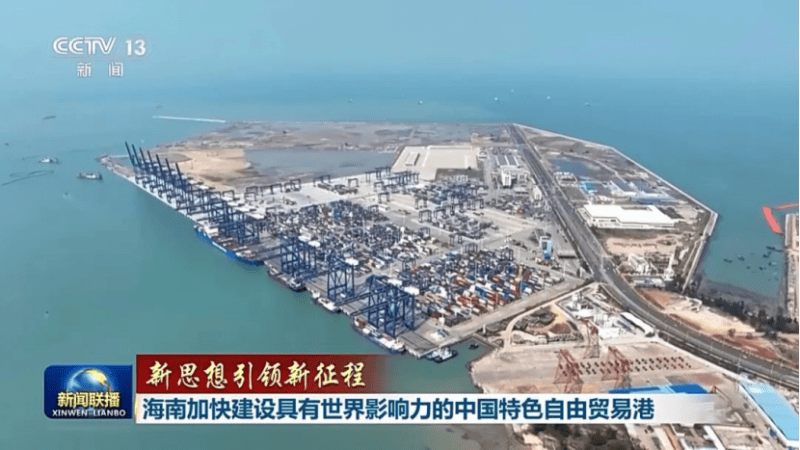
金仓数据库支撑海南自贸港“单一窗口”稳定运行
Sou Hu Cai Jing· 2025-08-18 08:01
Core Viewpoint - The Hainan Free Trade Port will commence full island closure operations on December 18, 2025, with a focus on enhancing efficient customs clearance and regulatory effectiveness through the Hainan International Trade "Single Window" project [1] Group 1: Project Overview - The Hainan International Trade "Single Window" project aims to integrate government departments and inspection units to improve trade facilitation levels [1] - The project is set to launch its first phase by the end of 2024, having already been in stable operation for 8 months [3] Group 2: Technical Infrastructure - The KES database supports the "Single Window" project with a multi-node high-availability cluster, providing 24/7 uninterrupted database services [3] - KES database is deeply compatible with SQL standards and mainstream database protocols, facilitating smooth migration and stable operation of various applications [3] Group 3: Performance and Reliability - The KES database optimizes storage engines and query mechanisms to support high concurrency and data processing, ensuring low latency and high throughput under heavy loads [4] - The system meets stringent response speed requirements for "second-level customs clearance" scenarios [4] Group 4: Security Measures - The project implements a multi-layered security mechanism, including user authentication, access control, data encryption, and audit tracking [5] - Compliance with national information security standards ensures the protection of sensitive business data [5][6] Group 5: Maintenance and Management - The KES database offers a comprehensive toolchain for simplified maintenance, including graphical installation, monitoring, and performance tuning [7] - Intelligent monitoring tools provide real-time status checks and performance diagnostics, enhancing operational efficiency [7] Group 6: Future Outlook - KES aims to contribute to the construction of a digital Hainan and support the development of an international, rule-of-law, and convenient Hainan Free Trade Port [10]
中国光谷企业近3年申报研发费用加计扣除金额年均增长30.7%
Zhong Guo Chan Ye Jing Ji Xin Xi Wang· 2025-08-17 22:14
Core Insights - The article highlights the significant advancements and achievements in the optical fiber and cable industry in China, particularly in the Wuhan East Lake New Technology Development Zone, known as "Optical Valley" [1][2]. Group 1: Industry Achievements - China has achieved multiple global firsts in the optical fiber and cable sector, including the world's largest optical fiber preform and the highest drawing speed, producing over 10,000 kilometers of fiber [2]. - Longhua Fiber has maintained the highest global market share in the optical fiber and cable industry for nine consecutive years, with overseas business accounting for over 30% for four years [2]. - The number of national-level specialized and innovative enterprises in Optical Valley has reached 173, ranking fourth among national high-tech zones [8]. Group 2: Tax Incentives and Support - Over the past three years, tax authorities have provided more than 20 billion yuan in tax incentives to enterprises in Optical Valley, significantly boosting their growth [3]. - The number of enterprises applying for R&D expense deductions has increased annually, with 5,692 companies reported in 2024, reflecting a 16.35% average annual growth [3]. - Longhua Fiber has benefited from approximately 1.5 billion yuan in tax reductions over five years, allowing for increased R&D investment [2]. Group 3: Compliance and Risk Management - The establishment of the "Optical Valley Tax Aid Station" aims to enhance compliance and reduce tax-related risks for companies, providing one-stop services for tax assistance and legal support [4][5]. - Companies like Wuhan Dameng Database have implemented comprehensive internal management systems to ensure tax compliance, supported by local tax authorities [4]. Group 4: Talent Development and Innovation - Optical Valley has launched new talent policies and a global talent service system to attract high-end talent, with tax incentives for technology transfer and innovation [7]. - In the past three years, tax incentives for technology achievement cash rewards have benefited 1,224 individuals, encouraging talent to settle and innovate in Optical Valley [7].