
气象服务

Search documents
气象人工智能预报模型上新升级 五大模型分工协作赋能千行百业
Jing Ji Ri Bao· 2026-01-03 23:44
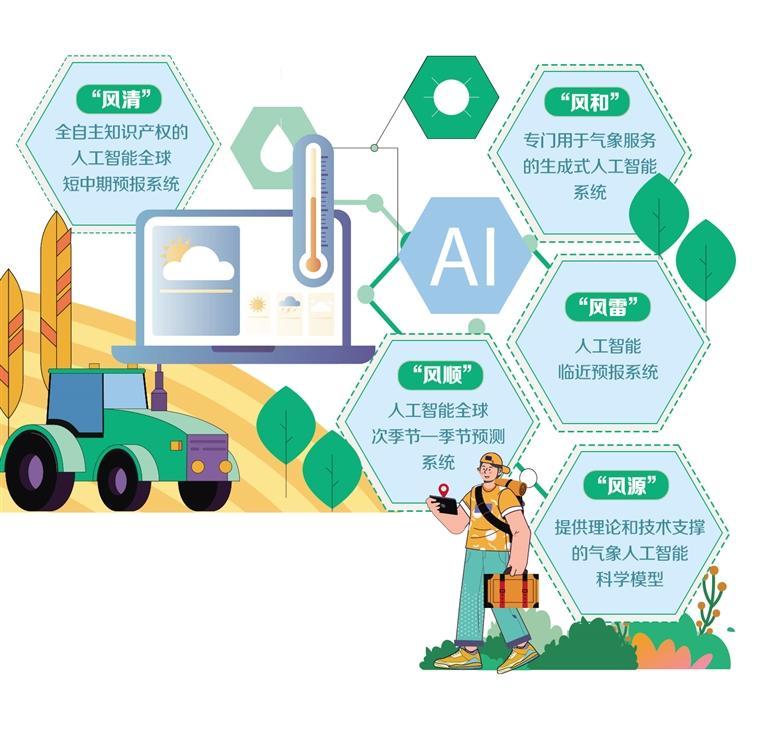
Core Viewpoint - The article discusses the advancements in artificial intelligence (AI) models for meteorological services in China, highlighting the launch of new AI models that enhance weather forecasting and disaster warning capabilities in response to increasingly complex climate conditions. Group 1: AI Model Developments - The China Meteorological Administration (CMA) has released the AI model "Fengyuan" and upgraded three other models: "Fengqing," "Fenglei," and "Fengshun," to improve weather forecasting and warning capabilities [1][2] - The newly launched "Fenghe" model, with a trillion parameters, collaborates with the other models to provide personalized weather services across various sectors [1][2] Group 2: Applications and Services - AI is deeply integrated into meteorological services, providing personalized travel and health guidance, and supporting decision-making in agriculture, energy, and transportation [2] - The "Fenghe" model can offer tailored solutions based on intelligent analysis, covering multiple scenarios related to weather [2] Group 3: Precision and Efficiency - The upgraded "Fengshun" model focuses on key agricultural and energy needs, adding over ten critical meteorological factors to enhance service precision [3] - The "Fenglei" model has shown a 25% improvement in the quality of severe weather predictions, demonstrating its effectiveness in real-time disaster warnings [4] Group 4: Future Directions - The CMA's strategy for 2025-2035 emphasizes the integration of numerical forecasting with AI to enhance simulation and prediction capabilities of Earth's systems [7] - The AI models are expected to significantly improve forecasting accuracy and computational efficiency, with the "Fengqing" model capable of generating 15-day global weather forecasts in just three minutes [7]
气象人工智能预报模型上新升级
Xin Lang Cai Jing· 2026-01-03 22:20
Core Insights - The article discusses the advancements in artificial intelligence (AI) models for meteorological services in response to increasing climate variability and extreme weather events, highlighting the launch of new AI models by the China Meteorological Administration (CMA) [2][3][4] Group 1: AI Model Developments - The CMA has released the AI model "Fengyuan" and upgraded three other models: "Fengqing," "Fenglei," and "Fengshun," enhancing the precision and timeliness of weather forecasts [2][3] - The "Fenghe" model, with a trillion parameters, is designed to provide personalized weather services across various sectors, including transportation and agriculture [3][4] Group 2: Enhanced Forecasting Capabilities - The upgraded "Fengshun" model focuses on key meteorological factors such as daily maximum/minimum temperatures and solar radiation, significantly improving the ability to respond to agricultural weather disasters [4][5] - The "Fenglei" model has shown a 25% improvement in the quality of severe weather predictions, particularly for thunderstorms and short-term heavy rainfall [5][6] Group 3: Integration of AI in Meteorology - AI technology is becoming a crucial link between weather forecasting, disaster warning, and emergency response, addressing the challenges posed by extreme weather events [5][6] - The "Fengyuan" model can directly analyze real-time observational data from satellites and weather stations, aiming to enhance the accuracy of weather predictions [6][7] Group 4: Future Directions - The CMA's strategy for 2025-2035 emphasizes the integration of numerical forecasting with AI, aiming to improve the simulation and prediction capabilities of Earth system interactions [7] - The AI models are expected to provide higher resolution forecasts and longer prediction periods, significantly enhancing disaster response and decision-making processes [7]

为低空经济精准预报
Jing Ji Ri Bao· 2026-01-03 22:09
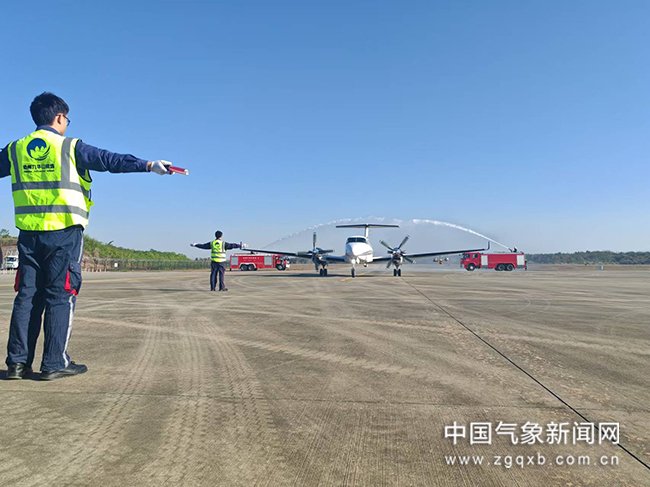
安全是低空经济发展的首要前提。而在这片低空之下,大风、暴雨、大雾、强对流等气象条件直接影响 低空航路规划和飞行时间安排等。 2025年初,国家气象信息中心数据研究室副主任谷军霞接受了一项新任务:践行"观测即服务"理念,带 领团队研发低空经济气象服务保障实况产品。 低空飞行离地面近,易受城市建筑、植被、山地等影响,这决定了低空飞行在很大程度上依赖于精密气 象监测和精细气象服务。起初,团队预计把这款气象实况产品的水平分辨率做到50米。可深入调研后发 现,对于低空飞行器来说,50米还是太"粗糙"了。"无人机一次作业时间可能只有十几分钟,其间还可 能需要在城市建筑之间穿行,原本我们业务应用的公里级小时级气象实况产品都派不上用场了。"谷军 霞说。 最终,团队将目标定在垂直分辨率2米、水平分辨率5米、5分钟更新的低空三维实况场。谷军霞坦言, 自己当初认为这个目标"几乎不可能完成"。 "压力特别大,要在短时间内做出这样的产品,我们少不了反复地试验、验证和改进,每个人都付出了 心血。"令谷军霞自豪的是,在团队协同合作下,米级分辨率的低空三维风场实况已经支撑了广州、武 汉、西安等16个城市低空经济示范场景应用。"不可能完成的任 ...
气象人工智能预报模型上新升级——五大模型分工协作赋能千行百业
Jing Ji Ri Bao· 2026-01-03 22:01
Core Viewpoint - The article discusses the advancements in artificial intelligence (AI) models for meteorological services in China, highlighting the launch of new AI models by the China Meteorological Administration (CMA) to enhance weather forecasting and disaster warning capabilities in the context of increasingly complex climate conditions. Group 1: AI Model Developments - The CMA has released the "Fengyuan" AI model and upgraded three other models: "Fengqing," "Fenglei," and "Fengshun," to improve weather forecasting and warning capabilities [1][2] - The "Fenghe" model, with a trillion parameters, is designed for personalized weather services across various sectors, including transportation and health [2] Group 2: Applications and Benefits - The upgraded "Fengshun" model focuses on agricultural, renewable energy, and water resource needs, adding over ten key meteorological factors such as daily maximum and minimum temperatures [3] - The "Fenglei" model has shown a 25% improvement in the quality of severe weather predictions, particularly for thunderstorms and heavy rainfall [4] Group 3: Technological Integration - AI technology is becoming a crucial link between weather forecasting, disaster warning, and emergency response, addressing the challenges posed by extreme weather events [4] - The "Fengyuan" model can directly analyze real-time observational data from satellites and weather stations, enhancing the accuracy of global weather forecasts [5] Group 4: Future Directions - The CMA's strategy for 2025-2035 emphasizes the integration of numerical forecasting with AI to improve simulation and prediction capabilities of Earth's systems [7] - The AI models are expected to significantly enhance forecasting precision and efficiency, with the "Fengqing" model capable of generating 15-day global weather forecasts in just three minutes [7]
最低零下3.3℃,贵阳“一路三方”依托气象信息撒盐除冰
Xin Lang Cai Jing· 2026-01-03 04:50
Core Viewpoint - The article highlights the measures taken by the Guiyang traffic police and meteorological department to ensure road safety amid falling temperatures and increased risk of road icing due to low temperatures in Guiyang [1] Group 1: Weather Conditions - Guiyang experienced a continued drop in temperature, with road icing risks increasing [1] - As of January 3rd morning, 177 meteorological monitoring stations reported temperatures at or below freezing, with 21 stations recording temperatures below -2°C, and the lowest temperature of -3.3°C recorded in Baiyun District [1] Group 2: Traffic Safety Measures - The Guiyang meteorological department prepared a traffic meteorological service report for local authorities to enhance collaboration with the traffic police in preventing the impacts of low-temperature weather on safe travel [1] - Guiyang traffic police, in conjunction with the meteorological department, conducted multiple rounds of preventive salting on key highways to slow down the icing process and ensure safe travel for the public [1] Group 3: Traffic Control - As of 10:40 AM on January 3rd, traffic control was temporarily implemented on the G7522 Gui Bei Expressway from 7 to 16 kilometers (Baiyi Interchange to Nanming River Bridge) to assist Qian Nan traffic police [1]
“十四五”发展成效丨安徽:创新潮涌江淮地 智“绘”风云“皖”象新
Xin Lang Cai Jing· 2026-01-03 01:44
Core Viewpoint - The article highlights the achievements and ongoing efforts of the Anhui Meteorological Department in implementing the "14th Five-Year Plan" for meteorological development, focusing on high-quality development, technological innovation, and enhanced service capabilities to support economic and social progress in the region [1][8]. Group 1: Technological Advancements - The Anhui Meteorological Department has achieved 240 meteorological technology results and received 12 provincial and ministerial science and technology progress awards since the beginning of the "14th Five-Year Plan" [2]. - The density of meteorological monitoring stations has improved from 6.8 kilometers to 5.0 kilometers, with the establishment of new observation systems and networks [2]. - The accuracy of 24-hour urban weather forecasts has increased to 91.7%, and severe weather warnings are issued 54.5 minutes in advance [2]. Group 2: Service Empowerment - The department has developed a comprehensive agricultural meteorological service network, including 14 smart agricultural meteorological service bases and 29 agricultural meteorological technology centers [5]. - A "two clouds and two ends" platform has been created to integrate agricultural meteorological data and services, benefiting 300,000 new agricultural operators [5]. - The department has implemented a minute-level weather monitoring and warning system for highways, enhancing traffic safety [7]. Group 3: Governance and Collaboration - The Anhui Meteorological Department has established a local meteorological regulatory framework, including the "3+3+17" system, to improve disaster response and legislative measures [8][9]. - Collaborative efforts with 18 industry departments have led to the joint development of meteorological observation station network plans and shared resources [9][11]. - The department is actively participating in cross-regional meteorological disaster prevention and control initiatives, enhancing cooperative governance across provinces [11].
《全球气象发展报告2025》发布 我国气象国际影响力明显增强
Xin Lang Cai Jing· 2026-01-02 18:29
Core Insights - The report titled "Global Meteorological Development Report 2025" was released by the China Meteorological Administration, highlighting China's contributions to global meteorological advancements and its increasing international influence in this field [1] Group 1: Technological Advancements - Key trends in global meteorology include digital twin Earth, AI meteorological forecasting models, early warning systems for the public, financial meteorology, commercial small satellite applications, and drone detection [1] - Innovations in observation technology are accelerating, with international cooperation on meteorological satellites deepening and more commercial small satellites entering meteorological services [1] - The use of drones and unmanned vessels in meteorological observation is progressing towards commercialization [1] Group 2: Expansion of Meteorological Services - Meteorological services are evolving from traditional weather forecasting to encompass climate prediction, environmental monitoring, disaster warning, and climate adaptation [1] - There is a growing emphasis on utilizing AI and digital twin technologies to enhance the precision, timeliness, and intelligence of meteorological services [1] Group 3: Research Scope and Focus - The report broadens its research perspective from primarily focusing on international organizations and developed countries to include developing countries [1] - It captures emerging global meteorological hotspots, adding topics such as global ocean meteorological observation, financial meteorological services, meteorological empowerment of the low-altitude economy, and commercial satellites [1] Group 4: Report Consistency - Since its first release in 2023, the "Global Meteorological Development Report" has consistently showcased the annual trajectory and overall trends in meteorological development from a global perspective and industry development dimension [1]
我国气象国际影响力明显增强
Xin Lang Cai Jing· 2026-01-02 18:29
Core Insights - The report titled "Global Meteorological Development Report 2025" was released by the China Meteorological Administration, highlighting China's increasing international influence in meteorology and its contributions to global development [1] Group 1: Global Meteorological Trends - Key annual terms in global meteorology include digital twin Earth, AI meteorological forecasting models, early warning systems for the public, financial meteorology, commercial small satellite applications, and drone detection [1] - Innovations in observation technology are accelerating, with deepening international cooperation in meteorological satellites and an increasing number of commercial small satellites entering meteorological services [1] - Meteorological services are expanding beyond traditional weather forecasting to include climate prediction, environmental monitoring, disaster warning, and climate adaptation, with a focus on utilizing AI and digital twin technologies for more precise, real-time, and intelligent services [1] Group 2: Research Scope and Focus - The report broadens the research perspective from primarily international organizations and developed countries to include developing countries [1] - It captures emerging global meteorological hotspots, adding topics such as global ocean meteorological observation, financial meteorological services, meteorological empowerment of the low-altitude economy, and commercial satellites [1] - Since its first release in 2023, the "Global Meteorological Development Report" has consistently showcased annual meteorological development trajectories and overall trends from a global perspective and industry development dimension [1]
“十四五”发展成效丨福建:数智筑屏障 海峡谱新篇
Xin Lang Cai Jing· 2026-01-02 00:57
Core Viewpoint - The article emphasizes the significant progress and achievements made by the meteorological departments in China, particularly in Fujian Province, in implementing the "14th Five-Year Plan" for meteorological development, enhancing public welfare, and supporting economic growth through advanced meteorological services and technology [1][2]. Group 1: Policy and Governance - The Fujian meteorological department adheres to the important directives from General Secretary Xi Jinping and has implemented the "Meteorological High-Quality Development Outline (2022-2035)" along with the "National Meteorological Development 14th Five-Year Plan" [2]. - A comprehensive policy support system has been established, with multiple policies introduced at provincial and municipal levels to enhance meteorological services and disaster prevention [3]. - The government has signed cooperation agreements with the China Meteorological Administration to promote high-quality meteorological development, ensuring coordinated efforts across different administrative levels [3]. Group 2: Technological Advancements - Fujian has developed an integrated observation network with 2,542 automatic weather stations, achieving an average spacing of 6.84 kilometers for precise land meteorological monitoring [4]. - The province has made significant advancements in forecasting technology, with typhoon path prediction errors reduced to 50 kilometers and severe convective weather warnings issued 60 minutes in advance [6]. - The "Fujian OTS Algorithm" has won national awards and is being promoted across 26 provinces, addressing challenges in short-term severe weather forecasting [6]. Group 3: Public Services and Disaster Management - The province has established a unique meteorological disaster prevention and mitigation system marked by the "1262" model, which has been recognized for its effectiveness in emergency response and disaster avoidance [7]. - Agricultural meteorological services have improved, with a 15% reduction in crop yield losses due to disasters, and the introduction of 44 meteorological index insurance products benefiting over 70,000 fishermen and farmers [7]. - The province's meteorological services have significantly enhanced public satisfaction, reaching a score of 93.1, and have improved search and rescue success rates through specialized maritime forecasts [3][7]. Group 4: Cross-Strait Cooperation and Community Engagement - Fujian has established a regular communication mechanism with Taiwan, hosting the "Cross-Strait Civil Meteorology Forum" to share meteorological research and technology [10]. - The province's meteorological services have integrated into various sectors, including tourism, with the "Know Weather" app gaining over 4 million users and boosting tourism revenue by 40% [10]. - Collaborative efforts in disaster prevention have led to the establishment of a cross-regional artificial hail prevention mechanism, effectively reducing crop damage [9].
上海如何“算”出春天
Xin Lang Cai Jing· 2025-12-31 07:36
樱花哪一天会开?法国梧桐何时染上金黄?在上海,这些"花开叶落"的问题正从"看天吃饭"的经验之 谈,逐步走向科学预报的精细服务。近年来,上海气象与绿化部门联手,借助气象观测网络、历史数据 建模与新技术应用,持续探索花期与物候的预测体系——不仅要回答"花何时开",更试图揭示气候变化 下植物生长的自然密码。在这条探索之路上,精准预报仍面临诸多挑战,却也反映出这座城市尝试与生 态对话的努力。 Q1 冬季气温竟是春天花开的关键? 物候模型的准确度,和物候观测资料息息相关。现阶段,想要提高模型准确度,尤其需要观测精细尺 度、多物种覆盖和历史序列完整性等资料的不断完善。 对于开花植物来说,最重要的是气温。春季开花的植物,一般都要满足一定的积温条件。花期预报都是 以温度作为指标建立物候模型来进行的。宝山区气象局研究团队在分析了历史资料发现:顾村公园染井 吉野和河津樱初花期早晚主要与上年12月和当年1月的平均最低气温和累计降水日数有较为密切关系。 以这两个气象因子建立初花期预测模型,采用平均最低气温预测模式和"天气份额"累计指标两种方法计 算,对初花期做了预报。 上海地区系统性、规范化的植物物候观测网络主要由绿化和生态部门开展 ...