
气象人工智能

Search documents
气象预报工具赋能多元场景(新春走基层)
Ren Min Ri Bao· 2026-02-25 22:18
Core Insights - The article discusses the development of artificial intelligence forecasting models by the Xiong'an Meteorological AI Innovation Research Institute, aimed at enhancing the safety and efficiency of drone logistics delivery in urban environments [1][2]. Group 1: AI Forecasting Models - The Xiong'an Institute has developed a weather forecasting model called "Wind Clear," which can generate global weather forecasts with a 25 km resolution, updated every 6 hours for the next 15 days [1]. - A climate prediction model named "Wind Smooth" provides forecasts for climate anomalies over weeks to months [1]. - The meteorological science model "Wind Source" enables end-to-end forecasting driven directly by observational data [1]. Group 2: Applications and Future Plans - The AI meteorological models have already been applied in various scenarios, including new energy power forecasting, flood control scheduling, and aviation support [2]. - The institute aims to continuously improve the precision of multi-scenario forecasts and expand the application of AI meteorological models across more industries [2].
我国将加快建设新型预报预测体系
Xin Hua She· 2026-01-26 07:09
Core Insights - In 2026, China will accelerate the construction of a new forecasting and prediction system to enhance the forecasting and early warning capabilities for extreme weather and climate events, aiming to improve the intelligence level of forecasts and establish Earth system forecasting capabilities [1] Group 1: Forecasting and Prediction Enhancements - The China Meteorological Administration plans to improve the forecasting and early warning capabilities for extreme weather events in 2026, including the pilot promotion of a new generation of short-term warning business systems [1] - The application of artificial intelligence technology will be strengthened to enhance the precision of typhoon and heavy rain forecasts [1] - Development of prediction products for water yield during key basin sub-seasonal heavy rain processes will be promoted, along with provincial pilot projects for sub-seasonal predictions of extreme climate events [1] Group 2: Earth System Forecasting Capabilities - Meteorological departments will focus on developing the next generation of numerical forecasting models and continue to advance specialized models for wind and solar energy [1] - Optimization of meteorological artificial intelligence model systems and research mechanisms will be established, including the creation of a unified base model and the development of coupled reanalysis technology [1] - The second generation of atmospheric reanalysis products will be released, and global forecasting business inspection standards will be established [1] Group 3: Response to Extreme Weather Events - Over the past year, meteorological departments effectively responded to extreme weather disasters, accurately predicting the distribution characteristics of rainfall during the flood season three months in advance [2] - The average lead time for severe convective weather warnings reached a historical high of 48 minutes, and the 24-hour typhoon path forecast error was reduced to 58 kilometers, maintaining international leadership [2] - Collaboration with various departments, including the Ministry of Agriculture and Rural Affairs, helped mitigate wheat losses by 2.3 billion jin (approximately 1.15 million tons) due to dry hot winds [2]
气象人工智能预报模型上新升级 赋能千行百业
Jing Ji Ri Bao· 2026-01-04 00:31
Core Insights - The article discusses the advancements in artificial intelligence (AI) models for meteorological services in response to increasing climate variability and extreme weather events, highlighting the launch of new AI models by the China Meteorological Administration (CMA) [1][4]. Group 1: AI Model Developments - The CMA has released the AI meteorological model "Fengyuan" and upgraded three other models: "Fengqing," "Fenglei," and "Fengshun," enhancing their capabilities to provide more accurate weather forecasts and warnings [1][3]. - The newly launched "Fenghe" model, with a trillion parameters, collaborates with the other models to improve weather prediction services across various industries [1][2]. Group 2: Applications and Services - AI is deeply integrated into meteorological services, providing personalized travel and health guidance, and supporting decision-making in agriculture, energy, and transportation sectors [2][3]. - The "Fenghe" model can offer tailored solutions based on intelligent analysis, covering multiple scenarios related to weather, such as traffic, tourism, and logistics [2]. Group 3: Precision and Efficiency - The upgraded "Fenglei" model has shown a 25% improvement in the quality of severe weather predictions, particularly for thunderstorms and heavy rainfall [4]. - The "Fengyuan" model can directly analyze real-time observational data from satellites and weather stations, providing global weather forecasts without complex data assimilation processes [5][6]. Group 4: Future Directions - The CMA's strategy for 2025-2035 emphasizes the integration of numerical forecasting with AI to enhance simulation and prediction capabilities of the Earth system [7]. - The AI models are expected to significantly improve forecasting precision, coverage, and computational efficiency, with the "Fengqing" model generating 15-day global weather forecasts in just three minutes [7].
气象人工智能预报模型上新升级
Xin Lang Cai Jing· 2026-01-03 22:20
Core Insights - The article discusses the advancements in artificial intelligence (AI) models for meteorological services in response to increasing climate variability and extreme weather events, highlighting the launch of new AI models by the China Meteorological Administration (CMA) [2][3][4] Group 1: AI Model Developments - The CMA has released the AI model "Fengyuan" and upgraded three other models: "Fengqing," "Fenglei," and "Fengshun," enhancing the precision and timeliness of weather forecasts [2][3] - The "Fenghe" model, with a trillion parameters, is designed to provide personalized weather services across various sectors, including transportation and agriculture [3][4] Group 2: Enhanced Forecasting Capabilities - The upgraded "Fengshun" model focuses on key meteorological factors such as daily maximum/minimum temperatures and solar radiation, significantly improving the ability to respond to agricultural weather disasters [4][5] - The "Fenglei" model has shown a 25% improvement in the quality of severe weather predictions, particularly for thunderstorms and short-term heavy rainfall [5][6] Group 3: Integration of AI in Meteorology - AI technology is becoming a crucial link between weather forecasting, disaster warning, and emergency response, addressing the challenges posed by extreme weather events [5][6] - The "Fengyuan" model can directly analyze real-time observational data from satellites and weather stations, aiming to enhance the accuracy of weather predictions [6][7] Group 4: Future Directions - The CMA's strategy for 2025-2035 emphasizes the integration of numerical forecasting with AI, aiming to improve the simulation and prediction capabilities of Earth system interactions [7] - The AI models are expected to provide higher resolution forecasts and longer prediction periods, significantly enhancing disaster response and decision-making processes [7]

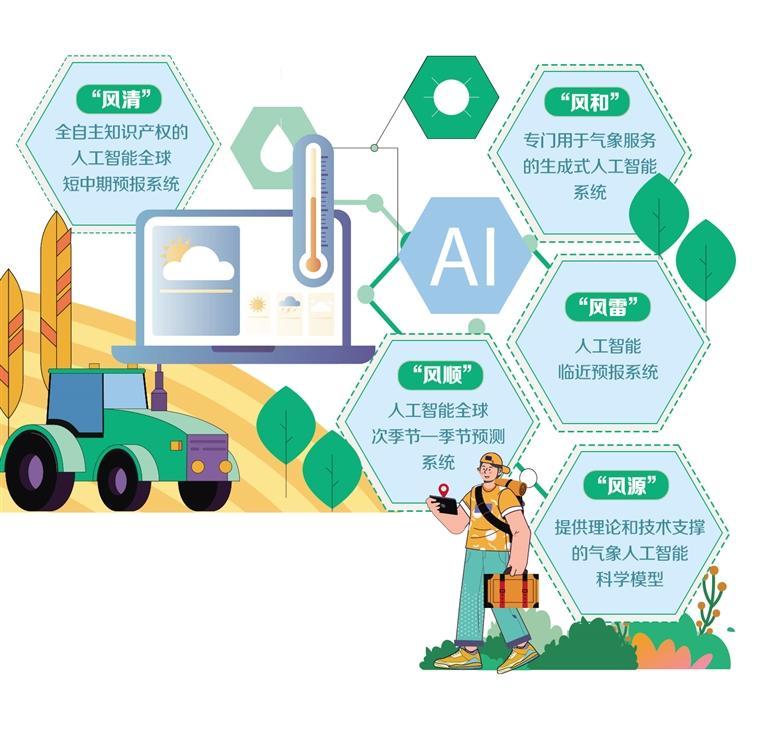
气象人工智能预报模型上新升级——五大模型分工协作赋能千行百业
Jing Ji Ri Bao· 2026-01-03 22:01
Core Viewpoint - The article discusses the advancements in artificial intelligence (AI) models for meteorological services in China, highlighting the launch of new AI models by the China Meteorological Administration (CMA) to enhance weather forecasting and disaster warning capabilities in the context of increasingly complex climate conditions. Group 1: AI Model Developments - The CMA has released the "Fengyuan" AI model and upgraded three other models: "Fengqing," "Fenglei," and "Fengshun," to improve weather forecasting and warning capabilities [1][2] - The "Fenghe" model, with a trillion parameters, is designed for personalized weather services across various sectors, including transportation and health [2] Group 2: Applications and Benefits - The upgraded "Fengshun" model focuses on agricultural, renewable energy, and water resource needs, adding over ten key meteorological factors such as daily maximum and minimum temperatures [3] - The "Fenglei" model has shown a 25% improvement in the quality of severe weather predictions, particularly for thunderstorms and heavy rainfall [4] Group 3: Technological Integration - AI technology is becoming a crucial link between weather forecasting, disaster warning, and emergency response, addressing the challenges posed by extreme weather events [4] - The "Fengyuan" model can directly analyze real-time observational data from satellites and weather stations, enhancing the accuracy of global weather forecasts [5] Group 4: Future Directions - The CMA's strategy for 2025-2035 emphasizes the integration of numerical forecasting with AI to improve simulation and prediction capabilities of Earth's systems [7] - The AI models are expected to significantly enhance forecasting precision and efficiency, with the "Fengqing" model capable of generating 15-day global weather forecasts in just three minutes [7]
“妈祖”出海记
Ren Min Ri Bao· 2026-01-02 01:11
Core Viewpoint - The "Mazu" early warning cloud platform, developed by the China Meteorological Administration, is being implemented globally to enhance disaster prevention and response to climate change, showcasing China's technological capabilities and experience in meteorological AI [1][5][13]. Group 1: Global Implementation and Impact - The "Mazu" platform has been deployed in five countries, including Pakistan and Mongolia, and is undergoing trials in 43 countries across Asia, Africa, and Oceania [5]. - The platform provides customized AI tools for different countries to monitor and respond to various meteorological risks, significantly improving early warning capabilities [3][4]. - In countries like Afghanistan and Uganda, the platform has successfully predicted extreme weather events, allowing for timely warnings and disaster mitigation [2][5]. Group 2: Technological Advancements - The "Mazu" platform integrates advanced AI technologies to enhance the accuracy of weather forecasts, particularly for extreme weather events that are traditionally difficult to predict [7][8]. - The platform employs innovative algorithms to improve the detection and forecasting of severe weather phenomena, addressing the limitations of conventional models [8][9]. - The AI models developed under "Mazu" are open-source, allowing global access and collaboration, which enhances the platform's adaptability and effectiveness [6][10]. Group 3: Training and Capacity Building - The China Meteorological Administration is committed to training over 2,000 professionals from developing countries in meteorological forecasting and disaster risk management from 2025 to 2027 [6]. - Collaborative efforts include sending scholars to China for training and developing localized forecasting models tailored to specific regional needs [6][10]. - The initiative aims to build a global network of early warning systems, fostering international cooperation in climate change adaptation [12][13]. Group 4: Future Prospects and Collaborations - The "Mazu" platform is set to integrate additional AI models, enhancing its service offerings and expanding its global reach [11][15]. - Upcoming collaborations with various countries and organizations aim to further develop meteorological AI capabilities and improve disaster response strategies [13][15]. - The initiative aligns with global climate governance efforts, positioning China as a key player in international meteorological cooperation [13][15].
“妈祖”出海记(深度观察)
Ren Min Ri Bao· 2026-01-01 22:10
Core Viewpoint - The "Mazu" early warning cloud platform, developed by the China Meteorological Administration, is being implemented globally to enhance disaster prevention and climate change response, showcasing China's technological capabilities and experience in meteorological AI [1][5][16]. Group 1: Global Implementation and Impact - The "Mazu" platform has been deployed in five countries, including Pakistan and Mongolia, and is undergoing trials in 43 countries across Asia, Africa, and Oceania [5]. - The platform provides customized AI tools for different countries, addressing specific meteorological challenges such as extreme weather events [3][4]. - In Afghanistan and Uganda, the AI system successfully issued early warnings for severe weather, aiding in disaster response and loss reduction [2]. Group 2: Technological Advancements - The "Mazu" platform integrates various AI models and tools for risk assessment, monitoring, warning dissemination, and emergency response [4]. - The platform's AI models have shown superior performance, with the "Fengqing" model producing results in half the time of traditional numerical forecasting models [16]. - Innovations in AI algorithms have improved the detection and prediction of extreme weather events, addressing historical challenges in meteorological forecasting [8][9]. Group 3: Training and Capacity Building - The China Meteorological Administration is committed to open-source AI models and data sharing, facilitating international collaboration and training for meteorological professionals [6]. - Plans for 2025-2027 include providing over 2,000 short-term training opportunities and scholarships for professionals from developing countries [6]. - The initiative aims to build a global network for early warning systems, enhancing the capacity of countries to respond to climate-related disasters [12][14]. Group 4: Strategic Collaborations and Future Plans - The "Mazu" initiative aligns with international efforts, such as the UN Climate Change Framework, to improve early warning systems and climate adaptation capabilities in developing nations [16]. - Collaborative projects with countries like Ethiopia and Mongolia are underway to develop tailored meteorological AI models [6][16]. - The platform is positioned as a key player in global climate governance, contributing to the establishment of a safer and more resilient global community [16].
智绘天图 预报未来——中国气象局智能预报技术重点创新团队建设纪实
Xin Lang Cai Jing· 2025-12-24 09:35
Core Insights - The article highlights the significant advancements made by the China Meteorological Administration's Intelligent Forecasting Technology Key Innovation Team in improving weather forecasting capabilities through innovative technologies and methodologies [1][2]. Group 1: Team Formation and Objectives - The Intelligent Forecasting Technology Key Innovation Team was established in October 2022 to address the gap in kilometer-level forecasting and to meet the public's demand for timely and accurate weather warnings [2]. - The team aims to develop high-resolution intelligent grid forecasting for key meteorological elements such as precipitation, temperature, and wind, with a target of achieving minute-level update frequency [3]. Group 2: Technological Breakthroughs - The team has developed a strong precipitation nowcasting model using a spectrum-generating adversarial network, which has improved forecasting accuracy by over 10% compared to traditional methods [3]. - A new method for downscaling global numerical model outputs to 1-kilometer grid forecasts has been created, enhancing wind speed and temperature forecasting performance by 34% and 30%, respectively [4]. Group 3: AI Integration and System Development - The team recognized the potential of artificial intelligence in transforming meteorological forecasting and collaborated with Tsinghua University to create the "Fengqing" AI global short-term forecasting system [4][5]. - "Fengqing" became operational in June 2024, capable of generating 69 global meteorological forecast products with a performance ranking among the top internationally [5]. Group 4: Practical Applications and Impact - During the flood season, "Fengqing" successfully predicted the path of Typhoon "Gemi" five days in advance, providing critical information for disaster prevention [7]. - The system has also been instrumental in high-impact weather forecasting, contributing to significant meteorological events and earning recognition as one of the top ten meteorological technological advancements in China [7]. Group 5: Systematic Innovation and Talent Development - The team has developed the "NIMM" intelligent digital forecasting system, which integrates over 30 forecasting plugins and automates the entire process from data preprocessing to product output [8]. - The team has fostered a high-level, agile research team, with several members recognized as young meteorological talents and contributing to numerous patents and publications [11].
中国气象局:到2035年建成自主可控、国际先进的地球系统预报体系
Yang Shi Xin Wen Ke Hu Duan· 2025-12-18 05:55
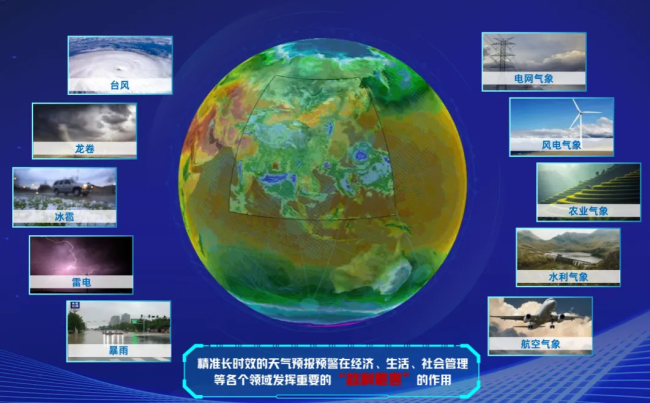
Core Viewpoint - The China Meteorological Administration has released the "Earth System Forecast Development Strategy (2025-2035)", aiming to establish a comprehensive Earth system forecasting system that integrates various Earth spheres for better disaster prevention, climate change response, and socio-economic development support [1][2]. Group 1: Strategic Goals - The goal is to build an autonomous and internationally advanced Earth system forecasting system by 2035, progressing in two phases [2]. - The first phase focuses on operationalizing a new generation of forecasting models and establishing a unified framework for meteorological artificial intelligence models within the next five years [2]. - The second phase, from 2030 to 2035, aims to fully establish a unified Earth system forecasting framework, significantly enhancing the simulation and prediction capabilities of multi-scale and multi-sphere interactions [2]. Group 2: Key Tasks - Develop multi-sphere coupled Earth system models to comprehensively reflect interactions among different Earth spheres [3]. - Focus on the research and development of meteorological artificial intelligence models to create an integrated forecasting system for weather and climate [3]. - Promote deep integration of numerical forecasting and artificial intelligence, developing common technologies and shared platforms [3]. - Build Earth system digital infrastructure to achieve seamless intelligent forecasting capabilities across all time scales, from minutes to decades [3]. - Provide high-level services for disaster prevention, climate change, and socio-economic development, effectively transforming meteorological data into application value [3]. - Strengthen the allocation of scientific and technological innovation resources to create an efficient and collaborative innovation development mechanism for Earth system forecasting [3]. - Advance the construction of a high-level talent team with a complete talent training and evaluation system [3]. - Enhance international cooperation and communication to promote data and technology resource sharing [3].
追风逐雨测风云——记一线气象工作者
Jing Ji Ri Bao· 2025-12-08 06:54
Core Viewpoint - The article highlights the ongoing efforts and advancements in meteorological forecasting, emphasizing the dedication of meteorologists to improve accuracy and provide timely weather predictions despite challenges posed by extreme weather and climate change [1][2]. Group 1: Meteorological Advancements - Meteorologists are developing numerical forecasting models to extend prediction accuracy from hourly to minute-level forecasts [1] - The integration of land, sea, air, and space observation systems has led to the creation of smart meteorological service platforms that deliver precise forecasting and warning information [1] - The National Climate Center's chief forecaster, Gao Hui, emphasizes that while 100% accuracy is unattainable, the team is committed to putting in 100% effort to improve forecasts [2] Group 2: Personal Stories of Meteorologists - Gao Hui's motivation to pursue long-term weather forecasting stemmed from experiencing a severe flood in 1998, which highlighted the need for better predictive capabilities [2][3] - Since joining the National Climate Center in 2004, Gao Hui has progressed through various roles, ultimately becoming the chief forecaster, where he has faced significant pressure during critical weather events [3] - The article also features the story of Qi Chengli, a senior engineer at the National Satellite Meteorological Center, who has been instrumental in the development of advanced meteorological satellites, enhancing observational capabilities [5][6][7] Group 3: Technological Innovations - The launch of the Fengyun-3A satellite in 2008 marked a significant advancement in China's meteorological capabilities, providing higher precision and stronger observational abilities [8] - The article discusses the establishment of the Xiong'an Meteorological Artificial Intelligence Innovation Research Institute, which aims to integrate AI into weather forecasting models, enhancing predictive accuracy [9][10] - The "Fengqing" AI model, developed in collaboration with Tsinghua University, is set to provide global weather forecasts with high resolution and frequent updates, showcasing the potential of AI in meteorology [9][10]