
Farming

Search documents
观点与策略:国泰君安期货商品研究晨报-农产品-20260119
Guo Tai Jun An Qi Huo· 2026-01-19 02:42
Report Industry Investment Rating No information about the industry investment rating is provided in the report. Core Views of the Report - Palm oil: With frequent news about bio - diesel, the volatility of edible oils has intensified [2][4]. - Soybean oil: There are insufficient themes for US soybeans, limiting the rebound height [2][4]. - Soybean meal: After the uncertainty is removed, the price may rebound [2][11]. - Soybean: The price will fluctuate [2][10]. - Corn: Attention should be paid to the spot market [2][13]. - Sugar: The price is in a low - level consolidation [2][17]. - Cotton: Wait for the end of the adjustment [2][22]. - Eggs: The sentiment for far - month contracts has weakened [2][26]. - Live pigs: Wait for the verification of peak - season demand [2][29]. - Peanuts: The price will move in a range [2][34]. Summary According to Relevant Catalogs Palm Oil and Soybean Oil - **Fundamental Data**: Palm oil's day - trading closing price was 8,674 yuan/ton with a 1.12% increase, and night - trading closing price was 8,630 yuan/ton with a 0.51% decrease. Soybean oil's day - trading closing price was 8,016 yuan/ton with a 0.98% increase, and night - trading closing price was 7,996 yuan/ton with a 0.25% decrease [4]. - **Macro and Industry News**: From January 1 - 15, 2026, Malaysia's palm oil production decreased by 18.24% compared to the same period last month. The expected export volume from January 1 - 15, 2026, increased by 20.5% compared to the same period last month. The US has lifted the import ban on Malaysia's FGV Holdings. Brazil's 2025 soybean production was estimated at 166.05 million tons, a 14.6% year - on - year increase [5][6][7][8]. - **Trend Intensity**: The trend intensity of palm oil is 0, and that of soybean oil is also 0 [9]. Soybean Meal and Soybean - **Fundamental Data**: DCE soybean meal 2605's day - trading closing price was 2,727 yuan/ton with a 0.44% decrease, and night - trading closing price was 2,722 yuan/ton with a 0.40% decrease. DCE soybean 2605's day - trading closing price was 4,324 yuan/ton with a 0.21% decrease, and night - trading closing price was 4,303 yuan/ton with a 0.74% decrease [10]. - **Macro and Industry News**: On January 16, CBOT soybean futures rose due to strong domestic soybean crushing and the strength of neighboring corn and wheat. However, Brazil's record - high soybean harvest will limit the upside of soybean prices. Canada and China reached a trade agreement including reducing rapeseed tariffs [10][12]. - **Trend Intensity**: The trend intensity of soybean meal is +1, and that of soybean is 0 [12]. Corn - **Fundamental Data**: The day - trading closing price of C2603 was 2,281 yuan/ton with a 0.13% decrease, and night - trading closing price was 2,284 yuan/ton with a 0.13% increase. The day - trading closing price of C2605 was 2,277 yuan/ton with a 0.09% decrease, and night - trading closing price remained unchanged [14]. - **Macro and Industry News**: The northern corn bulk shipping port price was 2,280 - 2,290 yuan/ton, and the container first - class grain port price was 2,330 - 2,350 yuan/ton, remaining stable. The price in Guangdong Shekou decreased by 10 yuan/ton [15]. - **Trend Intensity**: The trend intensity of corn is 0 [16]. Sugar - **Fundamental Data**: The raw sugar price was 14.96 cents/pound, the mainstream spot price was 5,350 yuan/ton, and the futures main - contract price was 5,258 yuan/ton [17]. - **Macro and Industry News**: As of January 15, 2026, India's sugar production in the 25/26 season increased by 22% year - on - year. Brazil exported 291 million tons in December, a 2.9% increase. China imported 44 million tons of sugar in November, a 9 - million - ton decrease [17]. - **Trend Intensity**: The trend intensity of sugar is - 1 [20]. Cotton - **Fundamental Data**: The day - trading closing price of CF2605 was 14,590 yuan/ton with a 0.58% decrease, and night - trading closing price was 14,535 yuan/ton with a 0.38% decrease. The day - trading closing price of CY2603 was 20,535 yuan/ton with a 0.63% decrease, and night - trading closing price was 20,525 yuan/ton with a 0.05% decrease [22]. - **Macro and Industry News**: The cotton spot sales basis is stable, and the freight for cotton out of Xinjiang has increased slightly. The price of pure - cotton yarn has declined slightly, and the downstream orders have improved slightly but are still limited [23]. - **Trend Intensity**: The trend intensity of cotton is 0 [25]. Eggs - **Fundamental Data**: The closing price of egg 2602 was 3,026 yuan/500 kilograms with a 0.50% increase, and the closing price of egg 2603 was 3,072 yuan/500 kilograms with a 0.39% increase [26]. - **Trend Intensity**: The trend intensity of eggs is 0 [27]. Live Pigs - **Fundamental Data**: The Henan spot price was 13,180 yuan/ton, the Sichuan spot price was 12,800 yuan/ton, and the Guangdong spot price was 13,060 yuan/ton. The closing price of live - pig 2603 was 12,010 yuan/ton, live - pig 2605 was 12,260 yuan/ton, and live - pig 2607 was 12,885 yuan/ton [31]. - **Trend Intensity**: The trend intensity of live pigs is 0 [32]. Peanuts - **Fundamental Data**: The day - trading closing price of PK603 was 7,830 yuan/ton with a 0.10% decrease, and PK605 was 7,822 yuan/ton with a 0.10% decrease. The price of Xingcheng small - Japanese peanuts decreased by 40 yuan/ton to 8,600 yuan/ton [34]. - **Spot Market Focus**: In Henan, Nanyang Baisha peanuts were priced at 3.75 - 3.8 yuan, and Kaifeng large peanuts were 3.5 - 4.0 yuan. In Jilin, 308 peanuts were about 4.6 yuan. In Liaoning, 308 peanuts were 4.5 - 4.6 yuan, and the price of Fuxin small - Japanese peanuts was slightly stronger [35]. - **Trend Intensity**: The trend intensity of peanuts is 0 [36].
US farm economy shows widening cracks as costs rise, jobs vanish
Yahoo Finance· 2026-01-15 11:02
Core Insights - The U.S. farm economy is under significant financial pressure, with farmers facing low prices and high production costs, leading to calls for clearer long-term biofuel policies and trade strategies to enhance exports [1][4][7] Group 1: Financial Strain on Farmers - U.S. farmers are experiencing a prolonged period of low crop prices and high production costs, with crop prices for corn and soybeans estimated at $4.10 and $10.20 per bushel respectively, both down from 2023 levels [9] - The USDA forecasts a 3% increase in total production costs for corn and a 3.1% increase for soybeans in 2026, indicating ongoing financial challenges for farmers [8] - Bankruptcy filings under Chapter 12 have surged, with 293 farmers filing in the first nine months of 2025, a 36% increase compared to the total for 2024, highlighting the financial distress in the sector [12][13] Group 2: Impact on Agricultural Equipment Industry - Sales of agricultural equipment have declined significantly, with tractor sales down nearly 10% and combine sales plunging over 35% from the previous year, reflecting reduced investment by farmers [14] - Major equipment manufacturers like Deere & Co. have laid off over 2,000 employees since 2023, and other companies like AGCO and CNH Industrial have also reduced their workforce due to weak demand and high material costs [15][16] Group 3: Broader Economic Implications - The financial strain on farmers is expected to have ripple effects on rural economies, potentially leading to job losses in local schools, hospitals, and government agencies that support rural families [17] - The tightening of credit access is making it increasingly difficult for farmers to secure necessary short-term loans, compounding the financial challenges they face [8][11]
内蒙古累计建成高标准农田6281万亩
Xin Lang Cai Jing· 2026-01-14 20:45
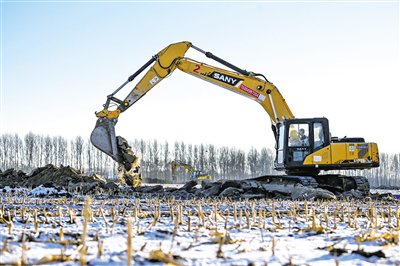
Core Viewpoint - Inner Mongolia is actively promoting high-standard farmland construction focused on efficient water conservation, aiming to increase grain yield by over 10% per mu, thereby enhancing agricultural efficiency and farmers' income [3]. Group 1: Agricultural Development - The region has constructed a total of 62.81 million acres of high-standard farmland to date [3]. - The initiative ensures the integration of eight essential components: land, water, roads, forests, electricity, technology, and management [3]. - The construction is part of a broader strategy to improve agricultural productivity and support rural economic growth [3].

Understanding the Jobs Market Freeze: What It Means for Workers and the Economy
FX Empire· 2026-01-14 12:00
Group 1: Employment Trends - Companies are hesitant to hire due to uncertainty from tariffs, leading to only 50,000 new jobs created in December, while unemployment slightly decreased from 4.5% to 4.4% [1][5][19] - Worker shortages are prevalent in sectors like construction, healthcare, and hospitality, making it difficult for businesses to fill positions despite having job openings [3][6][14] - Wages have increased, with a 3.8% annual growth, forcing businesses to pay competitive salaries, which adds to the cost of hiring [4][19] Group 2: Economic Dynamics - The current labor market is characterized as a "low-hire, low-fire" economy, where companies are reluctant to expand payrolls or conduct layoffs due to past experiences during the COVID recovery [5][20][21] - The Federal Reserve faces challenges as traditional rate cuts may not stimulate hiring due to ongoing labor shortages, leading to a cautious approach on monetary policy [7][15][21] - Financial markets are reacting to the disconnect between optimistic rate cut expectations and the current labor data, which does not support such optimism [8][22][24] Group 3: Market Implications - Equities, bonds, and precious metals are trading at or near record highs based on expectations of multiple Fed rate cuts, which may not materialize [22][24][25] - If the Fed maintains a cautious stance with only one rate cut, bond yields may rise sharply, impacting bondholders negatively [23][24] - The U.S. dollar has weakened due to expectations of aggressive Fed easing, but if these expectations are adjusted, the dollar may strengthen [26]

2025年我国三大粮食作物 化肥利用率达43.3%
Xin Lang Cai Jing· 2026-01-13 04:19
Group 1 - The core viewpoint of the articles is that China's fertilizer utilization rate for major grain crops (wheat, corn, and rice) is projected to reach 43.3% by 2025, an increase of 3.1 percentage points from 2020 [1][2] - The continuous improvement in fertilizer utilization rate is attributed to systematic policy guidance, technological innovation, and optimized promotion services [1] - The Ministry of Agriculture and Rural Affairs has been actively promoting the reduction and efficiency of fertilizer use since the start of the 14th Five-Year Plan, implementing green farming practices and enhancing soil testing and fertilization techniques [1] Group 2 - By 2025, the coverage rate of soil testing and formulated fertilization technology for the three major grain crops is expected to exceed 95% [1] - The promotion of new scientific fertilization products, technologies, and equipment is expected to significantly increase the efficiency of fertilizer use, with specific initiatives such as deep fertilization for rice and integrated water and fertilizer management for corn and wheat [1] - The cumulative promotion of soybean inoculation with rhizobium bacteria has reached nearly 8 million acres, resulting in an average reduction of nitrogen fertilizer application by 0.5 kg per acre [2] Group 3 - The area of organic fertilizer application is projected to exceed 650 million acres by 2025, with pilot projects in green farming reducing fertilizer use by an average of 10% [2] - There are currently over 17,000 socialized scientific fertilization service organizations in China, providing services for an area of 250 million acres annually [2] - The establishment of intelligent fertilization service points and the provision of specialized services have significantly contributed to the increase in fertilizer utilization rates [2]
Bill Gates owns 1 of every 4000 acres of US farmland. Why the tech billionaire loves traditional agriculture investing
Yahoo Finance· 2026-01-11 15:00
Core Insights - Bill Gates has transitioned from Microsoft to focus on philanthropy through the Bill & Melinda Gates Foundation, investing billions annually in various projects [1] Group 1: Bill Gates' Investment in Farmland - Bill Gates is the largest private farmland owner in the U.S., owning over 250,000 acres, which constitutes approximately 1/4000 of all U.S. farmland [2][3] - The investment in farmland is seen as a hedge against inflation, with U.S. farmland values reaching a record $4,350 per acre, reflecting a 4.3% year-over-year increase [6] - Despite challenges such as tariff restrictions and the trade war with China, which impacted farmers' market access, farmland values have continued to rise [4][6] Group 2: Challenges in Farmland Investment - Investing in farmland requires significant capital, and financing can be difficult to obtain, especially for those without farming expertise [7]

【四中全会精神在基层】定西高标准农田建设铺就丰收路
Xin Lang Cai Jing· 2026-01-11 01:43
Core Viewpoint - The article highlights the significant advancements in agricultural infrastructure in Dingxi, Gansu Province, focusing on high-standard farmland construction and efficient water-saving irrigation projects aimed at enhancing agricultural productivity and sustainability [1][2][3]. Group 1: Agricultural Development Initiatives - Dingxi is implementing high-standard farmland and efficient water-saving irrigation projects to transform previously drought-prone areas into productive agricultural land, with a focus on improving yield and ecological sustainability [1][2]. - The project in Tuanjie Town includes the construction of 25,000 acres of efficient water-saving irrigation, along with the development of 201.96 kilometers of water supply pipelines and 310 kilometers of field networks [1][2]. Group 2: Expected Outcomes and Benefits - By 2027, the project aims to achieve full coverage of irrigation with tap water, with expected potato yields of over 8,000 pounds per acre, and high-quality varieties potentially exceeding 10,000 pounds per acre, representing nearly a tenfold increase in productivity [2][3]. - The initiative allows local farmers to lease land to cooperatives while retaining a portion for personal cultivation, ensuring stable income and job opportunities, thus addressing challenges in agricultural product sales [2][3]. Group 3: Strategic Agricultural Policies - Dingxi's agricultural strategy aligns with the principles outlined in the 20th National Congress, focusing on enhancing agricultural production capacity and quality, promoting rural development, and improving the effectiveness of agricultural policies [3]. - The city has designated 10.35 million acres as permanent basic farmland, with 2.8082 million acres developed as high-standard farmland, accounting for 27.2% of the total basic farmland area [3].
成都“吨粮田”一年试出新账本
Xin Lang Cai Jing· 2026-01-10 21:36
Core Insights - Chengdu's grain production is projected to reach 2.371 million tons in 2025, marking a 1.1% year-on-year increase, outpacing the provincial growth rate by 0.3% [1] - The increase in grain production is primarily attributed to improvements in yield per unit area, supported by the establishment of 30 pilot "ton grain fields" starting in 2024 [1][2] Group 1: Pilot Program Background - The "ton grain field" initiative is part of a national strategy aimed at enhancing grain production capacity, with a focus on increasing yield per unit area [2] - The pilot program was launched in the Chengdu Plain, which has optimal farming conditions, to implement the first batch of "ton grain fields" [2][3] Group 2: Pilot Program Details - "Ton grain fields" are defined as plots where the comprehensive yield exceeds 1,000 kg per mu for both spring and autumn crops [3] - In 2024, 30 pilot sites covering a total area of 340,000 mu were selected, characterized by flat terrain and suitable for mechanized farming [3] Group 3: Pilot Program Outcomes - The average yield in the pilot area reached 1,060 kg per mu, exceeding expectations for rice and wheat production [5] - The pilot program has shown significant improvements in management and innovation, contributing to a 3% increase in yield per mu in 2025 [6] - The contribution of the pilot areas to Chengdu's overall grain production is notable, with the average yield for the city increasing by 0.6% year-on-year [6]
我市两人荣获2025年度“金牛奖”
Xin Lang Cai Jing· 2026-01-10 17:26
Core Insights - The "Golden Bull Award" for 2025 Zhejiang Rural Revitalization Leaders was announced, recognizing individuals who have made significant contributions to rural development and agricultural innovation [1] Group 1: Award Recipients - Lin Fangliang, the Party Secretary and Village Committee Director of Caoping Village, has developed a key industry with an annual output value exceeding 4 million yuan from "Caoping Red" chili peppers, while also integrating cultural projects to enhance local economy [1] - Weng Xudong, the Technical Director and Senior Engineer of Zhejiang Yulaoda Agricultural Technology Co., has led ecological fishery development, creating local standards and significantly increasing income for low-income farmers and village collectives [1] Group 2: Impact on Local Economy - Lin Fangliang's initiatives have effectively increased the income of hundreds of villagers along the Zhejiang-Jiangxi border, contributing to the collective economy of the village [1] - Weng Xudong's "Common Prosperity Courtyard" initiative has generated over 1 million yuan for 13 village collectives and provided employment for over 100 individuals, showcasing the potential for rural economic growth through innovative practices [1]
做好粮食逆周期和跨周期调节
Jing Ji Ri Bao· 2026-01-07 21:07
Core Viewpoint - The article emphasizes the importance of implementing central economic and rural work meeting guidelines to enhance food security governance and establish a more resilient and sustainable national food security system in response to both short-term price fluctuations and long-term development challenges [1][2]. Group 1: Short-term and Long-term Strategies - The government aims to utilize counter-cyclical and cross-cyclical adjustments as complementary policy tools to stabilize food prices and ensure food security [1][2]. - Counter-cyclical adjustments focus on immediate market stability, while cross-cyclical adjustments are aimed at long-term development, addressing the cyclical nature of food supply and demand [1][2]. Group 2: Current Food Production and Challenges - In the past year, China's food production reached a new high, with per capita grain availability at 1,000 jin, achieving basic self-sufficiency in grains and absolute security in staple foods [2]. - Despite these achievements, potential risks remain, including downward pressure on food prices, structural shortages, and environmental constraints that could affect long-term food security [2][3]. Group 3: Policy Implementation and Market Stability - The government has implemented effective market and proactive government measures, with total grain purchases reaching 8.3 billion jin, including 4.5 billion jin of wheat and rice through minimum purchase prices, ensuring farmers can sell their crops [3]. - Future efforts will focus on enhancing market-oriented purchasing and the role of policy reserves to stabilize the grain market [3]. Group 4: Enhancing Food Security Foundations - The government plans to implement a new round of actions to increase grain production capacity, improve agricultural infrastructure, and adapt to consumption trends while ensuring basic grain self-sufficiency [4]. - Strategies include optimizing planting structures, enhancing agricultural production layouts, and establishing stable grain supply bases to improve the overall food security system [4]. - Strengthening international agricultural cooperation and diversifying import channels are also key to mitigating risks associated with single-source dependencies [4].