
Foreign Exchange

Search documents
ETO Markets 外汇:美国数据密集时段前,英镑兑美元交易谨慎
Sou Hu Cai Jing· 2025-09-25 10:55
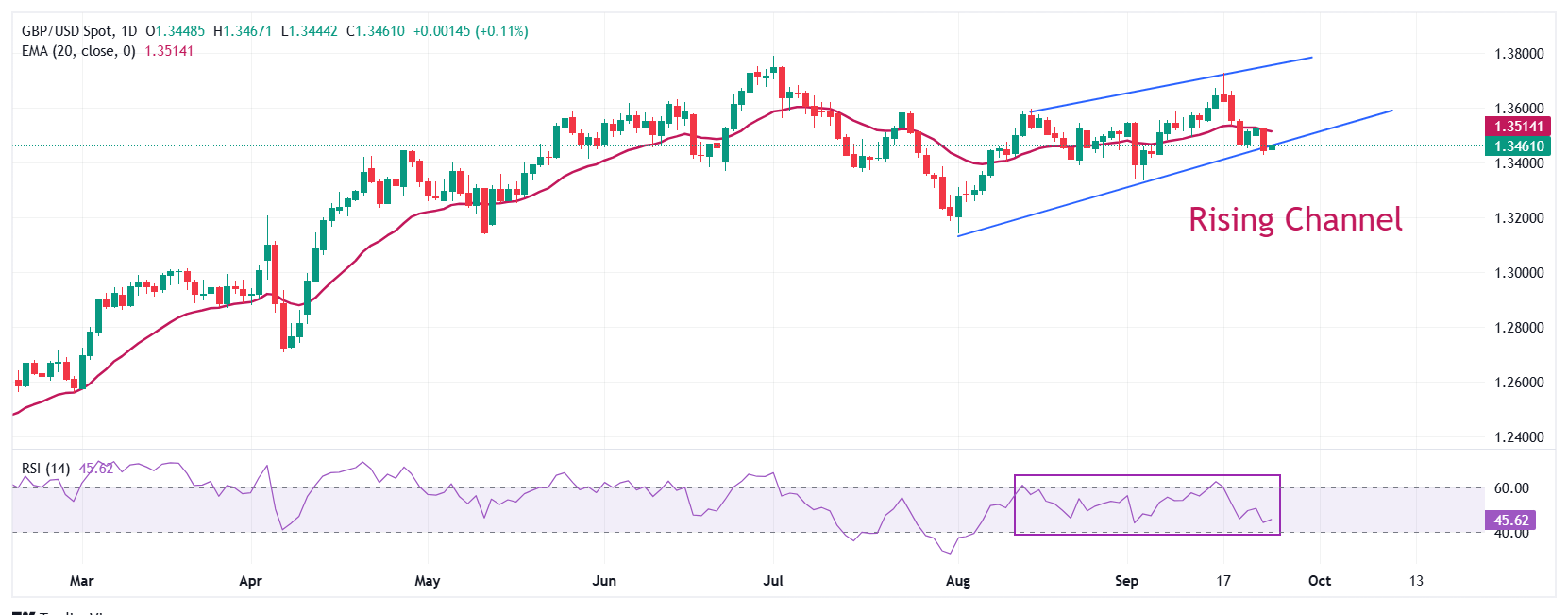
Economic Data and Market Trends - The upcoming release of key economic data includes the US GDP for Q2, initial jobless claims, and durable goods orders [1][5] - The dollar index (DXY) has maintained its near two-week high at 97.80, indicating a strong dollar ahead of the US economic data release [4] - Initial jobless claims are expected to rise from 231,000 to 235,000, following a significant increase to 264,000, the highest in four years [4] - Durable goods orders are projected to decline by 0.5% in August, following a 2.8% decrease in July [4] UK Economic Outlook - The Bank of England (BoE) is under scrutiny regarding potential interest rate cuts for the remainder of the year, with recent comments suggesting a cautious approach [6] - BoE's Megan Greene indicated that inflation risks have shifted upwards, and the central bank expects economic growth to rebound without significant labor market risks [6] - The BoE maintained interest rates at 4% after a 25 basis point cut in August, reflecting a "gradual and cautious" monetary easing policy [6] Currency Performance - The GBP/USD exchange rate is trading cautiously around 1.3450, influenced by a stronger dollar ahead of US economic data [3][9] - The recent trend for GBP/USD remains bearish, with the 20-day EMA acting as a key resistance level at 1.3514 [9] - Key support for GBP/USD is identified at the August 1 low of 1.3140, while resistance is noted near the July 1 high of 1.3800 [11]

Rupee shielded by central bank intervention even as pressure lingers
The Economic Times· 2025-09-24 10:38
Core Viewpoint - The Indian rupee closed at 88.69 against the U.S. dollar, nearing its all-time low, with the Reserve Bank of India (RBI) likely intervening to support the currency amid increasing dollar strength and concerns over U.S. tariffs and visa fee hikes [1][7]. Currency Market Dynamics - The RBI's intervention was noted across various segments, including non-deliverable forwards (NDF), currency futures, and the OTC spot market, which helped to stabilize the rupee despite ongoing pressures [2][7]. - A trader indicated that the RBI's presence led to muted price action, although the rupee's trajectory appears to lean towards further weakening [2][7]. Central Bank Strategy - The RBI has increased its activity in the offshore NDF market to support the rupee, allowing for a gradual weakening while selectively intervening to manage volatility rather than maintaining a fixed exchange rate [5][7]. - Abhishek Goenka from IFA Global noted that the RBI's approach is to smooth out volatility rather than defend a specific level for the rupee [5]. Economic Influences - Dollar demand related to gold imports and concerns over the H-1B visa fee hike have contributed to the pressure on the rupee [6][7]. - The dollar gained 0.3% against a basket of peers, while India's benchmark 10-year bond yield increased to 6.486% [6][7].

【金融街发布】国家外汇局: “十四五”以来破获外汇案件超6100件
Xin Hua Cai Jing· 2025-09-22 14:12
Core Viewpoint - The State Administration of Foreign Exchange (SAFE) has effectively managed foreign exchange cases and maintained foreign exchange reserves above $3 trillion, contributing to economic stability and supporting the new development pattern in China [1][3]. Group 1: Foreign Exchange Management and Economic Stability - Since the beginning of the 14th Five-Year Plan, over 6,100 foreign exchange cases have been cracked down on, significantly combating illegal activities such as underground banks [1]. - The international balance of payments has remained stable, with the current account surplus to GDP ratio maintained within a reasonable range, reflecting resilience in foreign trade [1]. - By the end of July, foreign institutions and individuals held over 10 trillion yuan in domestic stocks, bonds, and deposits, indicating active cross-border investment [1]. Group 2: Improvement in Foreign Exchange Services - The foreign exchange service environment has been optimized, with the number of enterprises able to handle transactions based on instructions increasing more than fivefold since the end of 2020 [2]. - Administrative licensing for trade foreign exchange receipts has been eliminated, leading to a reduction of over 70% in the number of administrative licenses issued by SAFE [2]. - A unified policy framework for capital pools has benefited over 1,000 multinational groups and 19,000 domestic and foreign member enterprises [2]. Group 3: Regulatory and Risk Management Enhancements - The regulatory capacity and risk prevention abilities in the context of an open environment have been continuously strengthened, with a dual management framework of macro-prudential and micro-regulation established [2]. - The foreign exchange market has shown improved functionality and resilience, successfully withstanding multiple rounds of external shocks [2]. Group 4: Foreign Exchange Reserves - China's foreign exchange reserves have remained stable above $3 trillion, consistently exceeding $3.2 trillion in recent years, serving as a crucial stabilizer for the national economy [3].

Despite A Decline, The Dollar's Influence Persists
Seeking Alpha· 2025-09-20 04:30
Economic Outlook - The U.S. dollar is under pressure due to policy uncertainty, a growing deficit, and weakening economic growth, which may extend its downtrend observed in 2025 [3][9] - Analysts predict that the de-dollarization trend will persist, potentially benefiting major G10 currency pairs like EUR/USD, CHF/USD, and CAD/USD [4] Trade Agreements - A recent trade deal between the U.S. and EU reduced tariffs from 30% to 15%, resulting in a 1.2% gain for the dollar on the announcement day, although it remains down approximately 13% for the year [5] - Despite the trade agreements, experts believe the dollar's recovery will be limited until more significant risks are addressed, such as the budget deficit and debt crisis [6] Currency Performance - The British pound's gains against the dollar are attributed more to the dollar's weakness than confidence in the UK economy, with expectations of flat trading for the pound in the coming year [10] - The Canadian dollar may strengthen if favorable tariff agreements are reached, particularly as oil prices rise [10] - The Swiss franc could benefit from its safe-haven status, while the Japanese yen faces challenges due to fiscal issues and low growth [10] Market Dynamics - The CME Group reported a 19% increase in unique FX futures and options users year-over-year, with open interest reaching a record 3.78 million contracts, valued at approximately $358 billion [7] - The FX market faces fragmentation challenges, making it difficult for investors to access reliable pricing and liquidity [8] Renminbi's Growing Influence - The renminbi is gaining traction as a global reserve currency, with its share of global SWIFT payments increasing to 3.5% in April 2025, up from 2% in 2023 [15] - Institutions are increasingly using the renminbi for cross-border trade and investment, indicating a shift in preference, especially in emerging markets [16] U.S. Economic Resilience - Despite challenges, some analysts remain optimistic about the dollar, citing steady U.S. economic growth and a strong AI sector as factors that could support the dollar's value [19] - The U.S. maintains a favorable business environment and higher benchmark rates compared to many countries, contributing to its attractiveness for investment [20]

Traders Blame ‘Insane’ Tech Advancements for Quiet FX Markets
Yahoo Finance· 2025-09-19 07:00
Core Viewpoint - Advancements in electronic trading and algorithmic trading are significantly reducing volatility in the currency market, leading to a calmer trading environment that may impact market makers' profitability [1][2][3]. Group 1: Market Volatility - The foreign-exchange market, valued at $7.5 trillion a day, is experiencing near-record low volatility, marking a long-term decline despite occasional spikes due to events like US trade tariffs [2][4]. - The euro's intraday movements are currently less than half of the long-term average, contrasting with Treasury yields that are fluctuating in line with historical patterns [4]. Group 2: Impact of Electronic Trading - The ability for volatility to decrease rapidly has increased significantly, with market reactions to economic data now returning to normal within 30 seconds, compared to longer durations previously [3][5]. - The changing landscape of market participants, including the rise of pod shops and competing systematic strategies, is contributing to a more stable trading environment [6]. Group 3: Strategic Shifts - The rarity of significant volatility events is leading asset managers to adjust their strategies, moving away from using calm periods to acquire cheap hedges against potential market flare-ups [7].
全球宏观展望与策略:全球利率、大宗商品、货币与新兴市场-Global Macro Outlook and Strategy_ Global Rates, Commodities, Currencies and Emerging Markets
2025-09-26 02:28
Summary of Key Points from the Conference Call Industry Overview - The conference call primarily discusses the **Global Macro Outlook**, focusing on **US Rates**, **International Rates**, **Commodities**, **Currencies**, and **Emerging Markets** [3][4][8]. Core Insights and Arguments US Rates - Risks to the front end of the yield curve are biased lower due to labor market weakness, while concerns about Fed independence are pushing long-end rates higher [3][15]. - The first Fed cut is projected for **September 2025**, with expectations of **four sequential cuts**, bringing the funds rate target range to **3.25-3.5%** by **1Q26** [12][11]. - Anticipated **2-year Treasury yields** are expected to reach **3.50%** and **10-year yields** to **4.20%** by the end of **2025** [12][11]. International Rates - Developed market (DM) curves have steepened, particularly in the US, amid renewed focus on the long end of the curve [4][36]. - The European policy easing is losing momentum, impacting the overall yield curve dynamics [36]. Commodities - The oil market is expected to face a significant surplus, with price forecasts remaining unchanged for now due to uncertainties surrounding China's stock build [8][88]. - The European natural gas market is entering winter with historically low storage levels, leading to a bullish stance for **4Q25** and a price target of **42 EUR/MWh** [8][93]. - Copper prices are anticipated to face bearish pressure, potentially dropping to **$9,000/mt** due to unwinding demand from the US and China [8]. Currencies - The US dollar has not weakened despite recent yield curve steepening, attributed to domestic growth factors [56][58]. - Concerns regarding Fed independence and fiscal excesses are influencing the dollar's performance, with expectations of a bearish outlook [58][63]. - Fiscal policy is expected to be a key differentiator for FX, with the hypothesis that fiscal easing supports currencies in low-debt countries [63][59]. Emerging Markets - The resilience of global growth and downside risks in the US are supporting emerging market (EM) local markets [8]. - A recommendation to stay overweight (OW) in EM FX and local rates, while maintaining a market weight (MW) in EM corporates and underweight (UW) in EM sovereigns [8]. Additional Important Insights - The US Treasury is well-funded through **FY25**, but a significant funding gap is expected to emerge in **FY26**, prompting coupon auction size increases starting in **May 2026** [19][22]. - The passage of the **OBBBA** is projected to lead to a surge in T-bill issuance, with an estimated **$529 billion** of net T-bill issuance expected in the current quarter [25][23]. - Demand from foreign investors remains weak, with expectations of a shift towards more price-insensitive demand in the Treasury market [29][31]. This summary encapsulates the critical insights and projections discussed during the conference call, providing a comprehensive overview of the current macroeconomic landscape and its implications for various markets.
DLSM外汇平台:8月CPI低于预期,纽元美元会继续下行吗?
Sou Hu Cai Jing· 2025-09-12 05:48
Group 1 - The New Zealand dollar (NZD) has faced downward pressure, recently trading around 0.5870 against the US dollar, influenced by a slight rebound in the dollar and declining inflation data from China [1][3] - China's Consumer Price Index (CPI) fell by 0.4% year-on-year in August, which was below market expectations, indicating ongoing deflationary pressures due to weak domestic demand and oversupply of industrial goods [3][6] - The weak CPI in China may indirectly affect New Zealand's exports, as China is a major trading partner, leading to increased volatility in the NZD/USD exchange rate [3][6] Group 2 - The US CPI for August showed the largest year-on-year increase in seven months, although it was still below general market expectations, raising concerns about future US monetary policy [3][4] - Market participants are focusing on key upcoming economic indicators, including China's CPI and economic performance, as well as the US consumer confidence index, which may influence short-term currency fluctuations [6] - Analysts emphasize the importance of understanding trends and risks rather than relying solely on specific data points for investment decisions, highlighting the interconnectedness of global economies [4][6]
Taoshi taps Bittensor to bring $7.5tn forex market to DeFi with new exchange
Yahoo Finance· 2025-09-11 13:49
Core Insights - The launch of 0xMarkets by Taoshi and General TAO Ventures aims to integrate digital assets with the $7.5 trillion foreign exchange market [1][3] - The platform will facilitate trading between multiple fiat currencies and cryptocurrencies, focusing on acquiring liquidity as a key to success [2][5] Company Overview - Taoshi is leveraging the Bittensor blockchain to create a decentralized exchange that allows for currency swaps, including major fiat currencies and cryptocurrencies like Bitcoin and Ethereum [2][3] - The platform's design is inspired by Curve Finance's token model to attract and retain liquidity providers [3][6] Market Context - The foreign exchange market is the largest financial market globally, with an average daily trading volume of approximately $7.5 trillion [3] - Previous attempts to establish a blockchain-based forex market have largely failed, indicating the challenges in this sector [4] Liquidity Strategy - A stable and substantial liquidity base is essential for the success of forex trading, especially given the small daily price movements in national currencies [5] - 0xMarkets will utilize a Bittensor subnet as a liquidity-as-a-service engine, allowing liquidity providers to earn fees by depositing USDC stablecoin [5][6] Incentive Mechanism - Liquidity providers will also receive emissions of the subnet's alpha token, which will serve as a governance token, allowing holders to influence market dynamics [6][7] - The dual rewards system aims to attract sufficient liquidity to ensure the market's functionality and sustainability [7]
Currency Exchange International Reports Third Quarter 2025 Results
Globenewswire· 2025-09-10 21:00
Core Insights - Currency Exchange International, Corp. reported a net income of $4.2 million for Q3 2025, an 8% increase year-over-year, despite a net loss of $1.0 million from its discontinued subsidiary, Exchange Bank of Canada [1][2][6] Financial Performance - Total revenue for Q3 2025 was $21.3 million, a 7% increase from $20.0 million in Q3 2024, driven by growth in Payments and Banknotes revenue [2][7] - Reported EBITDA for Q3 2025 was $8.1 million, up 4% from $7.8 million in the prior year, while adjusted EBITDA was $8.2 million, a 5% increase [2][7] - Adjusted net income decreased by 10% to $4.1 million compared to $4.6 million in the prior year [2][7] Operational Highlights - The Group processed 51,727 payment transactions worth $1.77 billion in Q3 2025, compared to 40,859 transactions worth $1.36 billion in the prior period [11] - The Group opened a new company-owned location in Scottsdale, Arizona, and added 138 new non-airport locations across the U.S. [11] - The Group increased its banknotes market penetration by adding 31 new financial institution clients in Q3 2025 [11] Strategic Decisions - The Group announced the cessation of operations for its subsidiary, Exchange Bank of Canada, effective February 18, 2025, with plans to apply for discontinuance from the Bank Act in Q4 2025 [3] - Management anticipates that the annualized operating expenses previously shared with EBC will be approximately $3 million after tax, fully borne by continuing operations [3] Shareholder Actions - The Group repurchased 282,400 common shares for a total of $4.25 million under a Normal Course Issuer Bid (NCIB) [4] - The shares were purchased at normal market prices, with 190,300 shares cancelled prior to September 10, 2025 [4] Market Position - The Group upgraded its U.S. securities listing to the OTCQX Best Market under the symbol CURN on May 20, 2025 [5] - The Group maintains a strong financial position with total equity of $83.8 million and net working capital of $67.6 million as of July 31, 2025 [2][7]

Currency Exchange International Reports Third Quarter 2025 Results
Globenewswire· 2025-09-10 21:00
Core Viewpoint - Currency Exchange International, Corp. reported a net income of $4.2 million for Q3 2025, an 8% increase year-over-year, despite a 10% decrease in adjusted net income due to the discontinuation of operations at its Canadian subsidiary [1][4][10]. Financial Performance - Reported net income for Q3 2025 was $4.2 million, up 8% from the previous year, while adjusted net income decreased by 10% to $4.1 million [1][10]. - EBITDA for Q3 2025 was reported at $8.1 million, a 4% increase year-over-year, with adjusted EBITDA at $8.2 million, reflecting a 5% increase [2][10]. - Total revenue for Q3 2025 was $21.3 million, a 7% increase compared to $20.0 million in the prior year, driven by growth in Payments and Banknotes revenue [10][12]. Operational Highlights - The Group's Payments revenue increased by 24% year-over-year, while Banknotes revenue rose by 4% [10][12]. - The Group processed 51,727 payment transactions worth $1.77 billion in Q3 2025, compared to 40,859 transactions worth $1.36 billion in the prior period [12]. - The Group opened a new company-owned location in Scottsdale, Arizona, and added 138 new non-airport locations across the U.S. [12]. Strategic Developments - The decision to cease operations of the Exchange Bank of Canada was announced on February 18, 2025, with the subsidiary classified as discontinued operations starting Q2 2025 [5][10]. - The Group's capital position remained strong, with total equity of $83.8 million and net working capital of $67.6 million as of July 31, 2025 [4][10]. Shareholder Actions - The Group repurchased a total of 282,400 common shares for $4.25 million under a Normal Course Issuer Bid (NCIB) [6][10].