
半导体制造

Search documents
台积电北美子公司CEO换帅,半导体行业多项高层变动
美股研究社· 2025-11-06 11:48
Core Insights - The semiconductor industry is experiencing significant executive changes, including new appointments at TSMC North America, Synopsys, and Shannon Semiconductor, which may impact their strategic directions and market operations [4][5][10][14]. Group 1: TSMC North America - TSMC announced the appointment of Sajiv Dalal as the new CEO of TSMC North America, effective January 1, 2026, following the retirement of David Keller [5][8]. - David Keller has over 30 years of experience in the semiconductor industry and has been with TSMC since 1997, while Sajiv Dalal has nearly 25 years of experience at TSMC, focusing on the North American market [7][8]. - TSMC North America is responsible for wafer foundry services, advanced packaging, and technology collaboration in the U.S., with a focus on AI, smartphones, automotive, and IoT applications [7][8]. Group 2: Synopsys - Synopsys announced the immediate departure of its Chief Revenue Officer, Rick Mahoney, who has nearly 30 years of experience in the semiconductor manufacturing and packaging sector [10][12]. - The company emphasized that this leadership change will not affect its performance targets for the fourth quarter and the full fiscal year 2025 [10]. - Synopsys reported a record revenue of $1.74 billion for the third quarter of fiscal year 2025, a 14% year-over-year increase, although it fell short of market expectations [12]. Group 3: Shannon Semiconductor - Shannon Semiconductor announced the resignation of Chairman Fan Yongwu for personal reasons, while retaining his position as a board member [14][17]. - Huang Zewei has been elected as the new Chairman, with a background in the company and significant shareholding [14][17]. - Shannon Semiconductor reported a revenue of 9.276 billion yuan for the third quarter, a 6.58% year-over-year increase, but a 3.11% decline in net profit [14][17]. Group 4: ASML - ASML appointed Marco Pieters as the new Executive Vice President and Chief Technology Officer, with over 25 years of experience at the company [19][21]. - The company emphasizes the importance of technology and engineering talent for future success, with Pieters expected to drive the technology roadmap [21].


商务部:中美经贸磋商达成主要成果共识,涉及芬太尼关税和执法合作、农产品贸易、美对华海事物流和造船业301措施等
中国基金报· 2025-11-06 11:08
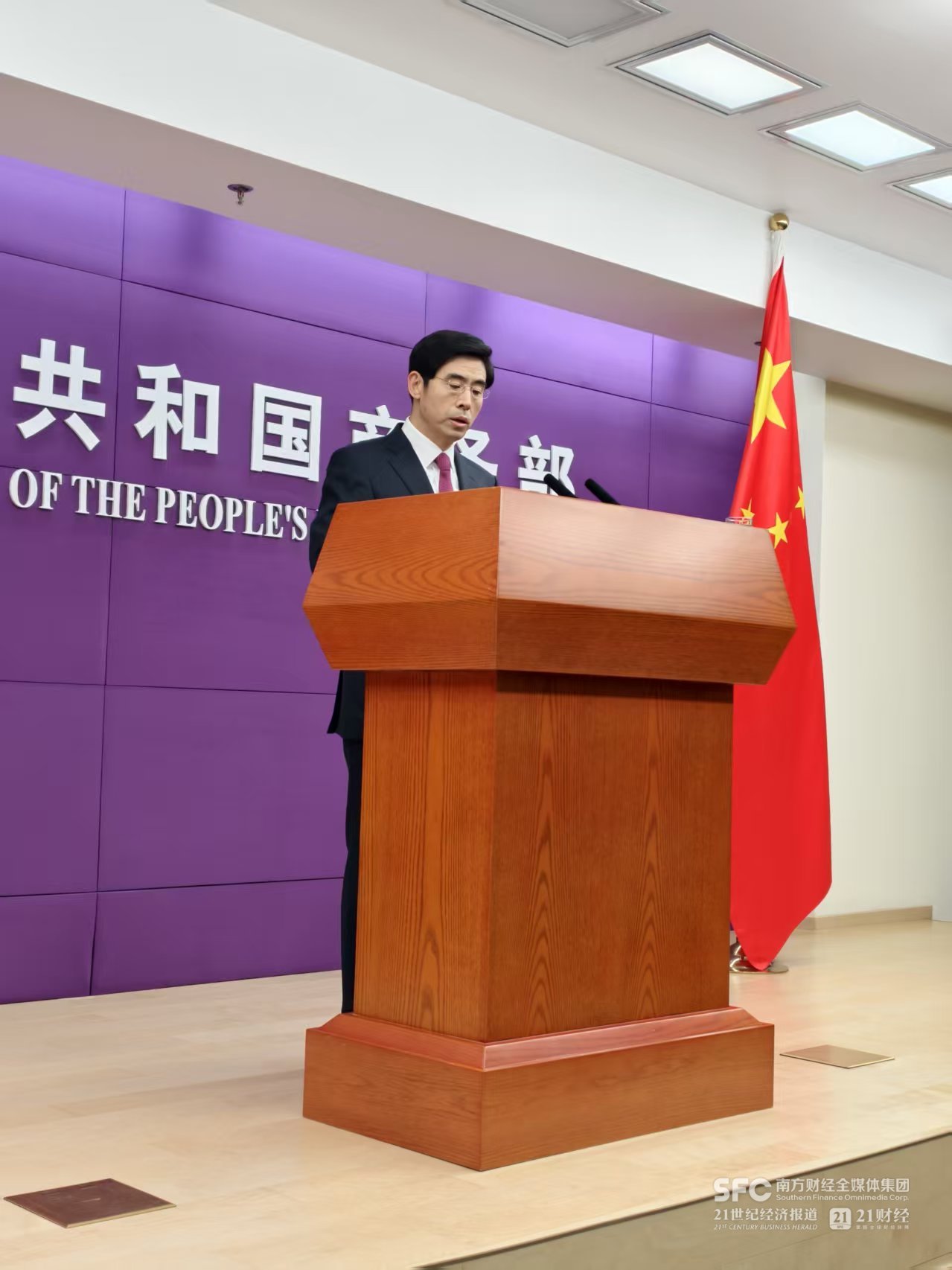
Group 1 - The Ministry of Commerce has announced the outcomes of the recent China-US economic consultations, which include agreements on fentanyl tariffs, enforcement cooperation, agricultural trade, and maritime logistics measures [2][3] - China expresses willingness to work with the US to implement the consensus reached during the leaders' meeting and the results of the Kuala Lumpur economic consultations [3] Group 2 - The Ministry of Commerce criticized the Netherlands for interfering in the internal affairs of ASML, leading to disruptions in the global semiconductor supply chain, and stated that the Netherlands should bear full responsibility [4] - China has approved export license applications for relevant exporters to stabilize the semiconductor supply chain and is urging the Netherlands to adopt a constructive approach to resolve the ASML issue [4] Group 3 - Regarding rare earth elements, the Ministry of Commerce clarified that China conducts licensing reviews in accordance with laws and regulations, emphasizing the dual-use nature of these materials [5][6] - China is committed to enhancing communication and cooperation with all parties to optimize the licensing process and ensure compliance in the trade of controlled items, thereby safeguarding the stability of global supply chains [6]
商务部回应安世半导体问题:努力促进安世半导体(中国)恢复供货
2 1 Shi Ji Jing Ji Bao Dao· 2025-11-06 11:02
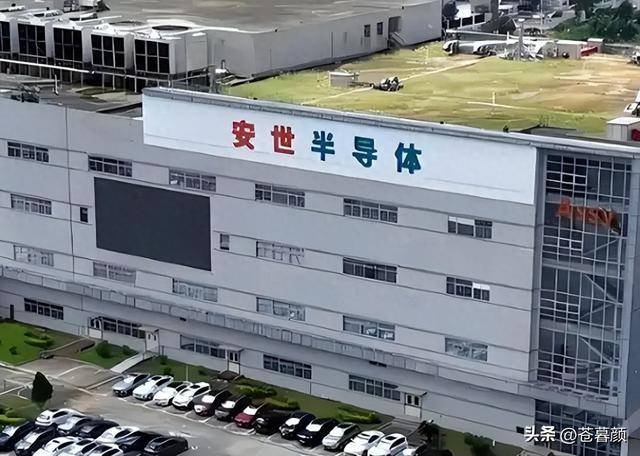
Group 1: Anshi Semiconductor Issue - The Dutch government is held fully responsible for the disruptions in the global semiconductor supply chain due to its improper interference in Anshi Semiconductor's internal affairs [3] - China has approved relevant export license applications for Chinese exporters and is working to restore supply from Anshi Semiconductor (China) [3] - China urges the Netherlands to adopt a responsible attitude and stop interfering in corporate internal matters to find constructive solutions for the Anshi Semiconductor issue [3] Group 2: China's CPTPP Membership - China is actively pursuing membership in the Comprehensive and Progressive Agreement for Trans-Pacific Partnership (CPTPP), which is seen as a pathway to promote regional economic integration [4] - Research indicates that China's accession to the CPTPP could lead to GDP growth for member countries ranging from 0.2% to 1.1% and export growth between 2.5% and 11.8% [5] - China's large market size is expected to provide significant growth opportunities for CPTPP members, enhancing the agreement's global influence [5] - The inclusion of China in the CPTPP is projected to contribute to a 0.2% increase in global GDP and a 2.8% rise in trade volume [5] - China emphasizes its commitment to high-level opening-up and encourages CPTPP members to recognize the positive significance of its membership [5]
冻结147亿也没用!安世要求必须用人民币结算,荷兰抢了个空壳?
Sou Hu Cai Jing· 2025-11-06 10:40
不得不说,荷兰政府雷厉风行,直接动用了一部冷战时期几乎被人遗忘的《商品供应法》,以"保障国家安全"为由,一举接管了半导体巨头安世 (Nexperia)的荷兰总部。 这场行动看上去准备充分,不仅罢免了中方的CEO张学政,还直接冻结了高达147亿人民币的巨额资产。 这一系列操作,背后显然有美国的影子,就在几个月前的6月,华盛顿就曾向荷兰方面施压,暗示更换CEO是让安世脱离实体清单的先决条件。 而荷兰这次的行动,也恰好紧随美国9月29日升级出口管制之后,时间点拿捏得相当"默契",更让人玩味的是,安世公司内部的一些外籍高管,也在 这场风波中与荷兰政府进行了内外配合。 就在所有人都以为这会是一场单方面的碾压时,戏剧性的一幕发生了,荷兰人兴高采烈地拿下了总部,却发现自己抢到手的,可能只是一个法律意 义上的"空壳",这个所谓的荷兰总部,根本不具备任何实际的生产能力。 而这一切的真正风暴眼就在中国。 安世半导体的命脉,根本不在欧洲那间办公室里,而在遥远的中国东莞,那里的工厂,承担了整个公司超过70%的封装产能。 要知道,全世界每十颗汽车顶级功率芯片里,就有七颗是东莞这家工厂造的,这才是安世最值钱的地方。 中国的反制来得又快又 ...
HUA HONG SEMI(01347) - 2025 Q3 - Earnings Call Transcript
2025-11-06 10:00
Financial Data and Key Metrics Changes - Hua Hong Semiconductor reported record sales revenue of $635.2 million for Q3 2025, representing a 20.7% increase year-on-year and a 12.2% increase quarter-on-quarter, driven by increased wafer shipments and improved average selling prices [3][5] - Gross margin stood at 13.5%, which is 1.3 percentage points higher than Q3 2024 and 2.6 percentage points above Q2 2025, primarily due to improved capacity utilization and average selling prices [5][6] - Operating expenses were $100.4 million, a 23.3% increase compared to Q3 2024, mainly due to increased engineering wafer costs and depreciation expenses [5] - Net loss for the period was $7.2 million, compared to a profit of $22.9 million in Q3 2024, but improved from a loss of $32.8 million in Q2 2025 [6][7] Business Line Data and Key Metrics Changes - Revenue from embedded non-volatile memory was $159.7 million, a 20.4% increase compared to Q3 2024, driven by increased demand for MCU products [8] - Revenue from standalone non-volatile memory surged to $60.6 million, a 106.6% increase compared to Q3 2024, mainly due to increased demand for flash products [9] - Revenue from power discrete was $169 million, a 3.5% increase compared to Q3 2024, driven by demand for superjunction products [9] - Revenue from analog and power management IC was $164.8 million, a 32.8% increase over Q3 2024, mainly due to increased demand for other power management IC products [9] Market Data and Key Metrics Changes - Revenue from China was $522.6 million, contributing 82.3% of total revenue, with a 20.3% increase compared to Q3 2024 [8] - Revenue from North America increased by 36.7% to $63.8 million, driven by demand for power management IC and MCU products [8] - Revenue from Europe was $18.4 million, a 12.6% increase compared to Q3 2024, mainly due to demand for IGBT and smart car ICs [8] Company Strategy and Development Direction - The company is focused on strategic capacity planning, technological breakthroughs, and ecosystem development to enhance core competitiveness amid global industry transformation [4] - The ongoing acquisition is expected to increase production capacity and diversify the process platform portfolio, creating synergies with the existing production lines [4][66] - The company aims to optimize product mix and improve average selling prices, with a strong emphasis on technology evolution and partnerships to enhance competitiveness [33][42] Management's Comments on Operating Environment and Future Outlook - Management expressed optimism about the fourth quarter, expecting revenue in the range of $650 million to $660 million, with a projected gross margin of 12% to 14% [12] - The management noted that the semiconductor market is expected to continue its growth momentum into 2026, with opportunities to raise prices or maintain stability [49][50] - The company anticipates strong growth in its flash business, particularly in NOR flash and MCU segments, driven by new technology transitions [25][32] Other Important Information - Cash and cash equivalents were $3.9 billion as of September 30, 2025, showing a slight increase from $3.85 billion on June 30, 2025 [10] - Capital expenditures for Q3 2025 were $261.9 million, with significant investments in Hua Hong Manufacturing [10] Q&A Session Summary Question: What drove the strong gross margin and ASP increase this quarter? - Management attributed the strong margin and ASP increase to high utilization rates and a 5.2% ASP improvement, with 80% of the margin increase coming from ASP improvements and 20% from product mix [14][17] Question: What actions are being taken to improve factory utilization rates? - Management explained that utilization rates are above 100% due to the ramping of Fab 9A, which allows for more flexible capacity management [18][20] Question: How does the company view the upcoming memory super cycle? - Management clarified that the company is engaged in NOR flash, which is experiencing steady growth, and expects strong growth in the flash business over the next few quarters [24][25] Question: What is the outlook for CapEx next year? - Management indicated that CapEx for Fab 9A is expected to be around $1.3 billion to $1.5 billion for next year, with ongoing investments in capacity expansion [44][46] Question: How does the company plan to address competition in the power discrete market? - Management acknowledged increased competition and pricing pressure in the power discrete segment but emphasized ongoing development in gallium nitride technology to maintain market position [37][38]
华虹公司:Q3营收45.66亿增21.1%,净利降43.47%
Sou Hu Cai Jing· 2025-11-06 09:51
【华虹公司发布2025年三季报,营收增长利润下降】11月6日,华虹公司发布2025年第三季度报告。第 三季度,该公司实现营业收入45.66亿元,同比增长21.10%;归属于上市公司股东的净利润为1.77亿 元,同比下降43.47%。前三季度累计实现营业收入125.83亿元,同比增长19.82%;归属于上市公司股东 的净利润为2.51亿元,同比下降56.52%。 本文由 AI 算法生成,仅作参考,不涉投资建议,使用风险自担 ...
新华财经晚报:商务部回应安世半导体、稀土出口相关问题
Xin Hua Cai Jing· 2025-11-06 09:37
Key Points - The State Council of China has announced the implementation of the "Ecological Environment Monitoring Regulations" starting January 1, 2026, aimed at enhancing ecological monitoring capabilities and ensuring data quality to support sustainable development [1] - The Ministry of Commerce held a roundtable meeting with over 30 foreign enterprises, where participants expressed their willingness to increase long-term investments and engage in R&D innovation in China, highlighting the positive outlook for future development opportunities [2] - The National Healthcare Security Administration is initiating a pilot program for intelligent review of medical insurance processes, integrating AI technology to enhance efficiency and security in fund management [3] - The International Electrotechnical Commission has released the first global industrial 5G standard, which provides guidelines for the application of 5G technology in industrial settings, facilitating its deployment and integration [4] - The Chongqing Municipal Government has introduced measures to support the high-quality development of innovative pharmaceuticals, including financial support for new CRO platforms and incentives for service contracts exceeding 3 million yuan [5] International News - In the U.S., the number of layoffs in October surged to 153,074, a 175% increase compared to the same month last year, indicating significant labor market challenges [6] - Germany's industrial production rose by 1.3% in September, driven primarily by a 12.3% increase in the automotive sector, suggesting potential economic stabilization [6] - Switzerland's unemployment rate remained steady at 3% in October, aligning with market expectations [7] - Malaysia's central bank maintained its policy rate at 2.75%, consistent with market forecasts [8] - Norway's central bank kept its benchmark interest rate unchanged at 4.00%, in line with market expectations [9]
商务部:荷兰不当干预安世半导体内部事务,致全球产供链动荡
Nan Fang Du Shi Bao· 2025-11-06 09:25
Core Viewpoint - The Chinese government criticizes the Netherlands for interfering in the internal affairs of ASML, leading to disruptions in the global semiconductor supply chain [1] Group 1: Government Response - The Chinese government holds the Netherlands responsible for escalating the global supply chain crisis due to its lack of constructive engagement and failure to address China's reasonable requests during negotiations [1] - China emphasizes its commitment to stabilizing the global semiconductor supply chain by approving export license applications from Chinese exporters and granting exemptions for eligible exports to facilitate ASML's supply recovery [1] Group 2: Call for Cooperation - China urges the Netherlands to adopt a responsible attitude and cease interference in corporate affairs, advocating for a constructive resolution to the ASML issue in the interest of maintaining stable China-Netherlands and China-Europe trade relations [1]
商务部再回应安世半导体问题
证券时报· 2025-11-06 09:24
Core Viewpoint - The Chinese government criticizes the Netherlands for interfering in the internal affairs of ASML, which has led to disruptions in the global semiconductor supply chain. China emphasizes the need for constructive dialogue to stabilize the situation and restore supply from ASML China [1]. Group 1: Government Response - The Chinese Ministry of Commerce reiterates its stance on the Netherlands' interference, stating it has caused turmoil in the global semiconductor supply chain [1]. - China has approved export license applications from Chinese exporters related to ASML and is working to facilitate the resumption of supply from ASML China [1]. - The Chinese government calls for the Netherlands to adopt a responsible attitude and cease interference in corporate matters to find constructive solutions for the ASML issue [1].

华虹公司(688347.SH)发布前三季度业绩,归母净利润2.51亿元,同比下降56.52%
智通财经网· 2025-11-06 09:07
智通财经APP讯,华虹公司(688347.SH)披露2025年第三季度报告,公司前三季度实现营收125.83亿元, 同比增长19.82%;归属于上市公司股东的净利润2.51亿元,同比下降56.52%;扣非净利润2.19亿元,同比 下降52.84%;基本每股收益0.15元。 ...