
农业科技

Search documents
深化京津冀农业协同发展
Jing Ji Ri Bao· 2025-07-01 22:17
Core Viewpoint - The 32nd China Beijing Seed Industry Conference will be held in September, marking a significant step towards deeper agricultural collaboration among Beijing, Tianjin, and Hebei, which is crucial for forming a new pattern of complementary advantages and deep cooperation in agricultural development in the region [1] Group 1: Agricultural Collaboration Achievements - The implementation of the Beijing-Tianjin-Hebei collaborative development strategy has led to significant achievements in agricultural collaboration, enhancing the capacity for agricultural product security [1] - The "Net Vegetables into Beijing" initiative has established a robust agricultural product circulation system, with Hebei's vegetable market share in Beijing reaching 42.5%, making it the largest supplier of vegetables to the capital [1] - Collaborative efforts in modern seed industry projects and technology research have been initiated, focusing on creating a complete industrial chain from planting to logistics [1] Group 2: Challenges and Areas for Improvement - There are notable challenges, including conflicts between agricultural development and resource/environmental needs, as well as issues of homogeneity in agricultural industries and insufficient overall regional competitiveness [2] - The disparity in agricultural development levels is evident, with urban areas leading nationally while Hebei still has room for improvement [2] - The mechanism for technology transfer is not fully developed, indicating a need for a more mature regional collaborative innovation model [2] Group 3: Future Directions for Agricultural Development - There is a focus on enhancing agricultural industry collaboration to meet consumer demands for healthier products and improve the supply structure and quality of agricultural products [3] - Plans include establishing more vegetable production bases around Beijing and developing emergency supply bases for agricultural products [3] - Strengthening agricultural technology innovation through collaborative platforms and addressing key technological challenges specific to Hebei's conditions is a priority [3] Group 4: Environmental Management in Agriculture - Emphasis is placed on managing agricultural ecological environments, particularly in preventing agricultural non-point source pollution and sharing relevant data [4] - Initiatives to reduce the use of pesticides and fertilizers while promoting new technologies and products are being implemented [4] - Efforts to enhance the recycling of agricultural waste and improve the management of livestock waste and crop residues are underway [4]
可持续农业潜力无限 先正达如何挖掘北极海藻里的绿色农业奥秘
Xin Lang Cai Jing· 2025-07-01 12:15
Core Insights - The article discusses the transformation of cold-water seaweed from a traditional animal feed into a key component of agricultural biostimulants, driven by technological advancements [1][3][4] Company Overview - Algea, a company founded in 1937 and later acquired by Syngenta, specializes in the harvesting and processing of cold-water seaweed, which has become a core raw material for Syngenta's biostimulant products [3][6] - The company employs advanced extraction techniques to produce soluble fertilizers from seaweed, significantly enhancing the nutritional value for soil absorption [6][7] Industry Trends - Biostimulants have emerged as a leading area of agricultural technology innovation, with seaweed extracts improving crop yields by 15% in European and American trials [9] - In Brazil, corn treated with these seaweed-based biostimulants showed a 12% yield increase under drought conditions [9] - The global biostimulant market is projected to grow at a compound annual growth rate (CAGR) of 10%, reaching nearly $20 billion by 2030, representing about 20% of the global crop protection market [11] Technological Advancements - Recent developments in biotechnology, data science, and artificial intelligence have accelerated the extraction and application of seaweed biostimulants, addressing challenges posed by climate change [9][11] - The integration of molecular biology and synthetic biology has facilitated the creation of effective biostimulant products [9][11] Market Dynamics - The global market for biostimulants is expected to expand rapidly, driven by increasing demand for sustainable agricultural practices and government policies promoting reduced chemical usage [11][12] - In China, the biostimulant market is anticipated to grow even faster than the global average, supported by national policies and the need to address agricultural challenges such as pesticide resistance and soil degradation [16]



列国鉴·以色列|记者观察:久处“战争状态” 以色列还是“科技强国”吗?
Xin Hua She· 2025-06-30 06:52
Core Viewpoint - Israel's high-tech industry, known for its innovation and startup ecosystem, is facing significant challenges due to ongoing geopolitical conflicts and military actions, leading to economic contraction and workforce shortages [1][4][12] Group 1: Economic Impact - The GDP of Israel shrank by nearly 20% in the fourth quarter of 2023, with an annual growth rate of only 2% for that year, and a projected growth rate of just 1% for 2024 [4] - The high-tech sector, which is capital-intensive and export-oriented, has been severely affected, with declines in tourism, consumer spending, and international investment [4][9] - Approximately 8,300 high-tech workers left Israel between 2023 and 2024, representing about 2.1% of the high-tech workforce [5] Group 2: Workforce Challenges - The high-tech industry saw a 1.2% decrease in employment for the first time in a decade, with R&D positions still dominating the job market at 48.3% [5] - Many tech professionals have been called to military service, exacerbating the labor shortage [4][5] Group 3: Sectoral Resilience - Despite the overall downturn, certain sectors like semiconductors and cybersecurity are showing resilience, with Intel planning a $25 billion investment in Israel [8] - The cybersecurity sector is experiencing increased demand due to heightened security needs during the conflict, with a significant portion of venture capital directed towards it [8][9] - Agricultural technology is also performing well, with growth in orders for water-saving technologies and agricultural information systems [9] Group 4: Government and Structural Adjustments - The Israeli government is attempting to balance military service requirements with the needs of the tech sector, allowing some tech workers to defer service or work remotely [10] - Long-term strategies include promoting dual-use technologies from military to civilian applications and attracting international talent to bolster the tech ecosystem [11][12]

农业十大领域建立 全国科学数据观测网络
Ke Ji Ri Bao· 2025-06-30 01:09
Core Insights - The establishment of a national agricultural scientific data observation network in China aims to drive agricultural technology innovation through systematic data collection and analysis [1][2] - The network has collected nearly 100TB of primary observation data across ten key agricultural fields, providing essential support for solving agricultural scientific challenges and upgrading the industry [1] Group 1: Data Collection and Infrastructure - The agricultural observation network includes one national data center, ten field data centers, 148 national agricultural scientific observation stations, and nearly 500 trial operation sites [1] - A long-term soil monitoring system in Shaanxi has been operational for 30 years, enabling the development of a soil effective phosphorus prediction model with over 85% accuracy [1] Group 2: Pest and Disease Management - A high-temperature cumulative damage model based on 14 years of wheat aphid observation data has improved pest control efficiency by 30% in the Huang-Huai-Hai wheat region [2] - AI image recognition technology has been integrated into a WeChat mini-program, allowing grape farmers to diagnose 98% of common diseases through mobile phone photos [2] Group 3: Standardization and Challenges - The Ministry of Agriculture and Rural Affairs has organized the development of 5,100 observation indicator standards across 62 observation tasks [2] - Despite significant data accumulation, challenges remain in interdisciplinary data integration, the application of artificial intelligence, and the shortage of multidisciplinary talent [2] Group 4: Future Plans - The Ministry is planning to construct a "sky-ground" integrated observation technology project, which will combine satellite remote sensing, drone inspections, and ground sensor networks to create a real-time observation system [2] - The optimization of ground station layout and the completion of major agricultural technology innovation facility construction planning are expected by 2025 [2]
农心科技: 农心作物科技股份有限公司第二届监事会第二十二次会议决议的公告
Zheng Quan Zhi Xing· 2025-06-26 16:29
Core Viewpoint - The company has made a prudent decision to adjust the timeline for certain fundraising projects to reach their intended usable state, ensuring that this will not negatively impact the implementation of these projects or the interests of shareholders, particularly minority shareholders [1][2]. Group 1 - The second meeting of the supervisory board was convened on June 26, 2025, with all three supervisors present, and the meeting followed the required legal and procedural guidelines [1]. - The supervisory board unanimously approved the proposal to adjust the timeline for certain fundraising projects, with all votes in favor [1][2]. - The adjustment is based on the actual progress and feasibility of the projects, and it is confirmed that this decision will not adversely affect the company's operations or the interests of shareholders [2].
提升农业科技创新体系整体效能
Jing Ji Ri Bao· 2025-06-25 22:27
Core Viewpoint - Technological innovation is the fundamental driving force for the transition from traditional agriculture to modern agriculture, emphasizing the need for China to enhance its agricultural technology level and achieve self-reliance in high-level agricultural technology [1] Group 1: Current Status of Agricultural Technology Innovation - China's agricultural technology innovation has entered the global first tier, with a contribution rate of over 63% from agricultural technology progress, particularly in areas like biological breeding and agricultural 5G applications [2] - Despite advancements, the overall effectiveness of China's agricultural technology innovation system remains low compared to world standards, necessitating a focus on improving this system [2] Group 2: Key Strategies for Agricultural Technology Self-Reliance - Emphasizing the importance of leveraging institutional advantages to enhance the overall effectiveness of the agricultural technology innovation system, ensuring that the leadership of the Party is integrated throughout the agricultural technology work [2] - Addressing weaknesses in agricultural technology innovation while simultaneously achieving "leapfrog" development by seizing opportunities in the new agricultural technology revolution characterized by biotechnology and information technology [3] - Promoting deep integration of agricultural technology innovation with industrial innovation to ensure that research tasks are aligned with real production and market needs [3] Group 3: Balancing Innovation and Cooperation - Maintaining a balance between self-reliance in innovation and open cooperation, expanding international scientific and technological exchanges while focusing on domestic agricultural development needs [4] - Recognizing that different countries have varying agricultural modernization stages, which influences their agricultural technology innovation models and paths [4] Group 4: Resource Allocation and Key Technology Development - Strengthening the coordination of agricultural research resources to optimize the agricultural technology management system and enhance the efficiency of resource allocation [5] - Focusing on key core technology breakthroughs, particularly in areas like core seed sources and intelligent agricultural machinery, to foster original and disruptive technological innovations [6] Group 5: Digital Technology Integration - Promoting the integration of digital technology with modern agriculture, including the establishment of comprehensive agricultural data platforms and the development of key technologies such as agricultural sensors and AI applications [7]
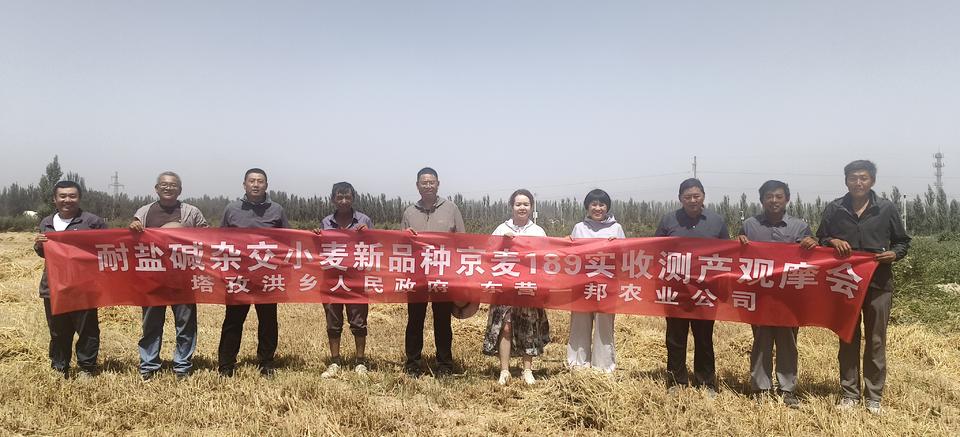
“良种+良技”,东营企业助力疏勒盐碱地小麦单产破679公斤
Qi Lu Wan Bao Wang· 2025-06-25 10:13
Core Insights - The "Sule County Alkali-resistant Water-saving Wheat Yield Improvement Demonstration Project" has achieved an average yield of 679.05 kg per mu, which is an increase of 51.69 kg compared to the local main variety [1][3] Group 1: Project Overview - The demonstration field is located in Tazihong Township, covering an area of 50 mu, and is managed by Dongying Yibang Agricultural Technology Development Co., Ltd [3] - The soil salinity in the demonstration field ranges from 3.13‰ to 4.56‰, with an average salinity of 3.84‰, indicating moderate salinization [3] Group 2: Technical Approach - The project employs a core planting strategy of "suitable variety for suitable land" and "suitable land for suitable variety" [3] - The selected wheat variety, Jingmai 189, is characterized by strong tillering, high ear rate, salt and drought resistance, and large grains [3] - Various agronomic practices are implemented, including balanced fertilization, organic fertilizer application, deep plowing, precise sowing techniques, and timely irrigation [3] Group 3: Future Plans - Dongying Yibang Agricultural Technology Development Co., Ltd plans to leverage the results of this yield measurement to promote increased wheat production and farmer income through a "good variety + good technology" model [4]
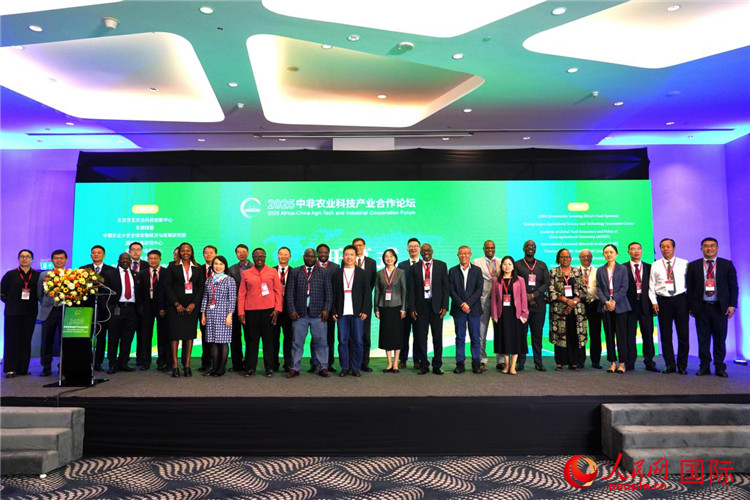
2025中非农业科技产业合作论坛在肯尼亚举行
人民网-国际频道 原创稿· 2025-06-25 08:39
Core Viewpoint - The 2025 China-Africa Agricultural Technology Industry Cooperation Forum was held in Kenya, focusing on collaboration and opportunities in agricultural modernization between China and Africa [1][2]. Group 1: Forum Overview - The forum was themed "Open Sharing, From Opportunities to Actions" and was co-hosted by various organizations including the African Alliance for a Green Revolution and the Beijing Jingwa Agricultural Technology Innovation Center [1]. - Over 200 representatives from government departments, enterprises, universities, research institutions, and international organizations participated in discussions to enhance cooperation in agricultural technology research and development, result transformation, industry collaboration, and talent cultivation [4]. Group 2: Key Initiatives and Statements - The Chinese Ambassador to Kenya highlighted that agricultural modernization is a key focus of China-Africa cooperation, with the launch of the "China-Africa Agricultural Modernization Plan" in 2023 and the "Agricultural Benefit Partnership Action" announced at the 2024 China-Africa Cooperation Forum [2]. - The Chinese government recently announced a 100% zero-tariff policy on products for 53 African countries, which will facilitate the entry of more agricultural products from countries like Kenya into the Chinese market [2]. - Ibrahim Assane Mayaki, the African Union's Special Envoy for Food Systems, emphasized the importance of China's successful experiences in agricultural modernization and poverty reduction, calling for strengthened cooperation to build sustainable and resilient food systems [2]. - Hamadi Boga, Vice Chairman of the African Alliance for a Green Revolution, noted that the proposed Agricultural Benefit Partnership Action reflects a new commitment to advancing agricultural transformation and building a modern, inclusive, and resilient agricultural technology ecosystem [2].
辽宁:科技“神器”为农田夏管护航
Xin Hua She· 2025-06-24 12:46
Core Insights - The article highlights the integration of advanced technology in agriculture in Liaoning, China, showcasing innovations such as drone-assisted pest control and real-time soil monitoring systems [1][2]. Group 1: Technological Innovations in Agriculture - The "Cloud Farm" system developed by Tieling Mobile Company allows real-time monitoring of soil moisture, water quality, and crop growth, significantly enhancing agricultural efficiency [1]. - The use of drones to deploy "bee dispensers" containing over 5,000 parasitic wasps (Trichogramma) for biological pest control represents a shift from chemical pesticides to environmentally friendly solutions [2]. Group 2: Economic Impact - The smart agricultural system in Tieling is projected to generate an annual output value of 3.98 million yuan, which is a 33% increase compared to traditional farming methods [1]. - The promotion of drone technology for pest control in Shenyang aims to cover an area of 340,000 mu by 2025, indicating a significant expansion in the use of innovative agricultural practices [2]. Group 3: Irrigation and Power Management - The State Grid Shenyang Power Supply Company is enhancing irrigation efficiency by monitoring power supply for irrigation systems and creating personalized electricity usage plans for farmers [3].
成都成华区:以科技为笔 智绘未来之城
Zhong Guo Jing Ji Wang· 2025-06-23 12:35
这里是成华,一座在数字浪潮中勇立潮头的创新之城。当千年蜀都的深厚底蕴与现代科技的澎湃动 能在此交汇,一座城市的创新基因被彻底唤醒。成都,中国西部的科技创新策源地的核心区域。成华正 以开放包容的姿态,热情拥抱未来,谱写以科技创新引领发展的崭新篇章。 驱动这股创新浪潮的是成华区精心构建的多层次、全链条政策支持体系。聚焦科技创新与成果转化 的关键环节,政策涵盖企业梯度培育、核心技术研发激励、高端人才引育、高效成果转化平台搭建以及 创新生态持续优化等核心领域。这套精准有力的"组合拳",为创新主体提供了坚实的后盾和广阔的舞 台,让创新的种子在成华这片沃土上破土而出、茁壮成长。 在成华,科技不是冰冷的代码,而是赋能千行百业、点亮美好生活的温暖力量。技术加文化的跨界 融合成为数字文创的硅巷,成为创意与灵感迸发的源泉。从智能高效的智慧交通网络,到以人为本、科 技赋能的未来社区构想;从解放生产力的农业机器人精准作业,到虚实相生、引人入胜的元宇宙文旅体 验…… 超过1000个鲜活的应用场景,如同璀璨繁星,将前沿科技深度融入城市的血脉与肌理,让科技 触手可及。 在2023年度,成华区财政科技投入6617万元,比上年增加1122万元 ...