
信托

Search documents
拉长考核、畅通渠道 北京六部门发文推动中长期资金入市
Di Yi Cai Jing· 2025-10-30 01:49
Core Viewpoint - The implementation of policies to promote long-term capital market participation in Beijing has shown positive results, with various measures being adopted to enhance the investment environment and increase the scale of equity investments [1][2][3] Group 1: Policy Measures - The Beijing Securities Regulatory Bureau, in collaboration with multiple financial and governmental bodies, has introduced the "Implementation Opinions" to promote long-term capital market participation [1] - Key measures include optimizing the market ecosystem, developing public equity funds, improving the investment environment for insurance and pension funds, and encouraging bank wealth management and trust funds to participate in the capital market [2] Group 2: Investment Performance - As of September 2025, the number of equity funds managed by companies in Beijing reached 1,090, with a total scale of 1.94 trillion yuan, reflecting a year-on-year increase of 19.0% in product quantity and 25.56% in scale [2][3] - The implementation of buyback and increase loans has seen 45 instances among listed companies in Beijing, with a total approved amount of 19.33 billion yuan [2] Group 3: Pension Fund Management - The total management of social security funds in Beijing reached 576.65 billion yuan, with a year-on-year growth of 13.41%, while enterprise annuities and basic pensions also showed significant growth rates of 14.99% and 34.31%, respectively [3] - The establishment of long-term assessment mechanisms for public funds is underway, aiming to enhance the stability of long-term investments [3] Group 4: Future Directions - The Beijing Securities Regulatory Bureau plans to strengthen policy coordination and information sharing with relevant departments to ensure the effective implementation of the "Implementation Opinions" [3]
拉长考核、畅通渠道,北京六部门发文推动中长期资金入市
Di Yi Cai Jing· 2025-10-30 01:40
Core Viewpoint - The implementation of policies to promote long-term capital investment in the Beijing region has led to a significant increase in the proportion of equity investments managed by fund companies, with a notable rise in both the number and scale of equity funds [1][2][3] Group 1: Policy Implementation and Progress - The Beijing Securities Regulatory Bureau, in collaboration with various financial and regulatory bodies, has introduced the "Implementation Opinions" to encourage long-term capital market participation [1] - Key measures include optimizing the market ecosystem, developing public equity funds, enhancing the investment environment for commercial insurance and pension funds, and encouraging bank wealth management and trust funds to engage in capital markets [2][3] Group 2: Fund Performance and Growth - As of September 2025, Beijing fund companies manage 1,090 equity funds with a total scale of 1.94 trillion yuan, reflecting a 19.0% increase in the number of products and a 25.56% increase in scale year-on-year [1][2] - Public funds in Beijing have implemented a plan to increase the market value of A-shares held by at least 10% annually over the next three years [3] - The management of various pension funds has also seen substantial growth, with social security funds increasing by 13.41%, enterprise annuities by 14.99%, and basic pensions by 34.31% year-on-year [3] Group 3: Long-term Investment Strategies - The establishment of a long-term assessment mechanism for public funds aims to enhance the stability of long-term investments, with a focus on three-year evaluation periods [3] - Companies are encouraged to buy back their equity funds and incentivize employees to invest in their own funds, promoting a culture of long-term investment [3]
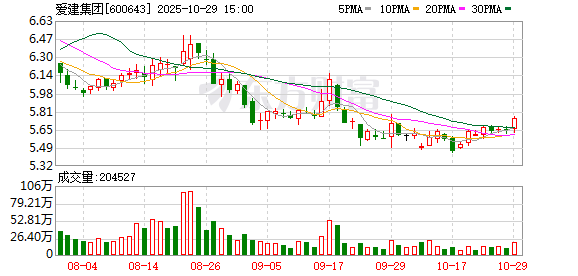
爱建集团(600643.SH)前三季度净利润1.88亿元,同比下降24.26%
Ge Long Hui A P P· 2025-10-29 14:17
Core Viewpoint - Aijian Group (600643.SH) reported a decline in both revenue and net profit for the first three quarters of 2025 compared to the previous year [1] Financial Performance - The total operating revenue for the first three quarters reached 1.562 billion yuan, representing a year-on-year decrease of 13.3% [1] - The net profit attributable to shareholders of the parent company was 188 million yuan, down 24.26% year-on-year [1] - The basic earnings per share stood at 0.118 yuan [1]

北京发布新政鼓励中长期资金入市
Zhong Guo Xin Wen Wang· 2025-10-29 13:59
Group 1 - Beijing has released new policies to encourage long-term capital to enter the market, focusing on optimizing the market ecosystem [1] - The implementation opinions include establishing a long-term performance evaluation mechanism for commercial insurance funds and promoting share buybacks by qualified listed companies [1] - There is a strong emphasis on developing equity public funds and supporting the stable growth of private equity investment funds to create long-term stable returns for investors [1] Group 2 - The policies aim to enhance the investment environment for commercial insurance funds and pension funds, increasing their investment coverage and flexibility [1] - The initiative encourages banks and trust funds to actively participate in the capital market, optimizing incentive mechanisms and improving channels for market entry [2]
“重阳敬老·法护银龄”金融养老与意定监护公益讲座在通州顺利举办
Zheng Quan Ri Bao Wang· 2025-10-29 13:50
Core Insights - The event "Respect for the Elderly: Financial Elderly Care and Intended Guardianship" focused on the innovative financial legal tool of "special needs trust" [1][2] - The introduction of the first national case of real estate trust in Tongzhou District aims to enhance the quality of life for vulnerable groups, particularly the elderly and disabled [1] - The collaborative model of "finance + law + united front" is seen as a replicable solution to the challenges of elderly care and assistance in society [2] Group 1 - The event highlighted the importance of "special needs trust" as a financial tool for asset protection and stable cash flow for beneficiaries [1] - The presentation by Dr. Lin Wei emphasized the role of real estate in trust structures to ensure long-term care for individuals with disabilities [1] - Experts from various organizations provided insights on legal practices and financial operations related to intended guardianship and special needs trusts [1] Group 2 - The initiative is viewed as a model for high-quality development aimed at improving and safeguarding people's livelihoods [2] - The collaborative approach is intended to address the societal challenges of elderly care and assistance effectively [2]
北京证监局等六部门出台《北京市推动中长期资金入市的实施意见》
Zheng Quan Ri Bao Wang· 2025-10-29 13:42
Core Viewpoint - The Beijing Securities Regulatory Bureau and five other departments have introduced the "Implementation Opinions on Promoting Long-term Capital Entry into the Market" to enhance the market ecosystem and encourage long-term investments [1][2] Group 1: Market Ecosystem Optimization - The implementation opinions aim to establish a long-cycle assessment mechanism for commercial insurance funds and other long-term capital, promoting a long-term performance orientation [1] - There is an emphasis on improving the quality of listed companies in Beijing, encouraging eligible companies to repurchase and increase their holdings [1] Group 2: Development of Public Funds - The initiative promotes the development of equity public funds and supports the steady growth of private securities investment funds [1] - Fund companies are encouraged to shift from scale-oriented to investor return-oriented strategies, aiming to create long-term stable returns for investors [1] - There is a push for private securities investment funds to diversify product types and investment strategies [1] Group 3: Investment Policy Environment - The policy environment for commercial insurance funds and pension equity investments is being optimized, enhancing the coverage and flexibility of enterprise annuities and personal pensions [1] - Employers are encouraged to allow personal investment choices in enterprise annuities, and fund managers are urged to explore differentiated investment strategies [1] Group 4: Participation of Financial Institutions - Banks' wealth management and trust funds are encouraged to actively participate in the capital market, with an emphasis on optimizing incentive assessment mechanisms [1] - The goal is to streamline market entry channels and increase the scale of equity investments [1] Group 5: Policy Implementation and Results - The Beijing Securities Regulatory Bureau reports improvements in the quality of listed companies and a better market ecosystem as a result of these policies [2] - There has been a notable increase in the actual proportion of equity investments and the long-cycle assessment of various long-term funds is gradually being refined [2] - Future efforts will focus on policy coordination and information sharing among relevant departments to ensure the effective implementation of the opinions [2]
北京连发三文!事关中长期资金入市等
Zheng Quan Shi Bao· 2025-10-29 12:54
Group 1 - The core viewpoint of the news is the release of the "Implementation Opinions" aimed at promoting long-term capital investment in Beijing's capital market, focusing on enhancing market ecology and improving the quality of listed companies [1][2] - The "Implementation Opinions" propose establishing a long-term assessment mechanism for commercial insurance funds and other long-term capital, encouraging listed companies to repurchase and increase their holdings [3][4] - The document emphasizes the importance of developing equity public funds and supporting the stable growth of private equity funds, shifting the focus from scale to investor returns [3][4] Group 2 - The "Implementation Opinions" encourage banks and trust funds to actively participate in the capital market, optimizing incentive mechanisms and enhancing equity investment scale [4] - Recent policies have led to positive progress in the entry of long-term capital into the market, with significant achievements in share buybacks and cash dividends among listed companies in Beijing [5][6] - As of September, the number of equity funds managed by companies in Beijing has increased by 19.0% year-on-year, with a total scale of 1.94 trillion yuan, reflecting a 25.56% growth [6] Group 3 - The Beijing Municipal Financial Office and other departments have released opinions to promote high-quality development of venture capital and private equity investment, focusing on creating a comprehensive service support system for institutions and enterprises [7] - The opinions on mergers and acquisitions aim to activate the capital market's vitality, accelerate industrial integration, and enhance the quality of listed companies, promoting the transformation of the capital economy towards new productive forces [7][8] - The document encourages listed companies to engage in mergers and acquisitions in strategic emerging industries and to enhance resource integration to reduce competition [8]
爱建集团:2025年第三季度归属于上市公司股东的净利润同比增长26.05%
Zheng Quan Ri Bao· 2025-10-29 12:10
Core Insights - The company reported a revenue of 393,464,312.61 yuan for the third quarter of 2025, representing a year-on-year growth of 9.68% [2] - The net profit attributable to shareholders of the listed company was 47,418,776.29 yuan, showing a year-on-year increase of 26.05% [2] Financial Performance - Revenue for Q3 2025: 393.46 million yuan, up 9.68% year-on-year [2] - Net profit for Q3 2025: 47.42 million yuan, up 26.05% year-on-year [2]

北京发布多项政策!推动中长期资金入市
Zhong Guo Zheng Quan Bao· 2025-10-29 10:17
Group 1 - The Beijing Municipal Government has released multiple policies aimed at promoting long-term capital market participation, equity investment, and mergers and acquisitions during the 2025 Financial Street Forum [1][2] - The implementation opinions focus on optimizing the market ecosystem, developing public equity funds, enhancing the policy environment for commercial insurance and pension funds, and encouraging bank wealth management and trust funds to participate in capital markets [3][4] Group 2 - The Beijing Municipal Financial Committee has introduced opinions to promote high-quality development in venture capital and private equity, emphasizing the creation of a new fundraising, investment, management, and exit ecosystem [5] - The policies include 15 measures across three main tasks, focusing on government and state-owned enterprise funds as stabilizing forces, and providing a comprehensive service support system for institutions and enterprises [5] - The opinions on mergers and acquisitions include 19 policy measures aimed at enhancing transaction efficiency, improving regulatory oversight, and ensuring risk prevention [5][6]
陕国投A涨2.20%,成交额2.92亿元,主力资金净流入4275.04万元
Xin Lang Cai Jing· 2025-10-29 06:48
Core Insights - The stock price of Shaanxi Guotou A increased by 2.20% on October 29, reaching 3.72 CNY per share, with a trading volume of 292 million CNY and a market capitalization of 19.024 billion CNY [1] Company Overview - Shaanxi International Trust Co., Ltd. is located in Xi'an, Shaanxi Province, and was established on January 5, 1985. It was listed on January 10, 1994. The company primarily engages in trust deposits and loans, investment, real estate investment, securities, financial leasing, and other financial services approved by the People's Bank of China and the State Administration of Foreign Exchange [1] - The main business revenue is derived entirely from financial trust services, accounting for 100% of the income [1] Financial Performance - For the period from January to September 2025, Shaanxi Guotou A reported zero operating income, while the net profit attributable to shareholders was 996 million CNY, reflecting a year-on-year growth of 6.60% [2] - The company has distributed a total of 1.979 billion CNY in dividends since its listing, with 1.023 billion CNY distributed over the past three years [3] Shareholder Information - As of October 20, 2025, the number of shareholders for Shaanxi Guotou A was 107,100, a decrease of 0.52% from the previous period. The average number of circulating shares per shareholder increased by 0.52% to 47,758 shares [2] - The top ten circulating shareholders include the Southern CSI 500 ETF, which holds 44.7628 million shares, a decrease of 1.0562 million shares from the previous period. Hong Kong Central Clearing Limited has exited the list of top ten shareholders [3] Market Activity - The stock has seen a year-to-date increase of 6.29%, with a 5-day increase of 2.76%, a 20-day increase of 4.79%, and a 60-day increase of 1.09% [1] - The net inflow of main funds was 42.7504 million CNY, with large orders accounting for 24.46% of purchases and 21.18% of sales [1]
