Robotics

Search documents
韩媒:中国机器人租赁行业从新奇转向服务
Huan Qiu Wang Zi Xun· 2026-01-28 23:19
来源:环球时报 韩国《东亚日报》1月28日文章,原题:中国人形机器人租赁行业从新奇转向服务 中国一家线上平台正 专门从事机器人租赁业务。通过该公司的应用程序,用户可以从多种型号中选择机器人,包括机器狗、 熊猫造型的机器人和人形机器人等。在选定租赁日期、填写送货地址并完成付款后,机器人就可在两天 内送达。专业技术人员将随机器人抵达使用现场,为客户讲解基本操作并协助处理使用过程中遇到的突 发问题。显然,这清晰展示了人形机器人正迅速成为触手可及的消费服务产品。 上海一家机器人租赁平台的营销负责人表示,目前,大多数客户来自企业,他们租用的机器人往往被用 于内部活动或在购物中心开展促销活动。随着春节即将来临,租赁订单激增。该负责人还说,自该平台 上线以来,日均接单超过100笔,且该平台不仅租赁机器人,还为客户提供围绕这些机器人打造的活动 方案。在中国,一些线下商店也在提供机器人租赁服务。去年,全球首家人工智能6S店在深圳开业, 该店提供包括销售和租赁在内的一站式服务。6S店模式在传统汽车行业的4S店框架基础上增加了租赁 和定制服务。 2025年,中国具身智能租赁市场规模约10亿元人民币。专家预测,今年该市场将快速扩张, ...

新股消息 | 阿童木机器人递表港交所
智通财经网· 2026-01-28 22:39
智通财经APP获悉,据港交所1月28日披露,天津阿童木机器人股份有限公司(简称:阿童木机器人)向港 交所主板递交上市申请书,华泰国际为其独家保荐人。该公司在高速机器人领域领跑全行业,特别是在 并联机器人领域确立了明显的领先地位。根据弗若斯特沙利文的报告,该公司自2020年起连续5年位列 并联机器人国内自主品牌市占率第一,自2023年起超越外资品牌,连续两年位列国内全品牌市占率第 一。 据招股书,该公司是一家卓越的高速机器人公司,致力于高速度、高可靠性机器人的研发、生产、销售 与服务,产品矩阵涵盖并联机器人、高速SCARA机器人、重载协作机器人、具身智能机器人四大系 列,并基于丰富的谱系化产品线,为客户提供自动化、智能化的解决方案。该公司聚焦于高速分拣、精 密装配、精准搬运等核心应用场景的自动化、智能化需求,下游应用广泛覆盖食品饮料、日化、制药、 新能源、3C及汽车等多个行业。 ...

Tesla(TSLA) - 2025 Q4 - Earnings Call Presentation
2026-01-28 22:30
Q4 and FY 2025 Update 1 Highlights 03 Financial Summary 04 Operational Summary 06 Manufacturing & Hardware 08 Supporting Infrastructure 09 AI & Software 10 Services 11 Other Updates 12 Outlook 13 Photos & Charts 14 Key Metrics 24 Financial Statements 27 Additional Information 34 (1) Excludes SBC (stock-based compensation) & Digital assets gains and losses, net of tax; (2) Free cash flow = operating cash flow less capex; (3) Includes cash, cash equivalents and investments; (4)Active driver supervision requir ...

Is Tesla a Buy After Its Lackluster 2025?
Yahoo Finance· 2026-01-28 17:25
Core Insights - Tesla experienced a challenging 2025 with a decline in electric vehicle sales and slower share price growth compared to previous years [1] - CEO Elon Musk's track record suggests that he often achieves ambitious goals, making it risky to bet against him [1] Group 1: Self-Driving Technology - Tesla's robotaxis are now operational in Austin, Texas, with human safety monitors following in separate vehicles [2] - The global robotaxi market is projected to exceed 900,000 vehicles and reach a market value of approximately $100 billion by 2035 [3] - Tesla is competing with Waymo, which currently has a fleet of 2,500 vehicles, indicating a significant opportunity for Tesla in the robotaxi market [4] Group 2: Optimus Robots - Musk announced that Tesla's humanoid robots, known as Optimus, are expected to be available for public sale by the end of 2027 and will be utilized in factories this year [4] - Musk claims that Optimus robots could potentially add $20 trillion to Tesla's valuation, although this figure may be overly optimistic given the uncertainty of the market [5] - Production of both robotaxis and Optimus robots is anticipated to be "agonizingly slow" initially, with expectations for faster production rates later on [6]
Is Tesla a Buy After Its Lackluster 2025?
Yahoo Finance· 2026-01-28 17:25
Core Insights - Tesla experienced a challenging year in 2025, with a decline in electric vehicle sales and slower share price growth compared to previous years [1] - Despite the difficulties, CEO Elon Musk has a track record of achieving ambitious goals, making it risky to bet against the company [1] Group 1: Self-Driving Technology - Tesla's robotaxis are now operational in Austin, Texas, with human safety monitors following in separate vehicles [2] - The autonomous taxi market is expanding, with Tesla competing against Alphabet's Waymo, which has a larger operational scale [3] - The global robotaxi fleet is projected to exceed 900,000 vehicles and reach a market value of approximately $100 billion by 2035 [3] Group 2: Optimus Robots - Tesla's humanoid robots, known as Optimus, are expected to be available for public sale by the end of 2027, with initial use in factories this year [4] - Musk claims that Optimus robots could potentially add $20 trillion to Tesla's valuation, although this figure may be overly optimistic [5] - The production of both robotaxis and Optimus robots is anticipated to be "agonizingly slow" initially, with expectations of ramping up production later [6]
3月苏州站:投研闭门会、追觅生态、魔法原子、灵猴机器人——AI中国力量·前沿科技
泽平宏观· 2026-01-28 16:05
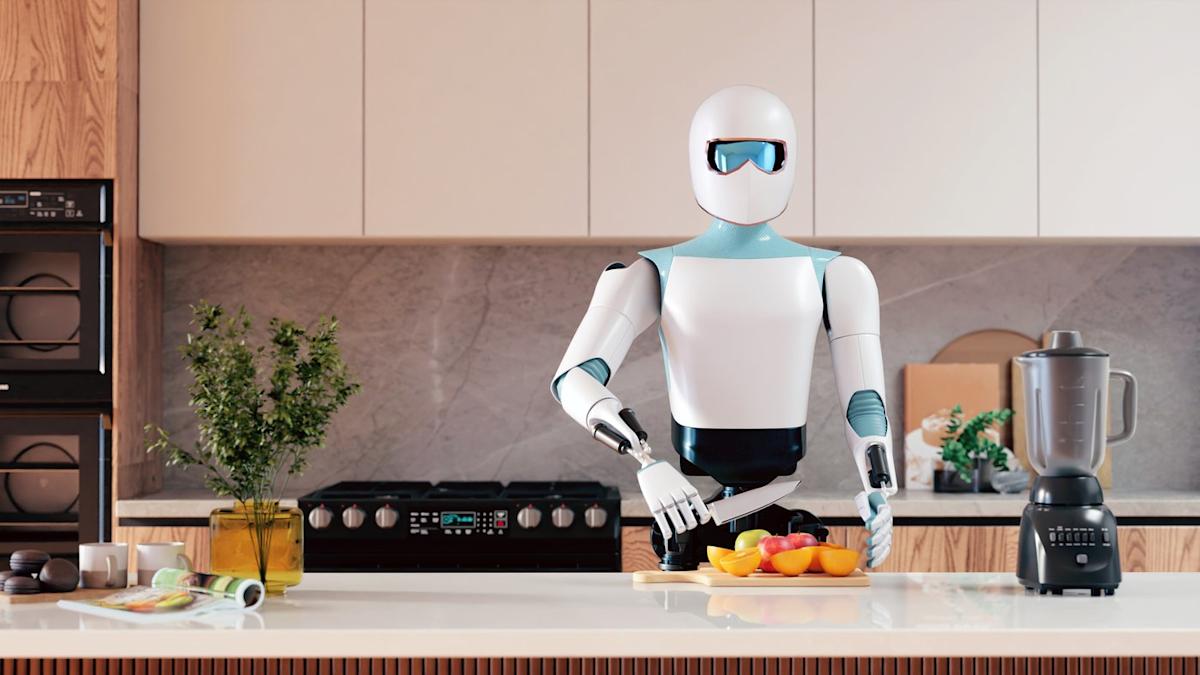
前沿科技企业实战研学 读万卷书行万里路 企业简介 追更生态 以下文章来源于泽平宏观商学 ,作者泽平宏观商学 泽平宏观商学 . 全场景高端智能生态,重新定义现代生活 追觅科技成立于2017年,是以高速数字马 达、智能算法、运动控制技术为核心的全球高端 科技品牌。其始终坚信"核心技术是一切的根本", 重视技术研发与创新。截至2025年12月,全球累 计申请专利超8000件,累计获得授权专利超 3000件。追觅科技旗下产品覆盖清洁、个护、厨 电等多元场景的高端智能产品矩阵,已成为智能 清洁领域的全球领导品牌。 魔法原子 聚焦机器人全栈自研,推动具身智能落地 魔法原子成立于2024年,是国内少数具备通 破桂 世 世 J7\///000 ヘエツイロリアム リアベリア ■ リア 超90%。不同于实验室构想,它坚持以商业化落 地为导向,发起"千景共创计划",在工厂、商业等 真实场景中锤炼机器人,解决"有用、好用、有人 用"的问题,加速技术转化为新质生产力。 灵猴机器人 视觉感知和运动控制技术,叩开自主创新大门 灵猴机器人成立于2015年,是智能制造领域 的核心零部件供应商。其自主研发机器视觉、直 驱电机、工业机器人等核心产 ...

技术落地提速 机器人商业化迎来“北京时刻”
Bei Jing Shang Bao· 2026-01-28 15:28
【编者按】 新质生产力加速成长、产业升级步履铿锵、首都功能不断提升⋯⋯"十四五"时期,我们见证了北京高质量发展的坚实步伐。带着超5.2万亿地区 生产总值的底气,这座城市开启了"十五五"的新征程。值此2026北京"两会"之际,我们推出"乘风'十五五' 北京的领与先"系列专题报道,聚焦北京在科技创 新、产业跃升、城市治理、民生改善等各领域的先行探索与引领实践,擘画高质量发展新图景的思路与举措。 新春临近,三家机器人企业先后官宣与2026年马年春晚合作:1月23日魔法原子宣布成为春晚智能机器人战略合作伙伴,25日银河通用机器人宣布拿下官方 指定具身大模型机器人资格,26日晚间宇树科技宣布三度牵手春晚。 台上的科技热度,源自台下中国机器人产业商业化的扎实突破。1月15日,IDC咨询发布了《2026年中国机器人与具身智能市场十大趋势洞察》。报告指 出,在人形机器人赛道,今年其应用场景将拓展至当前的3倍以上,市场规模预计接近13亿美元,同比实现翻倍增长;服务和消费机器人领域,中国厂商的 全球出货量占比将突破85%,成为驱动全球市场增长的核心力量;而四足机器人、灵巧手等细分赛道,2026年市场规模增速也将达到100%以上, ...

CORRECTING and REPLACING Teradyne Declares Quarterly Cash Dividend
Businesswire· 2026-01-28 14:15
Core Viewpoint - Teradyne, Inc. has declared a quarterly cash dividend of $0.13 per share, an increase from the previous $0.12 per share, reflecting the company's commitment to returning value to shareholders [1]. Company Overview - Teradyne designs, develops, and manufactures automated test equipment and advanced robotics systems, providing solutions that help customers maintain quality standards in semiconductors and electronics [2]. - The company's advanced robotics segment includes collaborative and mobile robots that enhance manufacturing and warehouse operations for various businesses [2].


BOS Further Expands Defense Business with New $510,000 Robotics Order
Globenewswire· 2026-01-28 14:00
Core Insights - BOS Better Online Solutions Ltd. has secured a new order worth $510,000 from a major Israeli defense customer for a fully integrated robotic production line aimed at the munitions industry, with delivery scheduled for the fourth quarter of 2026 [1][2] Company Performance - The Robotics Division is experiencing growth driven by the global defense industry, leading to repeat orders from customers for production facilities both in Israel and internationally [2] - BOS reported record revenue and net income for the first nine months of 2025, prompting an increase in its full year 2025 outlook to $48 million in revenue and $3.1 million in net income [2] Business Operations - BOS integrates advanced technologies to enhance supply chain operations across various sectors, including aerospace, defense, industrial, and retail [3] - The company operates three specialized divisions: Intelligent Robotics Division, RFID Division, and Supply Chain Division, each focusing on different aspects of operational efficiency and inventory management [4]


Figure抛弃10万行C++代码!用1000小时人类数据训练神经网络,实现全身控制基础模型
量子位· 2026-01-28 13:33
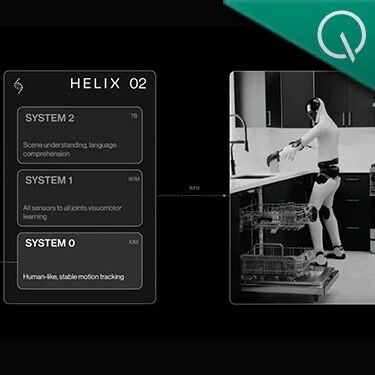
Core Viewpoint - Figure has introduced the Helix 02, a humanoid robot capable of performing complex household tasks autonomously, marking a significant advancement in robotic control systems [1][6]. Group 1: Technological Advancements - The Helix 02 features a unified control system that integrates visual and tactile inputs, allowing for end-to-end motion control without separate upper and lower body management [6][20]. - A new System 0 has been introduced, which is trained on over 1000 hours of human movement data, replacing more than 109,000 lines of manually written code [7][20]. - The robot successfully completed a 4-minute task of unloading a dishwasher, demonstrating the longest and most complex autonomous operation by a humanoid robot to date [5][6]. Group 2: Control Systems - The Helix 02 employs a three-tiered control architecture: - System 2 for high-level semantic reasoning and task decomposition [19][34]. - System 1 for rapid processing of sensory data into actionable movements [25][27]. - System 0 for maintaining balance and coordination at a high execution frequency [19][20]. - This architecture allows for a seamless integration of perception, decision-making, and action, addressing the limitations of traditional robotic control methods [66][67]. Group 3: Sensory Integration - The introduction of palm cameras and tactile sensors enables the robot to perform delicate tasks that require fine motor skills, such as opening a bottle cap or accurately dispensing liquid [30][41][49]. - The tactile sensors can detect forces as small as 3 grams, enhancing the robot's ability to manipulate objects with precision [30][31]. Group 4: Market Implications - The advancements in the Helix 02 position Figure as a leader in the field of humanoid robotics, particularly in the area of loco-manipulation, which combines movement and manipulation in real-time [54][77]. - The shift towards full-body control and continuous interaction with the environment suggests a growing trend in robotics, moving from static tasks to dynamic, real-world applications [77].