
金融科技

Search documents
新晨科技股价涨5.49%,华宝基金旗下1只基金位居十大流通股东,持有283.94万股浮盈赚取309.5万元
Xin Lang Cai Jing· 2025-12-18 05:53
Group 1 - New Morning Technology's stock increased by 5.49%, reaching 20.96 CNY per share, with a trading volume of 218 million CNY and a turnover rate of 4.42%, resulting in a total market capitalization of 6.258 billion CNY [1] - The company, established on January 24, 1998, and listed on September 20, 2016, is based in Haidian District, Beijing, and focuses on application software development and information technology solutions based on its self-developed New Morning Exchange Platform [1] - The revenue composition of New Morning Technology includes software development at 45.46%, system integration at 38.48%, and professional technical services at 16.06% [1] Group 2 - Huabao Fund's Huabao CSI Financial Technology Theme ETF (159851) is among the top ten circulating shareholders of New Morning Technology, having increased its holdings by 1.2271 million shares in the third quarter, totaling 2.8394 million shares, which represents 1.15% of the circulating shares [2] - The Huabao CSI Financial Technology Theme ETF was established on March 4, 2021, with a current scale of 12.319 billion CNY, yielding 13.58% this year, ranking 3176 out of 4197 in its category, and 6.46% over the past year, ranking 3527 out of 4143 [2] - The fund has achieved a cumulative return of 62.58% since its inception [2]

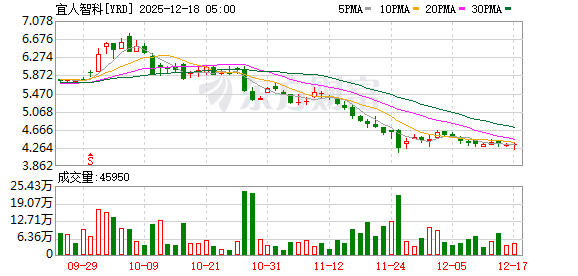
上市十年,宜人智科的AI野望
Guo Ji Jin Rong Bao· 2025-12-18 04:07
Core Insights - Yirendai has successfully navigated the rapid development of the fintech industry over the past decade, leveraging AI technology to enhance its business operations and maintain growth momentum [2][3] - The company aims to optimize existing business processes through AI, while also exploring opportunities to provide AI-enabled solutions to other industries [2][3] Business Strategy - Yirendai's strategy focuses on AI applications, enhancing internal efficiency and external technology output [5][6] - The company has established a comprehensive AI application framework, including risk control, customer service, marketing, and enterprise management [12][13] AI Technology and Applications - Yirendai has developed its own "Zhiyu" large model and various intelligent agents to address specific business pain points, ensuring compliance and operational efficiency [12][13] - The company has implemented AI solutions that significantly improve customer response times and operational efficiency, such as a 98.66% customer call pickup rate and a reduction in fund management time from a week to just 10 minutes [13][14] Talent and Data Resources - Yirendai has cultivated a diverse talent pool, combining expertise in technology, data analysis, and business operations, which supports its AI product development [17][18] - The company has accumulated a vast amount of data, which is essential for training AI models and enhancing business operations [16][18] Future Outlook - Yirendai is positioned to expand its AI capabilities beyond the financial sector, aiming to empower various industries through its technology and experience [21][22] - The company plans to deepen its AI integration in risk prevention and personnel training while fostering partnerships for AI application development [19][21]

百融云创获年度技术突破标杆机构:企业级AI迈入价值验证阶段
Hua Xia Shi Bao· 2025-12-18 04:03
Core Insights - The enterprise-level AI industry is entering a critical phase of value verification, focusing on whether AI technology can be transformed into practical and replicable productivity [1] - BaiRong Cloud's recognition as a leading technology breakthrough institution reflects its commitment to integrating AI into business growth [1] Group 1: AI Integration into Business Processes - BaiRong Cloud aims to transition AI from merely enhancing efficiency to becoming a core production factor integrated into organizational structures [2] - The company is advancing a technology architecture centered around agents, enabling AI to move from "assisting decision-making" to "participating in execution" [2] - The introduction of "silicon-based employees" allows for clear and stable responsibilities, significantly reducing operational costs by 60%-70% in quality inspection scenarios [2] Group 2: Long-term Value of AI in Production Systems - BaiRong Cloud believes that the explosion of enterprise-level intelligent services will hinge on the long-term value derived from integrating AI into production systems [3] - The company has developed a reusable path for enterprise-level AI implementation, allowing technology capabilities to be applied across various business lines and organizational structures [3] - BaiRong Cloud emphasizes the importance of strict business constraints and execution logic in AI ecosystem construction to ensure reliability and controllability in diverse operational environments [3]
滴灌通港股IPO招股书失效
Zhi Tong Cai Jing· 2025-12-18 03:03
公司官网显示,滴灌通集团是一家运用金融科技连结全球资本与小微企业的交易所集团。通过创新的收入分成模式,小企业得以在滴灌通澳门金融资产交易 所(MCEX)挂牌,募集便捷、实惠的长期资金。 | | 02/07/2025 整體協調人公告 - 委任(經修訂 ) 歴 | | --- | --- | | 18/06/2025 | 滴灌通國際投資有限公司 18/06/2025 申請版本(第一次呈交) 全文檔案 [四] 多檔案 > | 滴灌通国际投资有限公司(简称:滴灌通)于6月18日所递交的港股招股书满6个月,于12月18日失效,递表时汇丰银行为其独家保荐人。 ...

新股消息 | 宇信科技港股IPO招股书失效
Zhi Tong Cai Jing· 2025-12-18 02:59
Group 1 - The core viewpoint of the article is that Beijing Yuxin Technology Group Co., Ltd. (Yuxin Technology) submitted its Hong Kong IPO prospectus on June 18, which has now expired after six months on December 18, with Huatai International and BNP Paribas serving as joint sponsors [1] Group 2 - Yuxin Technology is a Chinese fintech solution provider operating in both domestic and overseas markets, offering product-oriented full-stack technology solutions to a wide range of financial institutions [2] - The company's main business segments include banking technology solutions, non-banking technology solutions, and innovative operational services, with a focus on credit business, digital banking, financial regulatory business, data business, and smart finance [2] - Yuxin Technology has established a broad customer base, achieving a penetration rate of 100% among the People's Bank of China, policy banks, state-owned banks, and joint-stock commercial banks [2]


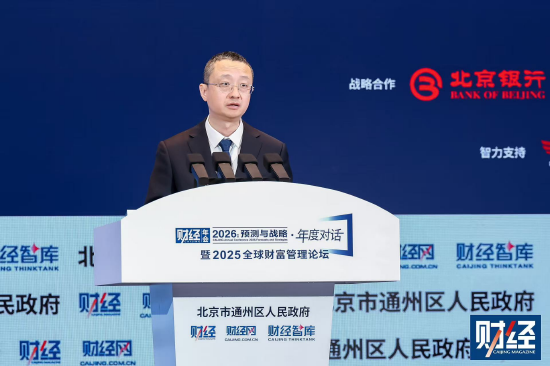
北京通州区委书记李俊杰:着力把副中心建设成为首都金融业新的增长极
Xin Lang Cai Jing· 2025-12-18 02:44
Core Insights - The 2026 Financial Annual Conference and 2025 Global Wealth Management Forum will be held in Beijing from December 18-20, 2025, highlighting the city's rapid development and investment scale [2][7] - The financial sector's value added has consistently accounted for around 10% of GDP over the past five years, indicating its crucial role in economic development [2][7] - The establishment of the Beijing Green Exchange aims to facilitate national greenhouse gas resource reduction trading, with a total of 113 million tons of carbon emission rights traded [2][8] Investment and Economic Development - The Beijing sub-center has maintained an annual investment scale of over 100 billion, with significant projects like Universal Studios and the comprehensive transportation hub completed, boosting economic strength and public engagement [2][7] - The focus on green finance and sustainable financial practices is being accelerated, with over 70% of registered financial institutions serving as regional headquarters or legal entities [2][8] Policy and Market Environment - The recent Central Economic Conference has bolstered market confidence, signaling a positive outlook for economic stability and growth, which is expected to create a favorable environment for the financial sector [3][8] - The government plans to enhance policy incentives and promote resource allocation reforms to stimulate market activity and foster a robust ecosystem centered on wealth management, green finance, and financial technology [3][8]
Coinbase announces stock trading and new Kalshi-based prediction markets
Yahoo Finance· 2025-12-17 22:30
Core Insights - Coinbase is expanding its services beyond cryptocurrency by allowing customers to trade stocks and engage in prediction markets through a partnership with Kalshi, indicating a shift towards becoming a broader financial platform [1][2][3] Group 1: Stock Trading Features - The new stock trading feature is a significant development for Coinbase, as it tests the company's ability to leverage its strong crypto brand to enter other financial sectors [3] - Initially, Coinbase will offer a curated list of major stocks and ETFs, with plans to expand to thousands of stocks in the coming months. Stock trading will be available 24/5 with no trading fees [4] - Coinbase plans to introduce perpetual futures for stocks early next year, which will be available outside the U.S. This derivative allows traders to hold options that do not expire [4] Group 2: Market Context and Future Prospects - The launch of stock trading coincides with a growing trend in the financial market towards tokenization, which involves converting various assets into tokens for blockchain trading, enhancing settlement speed and collateral efficiency [5] - Major firms like BlackRock are already offering tokenized versions of Treasury bills and money-market funds, suggesting that tokenized stock offerings could gain rapid traction, aligning with Coinbase's expertise in the crypto space [5]

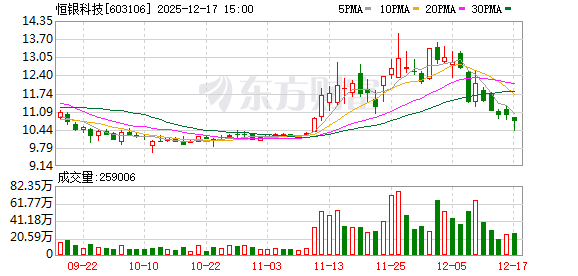
恒银科技党委书记、董事长江浩然: 金融科技赋能新质生产力发展
Zheng Quan Shi Bao· 2025-12-17 19:48
Group 1 - Jiang Haoran, the Chairman of Hengyin Technology, emphasizes the importance of independent research and innovation, leading the company to adopt national encryption algorithms in the financial sector and promoting the localization of financial intelligent terminals [2] - Hengyin Technology has established a comprehensive product matrix covering cash, non-cash, and payment security categories, supported by a closed-loop innovation system that includes basic research, key technologies, and industrial applications, resulting in over a thousand patents and software copyrights [2] - The company maintains a leading market share in the domestic market and is advancing its international development strategy, leveraging the Belt and Road Initiative to expand its solutions to multiple countries and regions [2] Group 2 - Jiang Haoran proposed a "three-step" strategy that transitions from following bank demands to collaborative innovation and ultimately leading industry transformation, utilizing advanced technologies like AI, big data, and blockchain [3] - Hengyin Technology is transforming banking service models from traditional counter services to intelligent services, achieving breakthroughs in fields such as digital currency and smart government [3] - Under Jiang Haoran's leadership, Hengyin Technology has become a leading provider of smart banking solutions in China and has received numerous honors, including the National Labor Model and the National Excellent Entrepreneur award [3]

朝阳永续副总经理李智:构建策略自动化的AI投资闭环
Shang Hai Zheng Quan Bao· 2025-12-17 19:19
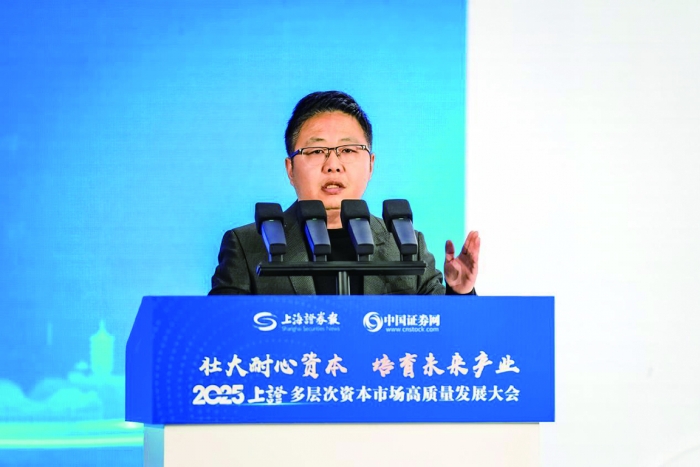
李智 ◎记者 聂林浩 "AI对整个投资会有一些范式方面的影响。"12月16日,朝阳永续副总经理李智在2025南通投资大会暨上 证多层次资本市场高质量发展大会作主旨演讲时称。他结合公司近两年辅助金融机构应用人工智能的实 践,分享了对AI赋能投研领域的深刻观察与未来展望。朝阳永续正致力于推动AI技术从概念走向落 地,助力券商、公募、私募等机构跨越从数据到决策的智能鸿沟。 在夯实数据基础之上,朝阳永续还致力于将金融领域专业的分析算法进行封装,形成可被AI调用的算 法引擎。如资产配置中的BL模型、均值方差模型,公司估值中的现金流折现模型等,都被封装为独立 的计算模块。"这确保了当用户提问相关诉求时,AI能准确调用相应算法与数据执行计算,而不是从历 史文章中拼接可能过时或无关的信息"。 李智还表示,团队将封装能力扩展至"机器人"形态,例如专门解读新闻的"新闻机器人"、分析研报 的"研报机器人",未来甚至可模仿特定优秀研究员的思维逻辑。 "虽然完全无人化的投资决策目前还未完全落地,但我们已在数据、算法与场景封装的基础上,看到了 策略自动化的可行路径。"李智说。 在量化投资领域,传统范式依赖于历史数据回溯以预测未来。李智表 ...
移动财经上涨6.03%,报19.0美元/股,总市值9.81亿美元
Jin Rong Jie· 2025-12-17 15:24
Group 1 - The core viewpoint of the article highlights the performance and financial metrics of Mobile Finance International Limited, noting a stock price increase of 6.03% to $19.0 per share, with a total market capitalization of $981 million as of December 17 [1] - As of June 30, 2025, Mobile Finance reported total revenue of HKD 15.0694 million, reflecting a year-on-year growth of 20.84%, while the net profit attributable to the parent company was a loss of HKD 13.6954 million, a significant decrease of 146.91% compared to the previous year [1] - Mobile Finance International Limited operates as an offshore holding company registered in the British Virgin Islands, primarily through its domestic subsidiary, m-FINANCE, which provides financial trading solutions [1] Group 2 - The company has three subsidiaries in Hong Kong, focusing on the research and sales of financial trading solutions, and is a member of the Hong Kong Gold Exchange (HKGX), providing gold trading platform solutions [1] - m-FINANCE has nearly 20 years of industry experience, offering a range of trading platform solutions for brokers and institutional clients, including mF trading platform, bridging and plugins, CRM systems, ECN systems, liquidity solutions, and social trading applications [1]