种植业

Search documents
乡村振兴路 绿色富民图
Xin Hua She· 2025-11-19 13:56
Group 1 - The artificial breeding of Chinese mitten crabs in Gansu Province's Dingxi City is thriving, with 60,000 crabs ready for harvest, benefiting from local water resources and favorable climate conditions [1] - The local aquaculture project utilizes high-quality crab seedlings and natural feed such as soybeans and corn to achieve high-quality standards in crab farming [1] Group 2 - Dingxi City is advancing ecological construction alongside rural revitalization, focusing on green development through large-scale afforestation activities [2] - Since 2021, the "Green Full Longzhong" initiative has been implemented, emphasizing ecological protection and high-quality development in the Yellow River basin [2] - The afforestation efforts prioritize drought-resistant tree species like Platycladus orientalis and Pinus tabuliformis to create a multi-layered ecological protection system [2] Group 3 - In Xinjiang's Huoerguosi County, farmers are utilizing leftover straw fields for grazing, significantly reducing feeding costs compared to traditional methods [3] - The improvement of transportation routes in Hunan Province has stimulated rural tourism and industry development, leading to the establishment of hotels and restaurants by local villagers [3] - Shanxi Province's medicinal herb industry is experiencing a processing peak, with local companies efficiently processing large quantities of herbs during the peak season from November to April [3]
茂南百名农户集中“充电”学艺,破题甘薯产业“老难题”
Nan Fang Nong Cun Bao· 2025-11-19 12:04
Core Insights - The article discusses a training program aimed at addressing long-standing challenges in the sweet potato industry in Maonan District, including seed degeneration and pest issues, through the introduction of advanced agricultural technology [2][7]. Group 1: Training Program Details - A training session on high-yield and quality sweet potato cultivation and green pest control techniques was held on November 18, attracting around 100 local farmers and agricultural technicians [3][4]. - The training is part of the "Maoming City 2025 Talent Going to the Grassroots and Enterprises Series Activities," co-hosted by Maoming City Talent Station and the South China Agricultural University Maoming Modern Agricultural Research Institute [6][7]. Group 2: Expert Contributions - Senior agronomists from the Guangdong Academy of Agricultural Sciences and Maoming Agricultural Technology Promotion Center provided insights on effective cultivation and pest control methods [8][9]. - The training focused on standardized breeding techniques for healthy seed production and environmentally friendly pest control methods, encouraging farmers to minimize pesticide use [10][11]. Group 3: Participant Feedback and Impact - Participants reported that the training content was closely aligned with practical production needs, effectively addressing common field management issues [15]. - Farmers expressed their intention to apply the learned techniques in their production and to act as demonstrators to help improve the planting standards of surrounding farmers [16][19]. Group 4: Economic Significance - Sweet potatoes are a traditional advantageous industry in Maonan District, with an annual output value exceeding 100 million yuan, serving as a significant source of income for farmers [17][19].


种植业板块11月19日跌0.54%,海南橡胶领跌,主力资金净流出2.02亿元
Zheng Xing Xing Ye Ri Bao· 2025-11-19 08:46
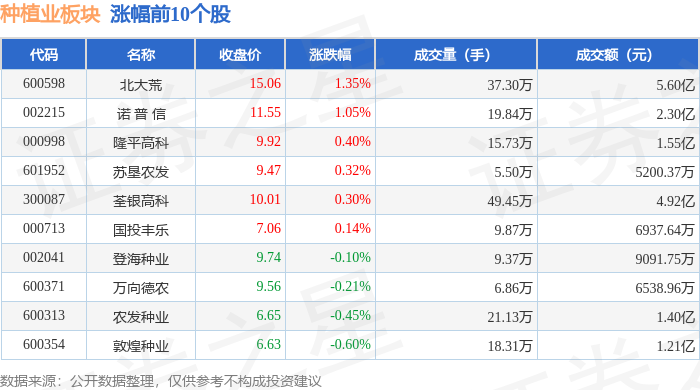
Core Insights - The agriculture sector experienced a decline of 0.54% on November 19, with Hainan Rubber leading the losses [1] - The Shanghai Composite Index closed at 3946.74, up 0.18%, while the Shenzhen Component Index closed at 13080.09, unchanged [1] Sector Performance - Notable gainers in the agriculture sector included: - Beidahuang (600598) with a closing price of 15.06, up 1.35%, trading volume of 373,000 shares, and a turnover of 560 million yuan [1] - Nuofushin (002215) closed at 11.55, up 1.05%, with a trading volume of 198,400 shares and a turnover of 230 million yuan [1] - Major decliners included: - Hainan Rubber (601118) closed at 5.90, down 3.28%, with a trading volume of 697,800 shares and a turnover of 413 million yuan [2] - Shennong Agriculture (300189) closed at 5.62, down 2.77%, with a trading volume of 2,051,200 shares and a turnover of 1.149 billion yuan [2] Capital Flow - The agriculture sector saw a net outflow of 202 million yuan from institutional investors, while retail investors contributed a net inflow of 228 million yuan [2] - Specific stock capital flows included: - Beidahuang (600598) had a net inflow of 27.18 million yuan from institutional investors, while retail investors contributed a net inflow of 9.57 million yuan [3] - Hainan Rubber (601118) experienced a net outflow of 4.92 million yuan from institutional investors [3]


“关键技术+精准服务”落实到田间地头 智慧农业“加速跑”夯实粮食生产基础
Yang Shi Wang· 2025-11-19 03:54
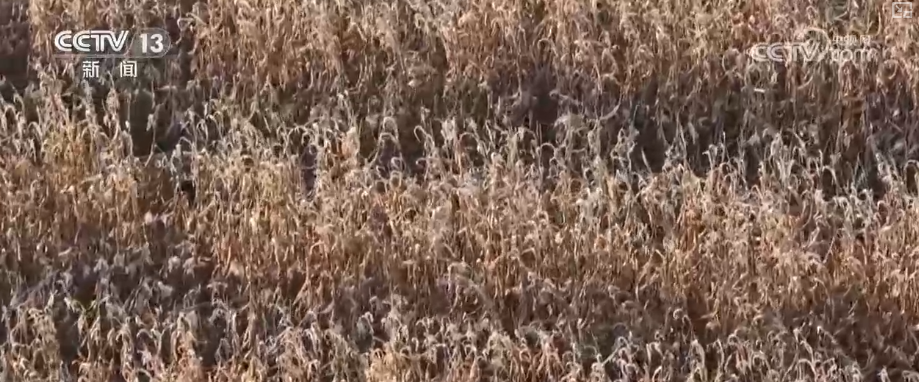
央视网消息:河南冬小麦产量占全国总产量的四分之一,每年小麦种植面积在8500万亩以上。受9月、10月持续阴雨导致土壤偏湿的影响, 2025年,河南麦播普遍推迟7到15天。如何在不利天气中抢回农时? 在河南省周口市商水县,记者看到部分田地里还有玉米秸秆。 邱守先介绍,往年,大型收割机在收割玉米的时候会直接将秸秆粉碎还田。而2025年,受连续阴雨天气的影响,机械无法下地,只能靠人工掰 玉米。眼下,已经进入了冬小麦播种期,这些没有收割的玉米秸秆该怎么办? 11月7日至8日,当地再次出现持续性降雨.为了尽快帮助农户,在墒情有所好转的田地里进行麦播,当地利用农业社会化服务资金购买服务, 对农田作业进行补贴。 商水县种粮大户邱守先表示,只能等田间墒情散发之后能进机械后,再机械粉碎打捆清运。 由于需要机械化作业的田地较多,相关部门已紧急从外地调集了大量机械赶来帮忙。 根据地块墒情的不同,不少机械已经开始在地里作业,为冬小麦播种做好准备。 在河南许昌,农技人员从9月开始就和农户一起关注雨情、墒情。河南省气象部门的天气预报显示,从11月中旬到月底,全省大部分地区没有 大范围雨雪天气,有利于农田除湿晒墒。 许昌市农业技术推广站站 ...

全国冬小麦播种过九成
Xin Hua She· 2025-11-19 02:53
新华社北京11月19日电(记者古一平)记者11月19日从农业农村部获悉,据农情调度,截至11月18日, 全国冬小麦播种过九成,其中黄淮海近九成半。 ...
【人民日报】全方位夯实粮食安全根基
Ren Min Ri Bao· 2025-11-19 00:39
Core Insights - The "14th Five-Year Plan" emphasizes enhancing agricultural production capacity and quality efficiency, as well as strengthening the supply guarantee for important agricultural products like grain, which is crucial for food security over the next five years [1] Group 1: Agricultural Development Strategies - The focus is on broadening the approach to food security beyond limited arable land, promoting diverse food resource development to meet the nutritional and personalized needs of consumers [1] - Black龙江 is highlighted as a pioneer in implementing a comprehensive food strategy, while Fujian is developing its unique agricultural industries, such as Ningde big yellow fish and Gutian edible fungi [1] Group 2: Technological Advancements in Agriculture - The article stresses the importance of technological breakthroughs in achieving agricultural modernization, with a focus on developing new agricultural production capabilities [2] - Black龙江 has achieved a 100% coverage rate of high-quality seeds for major crops, introducing new varieties that address critical agricultural challenges [2] - Automation and precision farming are being implemented, exemplified by the 15,000-acre unmanned farm operated by Beidahuang Group, which utilizes smart machinery for efficient operations [2] Group 3: Agricultural Service Systems - The article discusses the transformation of agricultural services, with cooperatives providing comprehensive support from planting to harvesting, reducing the burden on farmers [3] - In 河南, 932 agricultural service centers have been established to meet farmers' needs, while 广东 is enhancing its agricultural machinery service capabilities [3] - The establishment of a new agricultural social service system is essential for boosting confidence and motivation among service providers and ensuring benefits for farmers [3]
“中原粮仓”河南麦播接近尾声 已播种8116万亩
Zhong Guo Xin Wen Wang· 2025-11-18 13:19
Core Insights - As of November 18, 2023, Henan Province has completed the sowing of 81.16 million acres of wheat, accounting for 95.5% of the expected area, indicating that the wheat sowing work is nearing completion [1] - Henan is a major wheat-producing region in China, contributing to one-quarter of the national wheat output, with a stable sowing area of over 8.5 million acres annually [1] - The sowing period in Henan has been delayed by 15 to 20 days compared to previous years due to above-average rainfall and prolonged overcast weather [1] Summary by Sections Wheat Sowing Progress - The wheat sowing in Henan Province is almost complete, with 81.16 million acres sown, representing 95.5% of the planned area [1] - Major cities such as Xinxiang, Sanmenxia, Zhengzhou, and Kaifeng have completed their sowing, while other areas have exceeded 90% completion [1] Weather Impact - The recent weather conditions, including increased rainfall, have led to water accumulation in fields and high soil moisture, causing delays in sowing [1] - The current cold wave in Henan is ending, and favorable weather conditions are expected to assist in the final stages of sowing and field management [2] Expert Insights - Experts indicate that the current wheat seedlings are showing uniform and healthy growth, which is better than expected [1] - Farmers are advised to monitor soil moisture and weather changes closely to ensure optimal conditions for wheat growth and to prevent frost damage [2]
综合利用,盐碱地变丰产田
Ren Min Ri Bao· 2025-11-18 12:38
Core Insights - The article emphasizes the importance of high-quality agricultural land construction and the comprehensive utilization of saline-alkali land in China, highlighting the establishment of a breeding innovation system for saline-alkali land [1] Group 1: Saline-Alkali Land Utilization - The report outlines over 40 innovative achievements in biological breeding, productivity enhancement, and ecological utilization of saline-alkali land in China [2] - Various regional governance models and technical modes have been created, such as the "dry sowing and wet harvesting" in the Northwest oasis area and integrated grass and livestock systems in the Ningxia Hetao Plain [2] - In Jiangsu's coastal saline-alkali areas, annual rainfall supports a rotation planting model, achieving a 20% increase in soil organic matter and maintaining soil salinity below 2‰ [2] Group 2: Challenges and Solutions - The comprehensive utilization of saline-alkali land faces challenges such as water resource shortages and mismatched salt control technologies [3] - The report stresses the need for effective drainage systems and a dynamic monitoring network for soil salinity to implement differentiated irrigation and drainage standards [3] Group 3: Agricultural Development - The report advocates for a combination of "suitable crops for the land" and "suitable land for crops" to maximize the potential of saline-alkali land [4] - It highlights the high functional component content and biological activity of many saline-alkali agricultural products, urging the development of a data-sharing platform for salt-tolerant plant resources [4] Group 4: Breeding Innovation - Successful varieties such as the Huanghua drought-resistant wheat and saline-alkali goji berry have been developed, enhancing the value of saline-alkali agricultural products [5] - The National Saline-Alkali Land Comprehensive Utilization Technology Innovation Center has established a breeding innovation system, with 68 new salt-tolerant crop varieties developed and promoted across 26.32 million acres [6]
寒潮来袭 各地多部门积极应对护航农业生产
Yang Shi Wang· 2025-11-18 05:49
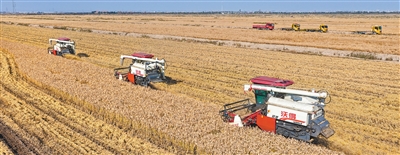
央视网消息:受较强冷空气影响,11月17日开始,江苏泰州市气温"断崖式"下跌,部分地区最低气温下降9℃左右。当地农业部门启动应 急预案,为农作物"防寒保暖",保障小麦、果蔬等作物安全越冬。 目前,正值小麦播种和出苗的关键期。为应对寒潮,泰兴市济川街道组织人员分片包干、分类施策,并指导正在播种的农户适当增加种子 用量,为已出苗的田块采取防冻措施。 记者从江苏省气象部门了解到,未来10天,江苏省气温将持续偏低,24日前后将再迎较强冷空气。气象部门提醒,小麦生产建议适当增加 播种量以增强抗逆性,播种后要及时镇压保墒,提升地温,对已出苗地块,可通过撒施草木灰、腐熟有机肥等方式增温御寒。 17日,泰州市姜堰区蒋垛镇最低气温降至3—4℃。正值开花挂果关键期的草莓对环境温度极为敏感,为确保其正常生长,农技人员深入各 基地,指导农户加设二道棚、安装挡风帘,强化保温防冻。草莓种植是当地的特色产业,这些措施将有效保障农户收益。专家介绍,要注意把 棚室的温度维持在20℃左右,增加蜜蜂活性,让它对草莓进行授粉,提高草莓的挂果率。 黑龙江省七台河市近日出现降雪,最低气温降至零下10℃左右。农技人员深入种植基地一线,指导农户加固大棚、清 ...

植物“打人” 菌类“致幻” 探寻自然真的很奇妙
Hang Zhou Ri Bao· 2025-11-18 03:00
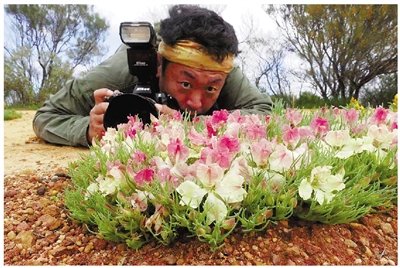
Group 1 - The event "Plant Science Popularization and Natural Education Innovation Practice Forum" was held at Hangzhou Botanical Garden as part of the 2025 China Natural Education Conference [3] - Renowned science writer Tian Dong shared insights from his recent trip to Western Australia, highlighting unique local plants such as "Kangaroo Paw" and "Coastal Wattle" [4][5] - The discussion emphasized the ecological significance of native plants and the challenges posed by invasive species in Western Australia [5] Group 2 - Lin Wenfei, an expert in mycology from Zhejiang University, discussed the ecological importance of fungi and their historical use in Chinese culture [6] - Various beneficial fungi were highlighted, including Lingzhi and Cordyceps, which have health benefits such as improving immunity and digestion [6] - Lin also provided guidance on identifying toxic mushrooms, emphasizing that not all brightly colored mushrooms are poisonous, with white and gray mushrooms being particularly dangerous [7]