交通

Search documents
培育新增长点 服务消费支持政策出台
Bei Jing Shang Bao· 2026-01-29 23:24
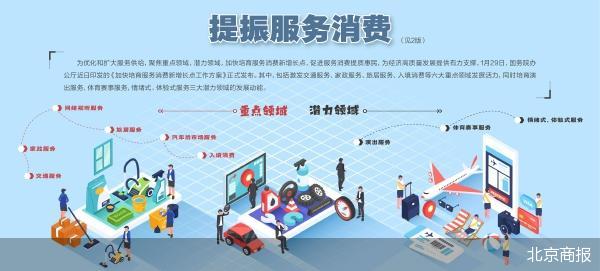
Core Viewpoint - The State Council's recently released "Work Plan for Accelerating the Cultivation of New Growth Points in Service Consumption" aims to enhance service supply and promote quality service consumption through 12 policy measures across six key areas and three potential areas of development [1][5]. Group 1: Key Focus Areas - The six key service consumption areas identified are transportation, housekeeping, online audio-visual, travel and accommodation, automotive aftermarket, and inbound consumption [3]. - The plan emphasizes the integration of railway and tourism, proposing policies to enhance railway tourism services, develop themed trains, and support cruise consumption innovation [3]. - It aims to improve the quality of yacht consumption and related infrastructure, while also promoting night tours and immersive cruise products [3]. Group 2: Inbound Consumption - Inbound consumption is highlighted, with measures to extend the trial period for unilateral visa-free countries and enhance the convenience of entry and exit for foreign visitors [5]. - The plan aims to create high-quality international brands in tourism, healthcare, education, and wellness, while promoting the "Buy in China" brand and optimizing international payment services [5]. Group 3: Potential Development Areas - The plan identifies three potential development areas: performance services, sports event services, and emotional/experiential services [6]. - It proposes optimizing performance management and ticketing systems, while also encouraging the establishment of quality brands in performance and sports events [7][8]. - For emotional and experiential services, the plan suggests innovative regulatory approaches and the establishment of new consumption scenarios [8]. Group 4: Support and Assurance - The plan emphasizes the need for a robust support system to enhance consumer capacity and willingness, including the establishment of a standardized service industry framework [9]. - It calls for the development of credit systems in sectors like elderly care, housekeeping, and tourism, leveraging platforms like "Credit China" for better transparency [9]. - Financial support measures include optimizing loan policies for service industry entities and encouraging financial institutions to develop tailored products for service consumption [10].

景德镇全面部署“票根经济”激发瓷都消费新活力
Sou Hu Cai Jing· 2026-01-29 20:57
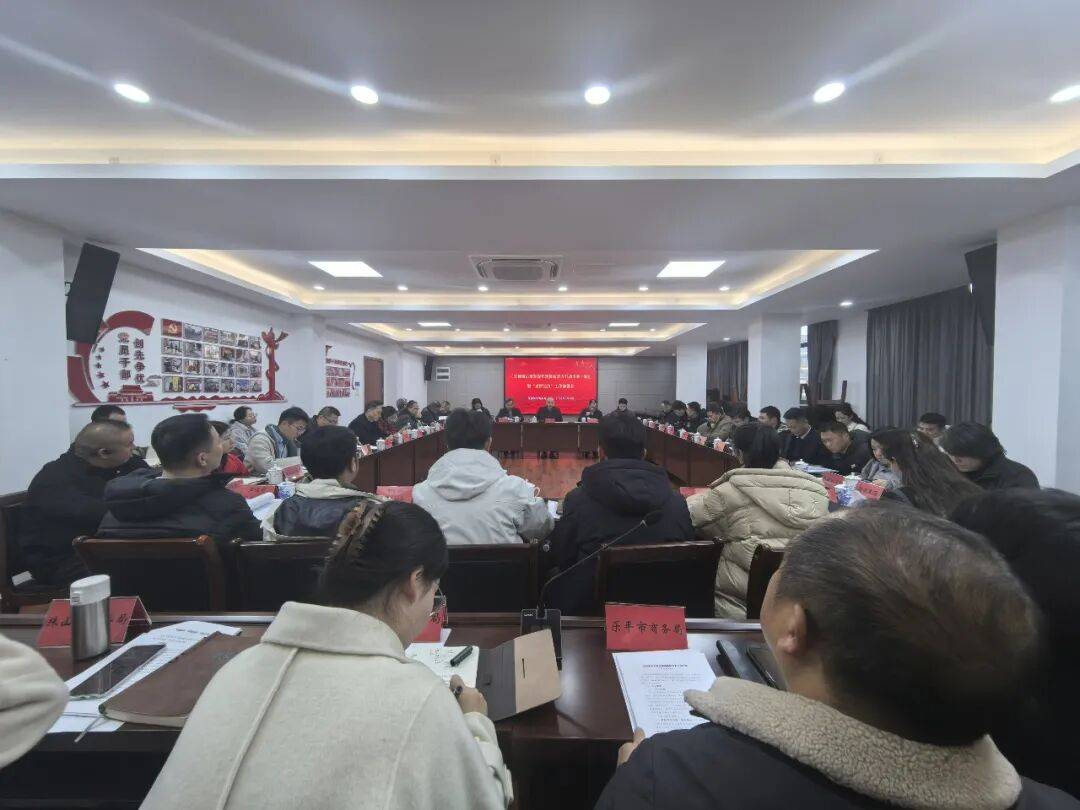
Core Viewpoint - The meeting emphasized the importance of implementing the "Action Plan" to promote consumption recovery and drive high-quality development through the "ticket root economy" model [1][3]. Group 1: Action Plan and Objectives - The "Action Plan" aims to stimulate consumption in Jingdezhen, focusing on the innovative "ticket root economy" model [1][3]. - The plan will integrate ticketing resources from transportation, culture, tourism, and sports, promoting a "one ticket access" system to enhance cross-industry consumption [3]. Group 2: Implementation and Responsibilities - Relevant units are required to take responsibility and collaborate closely, with the Jingdezhen Municipal Bureau of Commerce tasked with accelerating the construction of a digital service platform [3]. - The implementation details need to be refined, with a deadline set for the modification and approval of the plan by the end of the upcoming weekend [3].
去年完成投资5332亿元
Xin Lang Cai Jing· 2026-01-29 19:50
Core Viewpoint - The Chengdu-Chongqing Economic Circle has successfully completed 320 key projects with a total investment of 533.2 billion yuan in 2025, exceeding the annual investment target by 21.1% [1] Group 1: Investment Overview - A total investment of 533.2 billion yuan was completed in 2025, achieving an annual investment completion rate of 121.1% [1] - Modern infrastructure projects accounted for an investment of 318.1 billion yuan, with significant transportation projects such as the completion of the Tongzi Expressway and the commencement of the Wulong Silver Plate Pumped Storage project [1] - The modern industry and technology innovation sector saw an investment of 184.2 billion yuan, with key projects like the Chengdu High-tech Zone BOE 8.6 generation AMOLED production line nearing completion [1] Group 2: Key Projects and Developments - Major transportation projects include the construction of the Chengdu-Chongqing High-speed Railway and the completion of the Chongqing Gas Base, which is expected to produce nearly 80 billion cubic meters of gas annually [1] - The establishment of the Sichuan-Chongqing Gaotong New Area Technology Innovation Base and the trial production phase of the Fuling 6-inch IGBT power semiconductor production line are notable advancements in technology [1] - The collaboration between Sichuan and Chongqing aims to leverage national planning opportunities to support large-scale projects in transportation, energy, technology, industry, safety, and livelihood [1]
Brookfield Infrastructure Partners(BIP) - 2025 Q4 - Earnings Call Transcript
2026-01-29 15:02
Financial Data and Key Metrics Changes - Brookfield Infrastructure Partners generated funds from operations (FFO) of $2.6 billion in 2025, reflecting a 10% increase compared to 2024 when normalized for asset sales and foreign exchange [4][5] - The fourth quarter FFO reached a record of $0.87 per unit, leading to a conservative payout ratio of 66% and a 6% increase in quarterly distribution to $1.82 per unit, marking the 17th consecutive year of distribution increases of at least 5% [5][6] Business Line Data and Key Metrics Changes - The transport segment generated FFO of $1.1 billion, consistent with the prior year after normalizing for $1.8 billion in capital recycling initiatives, with rail and toll road segments seeing volume and rate growth of 2% and 3% respectively [7] - The midstream segment's FFO increased by 7% year-over-year to $668 million, driven by higher volumes in Canadian natural gas operations and a newly acquired U.S. refined products pipeline [8] - The data segment's FFO surged over 50% to $502 million, attributed to new investments and strong organic growth, including the commissioning of 220 MW of capacity at hyperscale data centers [8][9] Market Data and Key Metrics Changes - The global data center platform has a development potential of approximately 3.6 gigawatts, with contracted capacity exceeding 2.3 gigawatts [9] - In 2025, corporate investments in AI-related infrastructure reached approximately $500 billion, with expectations for further increases in the next two years [11][12] Company Strategy and Development Direction - The company is focused on a prudent, risk-focused approach to AI infrastructure investing, emphasizing long-term contracts and selective partnerships with investment-grade counterparties [12][13] - Brookfield Infrastructure aims to capitalize on structural themes such as digitalization, decarbonization, and deglobalization, positioning itself for a super cycle in infrastructure investment [20] - The company plans to deploy approximately $1.5 billion into new investments in 2026, supported by a robust pipeline across various sectors and geographies [18][20] Management's Comments on Operating Environment and Future Outlook - Management expressed optimism about the infrastructure sector's resilience and growth potential, with expectations to return to a 10% or higher per unit growth target in 2026 [20][21] - The company highlighted a strong liquidity position of $6 billion at the end of 2025, bolstered by record asset sale proceeds of $3.1 billion [9] Other Important Information - The company completed approximately $16 billion in financings to de-risk operating company balance sheets [4] - Significant growth in the data center business was noted, with 11 consecutive quarters of record bookings and a fully utilized U.S. colocation data center [15] Q&A Session Summary Question: Can you elaborate on your contract approach to mitigate technology risk in data centers? - Management explained that long-term contracts (15 years) are designed to avoid technology risks by ensuring that any necessary infrastructure changes are not at the company's cost [28][30] Question: What is the expected return on new data center developments? - Management indicated that new data centers yield a return of 9% to 10%, with monetization at cap rates of 5.5% to 6%, leading to equity returns in the high teens or twenties [26][27] Question: Can you provide details on the KKR acquisition of data centers from Compass? - Management stated that specific transaction details are private, but they have entered into joint ventures with institutional investors, including KKR, across North America and Europe [35][36] Question: What is the outlook for inflation indexation across geographies in 2026? - Management expects inflation indexation in OECD markets to average between 2% and 3%, with emerging markets like India and Brazil ranging from 2% to 4% [46][47] Question: How is the capital backlog in data operations expected to evolve? - Management noted a significant increase in the capital backlog, driven by new contracts and the onboarding of bulk fiber backlog, with expectations for smooth commissioning across utilities and data centers [50][52]

加快培育服务消费新增长点!国办出台12条政策举措
Xin Hua She· 2026-01-29 14:03
方案专门就入境消费作出部署,提出"做好单方面免签国家试行期限延长相关工作,研究稳妥扩大 单方面免签、过境免签、区域性免签政策适用范围""加快入境签证全流程在线办理全球覆盖""增加离境 退税商店"等多项务实举措,为外国游客营造更加便利、舒适的消费环境。 "开展家政服务职业技能专项培训行动""研究支持民营资本依法依规开展网络视听服务""培育一批 旅居目的地城市(区域)""加强房车露营基地建设"…… 新华社北京1月29日电 题:加快培育服务消费新增长点!国办出台12条政策举措 新华社记者 谢希瑶、黄韬铭 临近春节,各地年味渐浓,不仅年货等商品消费走俏,家政保洁、文旅出行等服务消费也在同步升 温。 为优化和扩大服务供给,促进服务消费提质惠民,国务院办公厅日前印发的《加快培育服务消费新 增长点工作方案》29日对外发布,从激发重点领域发展活力、培育潜力领域发展动能、加强支持保障三 方面提出12条政策举措。 方案划出了交通、家政、网络视听、旅居、汽车后市场、入境消费这些重点服务消费领域。 交通线也是风景线、文化带、产业廊。方案提出"制定出台促进铁路与旅游融合发展的专项支持政 策""加快车站、列车旅游化改造""开发沉浸式、多 ...
新华鲜报 | 加快培育服务消费新增长点!国办出台12条政策举措
Xin Hua She· 2026-01-29 11:51
Core Viewpoint - The State Council of China has introduced a plan to accelerate the cultivation of new growth points in service consumption, focusing on optimizing service supply and enhancing consumer experience through 12 policy measures [1][5]. Group 1: Key Service Consumption Areas - The plan identifies key service consumption sectors including transportation, housekeeping, online audio-visual services, travel, automotive aftermarket, and inbound consumption [2]. - Specific measures include developing policies to promote the integration of railways and tourism, enhancing the tourism transformation of train stations and trains, and improving infrastructure for yacht services [2]. Group 2: Inbound Consumption Initiatives - The plan aims to boost inbound consumption by extending the trial period for unilateral visa-free countries, expanding the scope of visa policies, and increasing the number of tax refund shops for departing tourists [2]. - It anticipates that by 2025, the number of inbound and outbound travelers will reach a historical high, converting inbound flow into tangible consumption growth [2]. Group 3: Development of Service Sectors - The plan proposes actions such as specialized training for housekeeping services, support for private capital in online audio-visual services, and the development of travel destination cities [2]. - It emphasizes the importance of optimizing service supply, promoting pilot programs, innovating consumption scenarios, and enhancing talent cultivation [2]. Group 4: Entertainment and Experience Services - The plan addresses the potential of entertainment services, proposing measures to optimize performance management, set safety capacity limits, and combat ticket scalping [3]. - For sports events, it suggests improving safety management and encouraging the introduction of international sports events [3]. Group 5: Regulatory and Support Measures - The plan highlights the need for innovative regulatory approaches for emotional and experiential services, advocating for a gradual improvement of regulatory requirements [4]. - It also calls for the establishment of a standard system, strengthening credit construction, and enhancing financial support to foster service consumption growth [5].
刚刚!国办印发重要方案!
Jin Rong Shi Bao· 2026-01-29 11:37
1月29日,为优化和扩大服务供给,聚焦重点领域、潜力领域,加快培育服务消费新增长点,促进服务 消费提质惠民,国务院办公厅印发《加快培育服务消费新增长点工作方案》(以下简称《方案》)。 服务消费是扩大内需的重要抓手,更是推动经济高质量发展的关键动力。当前我国居民消费正从商品消 费为主向商品和服务消费并重转变,服务消费市场活力持续释放,新产业(300832)、新业态、新模式 不断涌现,但同时也面临着标准体系不完善、部分领域信用建设滞后、经营主体融资难题突出等发展堵 点。此次出台的《方案》,直击服务消费发展的痛点难点,提出要健全标准体系、加强信用建设、强化 财政金融支持,为服务消费高质量发展划定清晰路径,让服务消费在规范中创新、在提质中惠民,真正 成为经济高质量发展的有力支撑。 一、《方案》明确了服务消费新增长点的重点领域: 包括: 交通服务。制定出台促进铁路与旅游融合发展的专项支持政策,加快车站、列车旅游化改造,开发特色 化旅游专线,打造多样化旅游专列产品,推出一批银发旅游等主题列车,提升铁路旅游服务和运行保障 水平等。 此次出台的《方案》,直击服务消费发展的痛点难点,提出要健全标准体系、加强信用建设、强化财政 ...
海南发布2026年重大项目投资计划!涉及海口的有……
Xin Lang Cai Jing· 2026-01-29 11:34
转自:海口发布 民生保障和生态环境保护等关键领域 其中包括新建湛江至海口铁路 海口经济圈规模化供水工程 海口市横沟村城市更新项目等 日前 《海南省2026年重大项目投资计划》发布 根据投资计划 2026年海南共安排 省重大项目470个、预备项目160个 覆盖基础设施建设、产业发展 2026年,海南安排省重大项目470个,总投资7175亿元,年度计划投资1280亿元。按建设阶段划分:竣 工项目92个,总投资910亿元,年度计划投资211亿元,占17%;续建项目265个,总投资5354亿元,年 度计划投资849亿元,占66%;新开工项目113个,总投资911亿元,年度计划投资220亿元,占17%。 这些项目紧密服务自贸港建设需要,涵盖交通、能源、产业升级及公共服务等多方面。其中包括新建湛 江至海口铁路、海南商业航天发射场能力提升项目、海口经济圈规模化供水工程、海口市横沟村城市更 新项目、海南东方CZ8场址50万千瓦海上风电项目、海南思可源30万吨/年生物能源项目、G98环岛高速 公路大三亚段扩容工程等一系列标志性工程,将有效夯实自贸港硬件基础、培育现代化产业体系。 此外,投资计划还安排了160个预备项目,总投资2 ...
广西防城港市“重大项目突破年”行动成效显著 项目建设实现“双增势”
Zhong Guo Fa Zhan Wang· 2026-01-29 08:55
中国发展网讯 朱芳敏 记者龚成钰报道 1月28日,防城港市人民政府新闻办公室举行"重大项目突破 年"行动成效新闻发布会。市发展和改革委员会主任韩凯介绍,2025年,防城港市深入实施"项目为 王"理念,项目建设取得关键突破。全年共有92个总投资5000万元以上项目开工,65个项目建成投产, 开工量与竣工量同比分别增长22.67%和51.16%,实现"双增势"。其中,民间投资增速达103.1%,位居 广西壮族自治区榜首。 在推动传统产业升级的同时,防城港市积极培育新质生产力。全市累计建成智能工厂26家,并成功培育 首家"卓越级智能工厂"。全国首个氧化铝AI大模型、全区首个"人工智能+海上风电"应用场景相继落 地。此外,商业航天、AI医疗等新兴领域的项目也已布局并初见成效。 强化民生保障与夯实发展基础并举 在推进产业项目的同时,一批民生基础设施项目同步加快。上峒高速、G219峒中至东兴段公路已建成 通车。在土地征收过程中,通过落实被征地农民养老保险补贴、解决历史拖欠补偿款等方式,切实保障 群众利益,并创新运用数字化平台提升征迁工作透明度和效率。 韩凯表示,2026年防城港市将继续抓实项目谋划储备,优化全周期服务保障 ...
生态公园将新增100个
Bei Jing Wan Bao· 2026-01-29 07:25
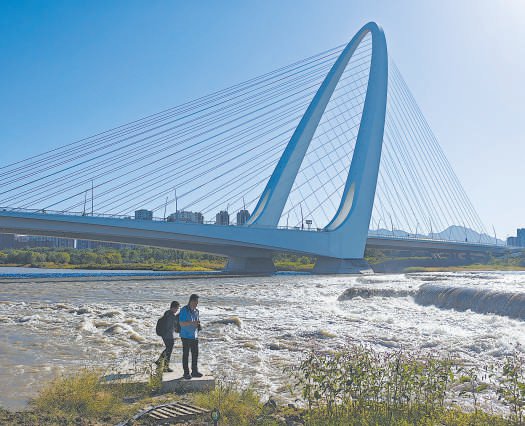
Core Viewpoint - The "14th Five-Year Plan" draft outlines a vision for Beijing by 2030, focusing on urban-rural integration, modern urban development, and ecological harmony, aiming to enhance the quality of life for residents and contribute to global ecological civilization [1][3]. Urban-Rural Integration and Regional Development - The plan emphasizes rural revitalization, urban vitality, and high-quality development of the Plain New City, with initiatives to enhance agricultural efficiency and improve living conditions for farmers [3]. - Beijing aims to construct and upgrade 600,000 acres of high-standard farmland and improve supply levels of vegetables, meat, eggs, and milk [3]. - The development of over 1,500 kilometers of "Beautiful Countryside Roads" and the standardization of water supply facilities in 300 mountainous villages are also highlighted [3]. Urban Vitality and Infrastructure - New urban vitality areas will be established along key axes, including the Grand Canal and the "Two Parks and One River" waterfront area, enhancing recreational experiences and cultural tourism [3][4]. - The plan includes the construction of major cultural facilities and parks, such as the National Museum of Nature and the Capital Planning Exhibition Hall, to enrich the cultural landscape [4]. Urban Governance and Public Spaces - A focus on urban governance will involve creating over 150 high-quality public spaces and updating more than 100 old factories and inefficient industrial parks [6]. - The annual investment in urban renewal is projected to exceed 300 billion yuan by 2030, with a commitment to a systematic and efficient urban planning and governance mechanism [6]. Environmental Sustainability - The plan aims to maintain a forest coverage rate of over 45% and includes initiatives for afforestation, with an additional 50,000 acres of new greenery planned [8][9]. - Efforts to improve water quality and ecological conditions along rivers such as the Yongding River and the Qing River are also part of the strategy [9][10]. Ecological Parks and Green Spaces - The addition of 100 ecological parks and the construction of small green spaces and pocket parks are planned, aiming for a 94% coverage rate of park green space within 500 meters in urban areas [10].