
供电

Search documents
河北保定:民宿电气化改造赋能乡村旅游高质量发展
Xin Hua Cai Jing· 2025-08-27 09:29
Core Insights - The article highlights the transformation of rural tourism in Hebei Province, particularly through the electrification of homestays, enhancing visitor experiences and promoting sustainable development [1][2]. Group 1: Electrification of Homestays - In Baoding City, rural homestays are undergoing electrification to provide a comfortable living environment, contributing to high-quality rural tourism [1]. - Bai Shikou Village has implemented green electrical appliances, resulting in increased visitor satisfaction due to improved cleanliness and comfort [1]. - The local power company has customized power supply plans for each homestay, ensuring efficient electricity use and enhancing the overall environment [1]. Group 2: Increased Tourist Demand - The peak summer tourist season has seen a rise in bookings for homestays in Luotuowan Village, with the local power company conducting regular checks on electrical systems to ensure safety [2]. - In Hu Shan Village, the transformation of abandoned houses into unique homestays has revitalized local resources and increased income for villagers [2]. - The local power department has upgraded the electrical infrastructure, including the construction of 32 kilometers of new 10 kV lines and the addition of a 200 kVA transformer to support the growing electricity demand from tourism [2].
国网白银供电公司:向“新”而行 “碳”索未来
Zhong Guo Neng Yuan Wang· 2025-08-22 09:10
Core Insights - The company is actively responding to national "dual carbon" goals by developing a comprehensive carbon business system to support the green and low-carbon transition in the Baiyin region [1] Group 1: Carbon Management and Monitoring - The company has launched an innovative "Electricity Monitoring for Carbon Analysis" platform in collaboration with the Baiyin Development and Reform Commission, enabling precise monitoring of carbon emissions from industrial enterprises with energy consumption above 5,000 tons of standard coal per year [2] - The platform has analyzed data from over 40 enterprises, leading to the development of emission reduction plans, such as the case of Taishan Gypsum (Gansu) Co., which reduced CO2 emissions by 3,000 tons, a 41.99% year-on-year decrease [2] Group 2: Policy Research and Clean Energy Integration - The company has conducted 13 energy policy analysis studies, with findings influencing local government decisions, such as optimizing the layout of charging stations for electric vehicles [3] - As of July 2023, the company has achieved a total installed capacity of 3.6 million kilowatts for renewable energy, generating 36.73 billion kilowatt-hours of clean energy, which has saved 146.92 million tons of standard coal and reduced CO2 emissions by 361.42 million tons [3] Group 3: Carbon Management System Development - The company has established a comprehensive carbon management system that includes a "goal-monitoring-analysis-improvement" process, covering seven professional areas to standardize workflows [4] Group 4: Internal Practices and External Services - The company has implemented energy-saving and environmental protection measures, achieving a 0.14 percentage point reduction in the 10 kV comprehensive line loss rate year-on-year, and has provided energy efficiency diagnostic services to 7,095 users, saving enterprises a total of 9.6 million yuan in electricity costs [5] - The company has signed contracts for 1.26 billion kilowatt-hours of renewable energy and completed green electricity transactions of 5.35 million kilowatt-hours, promoting green consumption in society [5] Group 5: Future Directions - The company plans to continue enhancing its carbon business system and improving the precision of carbon management and comprehensive service capabilities to contribute to the national "dual carbon" strategy [5]
公用事业领域反垄断指南公开征求意见 哪些方面涉及你我生活?一文了解↓
Yang Shi Wang· 2025-08-22 02:16
Core Viewpoint - The State Administration for Market Regulation has drafted the "Antitrust Guidelines for the Public Utilities Sector (Draft for Comments)" and is seeking public feedback on it [1]. Group 1: Overview of Public Utilities - Public utilities encompass a range of industries that provide essential goods or services to the public, including water supply, electricity, gas, heating, sewage treatment, waste disposal, broadcasting, and public transportation, most of which have natural monopoly characteristics [3]. Group 2: Antitrust Guidelines Purpose - The guidelines aim to address the unique characteristics and market competition rules of the public utilities sector, enhancing the scientific, targeted, and effective nature of antitrust enforcement [4]. Group 3: Identification of Antitrust Behaviors - The draft provides detailed specifications on potential monopolistic agreements in the public utilities sector, helping operators accurately identify legal risks [6]. - Horizontal monopolistic agreements are prevalent in the public utilities sector, particularly in the bottled gas industry, where operators may fix prices or divide market shares through informal agreements [8]. Group 4: Abuse of Market Dominance - The draft addresses the frequent occurrence of market dominance abuse in sectors like water, gas, electricity, and heating, detailing factors related to unfair pricing, refusal to deal, and other unreasonable trading conditions [9]. - It specifies common scenarios that may not be considered legitimate justifications for market dominance abuse, emphasizing that actions without legal basis or those claiming safety without proof are generally not justified [10][14].

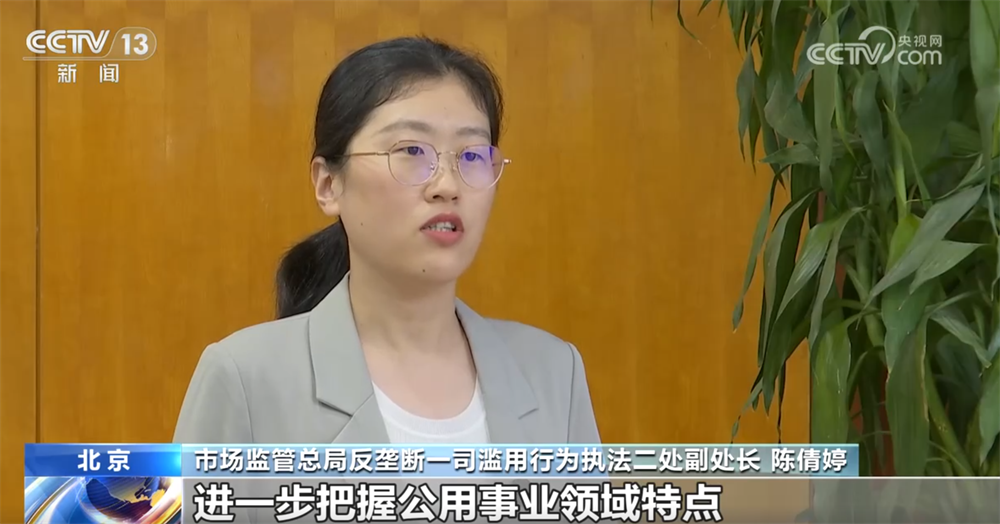
事关水气电热等民生领域,怎样为公用事业经营画红线
Yang Shi Xin Wen Ke Hu Duan· 2025-08-21 23:39
Core Viewpoint - The State Administration for Market Regulation has released a draft guideline for public utilities aimed at enhancing antitrust enforcement in sectors characterized by natural monopolies, such as water, electricity, gas, and heating services [1][3]. Group 1: Antitrust Guidelines Overview - The draft guideline consists of seven chapters and 45 articles, providing a comprehensive framework for analyzing monopolistic agreements and abuse of market dominance in the public utilities sector [3]. - It addresses horizontal monopolistic agreements, particularly in the bottled gas industry, and outlines specific behaviors and standards for identifying such agreements [3][4]. - The guideline establishes a systematic antitrust regulatory framework that covers preemptive, ongoing, and post-incident measures in the public utilities sector [3][4]. Group 2: Specific Provisions and Implications - The guideline specifies two forms of horizontal monopolistic agreements, including price-fixing through verbal agreements or meetings, and market division through cooperative operations [4]. - It emphasizes that operators cannot justify abusive market dominance behaviors under the pretext of safety unless they can prove such actions are necessary for safety [6]. - The guideline aims to promote self-regulation among public utility operators, encouraging compliance with laws and regulations to enhance fair competition and public welfare [6][7]. Group 3: Coordination and Comprehensive Governance - The guideline highlights the need for coordinated efforts between antitrust enforcement agencies and industry regulators to address systemic monopolistic issues in public utilities [7]. - It mandates that any violations of industry regulations discovered during investigations be reported to the relevant regulatory bodies for further action [7].

郴电国际:8月20日召开董事会会议
Mei Ri Jing Ji Xin Wen· 2025-08-21 23:33
Group 1 - The company, Chendian International, announced the convening of its seventh board meeting on August 20, 2025, to review proposals including the addition of daily related transactions for 2025 [1] - For the fiscal year 2024, the revenue composition of Chendian International is as follows: power supply industry accounts for 79.18%, gas supply industry for 11.54%, water supply industry for 8.92%, and other businesses for 0.36% [1] - As of the report, Chendian International has a market capitalization of 2.8 billion yuan [1]

事关水气电热等民生领域,怎样为公用事业经营画红线?
Yang Shi Xin Wen Ke Hu Duan· 2025-08-21 22:21
Core Viewpoint - The State Administration for Market Regulation has released a draft of the "Antitrust Guidelines for the Public Utilities Sector" to solicit public opinions, aiming to enhance the scientific, targeted, and effective enforcement of antitrust laws in this sector [1][2]. Summary by Relevant Sections Antitrust Guidelines Overview - The guidelines consist of seven chapters and 45 articles, addressing monopolistic agreements, abuse of market dominance, and the analysis framework for operator concentration, thereby creating a comprehensive antitrust regulatory system for public utilities [2][3]. Specific Provisions - The guidelines specifically address horizontal monopolistic agreements, particularly in the bottled gas industry, and detail the behaviors and standards for identifying such agreements [2][3]. - It also outlines the legal responsibilities of operators and includes provisions for fair competition reviews and the prohibition of administrative power abuse [2]. Unique Characteristics of Public Utilities - Due to the public, regional, and policy nature of public utilities, the types and impacts of monopolistic behaviors exhibit certain peculiarities, which the guidelines aim to address [3]. - The guidelines clarify that operators cannot justify abusive behaviors under the pretext of safety unless they can prove such actions are necessary for safety [3]. Enforcement Principles - The enforcement of antitrust regulations in the public utilities sector is guided by principles of maintaining fair competition, scientific regulation, enhancing public welfare, and supporting high-quality development [4]. - The guidelines emphasize a preventive regulatory role, encouraging operators to comply with laws and self-regulate [4]. Coordination with Other Regulatory Bodies - The guidelines highlight the need for coordination between antitrust enforcement agencies and industry regulatory bodies, suggesting a multi-faceted approach to address systemic monopolistic issues [4].
国网酒泉供电公司:筑牢青年人才基础 开展“工培一体”新篇章
Zhong Guo Neng Yuan Wang· 2025-08-21 08:53
Core Viewpoint - The successful completion of a practical training session on high-voltage cable head manufacturing marks a significant enhancement in the professional skills of young employees at the State Grid Jiuquan Power Supply Company, contributing to the safety and reliability of the power grid [1][3][4]. Group 1: Training Overview - A practical training session was conducted on August 19, focusing on the key processes of high-voltage cable head manufacturing [1]. - Young employees were introduced to three core types of cable heads: 35 kV plug-in cable heads, 110 kV GIS plug-in heads, and 110 kV oil-filled cable heads [1][3]. - The training combined theoretical explanations with on-site demonstrations by experienced technical personnel from manufacturers [3]. Group 2: Skill Development - The training provided a valuable learning opportunity for young employees, allowing them to observe the standard procedures for manufacturing each type of cable head [3]. - Key operational steps emphasized during the training included cleaning processes, precise insulation layer cutting, stress cone positioning, reliable conductor connections, and sealing for waterproofing [3]. - Participants engaged in hands-on practice under strict supervision, gradually mastering the differences and technical challenges associated with various voltage levels and types of cable heads [3]. Group 3: Impact on Workforce - The "integrated training" model aims to transform young employees from a "supporting force" to a "main force," enhancing their growth and contributing to the safe operation of the power grid [4]. - This initiative is expected to continuously supply high-quality talent for the construction of a new power system and inject youthful energy into the high-quality development of the power grid [4].
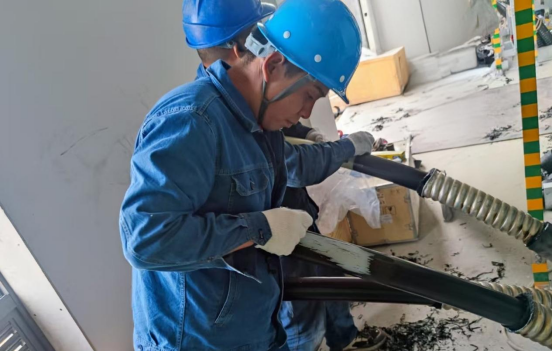
市场监管总局拟对公用事业领域反垄断 出台新规
Xin Hua She· 2025-08-21 07:27
Group 1 - The State Administration for Market Regulation released a draft guideline on antitrust in the public utility sector, seeking public feedback [1][2] - Public utilities encompass essential services such as water supply, electricity, gas, heating, sewage treatment, waste disposal, broadcasting, and public transportation, often exhibiting natural monopoly characteristics [1] - There is a prevalence of abuse of market dominance in the public utility sector, particularly in water, gas, electricity, and heating industries [1] Group 2 - The draft guideline aims to clarify the basic principles of antitrust enforcement in the public utility sector, detailing the analysis and identification standards for monopolistic behaviors [2] - The guideline provides specific considerations for unfair pricing, refusal to deal, exclusive dealing, bundling, unreasonable trading conditions, and differential treatment [1][2] - The document emphasizes the need for a long-term regulatory mechanism to promote the sustainable and healthy development of the public utility sector [2]
支持 北约32个成员国确认!美联储会议纪要:同意维持利率不变!对公用事业 我国拟出台反垄断新规!
Qi Huo Ri Bao· 2025-08-21 00:20
Group 1 - Israeli Defense Forces conducted airstrikes on Hezbollah targets in southern Lebanon, including weapon depots and rocket launchers, claiming their presence violated agreements between Israel and Lebanon [3] Group 2 - NATO defense ministers from 32 member countries confirmed support for Ukraine during a video conference, emphasizing the priority of achieving a just and lasting peace [5] - The European Union is considering establishing a treaty equivalent to NATO's Article 5 for Ukraine, which would ensure collective defense in case of an attack on any member [5] Group 3 - The Federal Reserve decided to maintain the federal funds rate target range at 4.25% to 4.5%, citing economic uncertainty and a slight increase in inflation [7] - Some Federal Reserve officials expressed concerns about the labor market and advocated for a 25 basis point rate cut to prevent further weakening [7] Group 4 - The American Soybean Association urged the U.S. government to reach an agreement with China to alleviate financial pressures on soybean farmers, highlighting a significant drop in soybean prices and rising production costs [9] - Prior to 2018, 28% of U.S. soybeans were exported to China, which accounted for 60% of total soybean exports during that period [9] - For the 2023-2024 marketing year, U.S. soybean exports to China are projected to be nearly 25 million tons, significantly higher than the 4.9 million tons exported to the European Union [9] Group 5 - The State Administration for Market Regulation released a draft guideline for antitrust measures in the public utility sector, addressing issues of market dominance and unfair practices [11][12] - The guideline aims to clarify the principles of antitrust enforcement in public utilities, which include water, electricity, gas, and waste management, and to provide clearer compliance guidance for operators [13]
市场监管总局拟对公用事业领域反垄断出台新规
Xin Hua Wang· 2025-08-20 15:44
Core Points - The State Administration for Market Regulation has released a draft guideline on antitrust measures in the public utility sector, seeking public feedback [1][2] - The public utility sector includes essential services such as water, electricity, gas, heating, sewage treatment, waste disposal, broadcasting, and public transportation, which often exhibit natural monopoly characteristics [1][2] - The draft aims to clarify the basic principles of antitrust enforcement in the public utility sector, detailing the analysis and identification of monopolistic behaviors to promote compliance and healthy development [2] Summary by Category - **Antitrust Guidelines** - The draft guideline provides detailed considerations for identifying abusive market dominance behaviors, including unfair pricing, refusal to deal, and tying arrangements [1] - Specific attention is given to limiting trading practices, such as requiring customers to purchase services exclusively from designated providers [1] - **Sector Characteristics** - The public utility sector is characterized by its public nature, regional focus, and policy implications, leading to unique types and manifestations of monopolistic behavior [2] - The guideline aims to establish a long-term regulatory mechanism to ensure the sustainable and healthy development of the public utility sector [2]