
外汇管理

Search documents
国家外汇管理局:2025年二季度我国经常账户顺差9715亿元
智通财经网· 2025-08-08 09:21
Core Insights - The State Administration of Foreign Exchange (SAFE) released preliminary data on China's balance of payments for Q2 and the first half of 2025, indicating a significant current account surplus [1][2]. Group 1: Current Account Overview - In Q2 2025, China's current account surplus was 971.5 billion yuan, with a goods trade surplus of 1,575.1 billion yuan and a services trade deficit of 334.5 billion yuan [1]. - For the first half of 2025, the current account surplus reached 2,158.9 billion yuan, driven by a goods trade surplus of 3,279.8 billion yuan [1][2]. - In USD terms, the current account surplus for Q2 2025 was $135.1 billion, while for the first half, it was $300.6 billion [2]. Group 2: Capital and Financial Account - The capital and financial account recorded a deficit of 971.5 billion yuan in Q2 2025, with net inflows from foreign direct investment [1]. - For the first half of 2025, the capital and financial account showed a larger deficit of 1,981.0 billion yuan [1][2]. - In USD, the capital and financial account deficit for Q2 was $135.1 billion, and for the first half, it was $275.8 billion [2]. Group 3: SDR Valuation - In terms of Special Drawing Rights (SDR), the current account surplus for Q2 2025 was 996 million SDR, with a goods trade surplus of 1,615 million SDR [2]. - The first half of 2025 saw a current account surplus of 2,257 million SDR, with a goods trade surplus of 3,425 million SDR [2]. - The capital and financial account deficit in SDR terms for Q2 was 996 million SDR, and for the first half, it was 2,065 million SDR [2].
国家外汇管理局拟施行一揽子跨境投融资便利化政策助力吸引和利用外资
Jin Rong Shi Bao· 2025-08-08 07:59
Core Viewpoint - The State Administration of Foreign Exchange (SAFE) has drafted a notice to deepen the reform of foreign exchange management for cross-border investment and financing, aiming to optimize the business environment and support high-quality economic development. The notice includes nine specific policies across three main areas: enhancing cross-border investment and financing management, and optimizing capital project income payment facilitation [1]. Group 1: Cross-Border Investment Policies - The notice cancels the basic information registration for foreign direct investment (FDI) pre-investment expenses, allowing foreign investors to directly open accounts at banks without prior registration [2]. - Foreign investors can now directly transfer funds for project evaluation and due diligence without needing to complete pre-investment expense registration, thus reducing their operational costs and improving capital efficiency [2]. Group 2: Domestic Reinvestment Policies - The notice eliminates the registration requirement for foreign investment enterprises' domestic reinvestment, allowing funds to be directly transferred to relevant accounts [3]. - It also permits the reinvestment of foreign exchange profits generated domestically by foreign enterprises, providing a clear policy basis for related business operations [3]. Group 3: Financing for High-Tech Enterprises - The notice raises the foreign debt facilitation limit for high-tech, specialized, and innovative small and medium-sized enterprises to the equivalent of $1 million, with certain qualified enterprises able to access up to $2 million [4][5]. - The simplification of signing and registration requirements for cross-border financing will reduce financial costs and improve financing efficiency for enterprises [6]. Group 4: Real Estate Sector Adjustments - The notice reduces the negative list for capital project income usage, allowing foreign exchange income to be used for purchasing non-self-occupied residential properties, which was previously restricted [7]. - For foreign individuals, the notice facilitates the currency exchange process for purchasing property in China, allowing them to complete transactions without prior registration documentation [8].
盯紧“学查改”引导党员干部增强定力改进作风高效履职
Jin Rong Shi Bao· 2025-08-08 02:31
Core Viewpoint - The National Foreign Exchange Administration's Liaoning Branch emphasizes the integration of educational initiatives and inspection rectification to enhance party discipline and improve operational efficiency Group 1: Educational Initiatives - The Liaoning Branch focuses on deepening understanding of the principles of party conduct, conducting centralized discussions on Xi Jinping's important statements regarding party style construction [2] - The branch organizes special party classes to reinforce political guidance and promote a culture of integrity among party members [2] - Warning education is highlighted through the analysis of typical cases, aiming to strengthen the ideological defenses of party members [2] Group 2: Problem Identification and Rectification - The branch conducts self-inspections against lists of violations of the Central Eight Regulations and hidden issues, establishing a problem list with specific rectification measures [3] - It emphasizes reducing burdens on grassroots levels by revising assessment methods and indicators to streamline processes [3] - The branch actively engages with key enterprises to provide targeted foreign exchange policy support and financial services [3] Group 3: Development and Economic Support - The Liaoning Branch aims to support the real economy by promoting cross-border trade and investment facilitation, contributing to high-quality development of the province's foreign-related economy [4] - It collaborates with provincial commerce departments to implement financial subsidy policies for exchange rate hedging, enhancing operational efficiency for cross-border e-commerce [4] - The branch leverages "Internet+" to optimize the cross-border investment and financing environment, ensuring a streamlined process from registration to foreign exchange [4]
上半年陕西跨境收支总额明显回升
Shan Xi Ri Bao· 2025-08-08 00:08
Group 1 - The State Administration of Foreign Exchange (SAFE) in Shaanxi Province has successfully turned the cross-border income and expenditure growth rate from negative to positive, with a total cross-border income and expenditure amounting to nearly $26 billion in the first half of the year, representing a year-on-year increase of 1.19% and a recovery of 4.05 percentage points compared to the same period last year [1] - The net inflow of cross-border income and expenditure reached $1.269 billion, showing a nearly 40% year-on-year growth [1] - In terms of goods trade, the cross-border income and expenditure scale reached $18.088 billion, with a year-on-year increase of 0.71%, and a trade surplus of $3.975 billion, which is a significant increase of 46.01% [1] Group 2 - The service trade in Shaanxi Province has shown a robust growth trend, with a cross-border income and expenditure scale of $3.471 billion in the first half of the year, reflecting a year-on-year increase of 15.81% [2] - The cross-border income from service trade was $1.549 billion, up 12.66% year-on-year, driven mainly by a significant increase in business service income [2] - The outflow of foreign direct investment capital from Shaanxi Province reached $284 million, marking a year-on-year growth of 24.56% [2]
“深学、细查、实干”三向发力 推动工作更加务实高效
Jin Rong Shi Bao· 2025-08-05 01:03
Core Viewpoint - The National Foreign Exchange Administration's Guangdong Branch is actively implementing the spirit of the Central Eight Regulations through comprehensive education and practical measures to enhance the work style and effectiveness of its party members and cadres [1][2][3][4] Group 1: Theoretical Learning - The Guangdong Branch prioritizes theoretical learning as a fundamental task, focusing on key texts related to party conduct and the Central Eight Regulations to deepen understanding among party members [2] - Special online courses and discussions are organized for senior officials to enhance the depth of learning and practical application in the context of Guangdong's foreign exchange work [2] - Over 160 learning materials have been distributed to party members for self-study, alongside various educational activities to promote immersive learning experiences [2] Group 2: Problem Identification and Resolution - The branch emphasizes a "learn, check, and improve" approach, ensuring quality learning and effective problem identification through a multi-dimensional system [3] - A dynamic problem checklist is created, with party members conducting self-assessments and engaging in discussions to identify and rectify issues [3] - Efforts are made to reduce bureaucratic burdens and improve meeting efficiency by revising assessment methods and meeting protocols [3] Group 3: Practical Implementation - The branch integrates educational outcomes with business operations, encouraging party members to take initiative and engage with enterprises to identify challenges in cross-border trade and investment [4] - Since 2025, the branch has conducted 12 enterprise visits and 10 bank-enterprise seminars, generating 25 pieces of research information to inform policy measures [4] - Initiatives such as the establishment of local foreign exchange self-discipline mechanisms and direct links for county-level banks aim to enhance the quality of foreign exchange services [4]
国家外汇管理局召开会议提出:优化完善境内企业境外上市资金管理
Zhong Guo Zheng Quan Bao· 2025-08-02 01:34
Core Points - The State Administration of Foreign Exchange (SAFE) emphasizes the need to promote cross-border investment and financing facilitation, including the cancellation of domestic reinvestment registration for foreign-invested enterprises and facilitating cross-border financing for technology enterprises [1][2] - The meeting outlines key tasks for the second half of 2025, focusing on strengthening the Party's leadership in financial and foreign exchange work, modernizing the governance system, and supporting high-quality economic development [1][2] Group 1 - The meeting calls for comprehensive strengthening of Party building within the financial system, enhancing the quality and effectiveness of Party work, and creating a high-quality professional team for foreign exchange management [1][2] - It aims to deepen reforms and opening up in the foreign exchange sector, supporting stable foreign trade development and optimizing foreign exchange management policies for new trade formats [2] - The meeting highlights the importance of monitoring foreign exchange trends and managing cross-border capital flows to mitigate external risks and maintain market stability [2] Group 2 - The meeting stresses the need to enhance regulatory capabilities under open conditions, improve legal frameworks for foreign exchange management, and utilize technology to increase regulatory efficiency [2][3] - It also emphasizes the importance of maintaining the safety, liquidity, and value appreciation of foreign exchange reserves [3] - The construction of an international balance of payments statistical system is prioritized, along with the implementation of the seventh edition of the Balance of Payments and International Investment Position Manual [4]
国家外汇管理局:三方面措施促进外贸和外资稳健发展
Ke Ji Ri Bao· 2025-07-23 00:55
Group 1 - The State Administration of Foreign Exchange (SAFE) has implemented three measures to promote stable development of foreign trade and foreign investment, including expanding trade facilitation, advancing cross-border investment and financing facilitation, and enhancing foreign exchange business reforms [1][2] - In the first half of the year, trade facilitation policies covered a wider range, with over $700 billion in related facilitation transactions processed, marking an 11% year-on-year increase [1] - The SAFE encourages banks and payment institutions to adopt technology for electronic order reviews, resulting in 5.1 billion related transactions processed in the first half of the year [1] Group 2 - In the cross-border investment and financing sector, SAFE has simplified processes, including the cancellation of domestic reinvestment registration for foreign-invested enterprises in 19 pilot areas by the end of 2024, benefiting over 600 companies [2] - The reform of foreign exchange business has allowed banks to process foreign exchange transactions for high-quality clients based on enterprise instructions, reducing processing time by over 50% [2] - Currently, 22 banks are participating in the foreign exchange business reform, with over 20,000 high-quality clients identified, representing a 23% increase compared to the end of 2024 [2]
外汇局:计划将一批创新试点政策推广至全国更多自贸试验区
news flash· 2025-07-22 07:57
Core Viewpoint - The State Administration of Foreign Exchange (SAFE) plans to promote a series of innovative pilot policies to more free trade zones across the country, aiming to enhance cross-border trade and investment facilitation [1] Group 1: Cross-Border Trade Policies - SAFE will expand the pilot policies for cross-border trade facilitation, which includes five specific measures: optimizing new international trade settlement by banks, expanding the net settlement scope of trade revenue and expenditure, and facilitating foreign exchange fund payments for current account transactions [1] Group 2: Cross-Border Investment and Financing - The initiative will also advance high-level openness in cross-border investment and financing, featuring five policies: pilot foreign exchange management for Qualified Foreign Limited Partners (QFLP), allowing banks to directly handle foreign debt registration, and enabling shared foreign debt quotas for financing leasing parent and subsidiary companies [1]
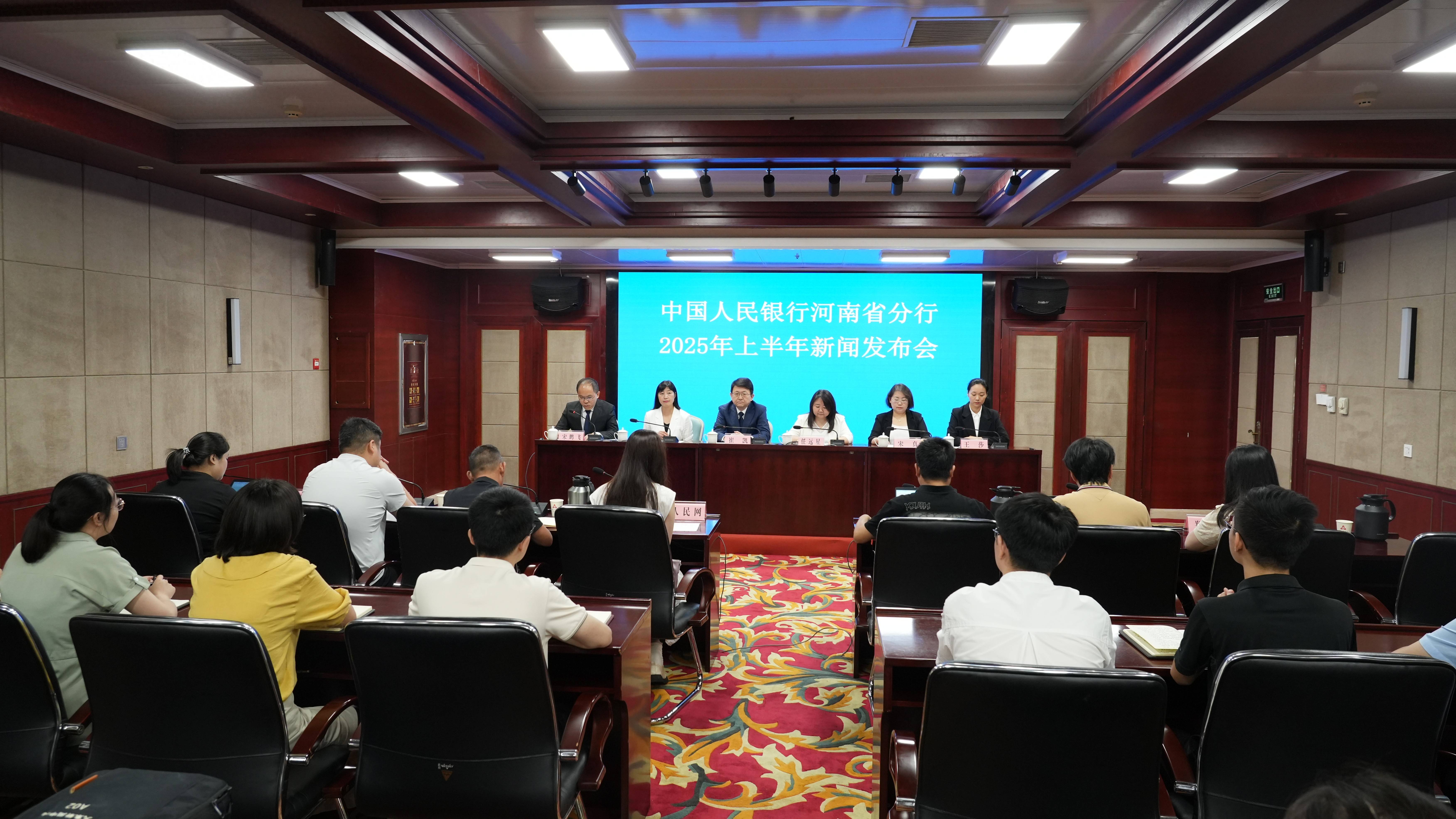
上半年全省优质企业共办理外汇收支便利化业务3.47万笔
Sou Hu Cai Jing· 2025-07-17 12:38
Group 1 - The People's Bank of China, Henan Branch, reported on the foreign economic development situation in Henan Province for the first half of 2025, emphasizing the importance of financial support for stabilizing foreign trade and investment [4] - The bank has enhanced the convenience of cross-border trade and investment financing, allowing more specialized, small and medium-sized private enterprises, and cross-border e-commerce entities to benefit from foreign exchange policies [4] - In the first half of the year, 410 quality enterprises in the province processed 34,700 trade foreign exchange transactions, totaling $42.7 billion [4] Group 2 - The bank has strengthened services for enterprises to hedge against exchange rate risks, promoting the use of foreign exchange derivatives and holding outreach events for over 200 large private enterprises [5] - In the first half of the year, foreign-related enterprises used foreign exchange derivatives to hedge against risks amounting to $6.4 billion, with a new hedging rate of 22.88%, an increase of 5 percentage points from the previous year [5]

2025年陆家嘴论坛政策解读:全球变局下的金融:促改革、扩开放、重科创
Haitong Securities International· 2025-06-23 03:28
Financial System - The international monetary system is evolving towards a structure with a few dominant sovereign currencies competing and balancing each other[5] - The global cross-border payment system is developing towards greater efficiency, security, inclusiveness, and diversity[5] - International financial organizations need to enhance the representation and voice of emerging markets and developing countries[5] Financial Opening - China has significant potential for high-level financial opening, focusing on expanding consumption demand and financial services[13] - The technology finance sector is a vast blue ocean, with initiatives for equity investment in financial asset investment companies and loans for technology enterprise mergers[13] - Green finance is gaining momentum, with foreign institutions introducing ESG rating systems and climate risk management tools into China[13] Capital Market - The capital market aims to promote the integration of technological innovation and industrial innovation, with a focus on deepening reforms through a "1+6" policy framework[15] - The introduction of a growth layer on the Sci-Tech Innovation Board and the restart of the fifth listing standard for unprofitable companies are key measures[15] - There is a push to strengthen the linkage between equity and debt to support technological innovation[15] Foreign Exchange Management - A comprehensive and innovative foreign exchange management system will be established, focusing on convenience, openness, safety, and intelligence[19] - Ten facilitation policies will be implemented in the free trade pilot zones, including optimizing new international trade settlement methods[19] Risk Warning - External factors may cause disturbances in the financial system[22]