家居零售

Search documents
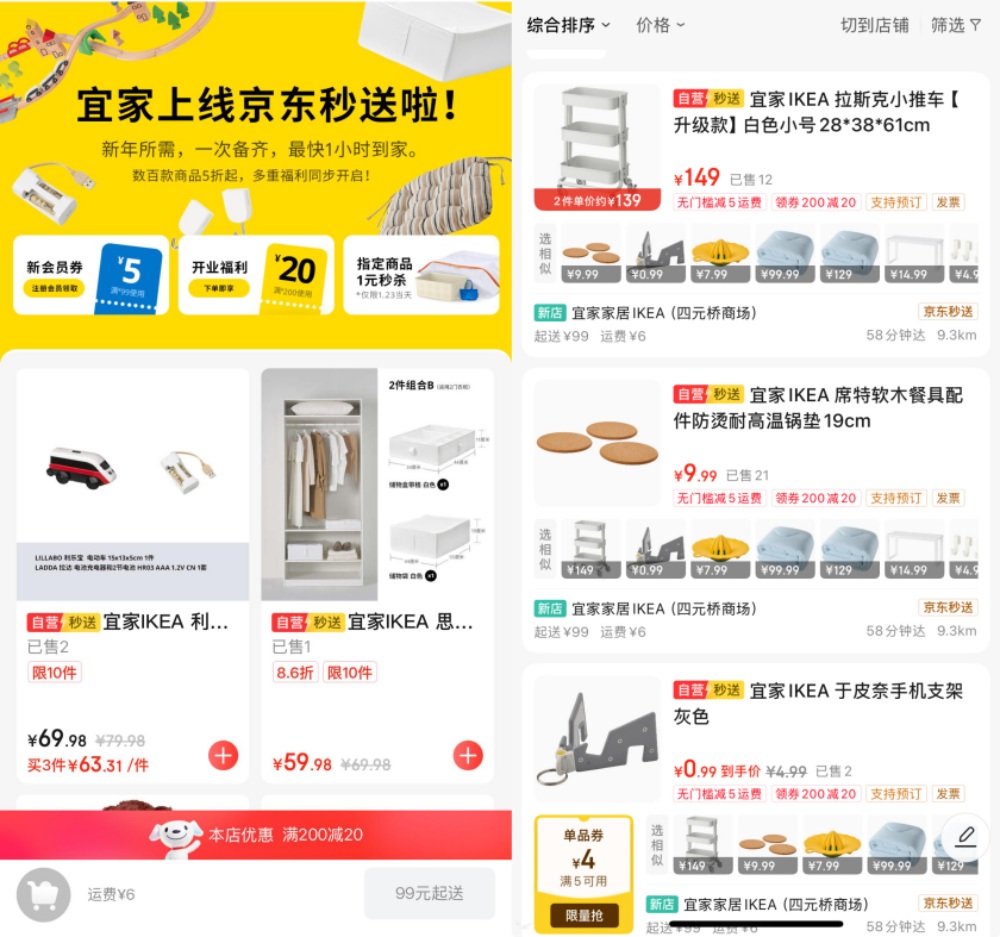
宜家首发上线京东秒送,首次推出即时零售服务
Zhong Jin Zai Xian· 2026-01-23 08:17
Group 1 - IKEA has launched a "秒送" (instant delivery) service in collaboration with JD.com, leveraging JD's efficient fulfillment system and IKEA's extensive product range for convenient online ordering and immediate delivery [1] - The service is initially available in 9 cities, including Beijing, Guangzhou, Shenzhen, Hangzhou, Chengdu, Wuhan, Jinan, Kunming, and Foshan, across 13 IKEA stores [3] - Consumers can easily purchase IKEA products through the JD app and enjoy instant delivery, with promotional offers available during the launch period, including a 1 yuan flash sale and various discounts [4] Group 2 - The partnership between JD.com and IKEA began in August 2025, when they established the official IKEA flagship store on JD, and this new instant retail collaboration aims to enhance consumer experiences [4] - JD's instant delivery service will support over 3,000 IKEA products for efficient delivery, catering to diverse home shopping scenarios such as emergency purchases and daily refreshes [4]



宜家首次支持即时零售:上线京东秒送,限时4公里内满99免运费
Xin Lang Cai Jing· 2026-01-23 04:26
Core Insights - IKEA has launched an instant retail service on JD.com, marking its entry into the instant retail sector, covering 9 cities and 13 stores in China [1][4] - The service offers a range of lightweight home products, with promotional activities to attract customers [1][3] Group 1: Instant Retail Launch - IKEA's instant retail service is available in cities including Beijing, Guangzhou, and Shenzhen, allowing consumers to order through the JD app [1] - The service features promotional offers such as 1 yuan flash sales and discounts for new customers [1][3] - The operating hours for the instant retail stores are from 10:00 to 20:00, shorter than traditional store hours [3] Group 2: Product Offering and Pricing - The product range includes storage items, tableware, kitchenware, bedding, lighting, and furniture, focusing on lighter items [3][4] - A specific example includes a drawer cabinet priced at 349 yuan, which can be purchased for 335.5 yuan after discounts and fees [3] Group 3: Market Context and Strategy - IKEA is facing a store closure trend in China, with plans to close 7 stores by February 2026 [5] - The company aims to shift from expansion to focused growth, planning to open over ten small stores in key markets like Beijing and Shenzhen [5] - IKEA's sales in China for FY2024 are projected to be approximately 11.15 billion yuan, a decline of nearly 1 billion yuan from the previous fiscal year [5]
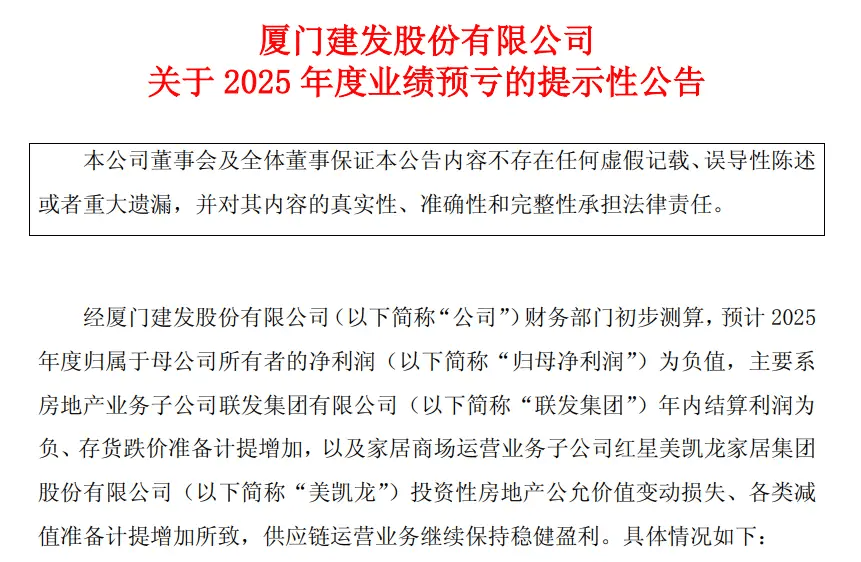
房地产寒冬、联发集团持续亏损、红星业绩承压……建发上市以来首亏!
Sou Hu Cai Jing· 2026-01-22 09:20
Core Viewpoint - The company, Jianfa Co., has experienced a significant shift in market perception due to a profit warning, indicating a potential net loss for 2025, primarily driven by pressures in its real estate and home operation businesses, despite stable performance in its supply chain operations [2][3]. Group 1: Company Performance - Jianfa Co. has maintained steady growth since its listing, with net profits of 11.259 billion yuan, 16.850 billion yuan, and an expected 5.820 billion yuan for 2022, 2023, and 2024 respectively, with supply chain business revenue consistently accounting for over 75% [2]. - The company's supply chain operations remain a strong profit driver, with overseas business reaching 14 billion USD in 2025, a 37% year-on-year increase [5]. - Despite the challenges, Jianfa Co. has consistently ranked in the top 20 for comprehensive strength among real estate developers, achieving 8th place in 2024 [2]. Group 2: Industry Context - The real estate market in 2025 is characterized by a "high open low walk" trend, with a significant decline in development investment, down 15.9% year-on-year from January to November [3]. - Jianfa's real estate platform set a sales target of 150 billion yuan for 2025 but only achieved 122.1 billion yuan, reflecting a shortfall of nearly 30 billion yuan and a year-on-year decline of over 10 billion yuan [3]. - The performance of Jianfa's subsidiary, Lianfa Group, has deteriorated since 2021, with a net profit of -1.642 billion yuan in 2024, highlighting the struggles within the real estate sector [4]. Group 3: Strategic Developments - Jianfa Co. and Lianfa Group invested 6.286 billion yuan to acquire a 29.95% stake in Red Star Macalline, aiming to create a synergistic ecosystem of "real estate + home + supply chain" [5]. - The home retail sector, including Red Star Macalline, is facing demand pressures, with a 3.33% year-on-year decline in sales for large-scale building materials and home furnishing markets [5]. - The central economic work conference in 2026 emphasizes "controlling increments, reducing inventory, and optimizing supply," indicating a shift towards high-quality development in the real estate industry [6].

出口链美企财报系列跟踪:关注降息趋势下耐用品需求修复的投资机会
Changjiang Securities· 2026-01-19 12:01
Investment Rating - The report maintains a "Positive" investment rating for the home decor industry [12] Core Insights - The U.S. home consumption trend is expected to turn around after interest rate cuts in 2024, with growth rates showing signs of recovery by Q3 2025. Home consumption is estimated to remain relatively stable when considering tariffs and comparable metrics [2] - The inventory levels for home decor companies have improved, with the inventory-to-sales ratio showing a month-on-month increase and currently positioned at historical averages [7] - The U.S. real estate market is gradually recovering, with home sales showing year-on-year growth of 1.9%, 3.7%, and 4.2% from August to October 2025. The annualized sales figure for existing homes in December 2025 is projected at 4.35 million units, indicating a recovery potential of 26% to 38% towards the mid-to-upper range of 5.5 to 6 million units [9] Demand - Home consumption in Q3 2025 is stable but shows a recovery trend, with fast-moving consumer goods continuing strong growth. Retailers in the home sector are performing relatively steadily, with variations across different categories. E-commerce channels are outperforming traditional offline channels [6][19] - Specific company performances in Q3 2025 include Home Depot and Lowe's experiencing year-on-year declines of 1.5% and 2.6%, respectively, while Costco reported a 6.3% increase in comparable revenue [19] Inventory - The inventory-to-sales ratio for major retailers in Q3 2025 has mostly improved month-on-month, with some companies experiencing declines. Overall, the inventory levels for home decor and appliances are at historical averages [7][28] Outlook - Leading companies have provided conservative guidance for Q4 2025, with growth rate expectations ranging from low single-digit declines to mid-high single-digit increases. The focus remains on demand improvement driven by interest rate cuts [8] Investment Perspective - The report expresses continued optimism regarding the U.S. interest rate cut chain, particularly for companies with well-established overseas production capabilities and competitive product costs. Key companies to watch include Xiangxin Home, Zhiou Technology, and Yongyi Co., as well as Ku Jia Home and Minhua Holdings, which are expected to benefit from export business [10]
美凯龙预计2025年归母净利润亏损
Bei Jing Shang Bao· 2026-01-19 10:25
Core Viewpoint - Red Star Macalline Home Group Co., Ltd. (referred to as "the company") has issued a profit warning for the fiscal year 2025, indicating an expected negative net profit attributable to shareholders [1] Financial Performance - The company's financial department has preliminarily estimated a negative net profit for the fiscal year 2025 [1] - The final financial data will be confirmed in the official 2025 annual report [1] Revenue and Market Conditions - The company has experienced a continuous low-level fluctuation in leasing and management income over the past two years [1] - Rental levels have significantly declined compared to previous years, leading to a shift in market sentiment and rental expectations [1] Asset Valuation and Impairment - Due to the adjusted expectations for future rental income, the value of investment properties has decreased substantially [1] - The company has conducted preliminary assessments of the recoverable amounts of various assets as of the end of 2025 and has made corresponding impairment provisions [1]
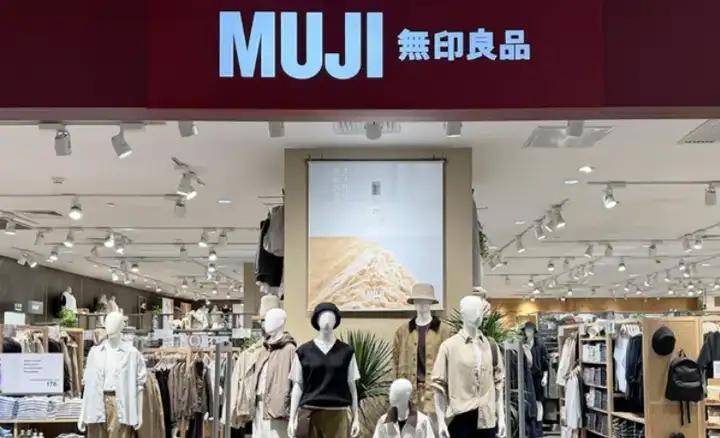
门店稳住、电商翻倍, MUJI是不是已经过了“最难时刻”?
Sou Hu Cai Jing· 2026-01-19 07:12
Core Insights - MUJI has shown positive changes in its operations in the Chinese market, with a reported revenue of 10.73 billion yuan in Q1 2026, marking a 15.4% year-on-year increase, raising questions about whether the company has overcome its most challenging period in China [1][12]. Group 1: Historical Challenges - MUJI faced multiple challenges leading to market contraction, including a significant drop in foot traffic to physical stores since 2020, while fixed costs remained high, resulting in operational pressure [4]. - The brand's unique "Japanese simplicity" design initially attracted consumers but has since lost its novelty as minimalism became mainstream in the home retail sector [5]. - High pricing compared to local competitors has been a significant issue, with products in China often priced much higher than in Japan, leading to perceptions of inflated prices [8][10]. Group 2: Current Performance - The company reported a revenue increase to 10.73 billion yuan in Q1 2026, with a net profit of 1.037 billion yuan, reflecting a 47.4% year-on-year growth [12]. - The total number of MUJI stores globally reached 1,443, with a net increase of 4 stores in mainland China, totaling 426 [13]. - E-commerce sales have significantly increased, accounting for about 20% of total sales, with a 110% year-on-year growth in existing store and e-commerce sales [16]. Group 3: Strategic Adjustments - MUJI is transitioning from being a style supplier to a solution provider, focusing on offering comprehensive lifestyle solutions rather than just individual products [20]. - The company is enhancing its localization strategy by establishing long-term partnerships with local manufacturers, which helps reduce costs and improve supply chain efficiency [23]. - MUJI aims to resonate with environmentally conscious consumers by introducing products made from recycled materials and engaging in community-building activities [24][26]. Group 4: Future Challenges - Despite recent improvements, MUJI faces ongoing price competition, as its products remain more expensive than many local alternatives, which could hinder long-term growth [28][30]. - The brand's reliance on classic products for sales growth raises concerns about its innovation capabilities, as new product contributions have been relatively low [31]. - The differentiation of in-store experiences is becoming increasingly challenging, as competitors enhance their retail environments, potentially diluting MUJI's unique appeal [32][34].
【财经早餐】2026.01.19星期一
Sou Hu Cai Jing· 2026-01-19 00:12
Macro Economy - In 2025, China-Central Asia trade cooperation has made significant progress, with total imports and exports exceeding 100 billion USD for the first time, maintaining positive growth for five consecutive years [4] - The total deposits of Chinese households reached 166 trillion CNY by the end of 2025, doubling over the past decade, marking a historic high [4] Real Estate Dynamics - In 2025, Shenzhen's second-hand residential transactions reached 56,000 units, a year-on-year increase of 3.2%, with December seeing the highest monthly transaction volume since the second half of the year [6] - The real estate market is showing signs of confidence improvement, supported by favorable policies such as a reduction in down payment ratios to 15% and low mortgage rates [6] Stock Market Review - The Hong Kong stock equity financing market experienced explosive growth in 2025, with total financing reaching 612.2 billion HKD, a year-on-year increase of 250.91% [7] - As of January 17, 2025, 365 listed companies had released annual performance forecasts, with 138 companies expected to report significant growth [7] Industry Observation - The price of storage chips has surged from 2025 into 2026, driven by explosive demand from AI servers, with some memory prices doubling [13] - The global international tourism market is expected to reach a record high in 2025, with total international visitors exceeding 1.5 billion, an increase of 80 million from the previous year [14] Company News - IKEA's Guangzhou store experienced overwhelming demand during its clearance sale, with significant discounts leading to long queues and rapid sellouts [16] - AMD has committed to keeping the prices of its Radeon graphics cards within an affordable range for average consumers, amid rising DRAM memory costs [16]

亚洲最大的宜家关门,什么信号?
Sou Hu Cai Jing· 2026-01-18 16:08
Core Viewpoint - The closure of IKEA's stores in China, including the largest store in Asia, signals a significant shift in consumer behavior and market dynamics, reflecting the challenges faced by foreign brands in adapting to local preferences and competition from domestic brands [3][14]. Group 1: Store Closures and Market Impact - In February, IKEA will close its largest store in Shanghai along with six other locations, marking the largest closure wave since its entry into China in 1998 [2][3]. - The closures highlight a broader trend of foreign home furnishing brands struggling in the Chinese market, with similar challenges faced by brands like Muji and Nitori [15][14]. - The closures are attributed to changing consumer preferences, with younger generations moving away from IKEA's standardized offerings towards more personalized and practical solutions [6][7][11]. Group 2: Changing Consumer Behavior - The shift in consumer behavior is characterized by a transition from "symbolic experience" to "rational pragmatism," with younger consumers preferring online shopping and quick comparisons over lengthy in-store experiences [9][11]. - The rise of instant retail has diminished the appeal of large stores, as consumers are less willing to travel long distances for a single purchase [11][10]. - The new generation of consumers, particularly Gen Z, finds IKEA's traditional aesthetic and shopping experience less appealing, leading to a disconnect between the brand and its target audience [8][7]. Group 3: Competitive Landscape - Domestic brands are rapidly gaining market share, with projections indicating that by 2025, local brands will hold over 60% of the market, compared to IKEA's declining presence [13][11]. - IKEA's slower response to local market trends and consumer demands has allowed domestic competitors to capitalize on their agility and localized offerings [13][12]. - The competitive landscape is shifting as foreign brands struggle to adapt to the fast-paced changes in consumer preferences and market conditions in China [14][16]. Group 4: Strategic Responses - In response to the challenges, IKEA is adopting a "reverse expansion" strategy, closing large stores and focusing on smaller community stores and online retail [16][18]. - The company plans to open over 10 small community stores in major cities, reducing store sizes and focusing on high-frequency product categories [16][18]. - This shift reflects a broader trend in the retail industry, where major players are moving from large-scale operations to more localized and efficient service models [17][18].

美国失态的真正原因:它已经无法容忍中国进入高端制造核心区
Sou Hu Cai Jing· 2026-01-18 06:00
Core Insights - The Federal Trade Commission imposed a record fine of $3.17 million on Williams-Sonoma for mislabeling imported mattresses as made in the USA, highlighting the erosion of America's manufacturing base over the past decade [1][3][5] Group 1: Manufacturing Landscape - The incident reveals that China has quietly entered the sensitive high-end manufacturing sector in the U.S., causing American industries to feel threatened [3][10] - The "Made in USA" label, once synonymous with top quality and technology, is losing its significance as more products are actually sourced from China [5][6] - China now accounts for nearly 30% of global manufacturing output, surpassing the U.S. at approximately 17%, indicating a fundamental shift in global industrial competition [8][14] Group 2: Regulatory and Economic Implications - The scrutiny of the "Made in USA" label reflects a significant crisis in the trust of American manufacturing, raising questions about what the U.S. is truly concerned about [9][20] - The U.S. is experiencing a gradual erosion of its manufacturing advantages, despite maintaining leadership in sectors like aerospace and biotechnology [14][27] - The U.S. has historically used international trade rules to protect its industries, but as these rules become less favorable, regulatory attitudes are shifting towards more stringent measures [20][22] Group 3: Competitive Dynamics - The competition is not merely about production volume but about control over the supply chain, with the ability to manage key nodes becoming crucial [10][17] - China's manufacturing success is attributed to its complete industrial chain, which includes capabilities in high-tech sectors previously dominated by the U.S. [10][12] - The anxiety in the U.S. stems from the realization that its once unassailable manufacturing advantages are no longer exclusive, leading to a search for new methods to maintain its global position [25][27]

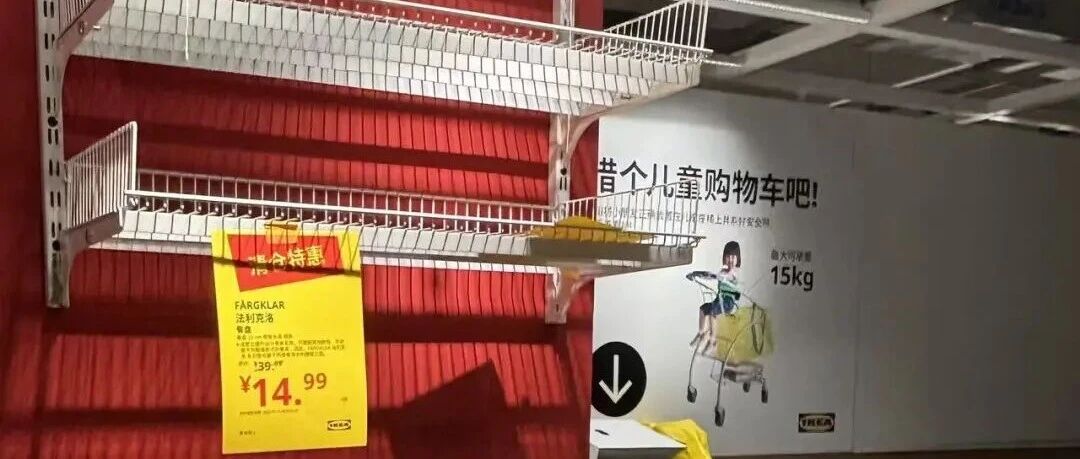
货架被搬空!排队1.5小时进场,宜家广州一商场清仓,超600件3折起甩卖
21世纪经济报道· 2026-01-18 04:33
Core Viewpoint - The article discusses the challenges faced by IKEA in China, highlighting a significant decline in sales and the closure of nearly one-fifth of its stores, raising questions about its market viability and strategic adjustments in response to changing consumer behavior and competition [9][10][11]. Group 1: Store Closures and Sales Performance - IKEA China announced the closure of seven stores, representing nearly 20% of its total outlets in the country, including locations in Shanghai and Guangzhou [10]. - For the fiscal year 2024, IKEA China reported revenue of 11.15 billion yuan, a year-on-year decline of 7.6%, while its parent company, Ingka Group, experienced a global revenue drop of 5.5% [11]. - The furniture industry in China is facing challenges, with a reported 9.1% decline in revenue for large-scale enterprises from January to November 2025 [17]. Group 2: Consumer Behavior and Market Dynamics - The article notes a surge in consumer interest during the clearance sale, with long queues and significant discounts on select items, indicating a strong brand presence despite underlying issues [1][19]. - Observations from consumers reveal a mismatch between expectations of discounted items and the reality of limited availability, with many items already sold out upon arrival [7][8]. - The shift in consumer preferences towards more convenient and cost-effective shopping options, driven by local e-commerce and brands, poses a significant challenge to IKEA's traditional business model [14][15]. Group 3: Strategic Adjustments and Future Outlook - The trend of "large stores retreating and small stores thriving" is becoming prominent in the home furnishings retail sector, prompting IKEA to adapt its strategy [17]. - The company is transitioning from large warehouse-style stores to smaller, more community-focused outlets, which may enhance consumer engagement but could dilute the unique shopping experience IKEA is known for [20]. - Despite the challenges, IKEA retains a strong customer base in China, which presents both an opportunity and a responsibility for the brand to evolve and meet changing consumer needs [19].