燃气及水生产和供应业

Search documents
2025年我国国内生产总值突破140万亿元,增长5.0%
Guo Jia Tong Ji Ju· 2026-01-19 02:05
2025年,面对国内外经济环境的复杂变化,在以习近平同志为核心的党中央坚强领导下,各地区各部门深入贯彻落实党中央、国务院决策部署,坚定不移贯 彻新发展理念、推动高质量发展,统筹国内国际两个大局,统筹发展和安全,实施更加积极有为的宏观政策,纵深推进全国统一大市场建设,国民经济运行 顶压前行、向新向优,高质量发展取得新成效,经济社会发展主要目标任务圆满实现,"十四五"胜利收官。 初步核算,全年国内生产总值1401879亿元,按不变价格计算,比上年增长5.0%。分产业看,第一产业增加值93347亿元,比上年增长3.9%;第二产业增加 值499653亿元,增长4.5%;第三产业增加值808879亿元,增长5.4%。分季度看,一季度国内生产总值同比增长5.4%,二季度增长5.2%,三季度增长4.8%, 四季度增长4.5%。从环比看,四季度国内生产总值增长1.2%。 一、粮食增产丰收,畜牧业稳定增长 全年全国粮食总产量71488万吨,比上年增加838万吨,增长1.2%。其中,夏粮产量14975万吨,下降0.1%;早稻产量2851万吨,增长1.2%;秋粮产量53662 万吨,增长1.5%。分品种看,小麦产量14007万吨, ...

国家统计局:中国2025年固定资产投资同比下降3.8%
Guo Jia Tong Ji Ju· 2026-01-19 02:04
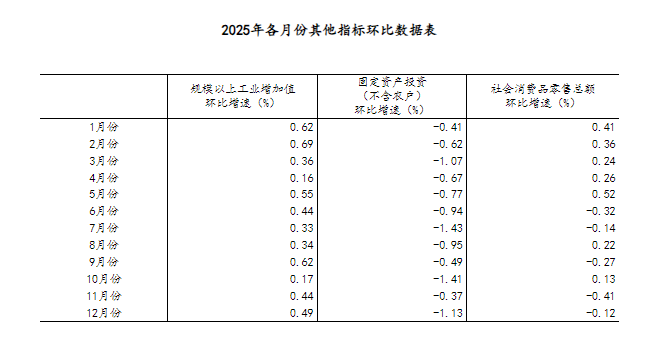
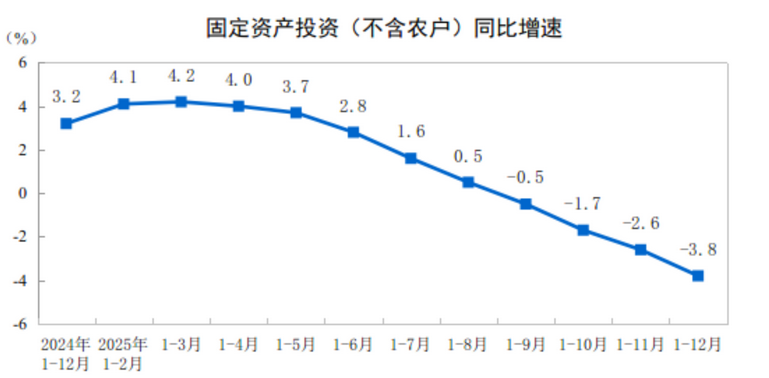
2025年,全国固定资产投资(不含农户)485186亿元,比上年下降3.8%。其中,民间固定资产投资比上年下降6.4%。从环比 看,12月份固定资产投资(不含农户)下降1.13%。 第二产业中,工业投资比上年增长2.6%。其中,采矿业投资增长2.5%,制造业投资增长0.6%,电力、热力、燃气及水生产和供 应业投资增长9.1%。 分产业看,第一产业投资9570亿元,比上年增长2.3%;第二产业投资177368亿元,增长2.5%;第三产业投资298248亿元,下降 7.4%。 第三产业中,基础设施投资(不含电力、热力、燃气及水生产和供应业)比上年下降2.2%。其中,管道运输业投资增长36.0%, 多式联运和运输代理业投资增长22.9%,水上运输业投资增长7.7%。 分地区看,东部地区投资比上年下降8.4%,中部地区投资下降2.7%,西部地区投资下降1.3%,东北地区投资下降15.5%。 分登记注册类型看,内资企业固定资产投资比上年下降3.8%,港澳台企业固定资产投资下降2.2%,外商企业固定资产投资下降 13.8%。 | 指 标 | 比上年增长(%) | | --- | --- | | 固定资产投资(不含农户) ...
2025年经济发展向新向优 预期目标圆满实现
Guo Jia Tong Ji Ju· 2026-01-19 02:01
(2026年1月19日) 国家统计局 2025年,面对国内外经济环境的复杂变化,在以习近平同志为核心的党中央坚强领导下,各地区各部门深入贯彻落实党中央、国务院决策部署,坚定不移贯 彻新发展理念、推动高质量发展,统筹国内国际两个大局,统筹发展和安全,实施更加积极有为的宏观政策,纵深推进全国统一大市场建设,国民经济运行 顶压前行、向新向优,高质量发展取得新成效,经济社会发展主要目标任务圆满实现,"十四五"胜利收官。 初步核算,全年国内生产总值1401879亿元,按不变价格计算,比上年增长5.0%。分产业看,第一产业增加值93347亿元,比上年增长3.9%;第二产业增加 值499653亿元,增长4.5%;第三产业增加值808879亿元,增长5.4%。分季度看,一季度国内生产总值同比增长5.4%,二季度增长5.2%,三季度增长4.8%, 四季度增长4.5%。从环比看,四季度国内生产总值增长1.2%。 一、粮食增产丰收,畜牧业稳定增长 全年全国粮食总产量71488万吨,比上年增加838万吨,增长1.2%。其中,夏粮产量14975万吨,下降0.1%;早稻产量2851万吨,增长1.2%;秋粮产量53662 万吨,增长1.5 ...

2025年12月份规模以上工业增加值增长5.2%
Guo Jia Tong Ji Ju· 2026-01-19 02:01
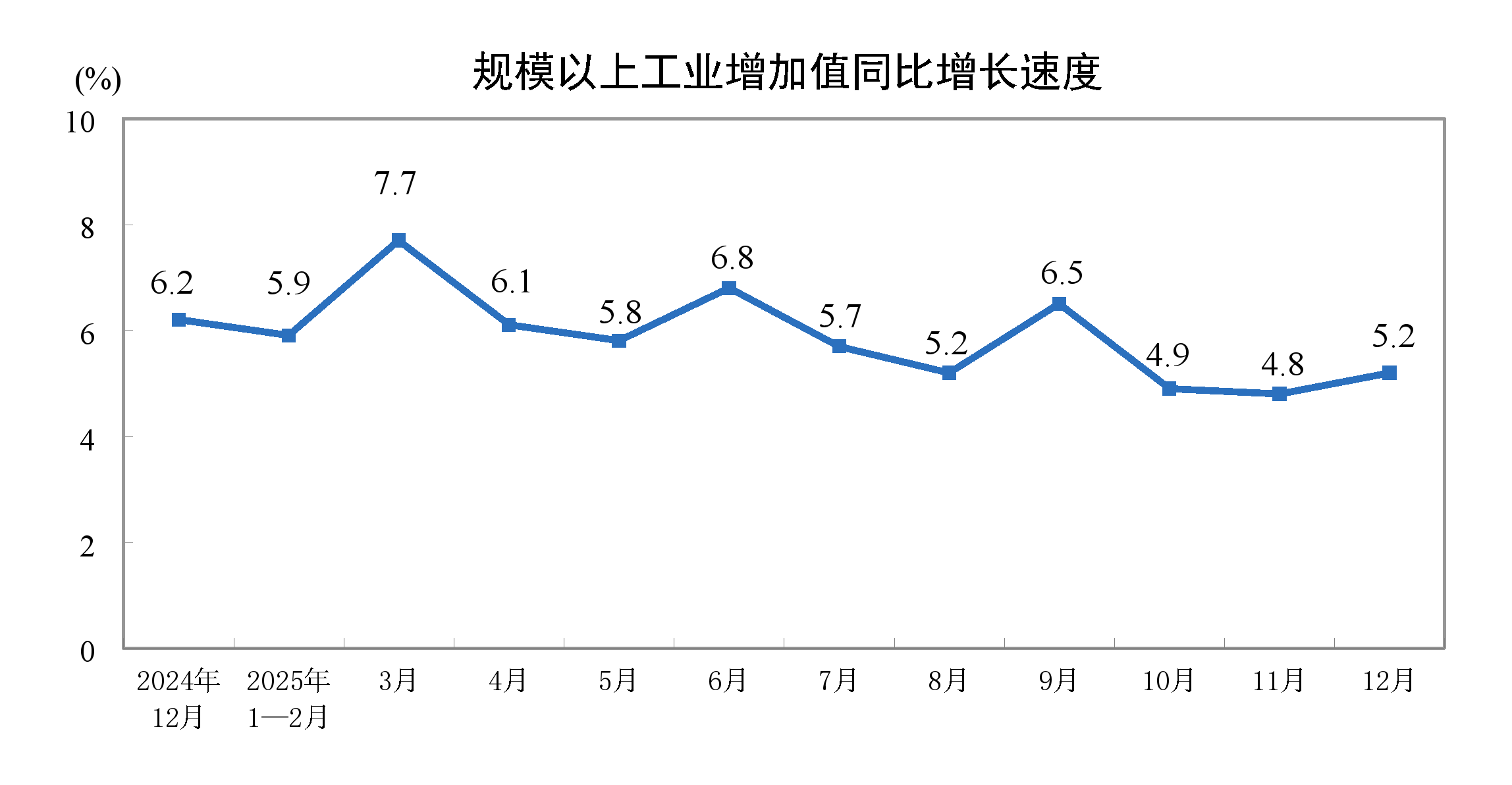
Economic Growth Overview - In December, the value added of the mining industry increased by 5.4%, manufacturing by 5.7%, and the production and supply of electricity, heat, gas, and water by 0.8% [2] - For the entire year, the industrial value added growth was 5.2% [6] Economic Type Analysis - In December, state-controlled enterprises saw a value added growth of 3.9%, joint-stock enterprises 5.8%, foreign and Hong Kong, Macau, and Taiwan-invested enterprises 2.7%, and private enterprises 4.2% [2][6] Industry Performance - Out of 41 major industries, 33 experienced year-on-year growth in value added in December. Notable growth was seen in coal mining and washing (6.4%), oil and gas extraction (3.7%), and food processing (3.2%). However, the beverage and refined tea manufacturing sector declined by 0.5% [2] - High-tech manufacturing grew by 6.4% [6] Product Output - In December, among 623 industrial products, 325 saw a year-on-year increase in output. Steel production was 115.31 million tons, down 3.8%, while cement production was 144.16 million tons, down 6.6%. Notably, the production of ten non-ferrous metals increased by 4.9% [3] - The output of new energy vehicles reached 1.791 million units, marking an 8.7% increase [3] Sales and Exports - The sales rate for products from large-scale industrial enterprises was 98.2%, a decrease of 0.7 percentage points year-on-year. The export delivery value reached 1,493.2 billion yuan, reflecting a nominal growth of 3.2% [4][6]
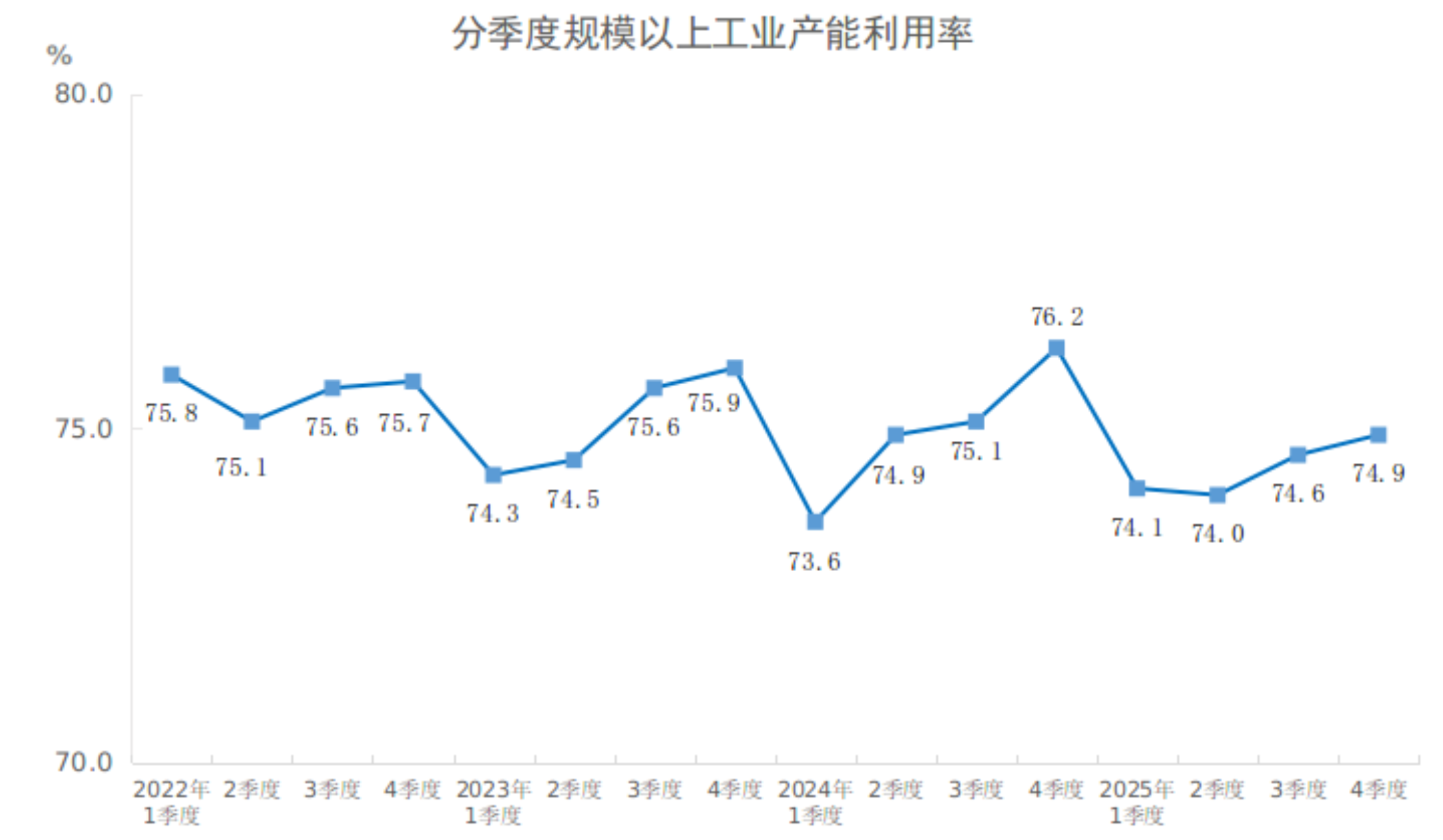
2025年四季度全国规模以上工业产能利用率为74.9%
Guo Jia Tong Ji Ju· 2026-01-19 02:01
Core Viewpoint - The national industrial capacity utilization rate for large-scale industries in Q4 2025 is reported at 74.9%, showing a 0.3 percentage point increase from Q3 but a 1.3 percentage point decrease compared to the same period last year [1][4]. Group 1: Overall Industrial Capacity Utilization - The overall industrial capacity utilization rate for the entire year of 2025 is 74.4%, which is a decrease of 0.6 percentage points from the previous year [6]. - The Q4 capacity utilization rate reflects a mixed performance across different sectors, with some industries experiencing significant declines [6]. Group 2: Sector-Specific Capacity Utilization - In Q4 2025, the mining industry has a capacity utilization rate of 71.7%, down by 3.9 percentage points year-on-year [6]. - The manufacturing sector's capacity utilization rate stands at 75.2%, a decrease of 1.2 percentage points from the previous year [6]. - The electricity, heat, gas, and water production and supply sector shows a capacity utilization rate of 74.0%, down by 0.8 percentage points year-on-year [6]. Group 3: Detailed Industry Breakdown - Coal mining and washing industry has a capacity utilization rate of 69.1%, down by 4.8 percentage points year-on-year [6]. - The food manufacturing industry reports a capacity utilization rate of 68.5%, a decrease of 2.2 percentage points from the previous year [6]. - The textile industry has a capacity utilization rate of 77.1%, down by 1.7 percentage points year-on-year [6]. - The chemical raw materials and products manufacturing industry shows a capacity utilization rate of 74.1%, down by 2.3 percentage points [6]. - The black metal smelting and rolling industry has a capacity utilization rate of 78.5%, with a slight increase of 0.4 percentage points year-on-year [6]. - The automotive manufacturing industry reports a capacity utilization rate of 76.0%, down by 1.2 percentage points from the previous year [6]. - The computer, communication, and other electronic equipment manufacturing industry has a capacity utilization rate of 79.7%, showing a slight increase of 0.3 percentage points year-on-year [6].
2025年全国固定资产投资基本情况
Guo Jia Tong Ji Ju· 2026-01-19 02:01
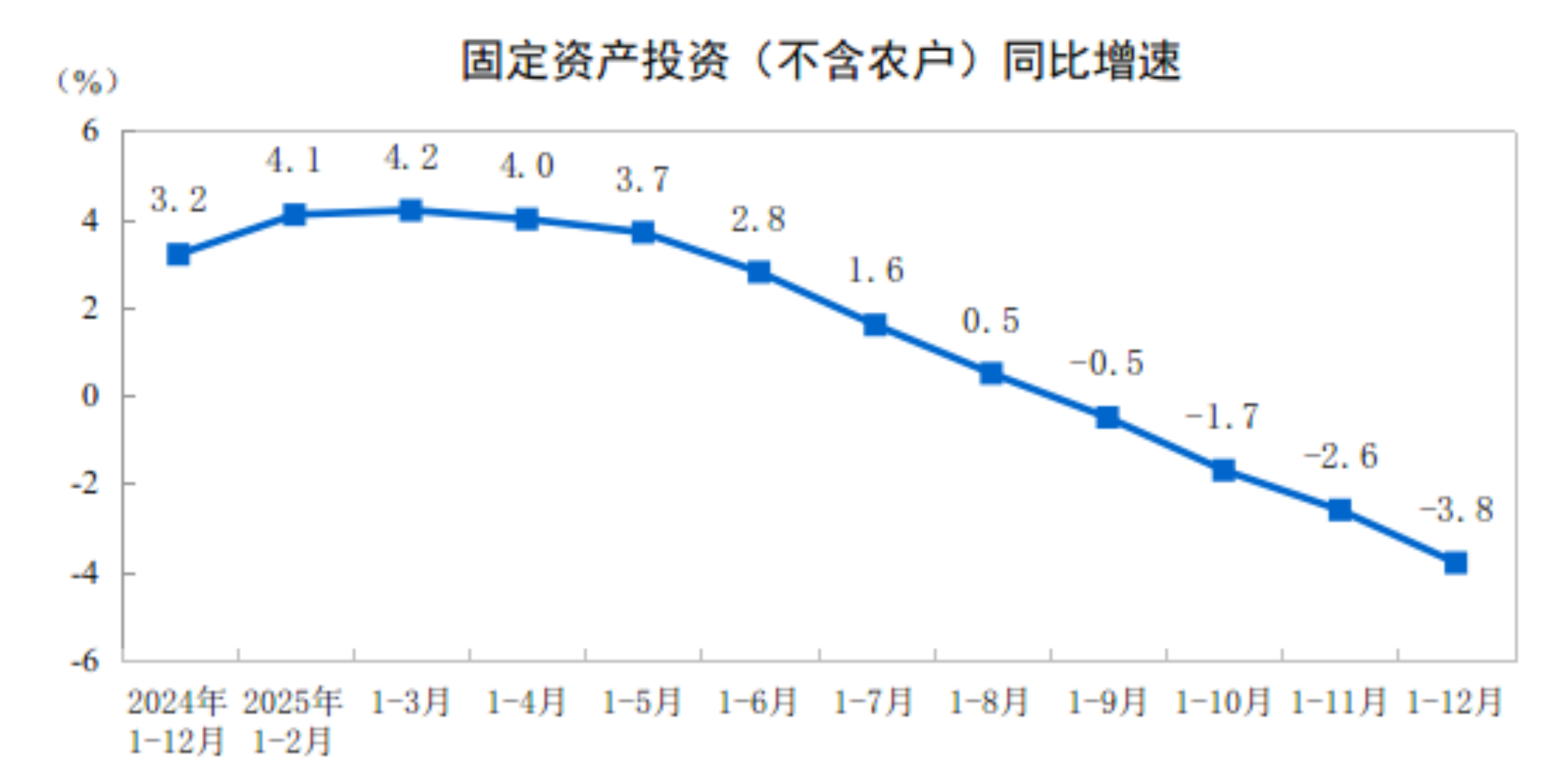
Core Insights - In 2025, China's fixed asset investment (excluding rural households) reached 48,518.6 billion yuan, a decrease of 3.8% compared to the previous year, with private fixed asset investment declining by 6.4% [1][6] Investment by Industry - Investment in the primary industry was 957 billion yuan, showing a growth of 2.3% year-on-year [3] - Investment in the secondary industry totaled 177,368 billion yuan, with a growth of 2.5% [3] - The tertiary industry saw a decline in investment, amounting to 298,248 billion yuan, down by 7.4% [3] Secondary Industry Breakdown - Within the secondary industry, industrial investment grew by 2.6% year-on-year [4] - Mining investment increased by 2.5%, while manufacturing investment grew by 0.6% [4] - Investment in the electricity, heat, gas, and water production and supply industry rose significantly by 9.1% [4] Infrastructure and Regional Investment - Infrastructure investment (excluding electricity, heat, gas, and water production and supply) decreased by 2.2% [4] - Investment in pipeline transportation surged by 36.0%, while multimodal transport and logistics saw a growth of 22.9% [4] - Investment trends varied by region, with the eastern region experiencing an 8.4% decline, the central region down by 2.7%, the western region down by 1.3%, and the northeastern region down by 15.5% [4] Investment by Registration Type - Domestic enterprises' fixed asset investment fell by 3.8%, while investment from Hong Kong, Macau, and Taiwan enterprises decreased by 2.2% [5] - Foreign enterprises saw a significant decline in fixed asset investment, down by 13.8% [5]
出口延续高增长,结构性降息政策出台
Hua Lian Qi Huo· 2026-01-18 13:32
1. Report's Investment Rating for the Industry - No investment rating for the industry is provided in the report. 2. Core Viewpoints of the Report - In December 2025, China's exports continued high - growth, imports rebounded significantly, and the trade surplus expanded. The Fed's January rate - cut probability decreased, and the RMB showed an appreciation trend. The central bank adjusted the structural monetary policy tool rate and commercial real - estate credit policies, aiming to improve capital activation and support the real economy [8][10]. 3. Summary According to Relevant Catalogs 3.1 National Economic Accounting - GDP quarterly data from 2023 to 2025 are presented, showing the performance of different industries, including agriculture, forestry, animal husbandry, fishery, industry, and services. The contribution rates and pulling effects of the three industries on GDP are also provided [13][18]. 3.2 Industry Analysis - **Industrial Sector**: The growth rate, added - value of major industries, and production of key products are analyzed. The profit situation of industrial enterprises shows mixed results, with some industries growing and some declining. The inventory of industrial enterprises is at a relatively high level, and enterprises still have the intention to reduce inventory [28][43][53]. - **Price Index**: In December 2025, the national consumer price index (CPI) increased year - on - year, and the industrial producer price index (PPI) decreased year - on - year but the decline narrowed. The prices of different categories in CPI and PPI showed different trends [60][68]. 3.3 Real Estate Market - In January - November 2025, real estate development investment, construction area, new - start area, completion area, sales area, and sales volume all declined year - on - year. The prices of new and second - hand residential properties in major cities also showed different degrees of decline [122][126][130]. 3.4 Foreign Trade and Investment - In December 2025, China's total import and export volume reached a record high. Exports to ASEAN and the EU increased, while exports to the US decreased. The export of key products and the import of key commodities are presented in detailed tables [93][100][101]. 3.5 Fixed - Asset Investment - From January - November 2025, national fixed - asset investment (excluding rural households) decreased year - on - year. Private fixed - asset investment also declined. Investment in different industries showed different trends, with the second - industry investment growing and the third - industry investment declining [114]. 3.6 Domestic Trade - The growth of service retail sales and social consumer goods retail sales is analyzed, and the year - on - year changes in retail sales of different industries above the quota are presented [158][165]. 3.7 Transportation - The transportation volume of goods and passengers by different means, the subway passenger flow in major cities, and the freight rates of shipping routes are analyzed [168][173][179]. 3.8 Banking and Currency - The new social financing scale, social financing scale stock, new RMB loans, and money liquidity are analyzed. The central bank emphasizes reasonable interest - rate control to promote the decline of the real - economy financing cost [183][194][200]. 3.9 Bond Market - The issuance of interest - bearing bonds and the yields of long - and short - term treasury bonds are analyzed [213][216]. 3.10 Foreign Exchange and Gold - The RMB exchange rate against the US dollar and the US dollar index are presented. China's gold reserves increased, and the foreign exchange reserves reached a new high [220][223]. 3.11 Fiscal and Employment - The central and local general public budget revenues and expenditures are analyzed, and the urban surveyed unemployment rate and new urban employment are presented [232][236][242]. 3.12 Business Climate Survey - The global and Chinese manufacturing and non - manufacturing PMI are analyzed. In December 2025, China's manufacturing PMI returned to the expansion range, and the non - manufacturing business activity index also rebounded [245][248][256]. 3.13 US Macroeconomy - The US real GDP growth rate, employment situation, treasury bond yields, retail sales, and the Fed's asset structure and federal funds rate are analyzed [263][266][274].
物价温和回升,央行持续购金
Hua Lian Qi Huo· 2026-01-11 14:00
Report Title - The report is titled "Hualian Futures Macro Weekly Report: Moderate Recovery in Prices and Continuous Gold Purchases by the Central Bank" [1] 1. Report Industry Investment Rating - Not provided in the given content 2. Core Viewpoints - In December 2025, China's CPI showed a moderate increase, with an annual CPI remaining flat compared to the previous year. The PPI decreased in 2025 but showed signs of improvement in December. The manufacturing PMI returned to the expansion range in December, and the non - manufacturing business activity index also rebounded [8][11][251] - The "Two New" policies (equipment renewal + consumer goods trade - in) and housing - related policies were introduced in 2026, which are expected to have an impact on the market, especially in the consumer and real estate sectors [14] 3. Summary by Relevant Catalogs 3.1 National Economic Accounting - GDP quarterly growth rates showed fluctuations from 2023 to 2025. Different industries had different growth trends, with industries like information technology and finance showing relatively stable growth, while the real estate industry had negative growth in some periods [17] 3.2 Industry 3.2.1 Industrial Growth - The growth of the industrial sector was diverse. Some industries such as automobile manufacturing and high - tech manufacturing had relatively high growth rates, while others like coal mining and textile had more moderate or negative growth in certain months [30][32][33] 3.2.2 Industrial Output - Output of various industrial products, including energy, raw materials, and finished products, showed different trends. For example, the output of crude oil and steel had fluctuations, and the output of new energy vehicles increased [35] 3.2.3 Industrial Electricity Consumption - In November 2025, China's total electricity consumption reached 8356 billion kWh, a year - on - year increase of 6.2%. The "14th Five - Year Plan" period is expected to have an average annual growth rate of 4.2% - 5.6% [42] 3.2.4 Industrial Enterprise Profits - From January to November 2025, the total profit of large - scale industrial enterprises increased by 0.1% year - on - year. Different industries had different profit situations, with some industries like electronics and power showing growth and others like coal mining showing a decline [46][50] 3.2.5 Industrial Enterprise Inventory - As of the end of October 2025, the finished - goods inventory of large - scale industrial enterprises increased by 3.7% year - on - year. The inventory of the mining industry decreased, while that of the mid - and downstream manufacturing industries remained stable [57] 3.3 Price Index 3.3.1 CPI - In December 2025, the national CPI increased by 0.8% year - on - year. Food prices had a significant impact on CPI, with fresh vegetables and fruits driving the increase, while pork prices had a downward effect [64] 3.3.2 PPI - In December 2025, the national PPI decreased by 1.9% year - on - year, with a narrowing decline. Production materials prices had a greater impact on the overall PPI decline [73] 3.3.3 Housing Prices - In November 2025, new - home and second - hand home prices in first - tier, second - tier, and third - tier cities generally showed a downward trend year - on - year, with different degrees of decline [83][88] 3.4 Foreign Trade and Investment 3.4.1 Import and Export Trade - In November 2025, China's total import and export value was $520.63 billion, a year - on - year decrease of 0.3%. Exports decreased by 1.1% year - on - year, and imports increased by 1.0% year - on - year [97] 3.4.2 Key Commodity Exports and Imports - The exports and imports of key commodities such as agricultural products, industrial raw materials, and high - tech products showed different trends. For example, the export of high - tech products like electric vehicles increased [105][106] 3.4.3 Foreign Investment - Not provided in detail in the given content 3.5 Fixed - Asset Investment - From January to November 2025, the national fixed - asset investment (excluding rural households) decreased by 2.6% year - on - year. Investment in different industries had different trends, with the secondary industry showing growth and the tertiary industry showing a decline [120] 3.6 Domestic Trade - The growth rates of service retail sales and social consumer goods retail sales showed fluctuations. The retail sales of different consumer goods categories also had different performance [163][170] 3.7 Transportation - The transportation volume of goods and passengers showed different trends in different transportation modes. For example, the railway and civil aviation transportation had different growth rates in passenger volume [173][178] 3.8 Banking and Currency 3.8.1 Social Financing - The new social financing scale and its components showed fluctuations from 2024 to 2025. Different financing methods such as RMB loans, government bonds, and corporate bonds had different growth trends [188] 3.8.2 Monetary Liquidity - In October 2025, the growth rates of M1 and M2 decreased. The M2 - M1 scissors gap widened slightly, and the money activation trend slowed down [204] 3.8.3 Interest Rates and Exchange Rates - The central bank emphasized reasonable interest rate control to reduce the financing cost of the real economy. The RMB exchange rate remained basically stable against a basket of currencies [213][231] 3.9 Fiscal and Employment 3.9.1 Fiscal Revenue and Expenditure - Fiscal revenue and expenditure data showed different trends in different months. Tax revenue and non - tax revenue, as well as different expenditure items such as infrastructure and people's livelihood, had different growth rates [239][240] 3.9.2 Employment - Not provided in detail in the given content 3.10 Business Climate Survey 3.10.1 Global Manufacturing PMI - The global manufacturing PMI showed fluctuations from 2024 to 2025. Different countries and regions had different manufacturing climate situations [248] 3.10.2 China's Manufacturing and Non - manufacturing PMI - In December 2025, China's manufacturing PMI returned to the expansion range, and the non - manufacturing business activity index also rebounded. Different industries within the non - manufacturing sector had different degrees of recovery [251][259] 3.11 US Macroeconomy 3.11.1 US GDP - The US real GDP had different growth rates in different quarters from 2022 to 2025, with private consumption, investment, and net exports having different impacts on GDP growth [266] 3.11.2 US Employment - The US non - farm payrolls and unemployment rate data showed the employment situation in the United States [269] 3.11.3 US Treasury Yields - The yields of different - term US Treasury bonds showed different trends, and the yield curve inversion situation also changed [274] 3.11.4 US Retail Sales - The US retail and food service sales had different growth rates from 2024 to 2025, with different categories of goods having different performance [277] 3.11.5 Federal Reserve's Assets and Liabilities - The Federal Reserve's asset structure and federal funds rate, as well as the changes in the reverse - repurchase amount on the liability side, were presented [278][281]
前11个月国企实现利润超2万亿元,私企1.93万亿元
Jin Rong Shi Bao· 2025-12-29 14:01
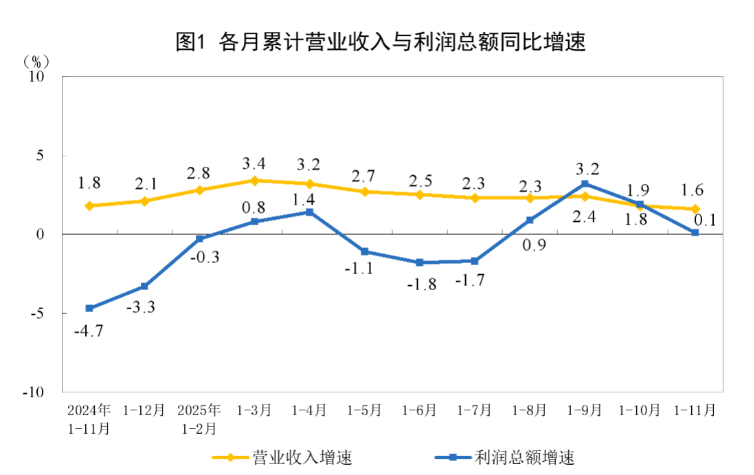
Core Insights - In the first eleven months of 2025, the total profit of large-scale industrial enterprises in China reached 66,268.6 billion yuan, reflecting a year-on-year growth of 0.1% [1] By Enterprise Type - State-owned enterprises reported a total profit of 20,083.6 billion yuan, a decrease of 1.6% year-on-year [4] - Shareholding enterprises achieved a total profit of 49,565.6 billion yuan, down by 0.4% [4] - Foreign and Hong Kong, Macao, and Taiwan-invested enterprises saw a profit of 16,355.3 billion yuan, an increase of 2.4% [4] - Private enterprises recorded a total profit of 19,319.9 billion yuan, a slight decline of 0.1% [4] By Industry Type - The manufacturing sector generated a total profit of 50,317.9 billion yuan, marking a growth of 5.0% [6] - The mining industry reported a profit of 7,896.3 billion yuan, down by 27.2% year-on-year [6] - The electricity, heat, gas, and water production and supply sector achieved a profit of 8,054.4 billion yuan, increasing by 8.4% [6] Key Industries - The computer, communication, and other electronic equipment manufacturing industry experienced a profit increase of 15.0% [7] - The automotive manufacturing sector saw a profit growth of 7.5% [7] - The agricultural and sideline food processing industry grew by 4.8% [7] - The oil and natural gas extraction industry faced a profit decline of 13.6% [7] - The coal mining and washing industry suffered a significant drop of 47.3% [7] Monthly Performance - In November, the profits of large-scale industrial enterprises fell by 13.1% year-on-year [8]
2025年1—11月份全国固定资产投资基本情况 - 国家统计局
Guo Jia Tong Ji Ju· 2025-12-29 09:36
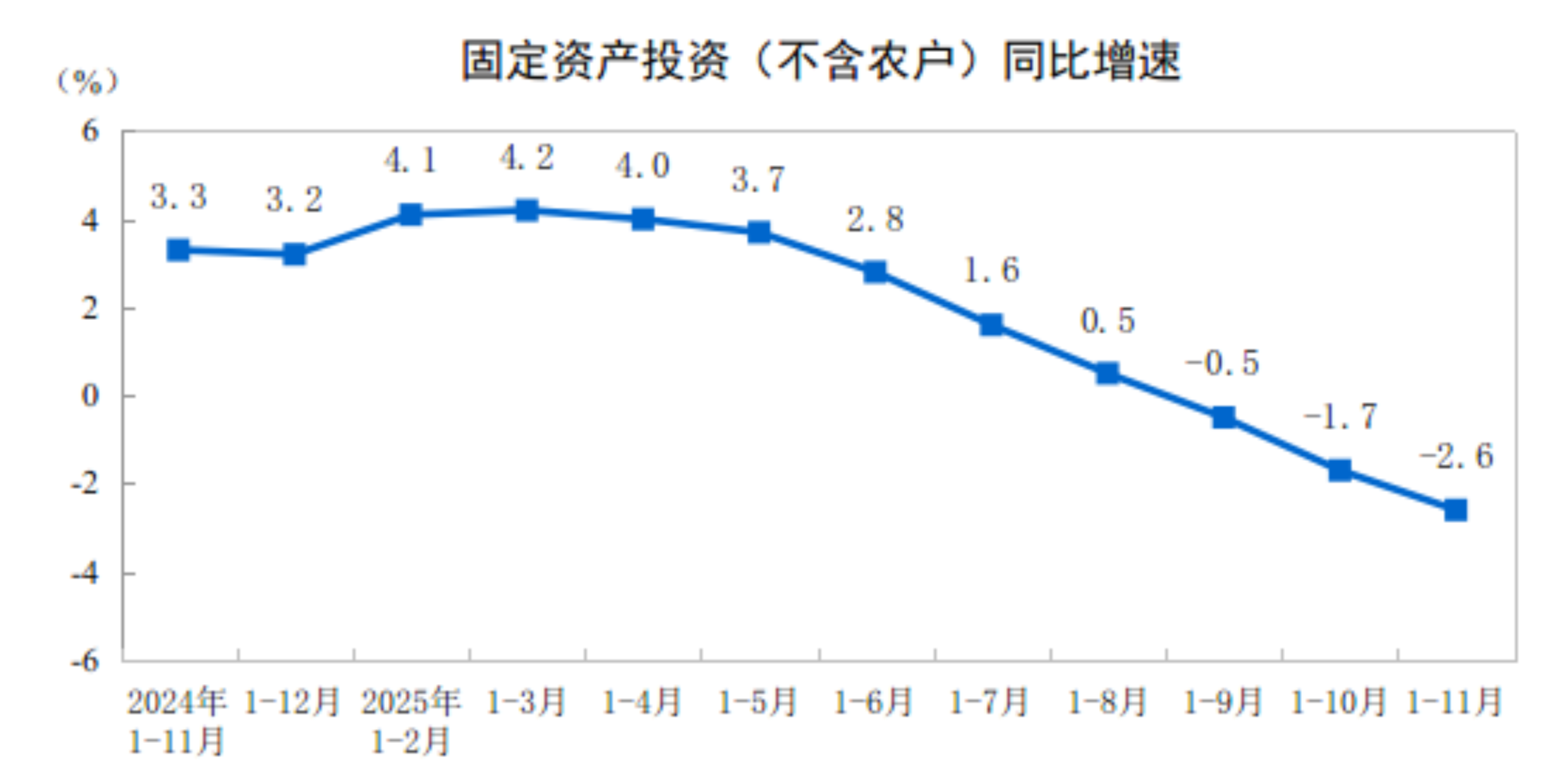
Core Viewpoint - In the first eleven months of 2025, China's fixed asset investment (excluding rural households) reached 444,035 billion yuan, showing a year-on-year decline of 2.6% [1][4]. Investment by Industry - Investment in the primary industry was 8,770 billion yuan, with a year-on-year growth of 2.7% [3][5]. - Investment in the secondary industry totaled 162,243 billion yuan, increasing by 3.9% [3][5]. - Investment in the tertiary industry was 273,022 billion yuan, reflecting a decline of 6.3% [3][5]. - Within the secondary industry, industrial investment grew by 4.0%, with mining investment also increasing by 4.0%, manufacturing investment rising by 1.9%, and investment in electricity, heat, gas, and water production and supply increasing by 10.7% [3][6]. Investment by Region - Eastern region investment decreased by 6.6%, central region investment fell by 1.7%, western region investment declined by 0.2%, and northeastern region investment saw a significant drop of 14.0% [3][6]. Investment by Registration Type - Domestic enterprises' fixed asset investment decreased by 2.6%, investment from Hong Kong, Macau, and Taiwan enterprises fell by 2.2%, while foreign enterprises' investment dropped sharply by 14.1% [3][6]. Detailed Investment Data - The overall fixed asset investment (excluding rural households) showed a decline of 2.6% year-on-year, with state-controlled investment down by 1.1% and private investment down by 5.3% [5][6]. - Specific categories such as construction and installation projects saw a decline of 6.4%, while equipment and tool purchases increased by 12.2% [5][6]. Industry-Specific Performance - In the manufacturing sector, notable growth was observed in the automotive manufacturing industry at 15.3% and in the railway, shipbuilding, aerospace, and other transportation equipment manufacturing at 22.4% [6][7]. - Conversely, the pharmaceutical manufacturing industry experienced a decline of 8.2%, and the chemical raw materials and chemical products manufacturing sector saw a drop of 13.1% [6][7]. Summary of Investment Trends - The overall trend indicates a contraction in fixed asset investment across various sectors, with significant regional disparities and varying performance across industries, highlighting potential areas for investment focus and concern [1][3][4].