铁路建设

Search documents
长三角议事厅·周报丨长三角软信产业需以标准互认促生态共融
Xin Lang Cai Jing· 2025-06-23 10:19
Core Insights - The article discusses the rapid restructuring of the software and information technology services industry in the Yangtze River Delta region, highlighting the competitive cluster development around industrial software [1][4] - Shanghai's government has approved measures to promote high-quality development in the software and information services sector, aiming to create a globally competitive innovation hub [1][4] - By 2024, the total revenue of the software and information services industry in the Yangtze River Delta is expected to reach 3.88 trillion yuan, accounting for nearly 30% of the national total [1][4] Group 1: Regional Development and Collaboration - Shanghai's software and information services industry revenue is projected to exceed 380 billion yuan in Q1 2025, with a year-on-year growth of 15.3%, contributing 13.6% to the city's GDP [2] - Jiangsu is focusing on the integration of software and manufacturing, with a software business revenue growth of 8.7% in 2024, and industrial software chain growth reaching 15.9% [2] - Zhejiang is building an industrial APP ecosystem with over 60,000 applications to support deep digital transformation in manufacturing [3] Group 2: Standardization and Ecosystem Integration - The Yangtze River Delta is promoting standard recognition and ecosystem integration as key strategies to break regional barriers, with a joint release of the "Yangtze River Delta Industrial Software Recommendation Directory" covering 35 quality software products [4][5] - The G60 Science and Technology Corridor is facilitating interconnectivity among 31 industrial internet platforms, reducing technical barriers for cross-regional collaboration [4] - Shanghai's "Gongfu Chain Master" platform has shared over 35,000 industrial knowledge models with Jiangsu, Zhejiang, and Anhui, fostering a collaborative model of "Shanghai R&D + Regional Application" [4] Group 3: Challenges and Future Directions - Despite progress, challenges remain in achieving ecosystem integration, including the lack of a unified regional standard system and insufficient collaborative applications in manufacturing scenarios [5][6] - The need for a standardized certification center and open-source platform is emphasized to enhance cross-regional collaboration and build a foundational trust mechanism [5][6] - The article suggests that the ability to establish an efficient and unified collaborative mechanism will directly impact the Yangtze River Delta's competitiveness in the global software and information services industry [6]
新调整!7月1日起,这些普速列车将由广州站迁入广州白云站
Nan Fang Du Shi Bao· 2025-06-23 06:45
Group 1 - The railway department has implemented a new train operation schedule starting from July 1, with 54 pairs of conventional trains departing from Guangzhou Baiyun Station, marking its upgrade to a core hub for conventional trains in Guangdong [1][2] - A total of 30 pairs of conventional trains will be relocated from Guangzhou Station to Guangzhou Baiyun Station, which will handle 44 pairs of originating and terminating conventional trains and 10 pairs of passing trains, covering popular destinations such as Urumqi, Lhasa, Harbin, Shenyang, Qingdao, Mudanjiang, Ningbo, and Shanghai [2][3] - The adjustment of train services will concentrate conventional train operations at the newly established Guangzhou Baiyun Station, enhancing passenger convenience and optimizing the use of resources at Guangzhou Station and Guangzhou East Station for high-speed trains and intercity transport, thereby improving overall operational efficiency to meet the growing demand for rapid commuting and business travel in the Greater Bay Area [3] Group 2 - The completion of the second layer of the Dalong Passenger Car Maintenance Center's cover marks a significant milestone in the development of the largest railway maintenance facility in the country, paving the way for residential and supporting infrastructure construction [4] - The project, which took only 214 days to complete the first layer covering approximately 160,000 square meters, is set to become the first comprehensive development project built on a railway maintenance facility, effectively addressing the traditional barriers between urban space and railway infrastructure [4][5] - The Dalong Passenger Car Maintenance Center will consolidate the functions of the original Guangzhou and Shipai maintenance facilities, significantly enhancing the capacity of the Guangzhou railway hub and promoting transportation connectivity in the Guangdong-Hong Kong-Macao Greater Bay Area [5]
甬舟铁路全线跨海大桥主塔墩进入水上施工阶段
Zhong Guo Xin Wen Wang· 2025-06-22 01:46
Core Insights - The completion of the 20th main pier foundation pouring for the Fuchimen dual-use bridge marks a significant milestone in the construction of the Ningbo-Zhoushan Railway, which is a major project in China's medium- and long-term railway network plan [1][2] Group 1: Project Overview - The Ningbo-Zhoushan Railway spans 76.4 kilometers, connecting Ningbo East Station to Baichuan Town in Dinghai District, and will end the historical lack of railway access in the Zhoushan archipelago [1] - The Fuchimen dual-use bridge, a key control project of the railway, is 1,726 meters long and features a "road-rail flat layer" design, with a railway in the middle and roads on both sides [1] Group 2: Engineering Features - The bridge boasts two world records: the main span of 388 meters is the largest for a high-low tower dual-use bridge, and it features the widest cantilever steel box girder bridge [2] - The bridge employs a unique design with a bridge tower penetrating the cantilever steel box girder, a global first [2] Group 3: Construction Details - The 20th main pier foundation was poured in two stages, with the first stage at 2.25 meters and the second at 4.25 meters, using approximately 4,300 cubic meters of concrete [2] - A smart temperature control system was implemented to monitor and adjust the temperature of the large volume of concrete, ensuring quality control during the pouring process [2]
成渝中线高铁成都站改建工程整体过半
Huan Qiu Shi Bao· 2025-06-20 07:56
本文转自【新华社】 记者从中国铁路成都局集团有限公司成都建设指挥部获悉,6月20日6时,经近2000名作业人员520分钟 的连续奋战,成渝中线高铁成都站南北站场交替施工圆满完成,标志着成渝中线高铁成都站改建工程整 体过半,为项目按期开通奠定了坚实基础。这次交替施工是铁路营业线Ⅰ级施工,由中铁八局、中铁电 气化局、成都工务段、成都电务段、成都供电段等10余家单位相互配合完成。成都站位于四川省成都 市,是新中国第一条自主建设的铁路——成渝铁路的起始站。为满足成渝中线高铁建设、市域铁路公交 化改造建设等需要,车站进行了拆除扩建。车站建设采取"分步施工、南北交替"方案,将施工区域划分 为南北两个作业面,实现了铁路正常运输与工程建设同步推进,完成衔接成渝、达成、宝成等多条铁路 线路的拨接与改造。 6月20日, 成渝中线高铁成都站南北站场交替施工完成后,一列列车顺利通过成都站南站场(无人机拍摄)。新华 社记者 江宏景 摄 6月19日, 俯瞰改造 中的成渝中线高铁成都站(6月20日,无人机照片)。新华社记者 江宏景 摄 在成渝中线高铁成都站南北站场交替施工现场,中铁八局施工人员在南站场拆除原来的轨道和枕木。新 华社记者 江 ...

襄荆高铁正式启动联调联试 为年内开通按下“加速键”
Zhong Guo Fa Zhan Wang· 2025-06-20 07:55
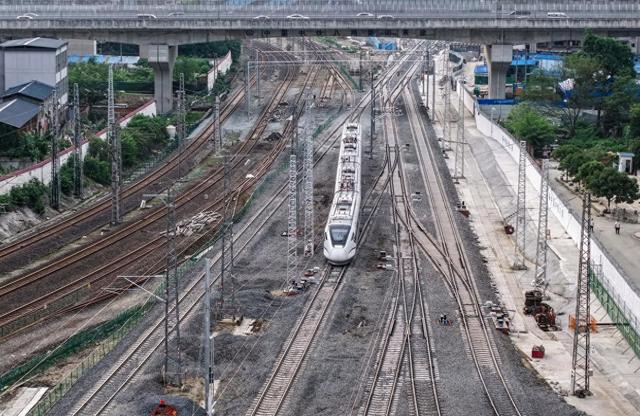
Core Points - The Xiangjing High-Speed Railway has officially entered the joint debugging and testing phase, marking a significant step towards its goal of opening for operation within the year [1] - The railway spans approximately 116.23 kilometers with a design speed of 350 kilometers per hour, featuring 69 new bridges and 16 tunnels, with bridge and tunnel construction accounting for 84.7% of the total length [1][2] - The construction has been efficient, with the introduction of innovative technologies and methods, achieving a daily track laying speed of 3,000 meters and completing the entire track laying task three days ahead of schedule [2] - The railway will significantly reduce travel time between Xiangyang and Jingmen from approximately 90 minutes to about 30 minutes, enhancing connectivity in the region [3] Industry Impact - The Xiangjing High-Speed Railway is a crucial part of China's "Eight Vertical and Eight Horizontal" high-speed rail network, specifically the "Hunan-Guangdong Corridor," connecting with other major rail lines [3] - Its completion is expected to promote high-quality development along the Yangtze River Economic Belt and support Hubei's strategic position as a key area for central China's rise [3]
五位高铁领域从业者代表与中外记者见面交流 勇当新征程上的先锋力量
Jing Ji Ri Bao· 2025-06-19 22:14
Core Insights - China has become the country with the longest high-speed railway operating mileage and the fastest commercial operating speed in the world, making high-speed rail a significant symbol of the nation [1][3] Group 1: Key Factors for Success - The success of China's high-speed rail is attributed to three main principles: unwavering commitment to building a strong transportation nation, adherence to independent innovation, and a collaborative innovation mechanism involving over 2,000 units and more than 20,000 engineering technicians [1] Group 2: Individual Contributions - Individual workers in the high-speed rail sector, such as train driver Kong Xiangpei and engineer Ma Xiaoli, have made significant contributions through dedication to skill development and technical innovation, leading to numerous patents and awards [2] - The commitment to service quality is exemplified by the efforts of service teams like the "Yingchunhua" service team at Shenzhen North Station, which has introduced various passenger-friendly initiatives [2] Group 3: Global Impact - China's high-speed rail success has also contributed to global railway development, with projects like the Jakarta-Bandung high-speed railway serving as a landmark for the Belt and Road Initiative and showcasing China's technological capabilities in challenging environments [3]
通苏嘉甬高铁苏南特大桥取得阶段性成果 首座大跨度连续梁主跨合龙
Su Zhou Ri Bao· 2025-06-18 21:47
Core Viewpoint - The successful completion of the main span of the Su Nan Grand Bridge marks a significant milestone in the construction of the Tong Su Jia Yong High-Speed Railway, enhancing connectivity in the Yangtze River Delta region [1][2] Group 1: Project Overview - The Su Nan Grand Bridge spans 25 kilometers and crosses multiple existing roads, rivers, lakes, residential areas, and industrial sites, making it a key engineering project for the Tong Su Jia Yong Railway [1] - The main span of the bridge, known as the Niu Chang Jing continuous beam, measures 329.6 meters and employs a single-box double-chamber cross-section design with cantilever construction methods [1] - The project faces challenges due to its complex structure, high technical requirements, and dense surrounding rivers and complicated geological conditions [1] Group 2: Safety and Management - The construction unit prioritizes safety production, implementing a strict safety responsibility system with detailed division of responsibilities [2] - Daily safety management work lists are published to identify and eliminate potential hazards, ensuring project safety and stability [2] - A safety management atmosphere is fostered through various initiatives, including the involvement of community safety officers and monthly evaluations [2] Group 3: Strategic Importance - The Tong Su Jia Yong High-Speed Railway is a crucial part of the national medium- and long-term railway network planning, specifically the "Eight Verticals and Eight Horizontals" high-speed railway main corridor [2] - Once completed, the railway will significantly reduce travel time between core cities in the Yangtze River Delta, promoting high-quality development and integration in the region [2]
连续“零增长”,这个中部大省开始发力了
Mei Ri Jing Ji Xin Wen· 2025-06-16 14:37
Core Viewpoint - The construction of the Chang-Gan high-speed railway in Hunan is set to begin, marking a significant development in the region's high-speed rail network after a period of stagnation in new projects [2][8]. Group 1: Current Developments - The Chang-Gan high-speed railway, approximately 429 kilometers long with a design speed of 350 km/h, has a total investment of about 83 billion yuan [8]. - The project has faced multiple delays since its planning began in 2014, including environmental assessments and funding challenges [8][10]. - Hunan's high-speed rail construction has slowed in recent years, with no new lines built for two consecutive years [5][12]. Group 2: Economic Impact - The completion of the Chang-Gan high-speed railway is expected to significantly reduce travel times, such as cutting the journey from Changsha to Ganzhou from 4 hours to under 2 hours [15]. - The railway will enhance connectivity with major urban areas, supporting the development of the Guangdong-Hong Kong-Macao Greater Bay Area [15][16]. - Hunan's strategic location as a transit hub between eastern coastal and central-western regions is emphasized, with plans to leverage this for economic growth [17]. Group 3: Future Prospects - Hunan is set to experience a "explosive" growth in high-speed rail projects, with several other lines queued for construction [2][12]. - The integration of various high-speed rail lines will transform Hunan's transport network from a single-axis structure to a multi-channel system [14]. - The ongoing projects are expected to enhance the overall economic landscape of Hunan, facilitating better access to markets and resources [18][19].
延榆高铁智能化轨枕厂开工建设
news flash· 2025-06-16 10:19
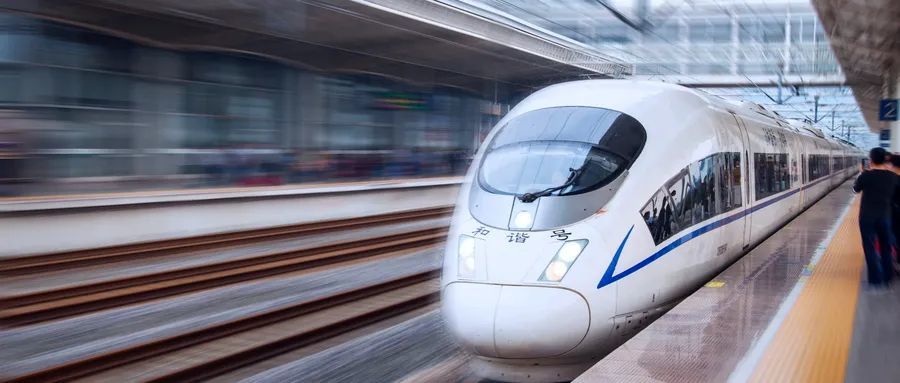
Group 1 - The construction of the intelligent sleeper factory for the Yan-Yu High-speed Railway has commenced [1] - The factory is located in Qingjian County, Yulin City, Shaanxi Province [1] - The factory is responsible for the prefabrication of 752,300 double-block sleepers for the entire Yan-Yu High-speed Railway line [1]
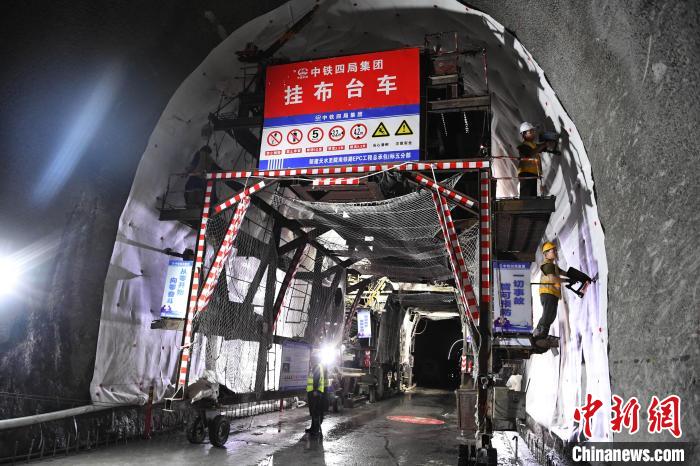
甘肃首条自主投资铁路迎突破!天陇铁路首条特长隧道贯通
Zhong Guo Xin Wen Wang· 2025-06-13 15:33
Core Points - The completion of the last blasting operation marks the breakthrough of the Xujiaping Tunnel, the first long tunnel of the Tianlong Railway, which is a significant milestone for the railway's construction [1][3] - The Tianlong Railway, connecting Tianshui and Longnan, is part of Gansu Province's "14th Five-Year" comprehensive transportation development plan and is the first fully self-funded and constructed single-line passenger and freight railway in the province [3][4] - The project, undertaken by China Railway Fourth Bureau, features a total length of 17.97 kilometers, with the Xujiaping Tunnel measuring 16.27 kilometers and reaching a maximum depth of 600 meters [3][4] Construction Management - A "three-level linkage" management mechanism has been established to coordinate design, construction, and monitoring, ensuring safety and quality through regular expert evaluations and targeted management measures [3][4] - The construction team follows strict principles including advanced monitoring, reinforcement, and support to ensure safe and efficient tunnel excavation [4][6] Technological Advancements - The project employs advanced technologies such as TSP geological forecasting systems and geological radar, completing over 200 rock monitoring sessions and issuing early warnings for 47 risk areas [6] - The use of energy-accumulating blasting technology and various construction methods has increased the average excavation rate from 7 meters to 8 meters per day, enhancing construction efficiency by approximately 20% [6] Strategic Importance - The Tianlong Railway, with a total length of 208.207 kilometers and a design speed of 160 km/h, will connect with the Longhai Railway and Lanzhou-Chongqing Railway, playing a crucial role in enhancing the transportation capacity of the western land-sea new corridor [6]