
甬舟铁路

Search documents
春节坚守不停歇!各行业劳动者用责任与担当守护万家安宁
Yang Shi Wang· 2026-02-21 02:00
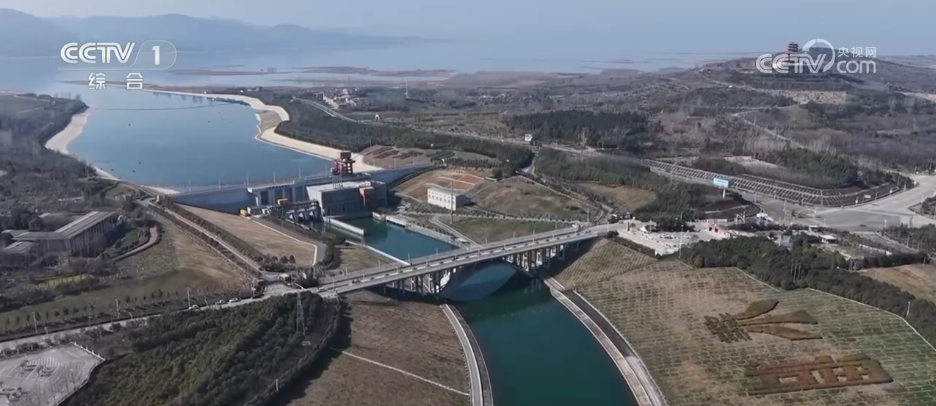
Group 1 - The South-to-North Water Diversion Project is crucial for ensuring water supply during the Spring Festival, with over 4,000 construction and management personnel on duty to maintain a stable water supply [5] - The project serves as a lifeline for 195 million people, emphasizing its importance in safeguarding public health and safety during the holiday season [5] - Emergency response teams have been established to address any unexpected situations promptly, ensuring the continuous operation of water supply systems [3] Group 2 - The Ningbo-Zhoushan Railway's underwater tunnel construction is ongoing, with the "Ningzhou" shield machine having completed over 3,150 meters, achieving more than 60% of its total task [7] - Once completed, the railway will significantly reduce travel time between Ningbo and Zhoushan to just 26 minutes, enhancing regional connectivity [9] Group 3 - The Chongqing Armed Police's patrol boats are operational during the Spring Festival, serving as a "floating sentry" on the Yangtze River, ensuring safety and security [11] - In Tai'an, 18 firefighters are stationed at the peak of Mount Tai to ensure visitor safety, with an expected influx of over 400,000 tourists during the holiday [12] - The introduction of exoskeleton equipment has improved rescue capabilities in challenging terrains, allowing firefighters to carry heavier loads and reducing physical strain [14]

轨道上的杭州“再加码”
Mei Ri Shang Bao· 2026-01-06 22:22
Group 1 - The construction of the Xiangmen Railway's key control project, the Ximenmen Rail-Road Bridge, has successfully reached its main tower topping, marking a significant advancement in the construction of this world-class cross-sea bridge [1][2] - The Xiangmen Rail-Road Bridge, with a total length of 2,664 meters and a main span of 1,488 meters, is currently the largest span rail-road bridge and the widest cross-sea bridge in the world [2] - The completion of the Xiangmen Railway will connect Ningbo East Station to Zhoushan Baiquan, covering approximately 77 kilometers, and will significantly reduce travel time from Hangzhou to Zhoushan to just over one hour [2] Group 2 - The construction of the Xiaosha to Chang'an regional railway has officially begun, enhancing the connectivity between Hangzhou and Haining [3] - This regional railway spans 20.8 kilometers with a design speed of 120 km/h, facilitating seamless transfers with existing Hangzhou-Haining intercity services [3] - The project aims to improve travel convenience for residents along the route and promote regional integration and development in the Hangzhou-Haining area [3][4]
世界最长海底高铁隧道建设取得重大突破
Zhong Guo Xin Wen Wang· 2025-11-28 13:48
Core Insights - The construction of the world's longest underwater high-speed rail tunnel has achieved a significant milestone with the "Dinghai" shield machine surpassing 5,000 meters of excavation, marking approximately 80% completion of the Zhoushan side of the tunnel, which is 6,270 meters long [1][3] Group 1: Project Overview - The Jintang Underwater Tunnel is a key project of the Ningbo-Zhoushan Railway, spanning 16.18 kilometers, with the shield section measuring 11.21 kilometers [3] - Two large-diameter shield machines, "Dinghai" and "Yongzhou," are being used for excavation from both sides, facing complex geological conditions including high water pressure and various soil types [3] Group 2: Construction Challenges - The geological conditions are extremely complex, requiring the shield section to navigate through hard rock, clay, and sandy layers, presenting multiple challenges such as high intensity, high water pressure, and high precision [3] - The construction team has implemented measures such as enhanced tail seal management, optimized excavation parameters, and real-time monitoring to control ground disturbance and ensure safety [3] Group 3: Future Plans - The "Dinghai" shield machine is set to continue its progress towards the seabed connection point, with the "Yongzhou" shield machine also advancing steadily [5] - The project is expected to achieve a successful underwater connection by October 2026, with the Ningbo-Zhoushan Railway projected to be operational by 2028, integrating Zhoushan into the national railway network [5]

浙江两条高铁建设迎来新节点
Mei Ri Shang Bao· 2025-09-22 22:25
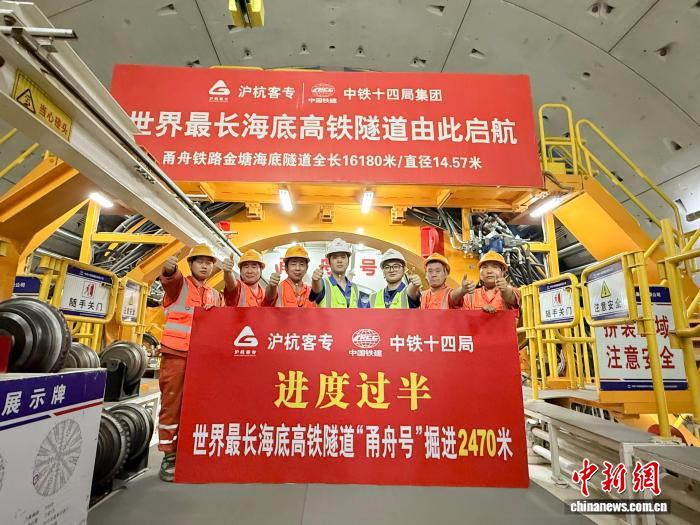
Group 1 - The Ningbo-Zhoushan Railway's Jintang underwater tunnel has achieved a significant milestone, with the domestic shield machine "Yongzhou" surpassing 2,470 meters in excavation, marking over half of the progress on the Ningbo side [1][2] - The Jintang underwater tunnel is a key project of the Ningbo-Zhoushan Railway, stretching 16.18 kilometers, with an underwater section of 11.21 kilometers, making it the longest underwater high-speed railway tunnel in the world [2] - The completion of the Jintang underwater tunnel will connect Zhoushan, the only city in the Yangtze River Delta without a railway, to the national railway network, significantly reducing travel time from Hangzhou to Zhoushan to just over one hour [2] Group 2 - The Hangzhou-Qiuzhou High-Speed Railway has initiated contact network hot sliding tests, paving the way for subsequent joint debugging and testing [3] - The Hangzhou-Qiuzhou High-Speed Railway spans approximately 131 kilometers with a design speed of 350 kilometers per hour, featuring six stations and a bridge-tunnel ratio of 78.7% [3] - Once operational, the Hangzhou-Qiuzhou High-Speed Railway will enhance regional transportation and economic integration, contributing to the high-quality development of Zhejiang Province and the Yangtze River Delta [3]
世界最长海底高铁隧道新进展:“甬舟号”盾构机掘进过半
Zhong Guo Xin Wen Wang· 2025-09-22 09:05
Core Insights - The "Yongzhou" shield machine has achieved over half of its tunneling progress for the world's longest underwater high-speed rail tunnel, marking a significant milestone in the construction of the Ningbo-Zhoushan railway [1][3]. Group 1: Project Overview - The Jintang underwater tunnel is a key project of the Yongzhou railway, stretching 16.18 kilometers, with the shield section measuring 11.21 kilometers [3]. - The tunnel employs two shield machines, "Yongzhou" and "Dinghai," which are advancing simultaneously from both Ningbo and Zhoushan sides [3]. Group 2: Technical Challenges - The geological conditions along the Jintang underwater tunnel are extremely complex, requiring the crossing of various risk sources such as sea dikes, docks, and shipping lanes [4]. - The maximum depth of the underwater section reaches 78 meters, with a maximum water pressure of 8.4 bar, equivalent to nearly 1 ton of weight on an adult's palm [4]. - The Ningbo side has experienced frequent geological changes, necessitating high-pressure tool changes, with the "Yongzhou" machine completing 12 geological transitions and changing tools over 2400 times [4]. Group 3: Strategic Importance - The Yongzhou railway is a major project in China's Medium- and Long-term Railway Network Plan (2016-2030), with a total length of 76.4 kilometers and a design speed of 250 kilometers per hour [4]. - Once operational, the project will connect Zhoushan, the only city in the Yangtze River Delta without a railway, to the national railway network, significantly enhancing regional integration and development [4].
浙江一批交通工程迎来新进展
Mei Ri Shang Bao· 2025-09-02 22:20
Group 1: Transportation Infrastructure Developments - The Hangzhou Metro Line 18, a key transportation line, has commenced construction with the launch of the "Kaitian" tunneling machine, marking the first application of a super-large rectangular tunneling machine in metro parking line construction [2] - The Hangzhou Metro Line 18 will span 48.3 kilometers with 19 stations, enhancing connectivity between the main urban area and the suburban regions of Linping and Xiaoshan, particularly filling the metro gap in areas like Wenyuan and Yiqiao [2] - The Jiaxing Nanhu Airport has successfully completed its verification flight, with plans to officially commence operations by the end of this year, following a thorough inspection of its facilities and flight procedures [3] Group 2: Railway Connectivity Enhancements - The successful completion of the Xujiashan Tunnel marks the progress of the Ningbo-Zhoushan Railway, which is a significant project in China's medium to long-term railway network plan [4] - The Ningbo-Zhoushan Railway will cover a total length of 76.4 kilometers, connecting Ningbo East Station to Zhoushan, and will include 7 stations, facilitating high-speed rail access to the previously isolated Zhoushan region [4] - Once operational, the railway will end the historical lack of railway access in Zhoushan, providing a new travel option between Hangzhou and Zhoushan [4]
甬舟铁路全线跨海大桥主塔墩进入水上施工阶段
Zhong Guo Xin Wen Wang· 2025-06-22 01:46
Core Insights - The completion of the 20th main pier foundation pouring for the Fuchimen dual-use bridge marks a significant milestone in the construction of the Ningbo-Zhoushan Railway, which is a major project in China's medium- and long-term railway network plan [1][2] Group 1: Project Overview - The Ningbo-Zhoushan Railway spans 76.4 kilometers, connecting Ningbo East Station to Baichuan Town in Dinghai District, and will end the historical lack of railway access in the Zhoushan archipelago [1] - The Fuchimen dual-use bridge, a key control project of the railway, is 1,726 meters long and features a "road-rail flat layer" design, with a railway in the middle and roads on both sides [1] Group 2: Engineering Features - The bridge boasts two world records: the main span of 388 meters is the largest for a high-low tower dual-use bridge, and it features the widest cantilever steel box girder bridge [2] - The bridge employs a unique design with a bridge tower penetrating the cantilever steel box girder, a global first [2] Group 3: Construction Details - The 20th main pier foundation was poured in two stages, with the first stage at 2.25 meters and the second at 4.25 meters, using approximately 4,300 cubic meters of concrete [2] - A smart temperature control system was implemented to monitor and adjust the temperature of the large volume of concrete, ensuring quality control during the pouring process [2]
新思想引领新征程丨劳动谱写时代华章 奋斗创造美好未来
Yang Guang Wang· 2025-05-03 02:08
Core Insights - The Chinese government emphasizes the importance of labor in achieving high-quality development and modernization, urging workers to actively participate in significant construction projects during the "May Day" holiday [1] Infrastructure Development - During the "May Day" holiday, major construction projects, including the Western Land-Sea New Corridor and the Pinglu Canal, are progressing with nearly 20,000 workers and over 4,400 machines involved [1] - The Pinglu Canal will provide the shortest and most economical route from Guangxi and Southwest China to ASEAN countries upon completion [1] - The Ningbo-Zhoushan Railway's underwater tunnel, the longest of its kind globally, is expected to be completed by 2027, significantly reducing travel time between Ningbo and Zhoushan [2] Water Conservancy Projects - The South-to-North Water Diversion Project's follow-up, the Middle Line Jiangjin Supplementary Han Project, is advancing, enhancing water distribution capabilities in the Han River basin [4] - In the first quarter, eight major water conservancy projects were initiated, with investment exceeding the same period last year [4] Energy Sector Advancements - A large-scale integrated energy project, "Long Electric into Shandong," is nearing completion, expected to deliver over 36 billion kilowatt-hours annually, with over 50% from renewable sources [5] - Wind and solar power projects are being developed faster than anticipated, with installed capacity increasing from 535 million kilowatts at the end of 2020 to 1.482 billion kilowatts by March 2025, marking a 177% growth [6] Overall Economic Impact - As of now, 99% of the 102 major projects outlined in the "14th Five-Year Plan" have met their targets, significantly supporting high-quality economic and social development [7]