高等教育

Search documents
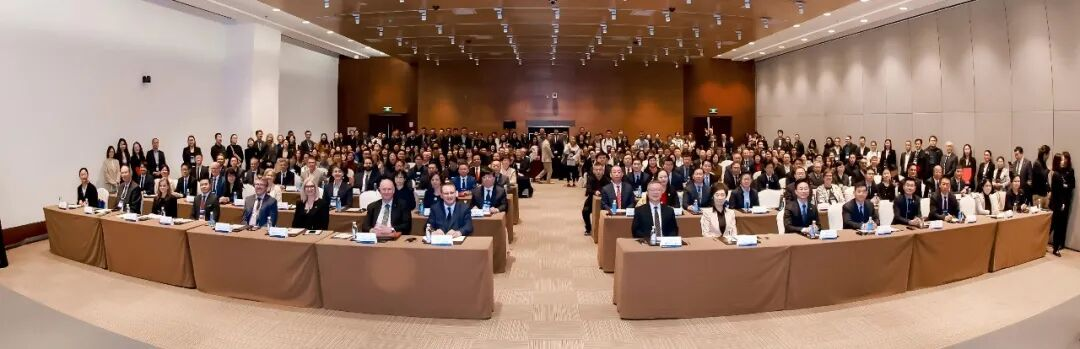
第二届中国—新西兰教育发展论坛成功举办
Xin Hua Wang· 2025-11-04 00:51
Core Points - The second China-New Zealand Education Development Forum was held in Beijing, focusing on the theme "Cultivating New Opportunities: Integrating the Future of China-New Zealand Education" [2] - The forum was co-hosted by the Ministry of Education of China and the Ministry of Education of New Zealand, with participation from various educational organizations [2] Group 1 - The Vice Minister of Education of China, Ren Youqun, acknowledged the significant achievements of China-New Zealand educational cooperation as an important part of bilateral relations [4] - Ren proposed three initiatives for future cooperation: co-cultivating the next generation through education, co-creating new development chapters, and co-building a better world through educational collaboration [4] - A joint commitment on higher education cooperation and a framework arrangement for strengthening educational cooperation and cultural exchange were signed by representatives from both countries [4] Group 2 - The Higher Education Parallel Forum discussed key topics such as "Deepening China-New Zealand Cooperative Education: Policies and Practices" and "Research Collaboration and Innovative Talent Cultivation" [5] - Representatives from universities in both countries shared their cooperation experiences and successful practices, emphasizing a student-centered approach and research focus for future collaborations [5] - Over 200 leaders and representatives from educational authorities and institutions from both countries attended the forum [5]

3年花费60万,大学生的第一个「奢侈品」竟然是它
36氪· 2025-11-04 00:47
Core Viewpoint - The rising tuition fees for graduate programs are becoming a significant deterrent for prospective students, leading to a decline in the number of applicants for graduate studies [4][11][60]. Group 1: Tuition Fee Increases - A C9 university announced a tuition increase for its Master's program in Social Work to 80,000 yuan, a nearly 70% rise from the previous year's 48,000 yuan [6][7]. - The overall cost of pursuing a Master's degree is expected to exceed 100,000 yuan when considering living expenses, with some programs costing over 800,000 yuan [8][21]. - Many universities are extending the duration of professional Master's programs from 2 years to 3 years, further increasing the financial burden on students [8][21]. Group 2: Declining Interest in Graduate Studies - The "exam fever" for graduate studies has cooled over the past two years, with predictions of continued declines in application numbers for the 2026 entrance exams [8][52]. - The phenomenon of "degree inflation" is leading to a devaluation of graduate degrees, as higher education does not guarantee better job prospects [53][59]. Group 3: Financial Burden and Living Costs - The total expenses for a three-year graduate program can reach around 600,000 yuan, including rent and living costs, with many students relying on family support [24][26]. - Some universities have stopped providing accommodation for professional Master's students, forcing them to seek expensive off-campus housing [21][26]. Group 4: Employment Concerns - Graduates from less popular programs, such as Social Work, face challenges in the job market, with salaries often ranging from 3,000 to 5,000 yuan per month [36][39]. - The perception of graduate degrees as a means to secure better employment is being questioned, as many graduates struggle to find jobs that match their qualifications [53][59]. Group 5: Future Outlook - Experts suggest that the surge in graduate enrollment may not return to previous levels, indicating a shift towards more rational decision-making among prospective students [59][60]. - The increasing costs associated with graduate education are prompting students to critically evaluate the value of their degrees and the potential return on investment [60][61].

6年前曾叫嚣让儿子当“101%美国人”的中国教授,现在下场如何
Sou Hu Cai Jing· 2025-11-04 00:35
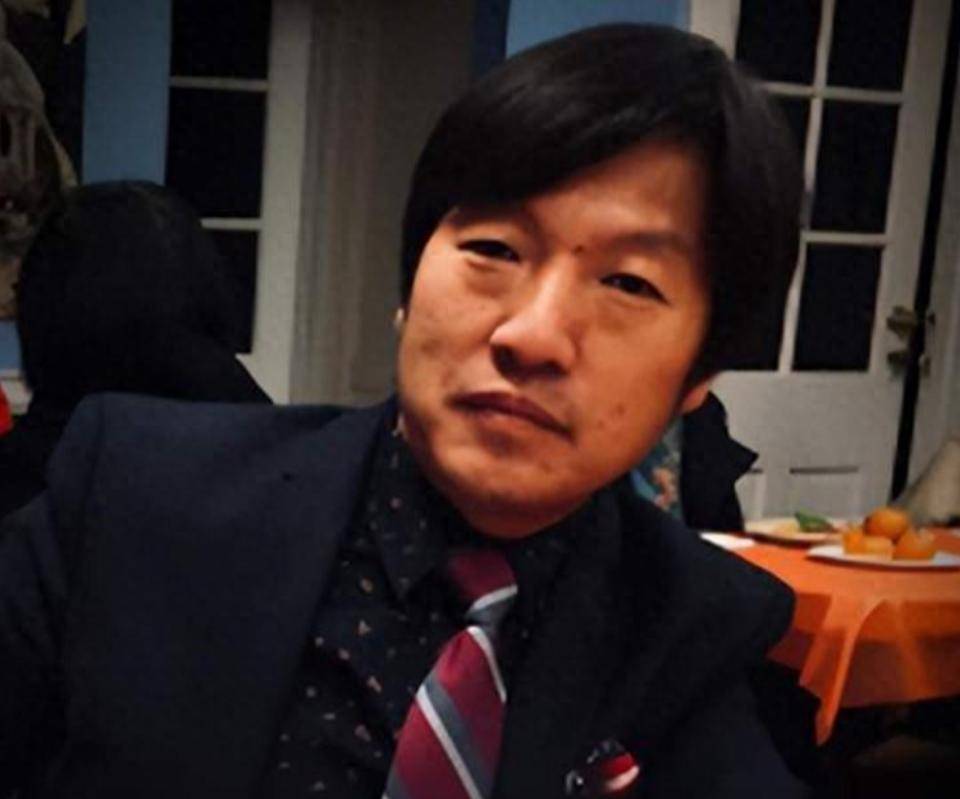
Core Viewpoint - The article discusses the story of Xu Siyuan, a Chinese economics professor who moved to the United States in pursuit of a better life and the American dream, only to face significant challenges and discrimination, ultimately leading to a drastic change in his life circumstances [1][10][17]. Group 1: Background and Motivation - Xu Siyuan, an economics professor in China, expressed admiration for the West, particularly the United States, and believed that life there was superior to that in China [3][4]. - He attended an international economic seminar where he felt envious of foreign scholars' lifestyles and success, which fueled his desire to move to the U.S. [3][6]. - Xu planned to have his child born in the U.S. to secure American citizenship for the child, believing this would help him gain a foothold in the country [8][10]. Group 2: Actions Taken - Xu sold his property in China and moved to the U.S. with his wife, despite her reluctance and concerns about leaving their familiar life behind [8][10]. - Upon arrival, he imposed strict rules on his family to ensure their child would be "101% American," including prohibiting the use of Chinese language and culture at home [10][11]. Group 3: Challenges Faced - Xu faced significant difficulties in finding employment in the U.S., as his qualifications were not recognized, and he encountered racial discrimination [11][14]. - After numerous failed job applications, he resorted to low-paying manual labor jobs to support his family, which was a stark contrast to his previous status as a respected professor [14][15]. Group 4: Reflection and Regret - Xu began to regret his decision to move to the U.S., feeling that his situation was a result of being Chinese and facing discrimination [17]. - Despite his hardships, he continued to share his experiences on social media, which led to public ridicule and criticism from those who remembered his previous disparaging remarks about China [14][15].
驻教育部纪检监察组与部党组同向发力同题共答推动形成层层抓落实工作格局
Zhong Yang Ji Wei Guo Jia Jian Wei Wang Zhan· 2025-11-04 00:35
Core Viewpoint - The article emphasizes the critical role of higher education institutions in China's anti-corruption efforts, particularly in the context of graduate admissions, highlighting the need for stringent oversight and systemic reforms to ensure fairness and integrity in the admissions process [2][3][4]. Group 1: Anti-Corruption Measures - The Central Commission for Discipline Inspection (CCDI) has identified universities as key areas for systemic corruption risk and has initiated comprehensive reforms to address these issues [2][3]. - The CCDI's fourth plenary session called for a sustained high-pressure stance against corruption, focusing on key problems and areas within the education sector [2][3]. Group 2: Graduate Admissions Oversight - The China University of Science and Technology has established a collaborative mechanism for admissions supervision, covering the entire process from exam preparation to candidate selection, ensuring comprehensive oversight [3][4]. - The Ministry of Education has introduced the "2026 National Master's Graduate Admissions Management Regulations," which emphasizes the responsibility of admissions units and aims to create a robust regulatory framework [5][6]. Group 3: Regulatory Framework Enhancements - The new regulations include detailed processes for managing admissions, such as standardizing the reporting and review of qualification for additional points and defining the weight of preliminary exam scores [5]. - The regulations also introduce a conflict of interest avoidance system, specifying the circumstances under which personnel involved in admissions must recuse themselves, thereby reducing the influence of personal relationships on the admissions process [5][6]. Group 4: Continuous Monitoring and Improvement - The CCDI has committed to ongoing supervision of the Ministry of Education's efforts in managing admissions, ensuring that any issues are promptly addressed and rectified [6]. - The Ministry is focused on enhancing its institutional mechanisms and reforming its processes to effectively tackle identified problems and improve the overall admissions landscape [4][6].
1.27亿元!北京理工大学近期大批仪器采购意向
仪器信息网· 2025-11-03 09:07
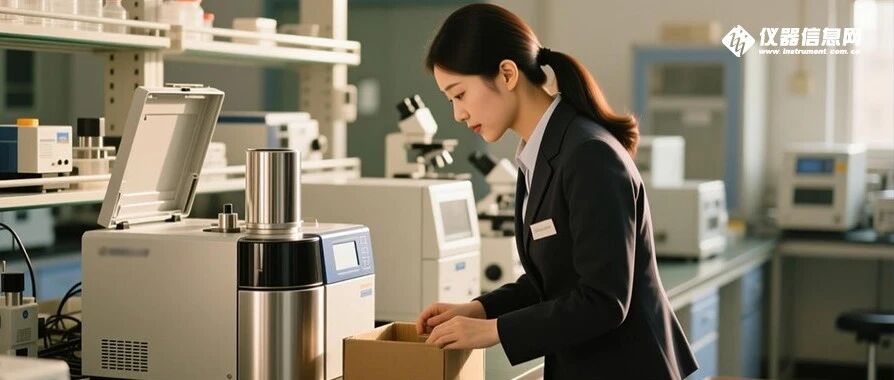
Core Insights - Beijing Institute of Technology has announced procurement intentions for 20 types of instruments and equipment, with a total budget of 127 million yuan, expected to be purchased between August and November 2025 [2][3]. Procurement Overview - The procurement includes advanced instruments such as mid-wave infrared spectral imaging systems, infrared imaging Fourier transform spectrometers, long-wave infrared spectral imaging systems, and ultra-high precision battery charge and discharge testing systems [3][4][5]. - The total budget for these instruments is 127 million yuan, indicating significant investment in research and development capabilities [3]. Instrument Descriptions - **Infrared Imaging Fourier Transform Spectrometer**: Combines FTIR technology with imaging capabilities to provide detailed spectral information for materials science and biomedical applications [4]. - **Long-Wave Infrared Spectral Imaging System**: Operates in the 8-14μm wavelength range, allowing for high-precision thermal imaging and spectral analysis, applicable in various fields [5]. - **Ultra-High Precision Battery Charge and Discharge Testing System**: Designed for precise testing of energy storage components, supporting product development and performance evaluation [11][14]. Specific Procurement Items - The procurement list includes various systems and components, such as: - Low-noise tunable semiconductor laser source systems [8]. - Smart laboratory key equipment, including servers and storage systems [8]. - Mid-wave infrared spectral imaging systems and long-wave infrared spectral imaging systems, each with specific technical requirements [9][10]. - The procurement also emphasizes the need for comprehensive after-sales service, including installation, debugging, and training [8][10].
9945万元!安徽大学近期大批仪器采购意向
仪器信息网· 2025-11-03 09:07
Core Insights - Anhui University has announced multiple government procurement intentions for laboratory instruments, with a total budget of 99.45 million yuan [2][3]. Procurement Overview - The procurement includes nine types of instruments, such as: - Transmission electron microscope microwave sample stage - Seafloor seismic detection system - Atomic-level precision material characterization equipment system - High-throughput automated synthesis system - Three-dimensional atom probe - Confocal Raman/fluorescence imaging system - High-throughput automated synthesis instrument - Low-temperature scanning tunneling microscopy testing subsystem - Comprehensive sub-micron level single crystal structure testing instrument - The expected procurement period is from September to December 2025 [3][4]. Instrument Descriptions - **Low-Temperature Scanning Tunneling Microscopy Testing Subsystem**: A core technology platform for modern condensed matter physics and nanomaterials research, designed for atomic-level resolution characterization in ultra-low temperature environments [4]. - **High-Throughput Automated Synthesis System**: A key tool in modern drug development and materials science, capable of parallel synthesis, purification, and characterization of hundreds to thousands of compounds, improving efficiency by over 100 times [5]. - **Comprehensive Sub-Micron Level Single Crystal Structure Testing Instrument**: An advanced device for high-resolution crystallographic analysis and microstructure characterization, integrating multiple techniques for precise analysis of materials at the sub-micron scale [6]. Specific Procurement Items - **Atomic-Level Precision Material Characterization Equipment System**: Budget of 30 million yuan, including various subsystems for precise analysis of defects and electronic states at the atomic level [8]. - **Three-Dimensional Atom Probe**: Budget of 35 million yuan, recognized as the most advanced technology for analyzing material composition and distribution at near-atomic scales [9]. - **Seafloor Seismic Detection System**: Budget of 2.25 million yuan, designed for high-sensitivity seismic signal collection in shallow and deep-sea environments [10].

高校党员学习教育在提升基层党组织组织力方面的思考与实践
Yang Shi Wang· 2025-11-03 06:07
Group 1 - The core argument emphasizes the importance of grassroots party organizations in higher education institutions, highlighting that their organizational strength directly impacts the implementation of educational policies and the effectiveness of moral education [1][2] - Party member education is identified as a crucial mechanism for enhancing organizational capacity, serving both as a means for self-renewal and as a pivotal point for systematic improvement [1][3] - The article discusses the dual role of party member education in binding innovative theories to practical tasks, thereby addressing the disconnect between theory and practice among faculty and students [2][3] Group 2 - Current challenges in enhancing organizational capacity through party member education include a disconnect between educational content and the actual needs of faculty and students, leading to a lack of engagement [4][5] - Traditional learning methods, such as meetings and online sessions, are criticized for being ineffective, with a need for more interactive and immersive learning experiences [4][6] - The article points out the absence of effective mechanisms for translating learning outcomes into organizational strength, which limits the practical effectiveness of educational initiatives [4][7] Group 3 - To address the identified shortcomings, the article proposes a systematic approach focusing on content, format, and mechanisms to enhance the integration of party member education with organizational capacity building [5][6] - A demand-oriented content system is suggested, which would tailor educational materials to the specific needs of faculty and students, ensuring relevance and engagement [5][6] - The establishment of a practical transformation mechanism is recommended, which includes diverse evaluation methods to assess the impact of learning on organizational effectiveness [7]
预算1.34亿元!北京大学近期大批仪器采购意向
仪器信息网· 2025-11-03 03:56
Core Insights - Peking University has announced procurement intentions for 26 items of laboratory equipment with a total budget of 134 million yuan, scheduled for procurement between September and December 2025 [1][2]. Equipment Procurement Overview - The procurement includes advanced instruments such as: - Small animal live imaging systems - High-throughput molecular interaction analysis instruments - Multifunctional photonic electron momentum microscopes - Biological microscopes, inverted microscopes, flow cytometers, and more [2][7]. - The total budget for the procurement is 134 million yuan, with specific allocations for various instruments [2][7]. Specific Equipment Descriptions - **Confocal Laser Scanning Microscope (CLSM)**: A high-resolution imaging device essential for modern biomedical research, utilizing laser scanning to achieve clear imaging and quantitative analysis [3]. - **Automated Microbial Sensitivity Analyzer**: A device for rapid detection of microbial species and antibiotic sensitivity, capable of processing multiple samples simultaneously [4]. - **Ten-Person Shared Microscope**: Designed for collaborative observation, allowing up to ten users to view the same specimen simultaneously, enhancing teamwork in research and education [6]. Detailed Procurement List - The procurement list includes: - 1 set of laser confocal microscope - 4 sets of biological microscopes - 2 sets of inverted microscopes - 1 set of flow cytometer - 1 set of ten-person shared microscope - 1 set of fluorescent quantitative PCR instrument - 1 set of automated microbial sensitivity analyzer - 20 sets of ultra-low temperature storage boxes, among others [8][9]. Budget Breakdown - The procurement intentions are categorized by budget, with significant allocations such as: - 139 million yuan for one batch - 109 million yuan for another batch - 97.39 million yuan for a third batch [7]. Future Implications - The planned procurement reflects Peking University's commitment to enhancing its research capabilities and infrastructure, particularly in the fields of biomedical research and molecular biology [1][2].

一条特别的短信 让高校学生心头暖了又暖
Hang Zhou Ri Bao· 2025-11-03 02:32
Group 1 - The core initiative involves a monthly meal subsidy of 200 yuan for students in need, aimed at providing continuous support rather than one-time assistance [1] - The program utilizes big data from the smart campus construction for precise and automatic distribution of subsidies, benefiting over 390 students in the first batch [1] - The initiative emphasizes not only financial aid but also emotional support, encouraging students to take care of themselves [1] Group 2 - The meal subsidy is part of a broader support system at the university, which includes transportation subsidies for students returning home during winter breaks and care packages for new students [2] - The university aims to foster a culture of self-reliance and gratitude among students, ensuring that support and education go hand in hand [2] - The student affairs department highlights the importance of creating a nurturing environment that allows students to grow confidently while feeling cared for [2]
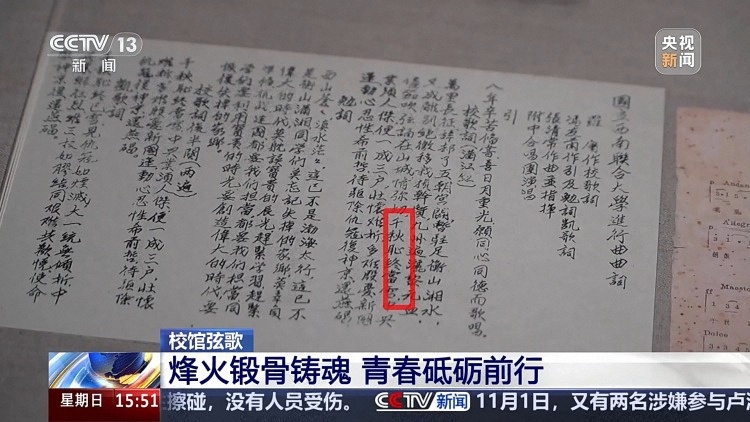
校馆弦歌丨件件展品皆见证 回溯高校学子坚韧报国之路
Yang Shi Xin Wen Ke Hu Duan· 2025-11-02 12:33
Core Viewpoint - The article commemorates the 80th anniversary of the victory in the Chinese People's Anti-Japanese War and the World Anti-Fascist War, highlighting the enduring spirit and historical significance of various educational institutions in China during wartime [1]. Group 1: Southwest Associated University - The Southwest Associated University, which existed for only eight years, produced eight "Two Bombs, One Satellite" contributors and two Nobel Prize winners, marking its legendary status in Chinese education history [3]. - The university's spirit is encapsulated in its motto "Resilience and Excellence," and its legacy is preserved through various cultural initiatives, including the establishment of a museum and themed performances [9][11]. - Students are inspired by the perseverance of their predecessors, who maintained optimism and a commitment to serving the country despite challenging circumstances [7]. Group 2: Nanjing University and the John Rabe Memorial - The John Rabe Memorial in Nanjing serves as a testament to the humanitarian efforts during the Nanjing Massacre, housing a list of 602 refugees saved by Rabe and his colleagues [12]. - The memorial has welcomed approximately 300,000 visitors and has utilized modern technology to share Rabe's story internationally, emphasizing the importance of peace [16]. Group 3: Chongqing University - Chongqing University features significant historical buildings, such as the "Stone House" which survived multiple bombings during the war, symbolizing resilience in the pursuit of knowledge [17]. - The university's cultural heritage is preserved through the renovated "Seven-Seven Anti-Japanese War Auditorium," which continues to serve as a cultural hub [24]. - The university's commitment to education during wartime is reflected in its ongoing initiatives to honor the sacrifices of past generations and inspire current students [22].