
信托

Search documents
【锋行链盟】科创板IPO信托计划设立流程及核心要点
Sou Hu Cai Jing· 2025-10-15 16:42
Group 1 - The establishment of trust plans for Sci-Tech Innovation Board IPOs is crucial for employee stock ownership, equity incentives, or introducing strategic investors, requiring strict adherence to regulatory rules to avoid IPO review issues [2][5] - The process of establishing a trust plan involves several steps, including preliminary preparation, structure design, document drafting, trust establishment, and IPO application [2][6] - Key considerations include ensuring clarity and stability of equity, compliance and penetration checks, trustee responsibilities, and the impact on the issuer's control [6] Group 2 - Trust plans must confirm the issuer's compliance with the Sci-Tech Innovation Board's positioning, ensuring that the trust does not violate laws regarding shareholder qualifications and related party transactions [5][6] - The trustee must be a licensed trust company with a good regulatory rating, fulfilling the duty of diligence to ensure the trust's assets are independent from its own [5][6] - The trust contract must clearly define the purpose, duration, beneficiary rights, trustee authority, and risk disclosures, ensuring compliance with tax obligations and regulatory requirements [5][6]

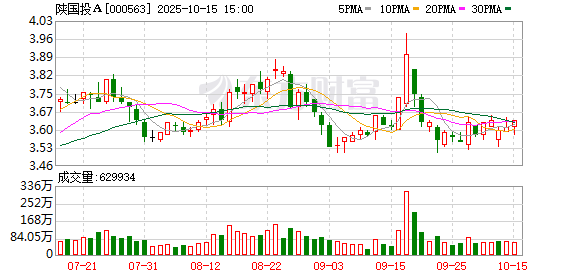
陕国投A:2025年半年度分红派息实施公告
Zheng Quan Ri Bao· 2025-10-15 14:10
(文章来源:证券日报) 证券日报网讯 10月15日晚间,陕国投A发布公告称,2025年半年度利润分配方案为向全体股东每10股派 0.1元人民币现金(含税)。股权登记日为2025年10月21日,除权除息日为2025年10月22日。 ...

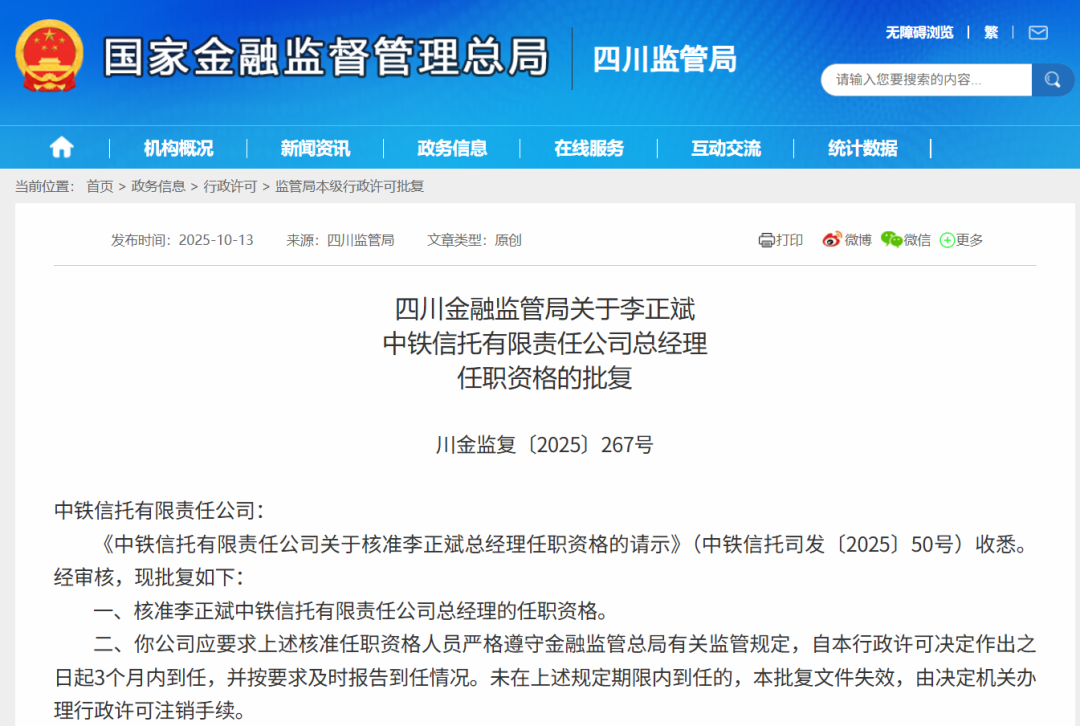
中铁信托新帅落定,副总经理李正斌“转正”
Guo Ji Jin Rong Bao· 2025-10-15 13:42
记者了解到,李正斌此前任中铁信托副总经理。2024年9月,经国家金融监督管理总局四川监管局核准,李正斌正式履新中铁信托副总经理职责。依 据中铁信托2024年年报,李正斌51岁,历任中铁二局机筑处会计员、助理会计师、会计师、财务部副部长,重庆垫忠高速公路有限公司财务总监,中铁信 托财务中心副总经理、总经理,中铁信托总会计师。 事实上,中铁信托此前已经官宣李正斌拟任公司总经理。9月底,中铁信托官微发布消息称,"中铁信托党委书记、董事长余赞,党委副书记、总经理 (拟任)李正斌,与中铁九局党委书记、董事长张连生,党委副书记、总经理岳志军一行在公司本部开展业务交流"。 中铁信托有限责任公司(下称"中铁信托")总经理落定。国家金融金融监管总局四川监管局近日公布相关批复,核准李正斌中铁信托总经理的任职资 格。 ...
浦发银行副行长崔炳文获批出任上海信托董事长
Guo Ji Jin Rong Bao· 2025-10-15 10:57
Core Points - Shanghai International Trust Co., Ltd. has appointed a new chairman, Cui Bingwen, whose qualifications have been approved by the Shanghai Regulatory Bureau of the National Financial Supervision Administration [1] - Cui Bingwen, born in 1969, holds a doctoral degree and has extensive experience in the financial industry, previously serving in various leadership roles at Shanghai Pudong Development Bank and Industrial and Commercial Bank of China [1] - Shanghai Trust, established in 1981, is one of the earliest trust companies in China, with a registered capital of 5 billion yuan [1] - The company is primarily engaged in asset management and wealth management services, catering to high-net-worth clients with a comprehensive range of financial solutions [1] - Shanghai Trust's business scope includes equity and debt financing, securities investment, alternative investments, entrusted industrial services, public welfare trusts, investment banking services, and family inheritance [1] - The company is recognized as one of the professional investment institutions in China with a complete product service system in the trust industry [1]

陕国投A:利润分配股权登记日为2025年10月21日
Mei Ri Jing Ji Xin Wen· 2025-10-15 10:03
Group 1 - The company, Shaanxi Guotou A, announced a profit distribution plan based on a total share capital of approximately 5.114 billion shares as of June 30, 2025, proposing a cash dividend of 0.1 yuan per 10 shares (tax included) [1] - The record date for the dividend is set for October 21, 2025, while the ex-dividend date is October 22, 2025 [1] Group 2 - The silver rental market is experiencing a significant opportunity, with annualized interest rates soaring to 35%, indicating a strong demand for silver globally [1] - There is a notable trend of silver being airlifted to the UK for profit, suggesting a strategic move in the market driven by a major short squeeze [1]
陕国投A:2025年半年度分红派息实施
Xin Lang Cai Jing· 2025-10-15 09:44
Core Points - The company announced a cash dividend distribution plan for the first half of 2025, proposing a payout of 0.10 yuan (after tax) for every 10 shares held [1] - The record date for shareholders to be eligible for the dividend is set for October 21, 2025, with the ex-dividend date on October 22, 2025 [1] - The total share capital of the company before the dividend distribution is 5.114 billion shares, and the total share capital will remain unchanged after the distribution [1]
北方信托成功落地“盘活·津辰1号”不动产服务信托
Zhong Zheng Wang· 2025-10-15 08:56
Core Viewpoint - Northern Trust has successfully implemented the "Revitalization. Tianchen No. 1" real estate service trust, addressing the challenges of integrating scattered real estate resources held by state-owned enterprises, thereby enhancing the overall operational efficiency of state assets [1][2]. Group 1: Project Overview - The project is commissioned by Tianjin Chenkai New Energy Property Management Co., Ltd., a wholly-owned subsidiary of the North Bin Development Zone Management Committee, which holds multiple commercial real estate properties across different administrative districts in Tianjin [1]. - The trust structure allows for the phased delivery of trust assets, focusing on the dual advantages of the trust system, including risk isolation and professional management [2]. Group 2: Benefits and Innovations - The trust structure creates a robust risk firewall by legally isolating the trust assets from the client's other assets, mitigating potential asset risks due to operational or external changes [2]. - Northern Trust has established a unified asset management platform, enhancing the overall revenue capability of the asset portfolio through professional management and lifecycle management [2]. Group 3: Future Implications - The successful implementation of this model serves as a replicable and scalable framework for managing similar scattered assets, enhancing the company's capabilities in asset service trusts [3]. - This model exemplifies the practical path for trust services to contribute to the "Three Quantities" work, transforming static, scattered assets into efficient, liquid development increments, thus injecting new financial vitality into the construction of a modern socialist metropolis in Tianjin [3].

鑫闻界丨信托业“换帅”潮,10月继续新更
Qi Lu Wan Bao· 2025-10-15 03:09
齐鲁晚报·齐鲁壹点 王赟 卸任董事长职务后,潘卫东仍担任上海信托法定代表人。去年5月初业内有消息称"上海信托董事长或将 变动,浦发银行总行风险业务总监兼风险管理部总经理张宝全将接任这一职位"。不过,浦发银行2025 年半年报显示,张宝全的任职已调整为上海信托副董事长,任职资格待监管核准。 此次崔炳文担任上海信托董事、董事长的任职资格获批,意味着上海信托新董事长正式落定。 其实,自新修订《信托公司管理办法》(2025年9月11日由国家金融监督管理总局公布,这是自2007年 发布以来的首次重大修订,2026年1月1日起施行)发布以来,信托行业人事"洗牌"不断,9月下旬起多 家信托公司高管密集变动。 其中最引人关注的是9月16日至19日单周内,金融监管总局地方局相继批复了四家头部或特色信托公司 的董事长、总经理任职资格,包括中信信托、平安信托、国投泰康信托及陆家嘴信托,这一周也被不少 信托从业者称为"最密集人事变动周"。 而且,就在同一天,中信信托与平安信托董事长任职资格公告发布。 10月13日,国家金融监督管理总局上海监管局官网公布相关批复,核准崔炳文上海国际信托有限公司董 事、董事长的任职资格。据了解,上海信托 ...
上海国际信托董事长落定系控股股东浦发银行副行长
Xin Lang Cai Jing· 2025-10-14 21:02
Core Viewpoint - The appointment of Cui Bingwen as the chairman of Shanghai International Trust has been approved, marking a significant leadership change in the company, which is one of the earliest established trust companies in China [1][2]. Company Overview - Shanghai International Trust was founded in 1981 and has a registered capital of RMB 5 billion. The company is primarily owned by Shanghai Pudong Development Bank, which holds a 97.3333% stake [2]. - The company focuses on asset management and wealth management services for high-net-worth clients, covering areas such as equity and debt financing, securities investment, alternative investments, and family trusts [3]. Leadership Background - Cui Bingwen, the newly appointed chairman, is currently a member of the Party Committee and vice president of Shanghai Pudong Development Bank. He has held various leadership roles in the banking sector, including positions at the Industrial and Commercial Bank of China [3]. Financial Performance - According to the financial report released in April, Shanghai International Trust reported a revenue of RMB 1.852 billion for the previous year, a decrease of 77.25% year-on-year, with a net profit of RMB 669 million, down 82.56% [3]. Strategic Transformation - The company is accelerating its transformation in response to a complex economic environment, focusing on enhancing policy research and risk assessment capabilities while prudently controlling the scale of financing-related businesses and reducing exposure to real estate and government financing platforms [3]. Industry Context - The trust industry is undergoing significant personnel changes and restructuring, with multiple high-level appointments across various trust companies since the introduction of the new "Trust Company Management Measures" [4]. - The new regulations aim to refocus the industry on its core mission of fiduciary responsibility, emphasizing risk management and operational compliance [4].
方大特钢科技股份有限公司关于交易性金融资产2025年第三季度公允价值变动的提示性公告
Shang Hai Zheng Quan Bao· 2025-10-14 19:40
Core Viewpoint - The announcement highlights the fair value changes of trading financial assets for Fangda Special Steel Technology Co., Ltd. in the third quarter of 2025, primarily driven by the performance of Sunshine Insurance's H-shares, which significantly impacted the company's net profit [4][5]. Group 1: Overview of Trading Financial Assets - Fangda Special Steel decided to use up to 430 million RMB of idle funds for entrusted wealth management with CITIC Trust, focusing on investing in Sunshine Insurance's H-shares [2][3]. - The trust project, established under the contract signed with CITIC Trust, allocated 4.3 billion RMB, with 1% reserved for trust operation funds, while the remaining funds were used to purchase 78.72 million shares of Sunshine Insurance at a price of 5.83 HKD per share [3]. Group 2: Fair Value Changes in Q3 2025 - In Q3 2025, the price of Sunshine Insurance's H-shares increased from 3.25 HKD per share on June 30, 2025, to 3.84 HKD per share on September 30, 2025, leading to a net value change of the trust product [4]. - The estimated fair value change loss for trading financial assets in Q3 2025 was approximately 64.19 million RMB, accounting for 25.90% of the net profit attributable to shareholders for 2024, indicating a significant impact on the company's financial performance [4]. Group 3: Additional Notes - The company acknowledges the uncertainty of future returns from securities investments and entrusted wealth management products due to market volatility, and will reassess the fair value periodically [5]. - The fair value changes will be recorded as non-recurring gains and losses, not affecting the net profit attributable to shareholders after excluding non-recurring items [5].
