
Semiconductor

Search documents
'Very constructive' on Asia in 2026, with Chinese stocks tipped for 20% gains: Goldman Sachs
Youtube· 2026-01-28 03:39
Geoeconomic Trends - Geoeconomics are increasingly influencing business leaders and investors, leading to a reality check on managing uncertainty while focusing on long-term trends [1] - Despite geopolitical noise, markets and businesses are progressing, with the global economy expected to grow at around 2.9% entering 2026 [2][3] Capital Flows and Regional Focus - There is a noticeable shift in capital flows towards Asia, particularly China, India, Japan, and Korea, driven by technological advancements and resilient economies [5][6] - The incremental investment decisions are increasingly favoring Asia without a significant rotation out of the United States [7] Market Performance in North Asia - Korea's market has reached historic highs, with the Kospi index surpassing 5,000, benefiting from geopolitical tailwinds and advancements in technology, especially in the semiconductor sector [8][9] - Taiwan is experiencing renewed confidence in its technology sector, while Japan is focusing on corporate governance reforms to enhance market activity [10][11] Economic Growth Projections - China’s GDP growth is projected at 4.8%, supported by a strong export model and record trade surplus of $1.2 trillion [16][18] - The sluggishness in the property sector remains a drag on growth but is diminishing over time, with expectations of reduced impact in the coming years [19][20] Hong Kong Market Activity - Hong Kong has seen a significant increase in IPO activity, raising $37 billion last year, with over 300 companies in the pipeline for this year [23][24] - The market is currently able to digest new capital, supported by strong aftermarket performance of IPOs and substantial liquidity from the South Connect [25][26] M&A Outlook - The M&A landscape is expected to be constructive in 2026, driven by financing for mega deals, interest in AI, and favorable credit conditions [27][28] - Corporate activity is a key driver of M&A, with expectations of increased participation from sponsors in the near future [30][31]



半导体行业深度报告:AgenticAI时代的算力重构:CPU,从“旁观者”到“总指挥”的价值回归
Soochow Securities· 2026-01-28 03:29
证券研究报告·行业深度报告·半导体 2026 年 01 月 28 日 证券分析师 陈海进 执业证书:S0600525020001 chenhj@dwzq.com.cn 证券分析师 李雅文 执业证书:S0600526010002 liyw@dwzq.com.cn 半导体行业深度报告 Agentic AI 时代的算力重构:CPU,从"旁观 者"到"总指挥"的价值回归 增持(维持) [Table_Tag] [Table_Summary] 投资要点 产业端推进方面,AWS 和 Google Cloud 等头部 CSP 正在加速建设面向 Agent的沙盒环境软硬件基础设施,率先在软件层面强化 Agent Sandbox 的隔离与编排能力,通过运行时与调度体系的完善,为后续 CPU 侧基 础设施规模化部署奠定基础。与此同时,CPU 龙头也在 Agent 驱动下向 超多核架构演进:AMD 推出的 Turin 最高可达 192 核;Intel 的 Sierra Forest 采用纯能效核设计,核心数可达 144 甚至 288 核。我们认为, 随着 Agent 商业化推进,厂商必须持续压低每次任务执行成本。在这一 目标下,超多 ...
Clawdbot用AI开发;国产大模型集体上新丨新鲜早科技
2 1 Shi Ji Jing Ji Bao Dao· 2026-01-28 03:25
Group 1: Technology Developments - Clawdbot, an AI assistant, has gained popularity with over 30,000 GitHub stars, showcasing its capabilities in managing tasks and conversations [2] - Apple continues to support the iPhone 5S, which is 13 years old, by releasing iOS 12.5.8, ensuring functionality until January 2027 [3] - DeepSeek has released a new model, DeepSeek-OCR 2, which enhances AI's ability to understand and rearrange images based on their meaning [4] - The Chinese AI startup, Moonlight Dark Side, launched the Kimi K2.5 model, achieving top scores in various assessments and integrating multiple capabilities into one model [5] Group 2: Market Trends and Pricing - Two chip manufacturers, Zhongwei Semiconductor and Guokewai, announced price increases for their products, with increases ranging from 15% to 80% [6] - OpenAI's advertising costs for ChatGPT are reported to be three times higher than Meta's, at approximately $60 per 1,000 views, but with limited data provided to advertisers [8] Group 3: Corporate News - NVIDIA's CEO, Jensen Huang, attended a New Year event in Beijing, indicating the company's ongoing engagement with its Chinese team [9] - Elon Musk announced that SpaceX's upgraded Starship V3 is set for its first test flight in mid-March, aimed at launching next-generation Starlink satellites [10] - OpenAI's Chief Information Security Officer, Matt Knight, announced his departure from the company after joining in 2020 [11] Group 4: Investment and Financing - Anthropic has completed a funding round, achieving a valuation of $350 billion, with total financing between $10 billion and $15 billion [14][15] - Turing Quantum has secured hundreds of millions in Series B funding, continuing its trend of significant financing within a short period [16] Group 5: Product Launches - Samsung's Galaxy Z TriFold, the first three-fold smartphone, will be launched in the U.S. on January 30, priced at $2,899, significantly higher than other smartphones [17]
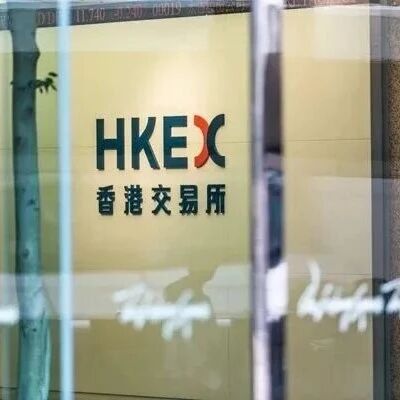
门庭若市港交所
创业邦· 2026-01-28 03:21
Core Viewpoint - The article discusses the resurgence of the Hong Kong Stock Exchange (HKEX) as a leading platform for AI companies, highlighting a significant shift from traditional sectors to technology-driven firms, particularly in AI and semiconductor industries [6][9][12]. Group 1: IPO Trends and Market Dynamics - Wall Street's IPO market has seen a drastic decline from approximately 310 billion HKD in 2021 to just over 100 billion HKD in 2022, a drop of about 65% [6]. - In 2023, the HKEX recorded only 68 IPOs, raising around 46 billion HKD, marking the lowest level since 2013 [6]. - The first two weeks of 2026 witnessed an unprecedented AI IPO wave, with companies like Wallran Technology experiencing a 2348 times oversubscription and raising 130 billion HKD [9]. Group 2: Financial Performance of HKEX - The HKEX reported a 41% increase in major business revenue from 14,542 million HKD in 2024 to 20,438 million HKD in 2025 [10]. - The net profit attributable to shareholders rose by 45%, from 9,270 million HKD in 2024 to 13,419 million HKD in 2025 [10]. - The EBITDA for the first three quarters of 2025 reached 17,164 million HKD, a 48% increase compared to the previous year [10]. Group 3: AI Companies and Their Financial Needs - AI companies often have R&D expenditures that are several times their revenue, with companies like Zhipu spending over eight times their revenue on R&D in the first half of 2025 [11]. - Wallran Technology's revenue surged from less than 500,000 HKD in 2022 to over 300 million HKD in 2024, but its R&D expenses reached 830 million HKD, indicating a cash burn situation [11]. - The need for continuous funding is critical for AI companies, as they require a sustainable capital pool to support ongoing operations and development [12]. Group 4: Advantages of HKEX for AI Companies - The HKEX has adapted its listing rules to accommodate frontier technology companies, allowing unprofitable firms to list if they have technological barriers and top-tier capital backing [13][14]. - The minimum market capitalization requirements for companies have been lowered, benefiting many AI firms [13]. - The HKEX's approval process has been streamlined, reducing the time from 8-12 months to 4-6 months, enhancing its attractiveness for tech firms [14]. Group 5: Future Outlook and Market Sentiment - The article suggests that the HKEX will continue to attract more technology-focused companies, with several AI and semiconductor firms already in the pipeline for IPOs [16]. - The success of AI companies is paradoxical; as they succeed, they require more capital, which may lead to prolonged periods of unprofitability [17]. - Investors are betting on the potential of AI companies, despite uncertainties regarding their profitability and market sustainability [18].


Kioxia Introduces QLC UFS 4.1 Embedded Flash Memory Devices for High-Capacity Mobile Storage
Businesswire· 2026-01-28 02:36
Core Insights - Kioxia has introduced new Universal Flash Storage (UFS) Ver. 4.1 embedded memory devices utilizing 4-bit-per-cell QLC technology, aimed at high-capacity mobile storage needs [1] - The new devices leverage Kioxia's 8th generation BiCS FLASH™ 3D flash memory technology, offering significant performance improvements over previous generations [1] Performance Enhancements - Kioxia's QLC UFS devices achieve a 25% increase in sequential write speeds, a 90% increase in random read speeds, and a 95% increase in random write speeds compared to the previous UFS 4.0 generation [1] - The Write Amplification Factor (WAF) is improved by a maximum of 3.5 times when WriteBooster is disabled [1] Product Specifications - The new UFS 4.1 devices are available in 512-gigabyte (GB) and 1-terabyte (TB) capacities, featuring a reduced package size from 11×13 mm to 9×13 mm [1] - The devices are compliant with the UFS 4.1 specification and are backward-compatible with UFS 4.0 and UFS 3.1 [1] Technological Innovations - Kioxia's 8th generation BiCS FLASH™ introduces CMOS directly Bonded to Array (CBA) technology, marking a significant advancement in flash memory design [1] - The new devices are well-suited for a variety of applications, including smartphones, tablets, PCs, networking, AR/VR, IoT, and AI-enabled devices [1]

未知机构:浙商大制造邱世梁开普云短期调整无虞收购金泰克事项有序推进持续推荐-20260128
未知机构· 2026-01-28 02:05
Company and Industry Summary Company: 开普云 (Kaipu Cloud) Key Points - **Acquisition Progress**: The acquisition of 金泰克 (Jintai Technology) is progressing smoothly with due diligence, auditing, and evaluation activities ongoing as of January 20. This indicates that the company is on track with its strategic initiatives [1] - **Establishment of Subsidiary**: On December 31, the company established a wholly-owned subsidiary in Shenzhen focused on intelligent storage, which aligns with its storage strategy [1] - **Independent Directors**: Two independent directors with expertise in the semiconductor storage field were introduced on December 11, reinforcing the company's commitment to advancing its storage strategy [1] - **Market Position**: 金泰克 is identified as a rare domestic enterprise-level storage module target, strategically positioned within the domestic computing power industry chain. The company is expected to benefit from increasing AI demand, rising storage prices, and domestic production initiatives [1] - **Product Leadership**: 金泰克 focuses on the most challenging and urgent areas of domestic substitution for enterprise-level memory modules. It leads in the domestic shipment of enterprise-level DDR4 modules and is among the first to achieve domestic substitution for enterprise-level DDR5 modules, maintaining a stable lead in cutting-edge technology [1] Supply Chain and Customer Relationships - **Supply Chain Stability**: 金泰克 has established solid relationships with leading international manufacturers such as 海力士 (SK Hynix), combined with advanced storage particle screening and repair technology, ensuring a stable supply of high-consistency products [2] - **Customer Base**: The company serves leading domestic clients, including 浪潮 (Inspur), 清华同方 (Tsinghua Tongfang), and 中科曙光 (Zhongke Shuguang), indicating a strong market presence [2] Risk Factors - **Industry Volatility**: There are risks associated with cyclical fluctuations in the storage industry and potential delays in the acquisition process, which could impact the company's performance [3]

港股异动 | 纳芯微(02676)涨超13% 半导体涨价潮蔓延 国内模拟需求及价格存在上行机会
Zhi Tong Cai Jing· 2026-01-28 01:59
Core Viewpoint - Naxin Micro (02676) has seen a significant increase in stock price, rising over 133% and currently trading at 160 HKD, with a transaction volume of 36.08 million HKD, indicating strong market interest and potential growth in the semiconductor sector [1] Group 1: Price Trends and Market Dynamics - Following substantial price increases in memory chips, the trend of rising prices is expanding to other chip categories, including analog chips [1] - Starting from the end of 2025, major international analog companies like Texas Instruments and ADI are set to increase prices for certain products, particularly in applications related to AI servers and automotive electronics [1] - Texas Instruments has provided a strong outlook, highlighting a rebound in orders for analog chips [1] Group 2: Company Positioning and Market Share - According to Frost & Sullivan, Naxin Micro ranks fifth among Chinese analog chip manufacturers in terms of revenue for 2024, and is the only company in the top ten that focuses on sensor, signal chain, and power management chip product lines [1] - A report from Open Source Securities indicates that as downstream demand continues to recover and AI capital expenditures remain high, there are upward opportunities for domestic analog demand and pricing by 2026 [1]

Texas Instruments Sales Rise, But Profit Slips
WSJ· 2026-01-27 21:23
The semiconductor company posted a profit of $1.16 billion, or $1.27 a share, compared with $1.21 billion, or $1.30 a share, a year earlier. ...


Qorvo® Announces Fiscal 2026 Third Quarter Financial Results
Globenewswire· 2026-01-27 21:00
Core Insights - Qorvo reported fiscal 2026 third quarter revenue of $993.0 million, with a gross margin of 46.7% and diluted earnings per share of $1.75 on a GAAP basis [2][4] - The company experienced year-over-year revenue growth across all operating segments, particularly in automotive components and consumer Wi-Fi [3][4] - Qorvo's non-GAAP gross margin improved to 49.1%, with non-GAAP diluted earnings per share at $2.17, reflecting strong operational performance [2][8] Financial Performance - Qorvo's GAAP revenue decreased by $65.5 million sequentially from the previous quarter but increased by $76.7 million year-over-year [6] - The GAAP operating income rose to $192.1 million, a 34.4% increase from the previous quarter and a 139.1% increase year-over-year [6] - Non-GAAP operating income was reported at $247.6 million, slightly down from the previous quarter but up 69.7% year-over-year [8] Segment Performance - Revenue from the High Power Amplifiers (HPA) segment was $190.9 million, up 9.3% sequentially and 11.2% year-over-year [9] - The Connectivity and Services Group (CSG) generated $111.3 million, a 4.1% increase sequentially and 1.6% year-over-year [9] - The Advanced Connectivity Group (ACG) reported $690.8 million, down 11.1% sequentially but up 8.8% year-over-year [9] Outlook - Qorvo anticipates a revenue outlook of approximately $800 million for the March 2026 quarter, with a non-GAAP gross margin expected between 48% and 49% [7] - The company expects continued improvements in gross and operating margins, driven by ongoing cost and productivity initiatives [4][3]


Microsoft Releases Powerful New AI Chip to Take on Nvidia
Yahoo Finance· 2026-01-27 20:17
Core Viewpoint - Microsoft has introduced the Maia 200, a new AI chip aimed at enhancing its position in the AI market, challenging Nvidia's dominance in the GPU sector [1][3]. Group 1: Product Introduction - The Maia 200 is described as a breakthrough inference accelerator that significantly improves the economics of AI token generation [3]. - It features high-bandwidth memory, delivering three times the performance of Amazon's third-generation Trainium chip and surpassing Alphabet's seventh-generation Ironwood TPU [3]. - The chip is tailored for large-scale AI workloads, providing efficient performance per dollar, with 30% better performance per dollar compared to similarly priced alternatives [3][4]. Group 2: Strategic Benefits - The Maia 200 is designed for peak efficiency in powering Microsoft's AI offerings, including Copilot and Azure OpenAI, and is being deployed in data centers for Microsoft 365 Copilot and Foundry [4]. - By utilizing its own AI chips, Microsoft aims to reduce the costs associated with running AI workloads amid rising energy expenses [4]. Group 3: Market Position and Competition - Microsoft plans to make the Maia 200 more widely available than its previous chip version, providing a Software Development Kit (SDK) to developers, AI start-ups, and academics [5]. - Despite the introduction of Maia, Nvidia retains a dominant 92% share of the data center GPU market, indicating that while Maia may benefit Microsoft's inference workloads, Nvidia's GPUs still offer superior computational power and flexibility for both inference and AI training [6].

