
玻璃纤维及制品制造

Search documents
宏和电子材料科技股份有限公司关于以债转股方式向全资子公司增资的公告
Shang Hai Zheng Quan Bao· 2025-09-19 19:25
Core Viewpoint - The company plans to increase capital for its wholly-owned subsidiary, Huangshi Honghe Electronic Materials Technology Co., Ltd., through a debt-to-equity swap amounting to 300 million RMB, raising the subsidiary's registered capital from 700 million RMB to 1 billion RMB [2][3][6]. Group 1: Capital Increase Overview - The capital increase will be executed via a debt-to-equity swap, where the company will convert its 300 million RMB debt owed by Huangshi Honghe into equity [6]. - The registered capital of Huangshi Honghe will increase from 700 million RMB to 1 billion RMB following the capital increase [3][6]. - The board of directors approved the capital increase on September 19, 2025, and it does not require shareholder approval as it does not constitute a related party transaction or a major asset restructuring [4][11]. Group 2: Subsidiary Information - Huangshi Honghe is a wholly-owned subsidiary of the company, with a registered capital of 700 million RMB and located in Hubei Province [5]. - The subsidiary's business scope includes manufacturing and sales of fiberglass and synthetic materials, as well as import and export activities [5]. Group 3: Impact of Capital Increase - The capital increase is expected to enhance the business development of Huangshi Honghe and strengthen the overall capabilities of the company [7]. - The capital increase will not adversely affect the company's normal operations or its consolidated financial statements, as it does not constitute a major asset restructuring [7].

宏和科技:拟以债转股的方式对全资子公司黄石宏和增资3亿元
Sou Hu Cai Jing· 2025-09-19 09:37
Group 1 - The core point of the article is that Honghe Technology plans to increase its wholly-owned subsidiary, Huangshi Honghe's registered capital from 700 million RMB to 1 billion RMB through a debt-to-equity swap, amounting to an investment of 300 million RMB [1] - As of the report, Honghe Technology's market capitalization stands at 34.2 billion RMB [1] - For the fiscal year 2024, the revenue composition of Honghe Technology is as follows: electronic-grade glass fiber cloth accounts for 93.47%, electronic-grade glass fiber yarn accounts for 6.44%, and other businesses account for 0.1% [1]
河北雄安霖丰玻纤制品有限公司成立 注册资本100万人民币
Sou Hu Cai Jing· 2025-09-17 22:50
天眼查App显示,近日,河北雄安霖丰玻纤制品有限公司成立,法定代表人为陈利平,注册资本100万 人民币,经营范围为一般项目:玻璃纤维及制品制造;玻璃纤维及制品销售;非金属矿物制品制造;非金属 矿及制品销售;建筑防水卷材产品销售;涂料销售(不含危险化学品);保温材料销售(除依法须经批准的 项目外,凭营业执照依法自主开展经营活动)。 ...
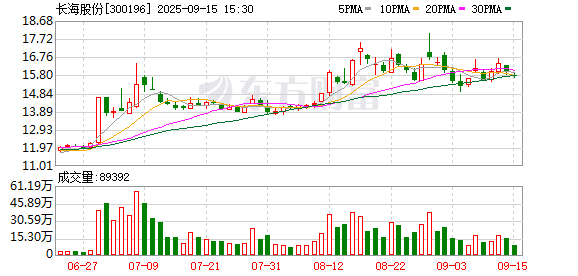
长海股份:公司生产的玻璃纤维及制品与环氧树脂等复合,可用于电池包壳体或上盖板
Mei Ri Jing Ji Xin Wen· 2025-09-15 11:42
Group 1 - The company, Changhai Co., Ltd. (300196.SZ), has indicated its involvement in the solid-state battery sector through its production of fiberglass and epoxy resin composites, which can be utilized for battery pack housings or covers, achieving lightweight and high-strength insulation protection [2]


财通证券:AI服务器渗透加速 特种电子布需求放量
智通财经网· 2025-09-01 08:18
Group 1: AI Server Demand and PCB Market Growth - The rapid development of artificial intelligence technology is driving strong demand for AI servers, with global shipments expected to reach 1.98 million units in 2024, accounting for 12.1% of the overall server market [1] - PCB market value is projected to be $73.565 billion in 2024, with a year-on-year growth of 5.8%, and is expected to reach $94.661 billion by 2029, reflecting a compound annual growth rate (CAGR) of 5.2% from 2024 to 2029 [1] Group 2: Technological Advancements in Electronic Fabrics - The ongoing iteration of technology in the downstream sector is driving upgrades in electronic fabric products, with the third generation of electronic fabrics expected to see accelerated demand as chip manufacturers research 224G high-speed interconnect technology [2] - The global market for third-generation electronic fabrics is anticipated to reach $720 million in 2024, with sales projected to grow to $3.127 billion by 2031, representing a CAGR of 23.3% from 2025 to 2031 [2] Group 3: Domestic Replacement Progress and Key Companies - China Jushi is actively advancing the development of specialty electronic fabric products and is expected to continue its momentum due to its advantages in R&D and cost control [3] - China National Materials Technology has established itself as a domestic leader in Low-DK fabric, with plans to increase production capacity from 26 million meters to 35 million meters by 2025 [3] - Honghe Technology has successfully validated its first and second generation low dielectric electronic fabrics and plans to invest 720 million yuan in high-performance glass fiber production lines [3] - International Composites is a pioneer in the development of low dielectric glass fiber products, with its second-generation LDK products showing a 20% reduction in dielectric loss compared to the first generation [3]

AI服务器渗透加速,特种电子布需求放量
CAITONG SECURITIES· 2025-09-01 07:03
Investment Rating - The industry investment rating is optimistic (first-time rating) [2] Core Insights - The rapid development of artificial intelligence (AI) technology is driving strong demand for AI servers, which is expected to reach 1.981 million units globally in 2024, accounting for 12.1% of the overall server market. This demand is projected to grow by 24.3% to 2.4611 million units in 2025 [2][14] - The demand for printed circuit boards (PCBs) is expected to increase significantly due to the rising AI server penetration, with global PCB output valued at $73.565 billion in 2024, representing a year-on-year growth of 5.8% [2][14] - The market for third-generation electronic fabrics (Q fabric) is anticipated to grow from $720 million in 2024 to $3.127 billion by 2031, with a compound annual growth rate (CAGR) of 23.3% from 2025 to 2031 [4][19] Summary by Sections 1. Electronic Fabric Product Upgrades - Electronic fabrics are critical materials in the electronic information industry, with continuous technological upgrades driven by the demand for high-frequency and high-speed signal transmission in advanced applications such as 5G and AI [7][9] - The evolution of electronic fabrics is categorized into three generations: first-generation (alkali-free glass fiber), second-generation (modified glass fiber), and third-generation (Q fabric/quartz fiber), each targeting different market needs [9][12] 2. Steady Progress in Domestic Substitution - The domestic substitution process is advancing steadily, with key companies like China Jushi, Zhongcai Technology, Honghe Technology, and International Composite Materials making significant strides in product development and capacity expansion [19][20] - China Jushi holds a 23% global market share in electronic fabrics, while Zhongcai Technology has established itself as a leader in low-DK fabric production, with plans to increase capacity significantly [19][20] - Honghe Technology and International Composite Materials are also expanding their production capabilities to meet the growing demand for high-performance electronic fabrics [20] 3. Market Dynamics and Future Outlook - The capital expenditure of major cloud service providers (CSPs) is on the rise, indicating a sustained demand for AI infrastructure, which is expected to further drive the need for high-end electronic fabrics [17][18] - The report highlights the importance of technological advancements in the electronic fabric sector, particularly in meeting the stringent requirements of high-frequency applications [4][19]


九鼎新材上半年净利同比大增145.18% 技术创新与新能源业务成亮点
Zheng Quan Shi Bao Wang· 2025-08-29 10:34
Core Insights - The company reported a significant increase in revenue and net profit for the first half of 2025, with operating income reaching 718 million yuan, a year-on-year growth of 26.09%, and net profit attributable to shareholders amounting to 44.29 million yuan, a substantial increase of 145.18% [1][2] Financial Performance - The company's net profit after deducting non-recurring gains and losses was 38.24 million yuan, reflecting a year-on-year growth of 152.23%, indicating an improvement in profit quality [1] - The net cash flow from operating activities was 83.86 million yuan, and financial expenses decreased by 29.01% [2] - Total assets reached 2.83 billion yuan, a growth of 5.16% compared to the beginning of the year, while net assets attributable to shareholders increased by 6.41% to 1.25 billion yuan [2] Product Performance - Revenue from fiberglass and related products was 367 million yuan, a year-on-year increase of 16.60%, while revenue from fiberglass reinforced plastic products surged by 37.78% to 326 million yuan, becoming a key driver of performance growth [1] - The mainland market contributed 533 million yuan in revenue, marking a 44.27% increase and accounting for 74.24% of total revenue [1] Industry Trends - The company's fiberglass reinforced plastic products are widely used in key components such as wind turbine blades, benefiting from the expansion of domestic wind power installations, which has driven rapid growth in related business [1] - The company plans to continue focusing on "new energy, new materials, and energy conservation and emission reduction," aiming to optimize product structure and extend the industrial chain to consolidate its competitive advantage amid industry recovery [2] Research and Development - Research and development investment amounted to 30.83 million yuan, representing 4.29% of operating income, with five new patents added, bringing the total to 123 effective patents, including 41 invention patents [1]

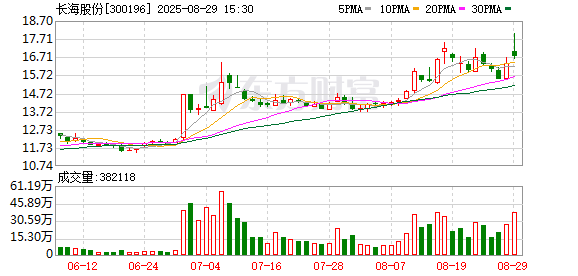
长海股份:公司玻纤产品可应用于光纤缆线的绝缘保护,光纤缆线的套管会使用玻纤产品
Mei Ri Jing Ji Xin Wen· 2025-08-29 10:30
Group 1 - The company responded to an investor inquiry regarding the application of its products in fiber optics, confirming that its fiberglass products can be used for insulation protection in fiber optic cables [2] - The company stated that the casing of fiber optic cables will utilize its fiberglass products [2]
中材科技20250827
2025-08-27 15:19
Summary of Zhongcai Technology Conference Call Company Overview - **Company**: Zhongcai Technology - **Industry**: Specialty Electronic Fabrics Key Points Industry and Market Dynamics - The demand for first-generation DJD electronic fabric is expected to reach 150 million meters by 2026, with second-generation demand at 26 million meters, and third-generation demand also showing growth despite higher costs, indicating a clear cost-performance advantage [2][3][4] - The first-generation electronic fabric market is highly competitive, with Zhongcai Technology and Linzhou Guangyuan rapidly expanding production. Supply-demand tightness is anticipated in 2025, with potential easing in 2026 [2][4] - The second-generation fabric faces production difficulties and low yield rates (approximately 80%), leading to tight supply and potential price increases [5][4] - The third-generation fabric market has a favorable competitive landscape with high barriers to entry due to strict requirements for quartz fiber uniformity and fuzz control [5][6] Company Performance and Projections - Zhongcai Technology's first-generation electronic fabric sales are projected to reach 36 million meters in 2026, with second-generation sales at 7 million meters and third-generation sales at 10 million meters. Total profit from specialty electronic fabrics could reach 1.8 billion yuan if production and sales are maximized and prices remain stable [2][9] - The company’s traditional fiberglass business reported revenue of 4.35 billion yuan in the first half of the year, a 13% year-on-year increase, with a significant profit increase of 260% to 560 million yuan [10] - The wind power blade business generated approximately 5.2 billion yuan in revenue, an 84% increase year-on-year, with net profit rising to 370 million yuan, also a 260% increase [11] Competitive Advantages - Zhongcai Technology has a comprehensive product layout in the specialty electronic fabric sector, with leading product quality, particularly in TDN electronic fabric, which is expected to contribute significantly to revenue growth [2][7][16] - The company has demonstrated flexibility in resource allocation to adapt to market changes, maintaining a strong competitive position [7][17] Future Outlook - The specialty electronic fabric sector is expected to see significant profit growth, with projections indicating a total profit of 1.8 billion yuan for 2026. If all production capacity is fully utilized and prices remain stable, this could translate to a market capitalization increase of 55 billion yuan based on a 30x PE ratio [15] - The overall market sentiment remains positive, with the company positioned to benefit from ongoing demand and supply constraints in the specialty electronic fabric industry [15][17] Additional Insights - The electronic fabric industry has high technical requirements, particularly for third-generation fabrics, where contamination can severely impact performance [8] - The LCD electronic fabric market is rapidly expanding, particularly in consumer electronics, with major suppliers like Nitto Denko holding over 90% market share [8] This summary encapsulates the critical insights from the conference call, highlighting Zhongcai Technology's strategic positioning, market dynamics, and future growth potential in the specialty electronic fabric industry.
山东玻纤:累计回购约859万股
Mei Ri Jing Ji Xin Wen· 2025-08-27 00:44
Company Summary - Shandong Glass Fiber announced the completion of its share repurchase plan on August 26, 2025, having repurchased approximately 8.59 million shares, accounting for 1.41% of the total share capital [1] - The highest repurchase price was 8.63 CNY per share, while the lowest was 4.08 CNY per share, with an average repurchase price of 5.83 CNY per share, totaling approximately 50.08 million CNY in funds used [1] Industry Overview - In 2024, Shandong Glass Fiber's revenue composition is as follows: glass fiber and products manufacturing accounted for 77.34%, thermal power generation and supply accounted for 21.72%, and other businesses accounted for 0.95% [1]
