
货物贸易

Search documents
权威数读丨我国货物贸易连续9个月保持增长
Xin Hua Wang· 2025-11-07 14:34
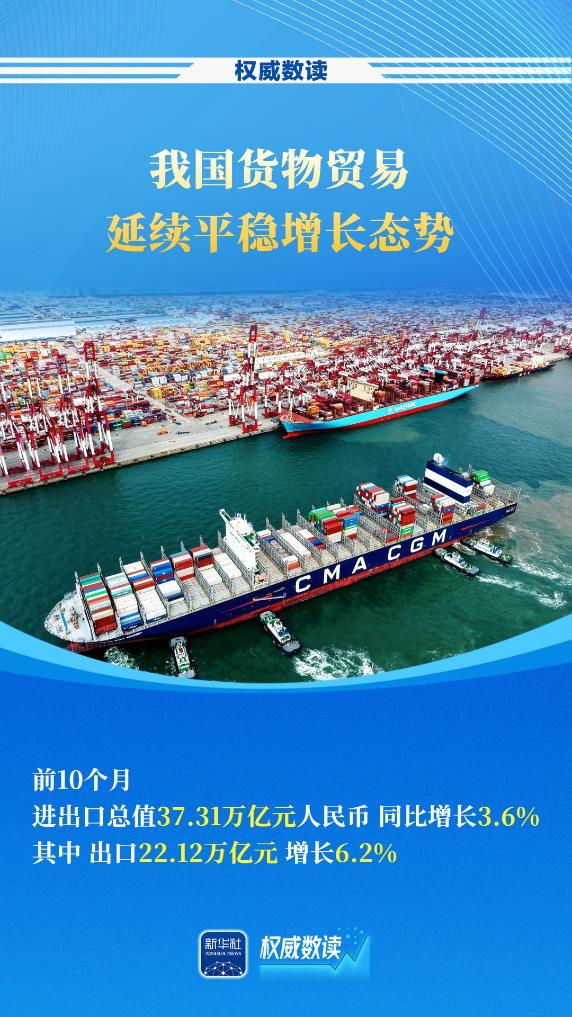
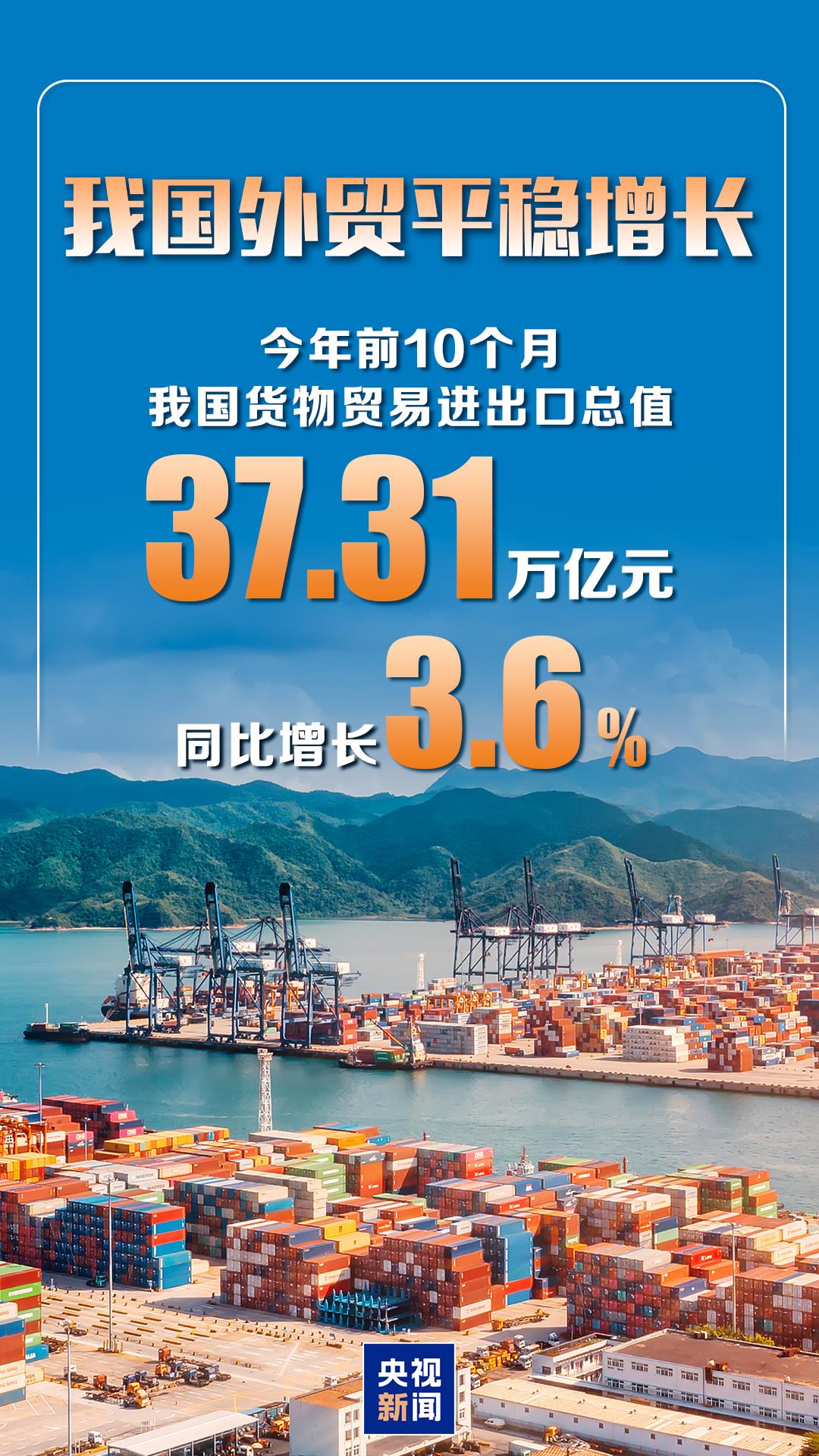
Core Viewpoint - China's goods trade continues to show stable growth, with a total import and export value of 37.31 trillion yuan in the first ten months of the year, representing a year-on-year increase of 3.6% and maintaining growth for nine consecutive months [1][4]. Group 1: Trade Value and Growth - The total import and export value for the first ten months reached 37.31 trillion yuan, with exports amounting to 22.12 trillion yuan, reflecting a growth of 6.2% [4]. - General trade and processing trade both experienced growth, with general trade imports and exports at 23.64 trillion yuan (up 2.3%) and processing trade at 6.94 trillion yuan (up 6.5%) [7]. Group 2: Trade Partners - ASEAN remains China's largest trading partner, with a total trade value of 6.18 trillion yuan, marking a growth of 9.1%. The EU is the second-largest partner, with a trade value of 4.88 trillion yuan, growing by 4.9% [12]. Group 3: Enterprises' Performance - Private enterprises reported an import and export value of 21.28 trillion yuan, increasing by 7.2%, which is 1.9 percentage points higher than the same period last year. Foreign-invested enterprises had a total of 10.91 trillion yuan in imports and exports, growing by 2.9% [17]. Group 4: Export Composition - Mechanical and electrical products accounted for over 60% of exports, with notable growth in integrated circuits and automobiles. Exports of mechanical and electrical products reached 13.43 trillion yuan, up 8.7%. Integrated circuits saw exports of 1.16 trillion yuan, growing by 24.7%, while automobile exports reached 798.39 billion yuan, increasing by 14.3% [22].

“十四五”以来安徽货物贸易进出口连跨3个千亿元台阶
Zhong Guo Xin Wen Wang· 2025-11-07 13:40
中新网合肥11月7日电 (记者 张强)记者7日从安徽省政府新闻办举行的新闻发布会上获悉,"十四五"以 来,安徽货物贸易进出口连跨3个千亿元(人民币,下同)台阶,从2020年的5451.5亿元提高到2024年的 8643.7亿元、年均增长12.2%,居长三角第一位。 "十四五"以来安徽货物贸易进出口连跨3个千亿元台阶 广告等商务合作,请点击这里 本文为转载内容,授权事宜请联系原著作权人 中新经纬版权所有,未经书面授权,任何单位及个人不得转载、摘编或以其它方式使用。 关注中新经纬微信公众号(微信搜索"中新经纬"或"jwview"),看更多精彩财经资讯。 目前,安徽有进出口实绩的企业达1.3万家,民营企业进出口占比提升至51.8%。"十四五"以来,该省跨 境电商交易额年均增长近四成。(完) 来源:中国新闻网 编辑:王永乐 安徽省商务厅厅长孙东海说,"十四五"以来,安徽坚持以产业赋能、靠创新破局,实施"徽动全球"出海 行动,在开拓新市场、发展新业态、培育新动能等方面持续发力,打出了一系列"政策+服务"组合拳, 安徽外贸实现逆势上扬、争先进位。 从进出口结构来看,"十四五"以来,安徽机电产品出口占该省出口比重由2020 ...
视频丨同比增长3.6% 前10个月我国货物贸易进出口平稳增长
Yang Shi Xin Wen Ke Hu Duan· 2025-11-07 12:46
(总台央视记者 张萍 孔令雯 制图 李承章) 责编:张靖雯、卢思宇 10月份,我国外贸进出口3.7万亿元,其中出口、进口分别为2.17万亿、1.53万亿元。 0:00 海关总署今天(7日)对外公布,今年前10个月,我国货物贸易进出口平稳增长,进出口总值37.31万亿元,同比增长3.6%。其中, 对共建"一带一路"国家进出口19.28万亿元,同比增长5.9%,占我国外贸总值的51.7%。 民营企业进出口21.28万亿元,同比增长7.2%。 ...
同比增长3.6%!重要数据出炉
Zhong Guo Zheng Quan Bao· 2025-11-07 05:15
Core Insights - China's goods trade maintained steady growth in the first ten months, with a total import and export value of 37.31 trillion yuan, a year-on-year increase of 3.6% [1] Trade Performance - Exports reached 22.12 trillion yuan, up 6.2% year-on-year, while imports totaled 15.19 trillion yuan, remaining stable compared to the same period last year [1] - In October, the total trade value was 3.7 trillion yuan, a slight increase of 0.1% year-on-year, with exports declining by 0.8% to 2.17 trillion yuan and imports increasing by 1.4% to 1.53 trillion yuan, marking five consecutive months of growth in imports [1] Trade by Method - General trade and processing trade saw growth, with general trade imports and exports at 23.64 trillion yuan, a 2.3% increase, accounting for 63.4% of total foreign trade [2] - Processing trade reached 6.94 trillion yuan, up 6.5%, making up 18.6% of the total [2] - Bonded logistics trade amounted to 5.34 trillion yuan, increasing by 5.5% [2] Trade Partners - ASEAN emerged as the largest trading partner, with a trade value of 6.18 trillion yuan, a 9.1% increase, representing 16.6% of total foreign trade [2] - The EU ranked second with a trade value of 4.88 trillion yuan, up 4.9%, accounting for 13.1% [2] - Trade with the US decreased by 15.9% to 3.38 trillion yuan, representing 9% of total foreign trade [2] - Trade with Belt and Road countries totaled 19.28 trillion yuan, a 5.9% increase [2] Enterprise Types - Private enterprises saw a 7.2% increase in trade, totaling 21.28 trillion yuan, which accounted for 57% of total foreign trade, an increase of 1.9 percentage points year-on-year [3] - Foreign-invested enterprises had a trade value of 10.91 trillion yuan, up 2.9%, making up 29.3% of the total [3] - State-owned enterprises experienced a decline of 8.1% in trade, totaling 5.04 trillion yuan, representing 13.5% of total foreign trade [3] Export Products - Mechanical and electrical products accounted for over 60% of exports, with significant growth in integrated circuits and automobiles [4] - Exports of mechanical and electrical products reached 13.43 trillion yuan, a year-on-year increase of 8.7%, comprising 60.7% of total exports [4] - Integrated circuit exports were 1.16 trillion yuan, up 24.7%, while automobile exports reached 798.39 billion yuan, increasing by 14.3% [4] - Labor-intensive product exports totaled 3.38 trillion yuan, down 3%, with clothing and accessories declining by 3% to 905 billion yuan [4]
海关总署:前10个月我国货物贸易进出口增长3.6%
Xin Hua Cai Jing· 2025-11-07 03:15
Core Viewpoint - China's goods trade maintained steady growth in the first ten months of 2025, with a total import and export value of 37.31 trillion yuan, an increase of 3.6% year-on-year Group 1: Trade Performance - Total exports reached 22.12 trillion yuan, growing by 6.2%, while imports were 15.19 trillion yuan, remaining stable compared to the previous year [1] - In October, the total trade value was 3.7 trillion yuan, a slight increase of 0.1%, with exports declining by 0.8% to 2.17 trillion yuan and imports increasing by 1.4% to 1.53 trillion yuan, marking five consecutive months of growth in imports [1] Group 2: Trade Composition - General trade and processing trade saw growth, with general trade imports and exports totaling 23.64 trillion yuan, up 2.3%, accounting for 63.4% of total foreign trade; processing trade reached 6.94 trillion yuan, growing by 6.5%, making up 18.6% [1] - Bonded logistics trade amounted to 5.34 trillion yuan, increasing by 5.5% [1] Group 3: Trade Partners - ASEAN emerged as China's largest trading partner, with a total trade value of 6.18 trillion yuan, up 9.1%, representing 16.6% of total foreign trade; the EU followed as the second-largest partner with 4.88 trillion yuan, growing by 4.9% [2] - Trade with the US decreased by 15.9% to 3.38 trillion yuan, accounting for 9% of total foreign trade [2] - Trade with Belt and Road Initiative countries totaled 19.28 trillion yuan, an increase of 5.9% [2] Group 4: Enterprise Contributions - Private enterprises contributed 21.28 trillion yuan in trade, growing by 7.2% and accounting for 57% of total foreign trade, an increase of 1.9 percentage points year-on-year [3] - Foreign-invested enterprises reported 10.91 trillion yuan in trade, up 2.9%, making up 29.3% of total foreign trade [3] - State-owned enterprises experienced a decline in trade, totaling 5.04 trillion yuan, down 8.1%, representing 13.5% of total foreign trade [3] Group 5: Export Composition - Mechanical and electrical products accounted for over 60% of exports, totaling 13.43 trillion yuan, an increase of 8.7% [4] - Notable growth was seen in integrated circuits, which reached 1.16 trillion yuan, up 24.7%, and automotive exports at 798.39 billion yuan, growing by 14.3% [4] - Labor-intensive products saw a decline in exports, totaling 3.38 trillion yuan, down 3% [4] Group 6: Import Trends - Major commodity import prices fell, with iron ore imports at 1.029 billion tons, increasing by 0.7%, but the average price dropped by 10.7% [5] - Crude oil imports rose by 3.1% to 471 million tons, with an average price decrease of 12.1% [5] - Imports of mechanical and electrical products grew by 5.5%, totaling 6.05 trillion yuan [5]
9月我国国际收支货物和服务贸易 进出口规模同比增长6%
Jin Rong Shi Bao· 2025-11-03 01:27
Core Insights - The State Administration of Foreign Exchange reported that by September 2025, China's international balance of payments for goods and services trade reached 47,362 billion yuan, marking a year-on-year growth of 6% [1] Trade Summary - Goods trade exports amounted to 23,744 billion yuan, while imports were 17,062 billion yuan, resulting in a surplus of 6,682 billion yuan [1] - Service trade exports totaled 2,680 billion yuan, with imports at 3,876 billion yuan, leading to a deficit of 1,196 billion yuan [1] Service Trade Breakdown - Major components of service trade included: - Travel services with an import-export scale of 1,891 billion yuan - Transportation services with an import-export scale of 1,869 billion yuan - Other business services with an import-export scale of 1,078 billion yuan - Telecommunications, computer, and information services with an import-export scale of 682 billion yuan [1]
王文涛:完善出口管制和安全审查机制,全面提升出口管制科学列管、妥善应对等能力
Sou Hu Cai Jing· 2025-10-31 05:40
Core Points - The article emphasizes the importance of expanding high-level opening-up to promote trade innovation, enhance bilateral investment cooperation, and build the "Belt and Road" initiative [1] Group 1: Trade Innovation Development - The focus is on improving foreign trade quality and efficiency, aiming to build a strong trading nation [2] - There is an emphasis on optimizing and upgrading goods trade, expanding intermediate goods trade, and promoting green trade [2] - The article highlights the need for digital trade innovation, including the expansion of digital product trade and the optimization of digital service trade [2] Group 2: Import and Export Balance - The strategy includes actively expanding imports and enhancing the convenience of import trade [2] - It aims to cultivate national import trade innovation demonstration zones and promote balanced development of imports and exports [2] - The development of service trade is encouraged, particularly in knowledge-intensive services and traditional advantage services [2] Group 3: Trade Facilitation and New Business Models - The article discusses enhancing the functions of trade promotion platforms and organizing various trade fairs [2] - Support for new business models such as cross-border e-commerce and overseas warehouses is emphasized [2] - The need for improved export control and safety review mechanisms is also highlighted [2]
东方创业:10月30日召开董事会会议
Mei Ri Jing Ji Xin Wen· 2025-10-30 18:22
Group 1 - The company Oriental Chuangye (SH 600278) announced the convening of its 33rd meeting of the 9th Board of Directors on October 30, 2025, to discuss the proposal for the second extraordinary shareholders' meeting of 2025 [1] - For the year 2024, the revenue composition of Oriental Chuangye is as follows: 75.33% from goods trade, 17.23% from freight storage and agency, 6.26% from the health industry, 0.93% from ship leasing, and 0.25% from service trade [1]

今年前三季度海南自贸港跨境资金流动保持增长势头
Zhong Guo Xin Wen Wang· 2025-10-24 16:16
Core Insights - The cross-border capital flow in Hainan Free Trade Port has maintained a growth momentum in the first three quarters of this year, enhancing the level of cross-border trade and investment liberalization and facilitation [1] Group 1: Cross-Border Capital Flow - In the first three quarters, the cross-border payment and receipt scale in Hainan reached 804.6 billion USD, a year-on-year increase of 1.1% [1] - The total amount of foreign exchange settlement and sales was 179.8 billion USD, up 10.4% year-on-year; among which, the settlement scale was 46.3 billion USD, increasing by 22.5%, while the purchase scale was 133.5 billion USD, growing by 2.4% [1] Group 2: Trade Structure Characteristics - The scale of goods trade receipts and payments in Hainan was 352.8 billion USD, with a notable increase in bonded trade, which reached 45.9 billion USD, a growth of 5.4% [2] - The payment for imported duty-free goods grew rapidly, amounting to 21.4 billion USD, reflecting a year-on-year increase of 26.6% [2] Group 3: Service Trade Growth - The cross-border receipts and payments for service trade in Hainan totaled 50.4 billion USD, marking an 8.1% year-on-year growth [2] - Transportation services saw a revenue scale of 25.1 billion USD, increasing by 11.3%, while telecommunications and computer services grew significantly by 67.2% to 3.2 billion USD [2] - Cross-border travel services also experienced rapid growth, with receipts of 4.4 billion USD, up 25.7% [2] Group 4: Direct Investment Scale - The direct investment receipts and payments in Hainan reached 367.1 billion USD, reflecting a year-on-year increase of 4.2% [2] - Outward direct investment grew significantly, amounting to 37.6 billion USD, a rise of 23.1%, while inward direct investment surged to 66.6 billion USD, increasing by 28.5% [2]
前三季度货物贸易出口19.95万亿元,增长7.1%——我国外贸延续稳中向好势头
Jing Ji Ri Bao· 2025-10-23 02:42
Core Viewpoint - Despite a complex external environment, China's foreign trade has shown resilience, achieving growth in imports and exports in the first three quarters of the year, with total trade reaching 33.61 trillion yuan, a year-on-year increase of 4% [1] Group 1: Trade Performance - In the first three quarters, exports amounted to 19.95 trillion yuan, growing by 7.1%, while imports were 13.66 trillion yuan, a slight decline of 0.2% [1] - In September alone, total trade reached 4.04 trillion yuan, marking an 8% increase [1] - The trade performance is characterized by a steady increase in both exports and imports for four consecutive months [2] Group 2: Regional Contributions - Major provinces such as Guangdong, Jiangsu, Zhejiang, Shanghai, and Shandong contributed significantly, with a combined growth of 5.2% in trade, accounting for over 80% of the national growth [2] - China's share of global goods trade stood at 11.8% in the first seven months, maintaining its position as the world's largest goods trader [2] Group 3: Emerging Trends - The export structure is evolving, with significant growth in industrial robots (54.9%) and wind power equipment (23.9%) [2] - Traditional crafts like dragon boats and wood carvings are gaining popularity in international markets [2] Group 4: Trade Entities and Confidence - The number of foreign trade entities reached 700,000, surpassing last year's total [3] - Export confidence has been rising for five consecutive months, while import confidence has increased for three months [3] - China has become a top trading partner for 166 countries and regions, an increase of 14 from the previous year [3] Group 5: Cross-Border E-commerce - Cross-border e-commerce has emerged as a new growth driver, with trade volume reaching approximately 2.06 trillion yuan, a 6.4% increase [3] - Exports in this sector were about 1.63 trillion yuan (up 6.6%), while imports were around 425.54 billion yuan (up 5.9%) [3] - Popular export items include clothing, jewelry, and electronics, while imports mainly consist of beauty products, food, and healthcare items [3] Group 6: Future Outlook - Despite challenges, the fundamentals of China's economy remain strong, with a stable market and complete industrial system expected to support future trade growth [4]