中医理疗

Search documents
大雪・“脆皮”年轻人,带火养生经济
21世纪经济报道· 2025-12-07 04:01
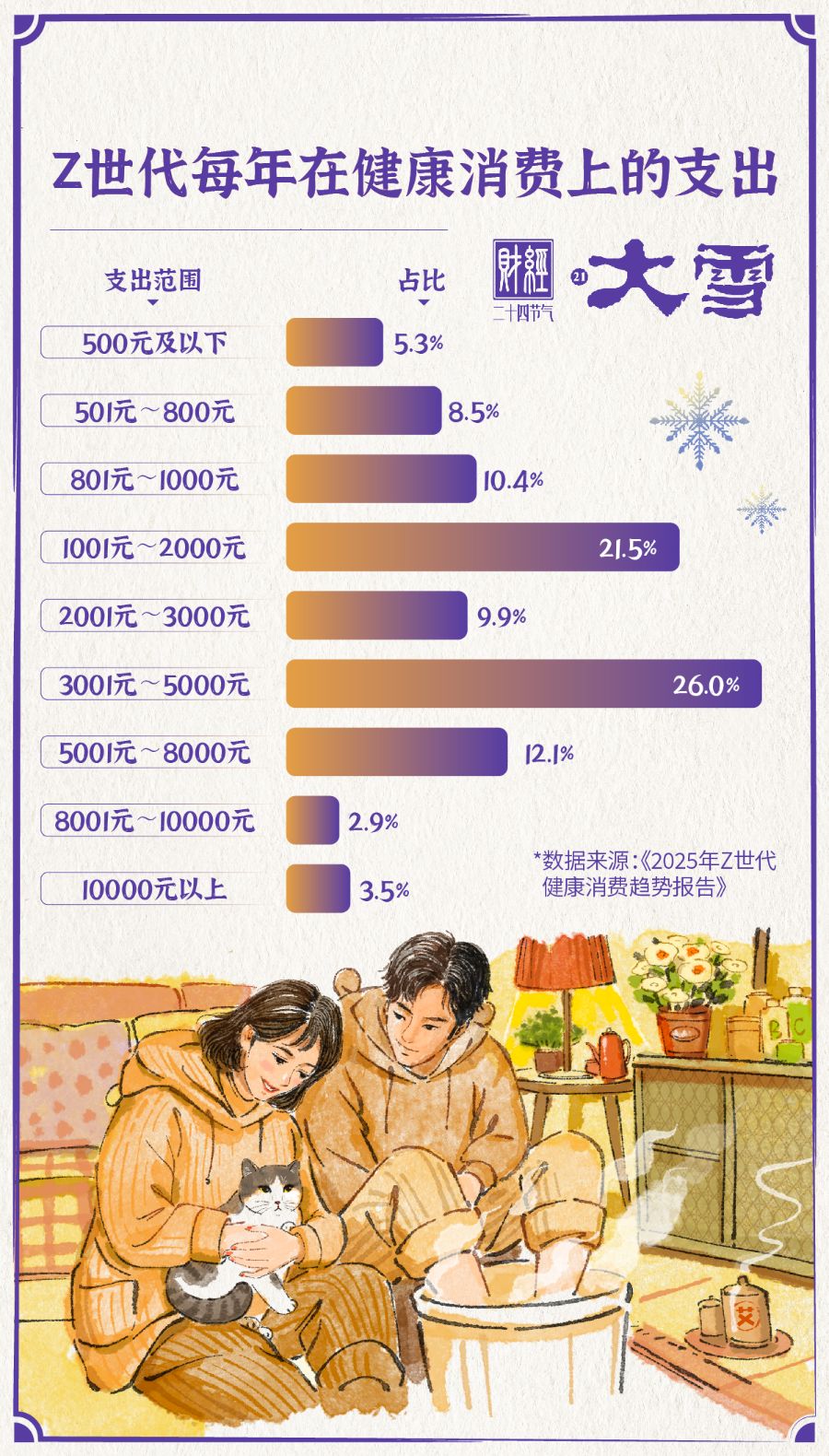
Core Viewpoint - The article discusses the rising trend of health and wellness consumption among young people in China, driven by increasing health awareness and the integration of traditional Chinese medicine concepts into modern lifestyles [2][3]. Group 1: Health Consumption Trends - During the "Double Eleven" shopping festival, the total sales of nutritional and health products reached 23.8 billion yuan, with over 2,500 health brands on JD experiencing a doubling in sales [4]. - Approximately 42% of millennials in China prioritize health management, and 47% of young people frequently purchase health products or services, establishing a stable consumption habit [4][8]. - The spending range for health products shows that 26% of young consumers spend between 3,000 to 5,000 yuan annually on health [6]. Group 2: Traditional Chinese Medicine and Health Products - The "medicine and food homology" market has grown significantly, with a market size exceeding 20 billion yuan and a year-on-year growth of 22.3% [8]. - The popularity of health teas that combine traditional Chinese medicinal ingredients with modern beverages is on the rise, attracting a younger audience [8][11]. - The health economy is expanding into various daily life scenarios, with a 100% year-on-year increase in health-related posts on social media platforms like Xiaohongshu [12][15]. Group 3: Industry Challenges and Future Outlook - The health economy is experiencing rapid growth, but issues such as concept speculation, exaggerated efficacy claims, and lack of standards need to be addressed for sustainable development [15]. - The integration of traditional health wisdom with modern lifestyles is driving growth in health drinks, nutritional supplements, and health services, reflecting a national awakening in health consciousness [15].


大雪·“脆皮”年轻人,带火养生经济?|财经二十四节气
2 1 Shi Ji Jing Ji Bao Dao· 2025-12-07 00:33
Group 1 - The core viewpoint of the article highlights the rising trend of health and wellness among young people in China, driven by the "Healthy China 2030" strategy and changing consumer preferences towards health management [1][3] - The sales data from the recent "Double Eleven" shopping festival indicates that the total sales of nutritional health products reached 23.8 billion yuan, with over 2,500 health brands on JD experiencing a doubling in sales [3][5] - A significant portion of the millennial generation, approximately 42%, is increasingly focusing on health management, with 47% of young consumers regularly purchasing health products, indicating a shift towards habitual spending on health [3][5] Group 2 - The "punk health" trend is gaining popularity among young consumers, who prefer products that offer both immediate taste satisfaction and health benefits, reflecting a shift in consumer preferences towards "food as medicine" [5][7] - The market for "food as medicine" has seen substantial growth, with a market size exceeding 20 billion yuan and a year-on-year increase of 22.3%, indicating a strong consumer interest in traditional Chinese medicine integrated into modern products [5][7] - The health economy is expanding into various aspects of daily life, with a notable increase in health-related content on social media platforms, which has seen over 100% growth in health-related posts on Xiaohongshu [9][12] Group 3 - The integration of traditional health wisdom with modern lifestyles is driving rapid growth in segments such as health teas, nutritional supplements, and smart health devices, reflecting a heightened national awareness of health and wellness [12] - The industry faces challenges such as concept speculation, exaggerated claims, and a lack of standards, highlighting the need for regulation and guidance to ensure that health practices remain grounded in genuine benefits [12]
香港中医理疗公司美妍堂(MCTA.US)IPO定价4美元/股 上市首日暴涨75%
智通财经网· 2025-10-22 07:08
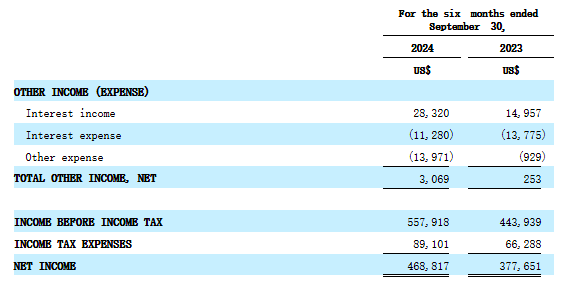
Core Viewpoint - Beauty Lab (MCTA.US), a Hong Kong-based traditional Chinese medicine (TCM) company, successfully launched its IPO on NASDAQ, pricing shares at $4 each, raising $6 million, and saw a 75% increase on its first trading day closing at $7.0 [1] Company Overview - Beauty Lab is headquartered in Hong Kong and offers TCM-inspired therapies and products [1] - The company operates four health centers under the "Beauty Lab" brand in Hong Kong, providing beauty, health, and postpartum services and products [1] - Beauty Lab also offers customized TCM therapies for men [1] Financial Performance - For the six months ending September 30, 2024, Beauty Lab reported revenues of $2.96 million, up from $2.61 million in the same period last year [1] - The net profit for the same period increased to $470,000 from $380,000 year-on-year [1]
刷医保“0元”做理疗,打工的尽头是养生?
Hu Xiu· 2025-07-11 10:34
Core Insights - The article discusses the shift in the lifestyle of workers in Shenzhen, focusing on their increasing interest in health and wellness through traditional Chinese medicine and the use of medical insurance for these services [2][6][64] Group 1: Changing Attitudes Towards Health - Workers in Shenzhen are prioritizing health over mere financial gain, leading to a surge in visits to hospitals and community health centers for wellness treatments [2][3] - Traditional wellness practices such as acupuncture, cupping, and massage are regaining popularity among the younger demographic [4][6] - The perception of visiting hospitals is evolving from only seeking treatment for illness to also seeking preventive care and wellness [5][15] Group 2: Demographics and Spending Habits - Young adults aged 18-35 represent 83.7% of the wellness consumer group, indicating a significant trend among this age bracket [6] - Unlike older generations, younger workers are looking for cost-effective ways to maintain their health, utilizing medical insurance to maximize benefits [7][16] Group 3: Utilization of Medical Insurance - Community health centers are becoming popular for wellness treatments, with insurance covering up to 75% of costs for services like acupuncture and massage [16][46] - The concept of "0 yuan purchase" is highlighted, where treatments can be accessed at minimal out-of-pocket costs due to insurance reimbursements [17][59] - The article clarifies that using insurance for wellness treatments is legal and compliant with regulations, emphasizing the importance of proper utilization of medical resources [46][59] Group 4: Impact on Quality of Life - The trend of using medical insurance for wellness treatments has led to an improvement in the quality of life for workers, allowing them to relieve stress and physical discomfort [45][59] - The article notes that these wellness practices not only address physical ailments but also provide mental relief from the pressures of work [41][64]
美股新股前瞻|美妍堂:年收入约300万美元 中医健康美容能否实现资本市场破圈?
智通财经网· 2025-05-26 03:08
Group 1 - The core viewpoint of the article highlights the increasing demand for traditional Chinese medicine (TCM) therapy and services in China, driven by an aging population and rising health concerns among younger demographics [1][6] - The TCM therapy market in China reached a scale of 700 billion yuan in 2023, with projections to exceed 1.3 trillion yuan by 2028, indicating a robust growth trajectory [1][6] - Charming Medical Limited, a Hong Kong-based TCM therapy company, has filed for an IPO in the U.S. with plans to raise between 6.4 million to 9.6 million USD by offering 160,000 shares at a price range of 4 to 6 USD per share [1][12] Group 2 - Charming Medical Limited operates four health centers in Hong Kong under the "Beauty Lab" brand, offering a range of TCM-based beauty, health, and postpartum services [2][5] - The company's revenue for the fiscal year 2023 to 2024 is projected to grow by 24.1%, with revenues of 2.6415 million USD and 2.9585 million USD for the respective years [2][4] - Despite revenue growth, the company has not increased its customer base, remaining at 1,941 clients, which raises concerns about future growth potential [5] Group 3 - The TCM beauty market is expected to thrive, with a significant increase in consumer interest and government support for TCM practices, as outlined in the "Healthy China 2030" plan [6][7] - The TCM women's health market has shown a compound annual growth rate (CAGR) of 7.9% from 2019 to 2023, with expectations to reach 4.666 billion HKD by 2030 [8] - The company plans to use the funds raised from the IPO for market expansion in Southeast Asia and the Greater Bay Area, technology development for health monitoring devices, and brand enhancement through international media [12]