二手消费电子

Search documents
张连起委员:优化二手消费电子税收,有望激发万亿消费潜力
第一财经· 2026-03-10 11:42
Core Viewpoint - The article emphasizes the urgent need to optimize tax policies for the second-hand consumer electronics market in China to stimulate the potential for "old-for-new" consumption and facilitate the industry's growth [2]. Group 1: Market Potential - The second-hand consumer electronics market in China is expected to reach a scale of 987.5 billion yuan by 2026, with a compound annual growth rate of 26.1%, approaching the 1.28 trillion yuan annual transaction scale of the second-hand car market [2]. - Currently, the recycling penetration rate for second-hand electronic devices in China is only about 4.4%, while mature markets in Europe and the U.S. have reached around 30% [2]. - Each second-hand mobile phone circulated can reduce carbon emissions by approximately 30 kilograms, highlighting the green economic value of a scaled and standardized second-hand market in achieving carbon neutrality goals [2]. Group 2: Taxation Issues - The existing tax collection system does not align with the industry's characteristics, particularly the challenges faced by businesses in confirming real costs when purchasing from individuals. Only transactions under 500 yuan can be deducted using internal vouchers, while the average price of second-hand electronic products is around 1,500 yuan [3]. - The tax burden on second-hand consumer electronics is significantly higher than that on second-hand vehicles, with the tax burden for second-hand mobile phones being approximately 3.9 times that of second-hand cars, placing second-hand electronics companies at a competitive disadvantage [3]. Group 3: Recommendations for Improvement - It is recommended that tax authorities develop tax collection guidelines suitable for the "Internet + recycling" model, recognizing traceable digital transaction information as valid tax deduction evidence [4]. - Optimizing value-added tax policies is suggested to create a fair tax environment, considering the tax burden balance across different sectors of the circular economy [4]. - Conducting pilot programs in key regions or representative compliant platform companies is advised to test and refine policies related to voucher recognition and tax rate optimization [4].


万物新生(RERE):2025Q3业绩点评报告:收入达指引高端,业务结构优化带动毛利率提升
Guohai Securities· 2025-11-24 11:09
Investment Rating - The report maintains a "Buy" rating for the company [1] Core Insights - The company achieved Q3 revenue of 5.149 billion RMB, a year-on-year increase of 27.1%, reaching the high end of previous guidance [6] - Non-GAAP operating profit for Q3 was 140 million RMB, up 34.9% year-on-year, while Non-GAAP net profit was 110 million RMB, reflecting a 22.3% increase [6] - The company expects Q4 total revenue to be between 6.08 billion and 6.18 billion RMB, representing a year-on-year growth of 25.4% to 27.4% [6] Revenue Performance - Q3 revenue breakdown shows 1P product revenue at 4.726 billion RMB, up 28.7% year-on-year, driven by increased sales of second-hand consumer electronics [8] - 3P service revenue reached 423 million RMB, a year-on-year increase of 11.6%, primarily from multi-category recycling services [8] - The number of traded devices in Q3 was 10.9 million, compared to 9.1 million in the same period last year [8] Business Structure and Profitability - The company's gross margin for Q3 was 20.5%, an increase of 0.5 percentage points year-on-year, with 1P business gross margin at 13.4%, up 1.7 percentage points [8] - Operating expenses showed improvement, with fulfillment expenses at 437 million RMB and a fulfillment expense ratio of 8.5%, down 0.1 percentage points year-on-year [8] - GAAP operating profit was 121 million RMB, a significant increase of 385.1% year-on-year, with a GAAP operating margin of 2.3% [8] Future Projections - Revenue forecasts for 2025-2027 are 20.96 billion, 26.35 billion, and 32.38 billion RMB, with growth rates of 28%, 26%, and 23% respectively [10] - Non-GAAP net profit projections for the same period are 473 million, 664 million, and 900 million RMB, with growth rates of 51%, 40%, and 35% respectively [10] - The report highlights the company's potential for growth through expanded channels for second-hand goods and multi-category business expansion [10]

万物新生20251120
2025-11-24 01:46
Company and Industry Summary Company Overview - The company reported a total revenue of 5.15 billion RMB in Q3 2025, representing a year-on-year growth of 27.1% [2][3] - Core product revenue increased by 28.7% to 4.73 billion RMB, while platform service revenue grew by 11.6% to 420 million RMB [3][13] - Gross profit reached a record 140 million RMB, with a gross margin of 2.7%, indicating steady improvement in profitability [2][3] Key Industry Insights - The company experienced a significant surge in compliant refurbished product revenue, which increased by 102% due to enhanced retail capabilities and improved pricing power in the recovery segment [2][5] - The number of signed merchants on the platform grew rapidly to 1.37 million, with an overall collection rate of 4% [8] - The multi-category recycling service laboratory platform saw a 95% increase in transaction volume, with new stores typically stabilizing performance within 2-3 months, contributing an average profit of 7,000 RMB per month [9] Strategic Initiatives - The company is focusing on three strategic phases: strengthening core capabilities in second-hand consumer electronics, accelerating the development of the AHS recycling brand, and preparing for international strategies [11] - In Q3, the company expanded its operational capabilities to support new device demands and enhanced customer service through personalized face-to-face interactions [4][6] - The company plans to establish a more detailed network layout in nearly 300 cities in China to enhance user experience and build the AHS recycling brand [18][20] Financial Performance - The company anticipates Q4 total revenue between 6 billion and 6.1 billion RMB, reflecting a year-on-year growth of over 25% [16] - For the full year, total revenue is expected to be between 20.8 billion and 20.9 billion RMB, with a year-on-year growth of over 27% [16] Market Dynamics - National trade subsidies have stimulated new device sales but have limited impact on high-end model purchases, benefiting the second-hand consumer electronics sector [17] - The company is leveraging partnerships with major brands like JD, Apple, Huawei, and Xiaomi to enhance user experience through trade-in programs [17] Operational Efficiency - The company is utilizing automation and AI to optimize fulfillment capabilities and enhance user experience during peak demand periods [10] - The platform's commission rate fluctuated due to adjustments in merchant service policies, with a focus on providing flexible return and exchange options [23] Future Goals - The company aims to balance the pace of new store openings with the expansion of service teams to ensure efficiency in both physical and online service channels [22] - There is a focus on expanding high-value categories that are convenient for users to bring to stores, while integrating demographic data to enhance service offerings [22] Risk Management - The company maintains a project market risk threshold of over 6%, with ongoing efforts to optimize commission structures and enhance service offerings [23][25] - The consignment model has shown initial success, with a commission rate nearing 9%, indicating potential for further optimization in revenue structures [25]
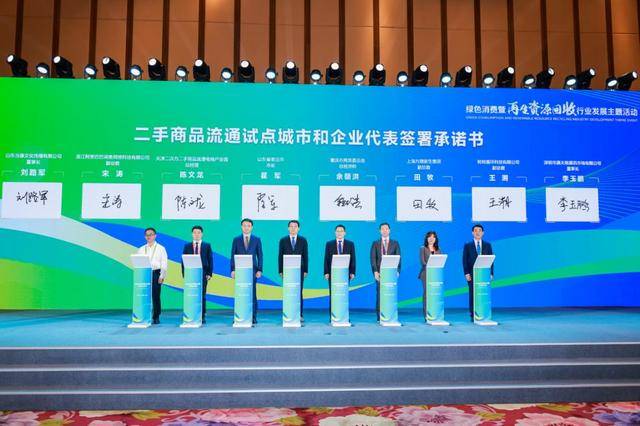
入选全国首批二手商品流通试点,深圳华强南片区迎发展新机遇
Sou Hu Cai Jing· 2025-04-15 08:10
Core Viewpoint - The first batch of pilot cities and enterprises for second-hand goods circulation has been announced, with Shenzhen being included, highlighting the importance of promoting second-hand goods circulation for resource optimization and sustainable consumption [1][2]. Group 1: Pilot Program and Market Overview - The Shenzhen City has been selected as one of the first pilot cities for second-hand goods circulation, with Shenzhen Tongtiandi Communications Market being recognized as a key enterprise [1][2]. - The Huaqiang South area has developed into the largest second-hand consumer electronics market in China, with over 30 second-hand markets covering more than 75,000 square meters and housing over 8,000 merchants, employing more than 20,000 people [3]. - The peak daily foot traffic in Huaqiang South exceeds 80,000, with an annual transaction volume reaching 20 billion yuan [3]. Group 2: Industry Development and Future Plans - The second-hand electronics market is expected to grow significantly, with an estimated 6 billion idle mobile phones in China during the 14th Five-Year Plan period, representing a market value of over 600 billion yuan [5]. - The Huaqiang South area is moving towards standardization, green practices, and digitalization, with the establishment of the Futian District Electronics Communication Equipment Industry Association and the release of service standards [5]. - Future plans include creating a comprehensive ecosystem for second-hand consumer electronics, integrating online and offline platforms, and enhancing the entire supply chain from recycling to sales [5]. Group 3: Legal and Regulatory Framework - The South Garden Street is implementing a "short-term project + long-term planning" approach to address challenges in the second-hand market, focusing on legal compliance and risk management [7]. - A legal public service platform is being established to guide market participants in compliant operations and protect their rights [7]. - Plans for park-wide transformation and unified identification systems aim to create a sustainable second-hand consumer electronics industry park [8].

国海证券晨会纪要-2025-03-14
Guohai Securities· 2025-03-14 01:35
Investment Rating - The report maintains a "Buy" rating for Hesai Technology, indicating strong growth potential in the lidar market and expected revenue increases for 2025-2027 [8][12][32]. Core Insights - Hesai Technology reported a net revenue of RMB 2.077 billion (approximately USD 285 million) for 2024, marking a year-on-year growth of 10.7% and achieving a non-GAAP net profit of RMB 13.7 million, reversing a loss from the previous year [3][4]. - The company experienced a significant increase in gross margin, reaching 42.6% in 2024, up from 35.2% in 2023, primarily due to cost optimization and increased sales volume [4][5]. - Hesai's Q4 2024 performance was particularly strong, with net income of RMB 720 million (approximately USD 98.6 million), a year-on-year increase of 28.3%, and a non-GAAP net profit of RMB 170 million [4][5]. - The company anticipates a revenue of RMB 3-3.5 billion (approximately USD 411-480 million) for 2025, representing a growth of 44%-69% compared to 2024 [6][8]. Summary by Sections Hesai Technology - Hesai Technology is positioned as a leading player in the autonomous driving and advanced driver-assistance systems (ADAS) lidar market, with a projected shipment of 1.5 million units in 2025 [8]. - The company has secured exclusive design contracts with top European OEMs, indicating strong demand for its lidar products [6][7]. - Hesai's new product line, including the JT series of 3D lidar for robotics, is expected to enhance its market presence and revenue streams [7]. Ideal Automotive - Ideal Automotive is transitioning from an electric vehicle manufacturer to an artificial intelligence company, with plans to leverage AI in its product offerings [9][10]. - The company is expected to achieve significant revenue growth, with projected net profits of RMB 13.35 billion and RMB 19.18 billion for 2025 and 2026, respectively [11]. Energy and Aluminum Sector - The report highlights the robust performance of Electric Power Energy and Shenhua Co., with both companies benefiting from rising aluminum prices and stable coal operations [12][13]. - Electric Power Energy is noted for its strong cash flow and stable profit margins, while Shenhua Co. is expected to see enhanced earnings due to its high aluminum production capacity [14][15]. Chemical Industry - Baofeng Energy reported a revenue of RMB 32.983 billion (approximately USD 4.5 billion) for 2024, driven by increased production and sales of polyethylene and polypropylene [24][26]. - The company is expanding its coal-to-olefins project in Xinjiang, which is expected to significantly boost its production capacity and market competitiveness [30][31]. Defense and Alloy Market - The report indicates that increased defense spending in China is likely to drive demand for chromium salts and high-temperature alloys, benefiting companies in the materials sector [38][39].