光伏面板

Search documents
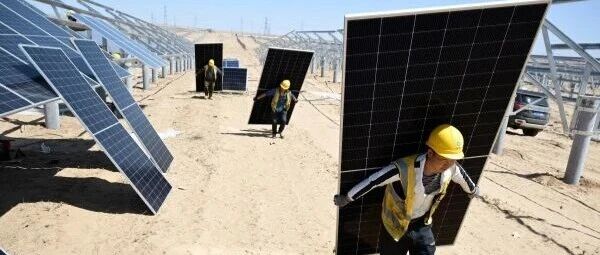
中国7家光伏面板企业2025年预亏392亿元
日经中文网· 2026-03-10 02:19
Core Viewpoint - The Chinese photovoltaic (PV) panel industry is facing a persistent supply surplus, leading to significant financial losses among major companies in the sector [2][4][5]. Group 1: Financial Performance - In the fiscal year 2025, all seven major PV companies in China are expected to report final losses, with total losses projected to reach up to 39.2 billion RMB [4]. - The fiscal year 2024 marked the first instance of losses for these companies, and the situation has not improved, with cumulative losses expected to increase from 27 billion RMB in 2024 to between 36.4 billion and 39.2 billion RMB in 2025 [4]. - The average price of PV panels remained stable at approximately 9 cents per watt by the end of 2025, indicating a lack of recovery in pricing despite the losses [4]. Group 2: Industry Dynamics - The demand for PV panels has increased due to decarbonization trends and rising energy prices; however, the growth in supply has outpaced demand, leading to intensified price competition and deteriorating market conditions [5]. - The Ministry of Industry and Information Technology of China has initiated discussions to address "disorderly competition" and plans to implement measures to reduce production capacity, although these efforts have not yet yielded significant results [5]. - From January to October 2025, the production of PV panels by Chinese companies reached 514 GW, reflecting a year-on-year increase of 13.5%, further contributing to the oversupply issue [5].




资金回归中国制造业股
日经中文网· 2025-11-13 02:46
Group 1 - The core viewpoint of the article indicates that the Chinese manufacturing sector is experiencing a recovery, with manufacturing profits increasing by 22% year-on-year in September, marking the highest growth rate since November 2023 [2][8] - The Shanghai Composite Index has risen approximately 20% compared to the end of 2024, with semiconductor company Cambricon Technologies seeing its stock price more than double this year, driven by advancements in AI and technology-related stocks [4] - The trend of rising manufacturing stock prices is expanding, with about 90% of the top 100 stocks projected to increase by mid-2025 being from the manufacturing sector [4] Group 2 - The background of this trend is the Chinese leadership's push to correct excessive competition, referred to as "involution," with policies introduced to limit unproductive price-based competition [5] - The expectation of profit recovery due to the elimination of excess capacity is evident, as seen in the stock price surges of companies like Sungrow Power Supply, which increased nearly threefold in the second half of the year [7] - Overall, the industrial stock price index on the Shanghai Stock Exchange rose over 20% in the second half of the year, surpassing the 16% increase of the Shanghai Composite Index, indicating a shift in market focus from shareholder returns to manufacturing performance recovery [7] Group 3 - Macroeconomic statistics show that fixed asset investment decreased by 7% year-on-year in August and September, indicating a significant reduction in manufacturing investment activities [8] - The Chinese government is focusing on boosting consumption as part of its economic strategy for 2026-2030, with the effectiveness of the "anti-involution" policy being crucial for stimulating domestic demand [10] - The sustainability of stock price increases remains uncertain, as the balance between eliminating inefficient production and stimulating consumption is delicate [10]
日经调查预测:中国经济7-9月增4.6%
3 6 Ke· 2025-10-09 08:53
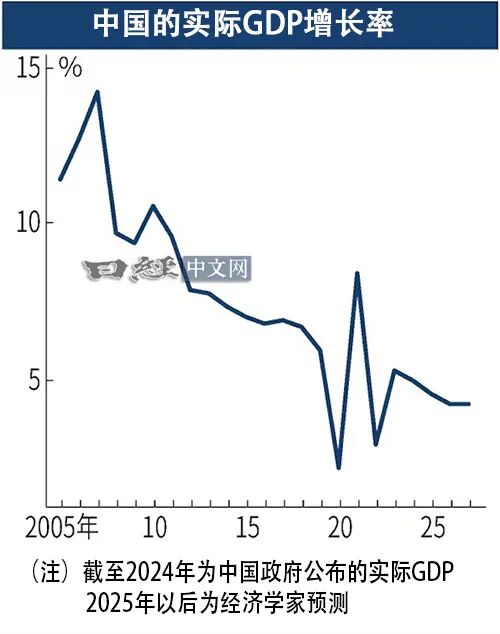
Group 1 - The core viewpoint is that China's economic growth is expected to slow down in the second half of the year due to weakened consumer stimulus policies and weak domestic demand, with a projected GDP growth of 4.6% for Q3 2025, down from 5.2% in Q2 2025 [1][4][7] - The National Bureau of Statistics of China will release GDP data for Q3 on October 20, with predictions for actual growth rates ranging from 4.2% to 5.0%, and a seasonally adjusted quarter-on-quarter growth rate average of 0.7%, down from 1.1% in Q2 [2] - The retail sales growth rate has been declining since reaching a peak in May, indicating a slowdown in consumer spending, which is a key driver of economic activity [4] Group 2 - The real estate sector's downturn is identified as a fundamental reason for the economic slowdown, with weak residential sales leading to falling property prices and a negative asset effect on consumer spending [5] - Companies are competing to lower prices in response to weak domestic demand, leading to excessive competition, termed "involution," prompting the government to implement "anti-involution" policies to curb excessive price cuts [5] - The trade tensions between China and the U.S. have temporarily eased, but some analysts believe this merely postpones uncertainty, as ongoing export declines to the U.S. continue to suppress market confidence [6][7] Group 3 - Economists predict a moderate appreciation of the Renminbi against the U.S. dollar, with an average forecast of 7.12 yuan per dollar by the end of 2025, compared to a previous forecast of 7.22 yuan [8] - The Chinese stock market has seen a surge in AI-related stocks, attracting previously cautious foreign investments back into China, which may further support the Renminbi's appreciation [8] - The People's Bank of China is expected to implement slight interest rate cuts as part of a broader monetary easing strategy, especially in light of recent U.S. Federal Reserve actions [7]
中国股市“分红大革命”
日经中文网· 2025-02-26 03:29
Core Viewpoint - The Chinese stock market has been fluctuating within a certain range over the past decade, primarily due to the neglect of shareholder interests. Recent trends indicate a shift towards increased dividends and stock buybacks, creating a re-evaluation atmosphere for Chinese stocks, akin to a "dividend revolution" [1][5]. Group 1: Dividend and Buyback Trends - Over 1,000 state-owned enterprises have established plans for shareholder returns, representing about 20% of approximately 5,400 listed companies. The total dividend amount for the fiscal year 2024 is expected to reach 2.4 trillion yuan, an 80% increase from five years ago and three times that of ten years ago. The average dividend yield is close to 3% based on the total market capitalization of listed companies in Shanghai, Shenzhen, and Beijing [2]. - The number of companies implementing stock buybacks in 2024 is projected to reach 1,500, with a total amount of 140 billion yuan, marking a historical high. Despite the lower momentum of buybacks compared to Japan and the U.S., the Shanghai Composite Index has risen by 20% from its lowest point in February 2024 [3]. Group 2: Regulatory Environment and Corporate Response - The Chinese securities regulatory authorities are pushing for companies to return profits to shareholders, learning from the Tokyo Stock Exchange's practices. The State Council updated the capital market revitalization policy for the first time in ten years, introducing strict measures for companies with low or no dividends [3]. - The China Securities Regulatory Commission (CSRC) has mandated that companies with a price-to-book ratio (PBR) below 1 must develop and disclose improvement plans. The focus of regulatory work is on being "strong" and "strict" [3]. Group 3: Economic Context and Corporate Performance - The Chinese leadership faces urgent circumstances, with a strong motivation to boost the stock market amid a weak real estate sector and sluggish consumer growth. A survey of 2,700 listed companies revealed a double-digit decline in profit expectations for the fiscal year 2024 [4]. - The return on equity (ROE) for Chinese companies was below 8% for the fiscal year 2023. Despite economic slowdowns and challenges from U.S. relations, the gap in ROE between Chinese and Japanese companies is only about 2% [4].