医疗健康行业

Search documents
中资券商香江弄潮,跨境布局开辟全球新赛道
梧桐树下V· 2026-01-30 06:52
Core Viewpoint - The Hong Kong stock market has shown strong recovery and growth, with Chinese securities firms playing a crucial role in connecting high-quality domestic enterprises with global capital, thereby driving the market's continued prosperity [1][2][3]. Group 1: Market Recovery and Chinese Securities Firms' Dominance - In 2025, the Hong Kong stock market saw a significant revival, with 119 new stocks listed and a total fundraising amount of approximately 285.8 billion HKD, marking a return to the global IPO fundraising leaderboard [2]. - Chinese securities firms have increasingly dominated the market, holding six of the top ten positions in underwriting amounts, with a combined market share of 56.15% [2]. - Leading firms such as CICC and CITIC Securities (Hong Kong) reported substantial revenue and profit growth, with CICC's revenue and net profit increasing by 54.4% and 129.8% year-on-year, respectively [2]. Group 2: Structural Optimization and New Opportunities - The 2025 Hong Kong IPO market exhibited two notable structural trends: the dominance of mainland enterprises and the rise of the A+H model for cross-border financing [4]. - Over 90% of IPOs in 2025 were from mainland enterprises, with the top five IPO projects all belonging to these companies, including CATL and Zijin Mining [4]. - The A+H model became mainstream, with 19 A-share companies raising approximately 140 billion HKD through this method, accounting for nearly half of the total IPO fundraising [4]. Group 3: New Economic Sectors and Investment Trends - The new economy sectors, particularly technology and healthcare, have become core areas for IPOs, with technology leading in the number of IPOs and healthcare showing significant fundraising recovery [6][7]. - Chinese securities firms have adapted their strategies to cater to the specialized financing needs of new economy enterprises, forming dedicated teams to provide customized services [7][8]. Group 4: Opportunities and Challenges in the Market - The growth of the Hong Kong market is supported by favorable policies, including measures from the China Securities Regulatory Commission to facilitate mainland enterprises' listings [9]. - Despite the dominance of Chinese securities firms, competition from international investment banks remains a challenge, particularly in high-end cross-border financing and complex mergers and acquisitions [9]. - Chinese securities firms are focusing on building a comprehensive competitive framework that includes service, pricing, and compliance to enhance their market position [9][10]. Group 5: Global Expansion and Strategic Development - Hong Kong serves as a critical hub for Chinese securities firms' internationalization, with several firms announcing significant capital increases for their Hong Kong subsidiaries to enhance their overseas business capabilities [13]. - Continuous investment has led to substantial returns, with firms like CICC and Huatai International achieving top-tier positions in IPO underwriting [14]. - Chinese securities firms are actively expanding their global footprint, targeting markets in Southeast Asia and Europe while leveraging their strengths in the Greater Bay Area [14][15].


优宁维:已通过参与产业基金围绕医疗健康等行业开展投资业务
Sou Hu Cai Jing· 2025-12-10 07:45
Group 1 - The core viewpoint of the article is that the company, 优宁维, is addressing investor concerns regarding its stock performance and investment strategy, specifically the suggestion to establish a private equity fund focused on high-tech industries supported by the government [1] - The company has responded to investor inquiries by stating that it is already participating in industrial funds and leveraging professional research capabilities along with its market resources to invest in sectors such as healthcare [1]
建信基金:夏去秋来,投资“换季”正当时!
Xin Lang Ji Jin· 2025-10-10 09:42
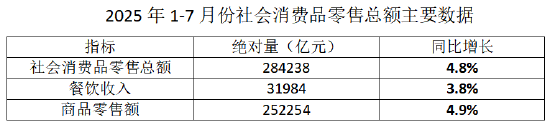
Group 1: Consumer Sector - The consumer market is experiencing a boost due to seasonal changes and government policies, with a notable increase in demand during the "Golden September and Silver October" period [2][6] - From January to July this year, the total retail sales of consumer goods increased by 4.8% year-on-year, with dining revenue up by 3.8% and retail goods sales up by 4.9% [3] - Seasonal transitions are driving new consumption trends, with increased interest in autumn clothing, skincare products, and seasonal food and beverages [5] Group 2: Healthcare Sector - The change in seasons is expected to create new investment opportunities in the healthcare sector, particularly due to increased health demands as respiratory diseases become more prevalent [8][9] - The World Health Organization reports approximately 1 billion seasonal flu cases annually, highlighting the rising health protection needs during the autumn [9] Group 3: Agriculture Sector - The agricultural sector is poised for investment opportunities as the autumn harvest signals increased grain production, supported by advancements in agricultural mechanization and smart farming [14][15] - In 2024, the total area for autumn grain planting is projected to be 87,951.2 thousand hectares, with a yield of 6,008.3 kg per hectare, leading to a total production of 52,843.4 million tons [15] Group 4: Energy Sector - The autumn season marks a peak for construction activities and energy storage, with traditional energy demand rising and new energy sources entering efficient operational phases [20][21] - The construction season is expected to boost energy consumption, particularly in high-energy industries like steel and cement, while traditional energy procurement is increasing in preparation for winter [22][23] - As temperatures drop, solar and wind energy generation is expected to see significant growth, with solar power capacity reaching 1,111 million kilowatts, a 50.8% year-on-year increase [24]
稳健医疗财务总监方修元大专学历年薪201.5万,目前香港中文大学(深圳)金融EMBA在读,很快就是硕士学位了
Xin Lang Zheng Quan· 2025-08-07 10:42
Summary of Key Points Core Viewpoint - The 2024 A-share CFO data report reveals significant insights into the compensation of CFOs in listed companies, highlighting the importance of their roles in corporate governance and financial management [1]. Group 1: CFO Compensation Overview - The total compensation for CFOs in A-share listed companies reached 4.27 billion yuan, with an average annual salary of 814,800 yuan [1]. - Midea Group's CFO, Zhong Zheng, earned 9.46 million yuan, while BYD's CFO, Zhou Yalin, received 8.96 million yuan, indicating high compensation levels among top executives [1]. Group 2: Notable CFO Profiles - Fang Xiuyuan, CFO of Shengjian Medical, reported a salary of 2.015 million yuan in 2024, an increase of 370,000 yuan from the previous year, significantly above the average CFO salary [1]. - Fang Xiuyuan holds a diploma and is currently pursuing an EMBA at the Chinese University of Hong Kong (Shenzhen), which may lead to a master's degree by 2025 [2]. Group 3: CFOs with High Revenue and Market Value - The report lists CFOs with a diploma whose companies have revenues exceeding 5 billion yuan or market values over 10 billion yuan, showcasing the financial leadership in high-performing firms [3]. - Notable CFOs in this category include Tang Huifen from Shengyi Electronics with a salary of 2.8297 million yuan and Liu Zhiwen from Better Battery with 2.7483 million yuan [3].


对日收并购实务指南:风险解析与防范
Sou Hu Cai Jing· 2025-05-12 03:44
Core Insights - The article highlights the significant increase in Chinese enterprises' mergers and acquisitions (M&A) in Japan, with a year-on-year growth of 604% in 2024, indicating Japan's unique appeal to Chinese investors [2][3]. Group 1: M&A Trends and Statistics - Chinese enterprises' M&A activities in Japan reached $4.1 billion in 2024, up from $0.6 billion in 2023, marking a 604% increase [3]. - Japan is the top destination for Chinese overseas M&A in 2024, surpassing other countries such as the UK and South Korea [3]. - The total investment from Chinese enterprises in Japan for 2024 is projected at ¥30,112 million, reflecting a growth rate of 33% [7]. Group 2: Industry Focus and Opportunities - Key sectors for Chinese investment in Japan include manufacturing, healthcare, real estate, services, and high-tech industries, which are seen as vital for enhancing domestic consumption and driving economic growth [8][23]. - The manufacturing sector faces risks related to stricter foreign investment regulations and product quality standards, necessitating compliance management [25][26]. - The healthcare sector must navigate stringent certification and operational integration challenges, particularly in maintaining relationships with key medical personnel [27][28]. - The renewable energy sector is subject to rigorous national security reviews and technical standards, requiring careful assessment of target companies [29][30]. - High-tech industries face risks associated with national security scrutiny and intellectual property protection, emphasizing the need for thorough due diligence [31][32]. Group 3: Risk Management Strategies - Companies are advised to establish compliance management systems to navigate Japan's foreign investment regulations effectively [26]. - In the healthcare sector, ensuring the retention of key medical staff through early communication and contractual agreements is crucial for operational stability [28]. - For renewable energy investments, implementing a mechanism to identify sensitive technologies and ensuring compliance with technical standards is essential [30]. - High-tech firms should conduct comprehensive intellectual property assessments and develop strategies to protect trade secrets during and after M&A transactions [32].