反无人机

Search documents
国泰海通晨报-20260108
GUOTAI HAITONG SECURITIES· 2026-01-08 02:19
Group 1: Strategy Research - The report highlights a differentiated macroeconomic environment, with significant growth in tourism and cultural sectors during the New Year period, alongside notable increases in inbound and outbound travel demand [2][9] - The technology hardware and certain industrial raw materials continue to see price increases, driven by trends in the AI industry and tight supply in chemical and non-ferrous materials [2][9] - The real estate and durable goods sectors remain under pressure, with weak demand in the real estate construction chain [2][9] Group 2: Tourism and Travel - During the 2026 New Year holiday (January 1-3), daily cross-regional personnel flow in China reached 198 million, a year-on-year increase of 19.5%, with daily inbound and outbound travel averaging 2.205 million, up 28.6% year-on-year [3][10] - Domestic daily tourism participation and revenue increased by 5.2% and 6.3% respectively compared to the 2024 New Year holiday, with average spending per person rising by 1.1% [3][10] - The improvement in tourism demand is attributed to optimized service supply and the implementation of vacation policies, as well as enhanced inbound travel policies [3][10] Group 3: Downstream Consumption - The price of live pigs increased by 3.9% as of December 28, driven by improved downstream demand due to New Year stocking [4][11] - In 30 major cities, the transaction area of commercial housing decreased by 26.0% year-on-year, with first, second, and third-tier cities seeing declines of 31.8%, 14.0%, and 45.5% respectively [4][11] - The average daily retail of passenger cars fell by 12% year-on-year, indicating a continued decline in the automotive circulation industry [4][11] Group 4: Technology and Manufacturing - The electronic industry remains buoyant, with AI infrastructure investments driving growth; as of January 2, the average spot prices for DRAM memory (DDR3, DDR4, DDR5) increased by 2.6%, 6.0%, and 7.1% respectively [5][12] - Chemical raw material prices are showing mixed performance, with PX prices rising by 6.4% while PTA prices fell by 0.3%; lithium carbonate prices increased by 5.9% due to supply concerns [5][12] - Coal prices stabilized with a 0.9% increase, while industrial metal prices continued to rise due to supply disruptions and expectations of interest rate cuts [5][12] Group 5: Company Announcements - The report discusses Zhongxin Co., Ltd. (603091) planning to establish a wholly-owned manufacturing base in the U.S., with an investment of up to $36 million for a project producing 20,000 tons of pulp molded tableware annually [13][14] - The company maintains its earnings forecast, projecting EPS of 3.32, 5.65, and 7.37 yuan for 2025-2027, and sets a target price of 99.68 yuan, maintaining an "Accumulate" rating [13][14] - The company is focusing on enhancing its supply chain resilience and expanding its overseas production capacity to adapt to market demands [14][15]
技术铸盾、全域防控 星网宇达为低空经济新质安全保驾护航
Quan Jing Wang· 2025-12-18 00:51
Core Insights - The low-altitude economy in China is projected to grow from 400 billion yuan in 2022 to 670.25 billion yuan in 2024, with expectations to exceed 1 trillion yuan by 2025, driven by the rapid rise of new business models such as drone logistics and manned transportation [1] - The increasing incidents of illegal drone flights pose significant challenges to public safety and airspace order, leading to a growing demand for anti-drone systems as a crucial safety measure [1][2] - The anti-drone industry is expected to reach a market size of 20 billion yuan by 2024 and potentially grow into a 100 billion yuan industry by 2035, fueled by the simultaneous growth of the low-altitude economy and safety risks [2] Industry Development - The Chinese government has integrated the low-altitude economy into national strategic emerging industries, with 30 provinces implementing supportive policies, creating a robust ecosystem for industry development [2] - The anti-drone systems are evolving from single detection to integrated "detect, disrupt, control" capabilities, with AI-driven precise identification and soft-kill technologies becoming mainstream [2] - The market is shifting towards a comprehensive "low-altitude protection shield," emphasizing the need for systemic upgrades in anti-drone solutions [2] Company Overview - StarNet YuDa, a national high-tech enterprise, has been focused on inertial technology since its establishment in 2005, creating a full-chain service system for anti-drone solutions based on core inertial technology and radar detection capabilities [3] - The company has developed three core advantages: advanced radar detection technology optimized for "low, slow, small" targets, proprietary AI recognition algorithms to differentiate drones from other objects, and multi-spectrum sensor fusion capabilities [3] - StarNet YuDa offers a comprehensive range of anti-drone solutions, including portable, vehicle-mounted, fixed, and networked systems, capable of addressing both temporary security needs and long-term defense requirements [4] Market Applications - The anti-drone systems are widely applied in national security, critical infrastructure protection, and urban public safety, creating a multi-dimensional low-altitude defense system [5] - The systems are deployed in various scenarios, including border patrol, military base protection, and safeguarding key facilities like airports and power grids, effectively preventing operational disruptions caused by drone intrusions [5] - As the low-altitude economy expands, anti-drone technology is transitioning into a "low-altitude traffic management system," ensuring the safe operation of registered aircraft by identifying and managing unauthorized drone flights [5] Future Outlook - StarNet YuDa is accelerating technological iterations and scene integration, positioning itself as a key player in the burgeoning low-altitude economy, which is expected to reach a trillion yuan market size [5][6] - The maturity of anti-drone technology is seen as a determinant for the development of the low-altitude economy, with StarNet YuDa positioned at a strategic advantage in this evolving landscape [6]

(ASX: LPM)继稀土铀矿之后Moonlight再添重磅金矿资产 计划携黄金与关键矿产项目组合澳交所上市
Sou Hu Cai Jing· 2025-08-29 12:40
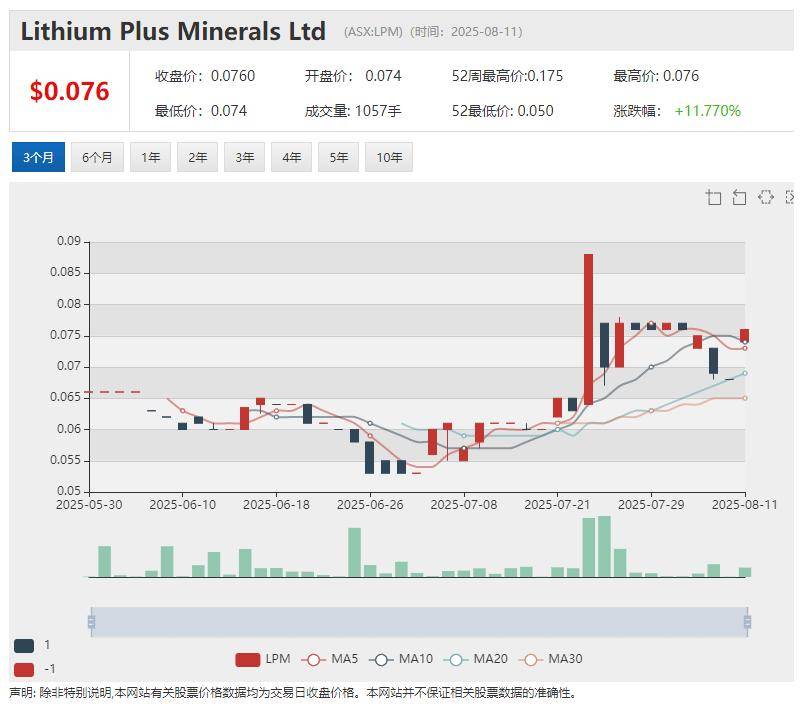
Group 1: Lithium Plus Minerals and Moonlight Resources - Lithium Plus Minerals (ASX: LPM) announced the acquisition of the high-potential Clermont gold project in Queensland from Diatreme Resources (ASX: DRX) through its 44.7% owned entity, Moonlight Resources [3] - Moonlight Resources now holds approximately 5,200 square kilometers of mining rights across Northern Territory, New South Wales, and Western Australia, including promising rare earth and uranium exploration rights in the MacDonnell Ranges [3] - The acquisition is expected to enhance Moonlight's asset portfolio, focusing on gold and critical mineral exploration, with resource definition anticipated to be completed soon [5] Group 2: Lynas Rare Earths - Lynas Rare Earths Ltd (ASX: LYC) announced a fully underwritten equity financing plan to raise AUD 750 million to expand rare earth production capacity [8] - The financing aims to capitalize on government interventions that have led to a 40% increase in rare earth prices over the past month, with Lynas's market capitalization rising nearly 80% [8] - Lynas's CEO emphasized the importance of securing sufficient resources to leverage market opportunities as the company prepares for growth [8] Group 3: Electro Optic Systems Holdings - Electro Optic Systems Holdings Limited (ASX: EOS) announced its successful bid as a systems integration partner for the Australian Defence Force's LAND 156 project, leading to a 13.88% increase in its stock price [12] - The project is part of a AUD 1.3 billion investment plan over the next decade aimed at developing advanced counter-drone capabilities [12] Group 4: Invictus Energy - Invictus Energy Ltd (ASX: IVZ) established a strategic partnership with Al Mansour Holdings, backed by a member of the Qatari royal family, to support the commercialization of the Cabora Bassa gas project [14] - The partnership includes a plan for AMH to acquire 19.9% of Invictus and provide up to USD 500 million in future financing [14] - Following the announcement, Invictus's stock surged by 145.28% [14] Group 5: McPherson's Limited - McPherson's Limited (ASX: MCP) reported a 3.9% decline in revenue to AUD 139 million and a net loss of AUD 16.6 million for the fiscal year ending June 30 [17] - The company is transitioning to a lighter asset model to drive future growth [17] Group 6: Neuren Pharmaceuticals - Neuren Pharmaceuticals (ASX: NEU) reported a net profit of AUD 15 million for the first half of the 2025 fiscal year, an increase of 87.5% year-on-year, driven by revenue from its core product DAYBUE [21][22] - The company is advancing its second candidate drug, NNZ-2591, with significant progress in clinical development for various rare neurodevelopmental disorders [24] - Neuren's cash and short-term investments reached AUD 300 million, providing a strong financial foundation for future research and market expansion [25] Group 7: Fortescue Metals Group - Fortescue Metals Group (ASX: FMG) reported a 41% decline in net profit to USD 3.4 billion (AUD 5.24 billion) for the fiscal year, with revenue down 15% to USD 15.54 billion [28] - The company is focusing on green hydrogen and decarbonization projects as part of its future strategy [28] Group 8: Sigma Healthcare - Sigma Healthcare Ltd (ASX: SIG) reported a 41% increase in EBITDA to AUD 903.4 million following its reverse acquisition of Chemist Warehouse [32] - The company plans to cut costs by AUD 100 million, exceeding its initial target of AUD 60 million [32]

【点金互动易】多家公司回复液冷业务布局,这家公司液冷产品已用于IDC和储能温控领域
财联社· 2025-08-19 00:46
Group 1 - The article emphasizes the importance of timely and professional information analysis in investment decisions, particularly focusing on significant events, industry chain companies, and key policy interpretations [1] - Multiple companies are responding to the layout of liquid cooling business, with one company already utilizing its liquid cooling products in IDC and energy storage temperature control fields [1] - A company is developing products for anti-drone applications, including a robotic dog that is currently in the trial production stage [1]

无人机“黑飞”导致航班延误取消
Nan Fang Du Shi Bao· 2025-07-31 23:14
Core Viewpoint - The frequent incidents of unauthorized drone flights ("black flights") have raised significant public safety concerns, prompting the government to emphasize the establishment of a low-altitude safety regulatory system and the need for real-name registration of drones [2][4][5]. Group 1: Regulatory Developments - The National Development and Reform Commission has called for the establishment of a low-altitude safety regulatory mechanism to clarify safety oversight responsibilities and enhance governance capabilities [2][5]. - The consensus among central departments and ministries is that "no safety, no low-altitude" is crucial for the development of the low-altitude economy [4][5]. - A recent report indicated that by the end of 2024, there will be 1.619 million registered drone users in the industry, with a 98.5% increase in registered drones compared to 2023 [5]. Group 2: Safety Challenges - Unauthorized drone flights pose serious threats to national defense, public safety, and aviation order, with multiple incidents disrupting airport operations in recent years [5][6][7]. - There have been 15 recorded incidents of drone-related injuries in the agricultural sector alone from August 2020 to July 2025, highlighting the risks associated with drone usage [6]. - Criminal activities involving drones, such as theft and drug trafficking, have raised alarms about their potential misuse [6][7]. Group 3: Industry Perspectives - Experts emphasize the urgent need for a comprehensive safety regulatory and defense system for drones to ensure the sustainable development of the industry [8][11]. - The current regulatory framework is seen as relatively clear, but many operators still fail to comply with regulations, citing high approval costs and political pressures [9][10]. - The lack of effective detection and counter-drone infrastructure poses significant challenges to enhancing drone defense and regulatory capabilities [10][12]. Group 4: Market Opportunities - The integration of "drone countermeasures" into the national low-altitude safety regulatory system is expected to create new opportunities for the counter-drone industry [11]. - The global market for drone defense systems is projected to reach over 500 billion yuan by 2030, with urban low-altitude management systems expected to account for around 300 billion yuan [11]. - Despite the potential of the counter-drone market, the industry faces challenges such as a lack of talent and resources, with only a few private companies capable of independent research and development [12][13]. Group 5: Recommendations for Development - There is a call for the government to support the development of the drone defense and regulatory industry, particularly for private enterprises, to ensure safety and compliance [13]. - Experts suggest that the government should lead the establishment of comprehensive regulatory standards for drone defense as part of urban low-altitude management [13].

未知机构:招商汽车军工重视低空物流场景和无人机及低空反制事件1-20250603
未知机构· 2025-06-03 01:45
Summary of Key Points from the Conference Call Industry Overview - The focus is on the low-altitude logistics sector, particularly involving drones and counter-drone technologies [1][2][4]. Core Insights and Arguments - The National Postal Bureau of China has emphasized the development of drone technology for branch transportation and last-mile delivery, aiming to enhance the low-altitude economy in postal and express services [1][2]. - There is an exploration of cross-province and intercity drone transportation to scale up last-mile delivery applications, improving service efficiency and customer experience [3][4]. - Low-altitude logistics can be categorized into last-mile logistics (within 20 km) and branch logistics (50-500 km), with small multi-rotor drones used for last-mile delivery and fixed-wing drones for longer distances [4]. - A comprehensive drone delivery network is being established, as outlined in the "General Aviation Equipment Innovation Application Implementation Plan" released in March 2024 [4]. - Meituan has received the first nationwide low-altitude logistics coverage operational certificate in April 2025 [4]. Related Companies and Investment Opportunities - **Logistics Drone Companies**: - Guanglian Aviation (supplier for Baijing Airlines) - Zongshen Power (suppliers for Tengdun, Rainbow, and Zhong UAV) - Zongheng Co. (engaged in drone logistics demonstration applications) - Green Energy Huichong (heavy-duty drones in collaboration with China Post) - Aerospace Rainbow (YH1000 logistics drone first flight) [5]. - **Other Low-Altitude Economy Companies**: - Shenzhen Urban Transport - Sichuan Chuang Electronics - Lais Information - Wanfeng Aowei [5]. Additional Important Insights - The Ukrainian National Security Bureau reported the deployment of 117 FPV drones to attack multiple airports in Russia, destroying several strategic bombers [6]. - The tactic employed by Ukraine involves concealing drones in modified containers, which are then delivered to specified locations by unsuspecting truck drivers, showcasing a low-cost and high-concealment strategy that may increase global focus on drone technology and countermeasures [6][7]. Related Companies in Counter-Drone Technology - **Drone Companies**: - Zongshen Power (aviation piston engines) - Aerospace Electronics - Zhong UAV - Aerospace Rainbow - Guanglian Aviation - Zongheng Co. [7]. - **Counter-Drone Companies**: - Sichuan Chuang Electronics - Lianchuang Optoelectronics - Aerospace Nanhu - Guorui Technology - Lais Information - Sichuan Jiuzhou [7].