
中国制造全球化

Search documents
中国外贸连续9年增长,对美贸易份额降至个位数
Di Yi Cai Jing· 2026-01-14 10:13
Core Viewpoint - China's foreign trade is showing robust growth, with a diversified trading network and significant increases in green product exports, driven largely by private enterprises [1][12]. Group 1: Trade Growth and Projections - By 2025, China's total foreign trade is projected to reach 45.47 trillion yuan, marking a 3.8% increase, with exports growing by 6.1% and imports by 0.5% [1]. - The proportion of trade with the United States is expected to decrease, with imports and exports to the U.S. accounting for 8.8% of China's total trade by 2025, down from 11.2% in 2024 [1][6]. - China has achieved trade growth with over 190 countries and regions, with significant increases in trade with ASEAN, Latin America, and Africa [3]. Group 2: Sector-Specific Growth - High-tech product exports are expected to grow by 13.2% in 2025, contributing 2.4 percentage points to overall export growth, with specialized equipment and industrial robots seeing substantial increases [9]. - Exports of green products, including wind power generators and electric motorcycles, are projected to grow significantly, with wind power generator exports increasing by 48.7% [10][11]. - The export of autonomous brand products has risen by 12.9%, indicating a shift in the manufacturing landscape [11]. Group 3: Role of Private Enterprises - Private enterprises have become the main engine of trade growth, accounting for 57.3% of total trade in 2025, with a 7.1% increase in their trade volume [12][13]. - The implementation of the Private Economy Promotion Law has spurred innovation and growth in private enterprises, particularly in high-tech product exports [13]. Group 4: Foreign Investment and Trade - Foreign enterprises have also shown consistent growth in trade, with significant increases in sectors such as electronics and pharmaceuticals [14]. - Over 90% of surveyed foreign companies plan to continue investing in China, reflecting strong confidence in the Chinese market [14].
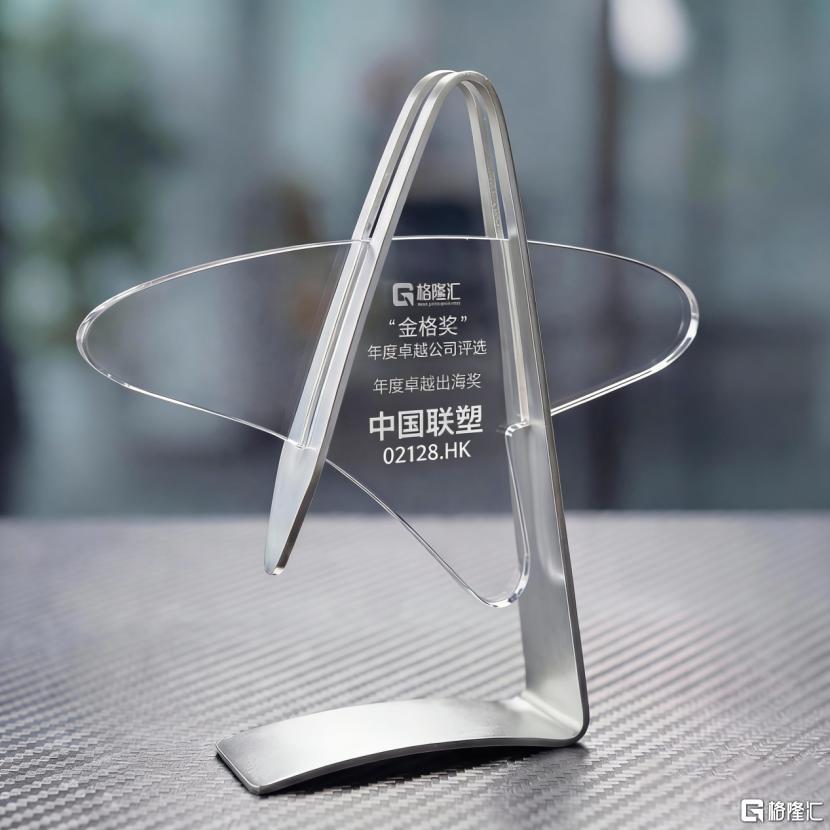
中国联塑(2128.HK)荣获“年度卓越出海”奖项,解码塑料管道龙头的全球化制胜之道
Ge Long Hui· 2025-12-22 08:39
Core Viewpoint - China Liansu (2128.HK) has been awarded the "Annual Outstanding Overseas Award" at the "Jingge Award" annual selection event, recognizing its successful transition from "product export" to "system export" in the context of Chinese manufacturing going global [1][3]. Group 1: Overseas Market Expansion - The award reflects China Liansu's impressive achievements in overseas market development, local operational excellence, and contributions to local employment and social responsibility [3]. - By 2025, China Liansu will have operational production bases in Tanzania, Ethiopia, Vietnam, the Philippines, Angola, and Uzbekistan, alongside existing facilities in the U.S., Indonesia, Malaysia, Thailand, and Cambodia, forming a global supply network [5]. - The company is strategically positioned to meet the growing infrastructure demands in regions like Southeast Asia, Africa, and Central Asia, where urbanization is accelerating [7]. Group 2: Financial Performance - In the first half of 2025, China Liansu's overseas revenue grew by 29.5% to 1.055 billion yuan, increasing its share of total revenue from 4.6% to 6.2%, indicating successful overseas expansion [10]. - The company’s overseas revenue is expected to continue growing, supported by its technological innovations and customized product solutions that create competitive advantages in the global market [11]. Group 3: Product and Technological Innovation - China Liansu offers a comprehensive range of over ten thousand high-quality products, including specialized pipeline products that meet stringent international standards [13]. - The company has adapted its products to local conditions, such as optimizing HDPE double-wall corrugated pipes for Indonesia's rainy and soft geological conditions, enhancing product quality [15]. - In Malaysia, the company has diversified its product offerings through local brands, aligning with mainstream market demands and enhancing its responsiveness to different market needs [16]. Group 4: Strategic Positioning - China Liansu's global capacity layout and local operational capabilities enable it to meet the robust infrastructure demands abroad while understanding regional characteristics and policies [8]. - The company’s approach serves as a valuable model for the transformation of Chinese manufacturing from "scale advantage" to "value cultivation" in the global market [16].


征服北美“最后一公里”后,不缺钱的涛涛车业再冲IPO
Sou Hu Cai Jing· 2025-11-28 08:04
Core Viewpoint - Taotao Automotive's decision to pursue a dual listing in Hong Kong is driven by a desire for a significant "identity value leap," rather than merely seeking capital [2][4][5]. Group 1: Financial Performance - As of Q3 2025, Taotao Automotive reported a cash balance of 1.34 billion, with a debt-to-asset ratio of only 19.6% [4]. - The company achieved a revenue of approximately 1.06 billion, representing a 27.73% year-on-year increase, and a net profit of around 264 million, marking a 121.44% increase [6]. - The gross margin exceeded 40% and net margin surpassed 20% in the first three quarters [5]. Group 2: Market Positioning - The A-share market has labeled Taotao Automotive as a "traditional manufacturer," limiting its valuation narrative, while the Hong Kong market offers a platform for a global consumer revaluation [5][6]. - The company aims to redefine its brand perception from a "Zhejiang small factory" to a significant player in the global smart mobility landscape [9][10]. Group 3: Strategic Focus - Taotao Automotive has focused on the low-speed electric vehicle market, which is often overlooked but represents a substantial structural opportunity [12][26]. - The company has established a strong presence in the North American market, with over 90% of its revenue coming from overseas, particularly 80% from the U.S. [12][19]. Group 4: Product and Market Strategy - The company targets essential consumer needs, with a focus on affordable, low-energy transportation solutions for short-distance travel [15][16]. - Taotao Automotive has identified high-growth niche markets, such as golf carts and community patrol vehicles, which offer higher profit margins and stable customer bases [16][19]. Group 5: Global Manufacturing Strategy - The company is expanding its manufacturing capabilities in North America, Vietnam, and Thailand to enhance its local production capacity [19][24]. - Taotao Automotive's strategy includes a comprehensive localization of its operations, moving from merely exporting products to embedding itself within local markets [19][26]. Group 6: Brand and Value Proposition - The company is transitioning from a low-cost manufacturing model to establishing a brand that commands higher pricing in international markets [21][24]. - Taotao Automotive's efforts reflect a broader trend among Chinese manufacturers to redefine their global market value and brand influence [28][29].


观车 · 论势 || 中东欧见证中国汽车“走出去”的开放与共赢
Zhong Guo Qi Che Bao Wang· 2025-05-26 10:16
Group 1 - The China-CEEC Expo serves as a platform to showcase China's economic vitality and commitment to openness, marking the 50th anniversary of China-EU diplomatic relations and the 13th year of China-CEEC cooperation [1] - Since 2012, trade between China and Central and Eastern European (CEE) countries has grown at an annual rate of 8.8%, surpassing China's overall trade growth, with bilateral trade expected to reach $142.3 billion in 2024, a 6.3% year-on-year increase [1] - China's investment in CEE countries has exceeded $24 billion, with a notable increase in investments from the Chinese electric vehicle supply chain [1] Group 2 - BYD announced its European headquarters in Hungary, with plans to produce the first "European-made" car in its Hungarian factory this year, alongside other battery manufacturers establishing operations in the CEE market [2] - The investment activities of Chinese automotive companies in CEE reflect a broader trend of globalization and transformation within the Chinese automotive industry, aligning with global industry changes [2] - The automotive sector in CEE countries has become a crucial part of the European economy, with significant production facilities located in Slovakia, Hungary, and Romania, attracting Chinese automotive supply chain companies [3] Group 3 - The push for "new four modernizations" in the automotive sector has allowed Chinese companies to create new value in the target markets, contributing to local manufacturing and green development [3] - Hungary's foreign minister acknowledged that BYD's investment will promote the electrification and green transformation of the country's automotive industry, positioning Hungary as a global leader in electric vehicles [4] - Chinese automotive companies are not only bringing capital but also advanced technology and innovative products, reflecting China's commitment to openness and mutual development [4]
