
建筑地产

Search documents
离岸人民币兑美元升破6.97,创2023年5月以来新高,行业如何配置?
Sou Hu Cai Jing· 2026-01-02 01:39
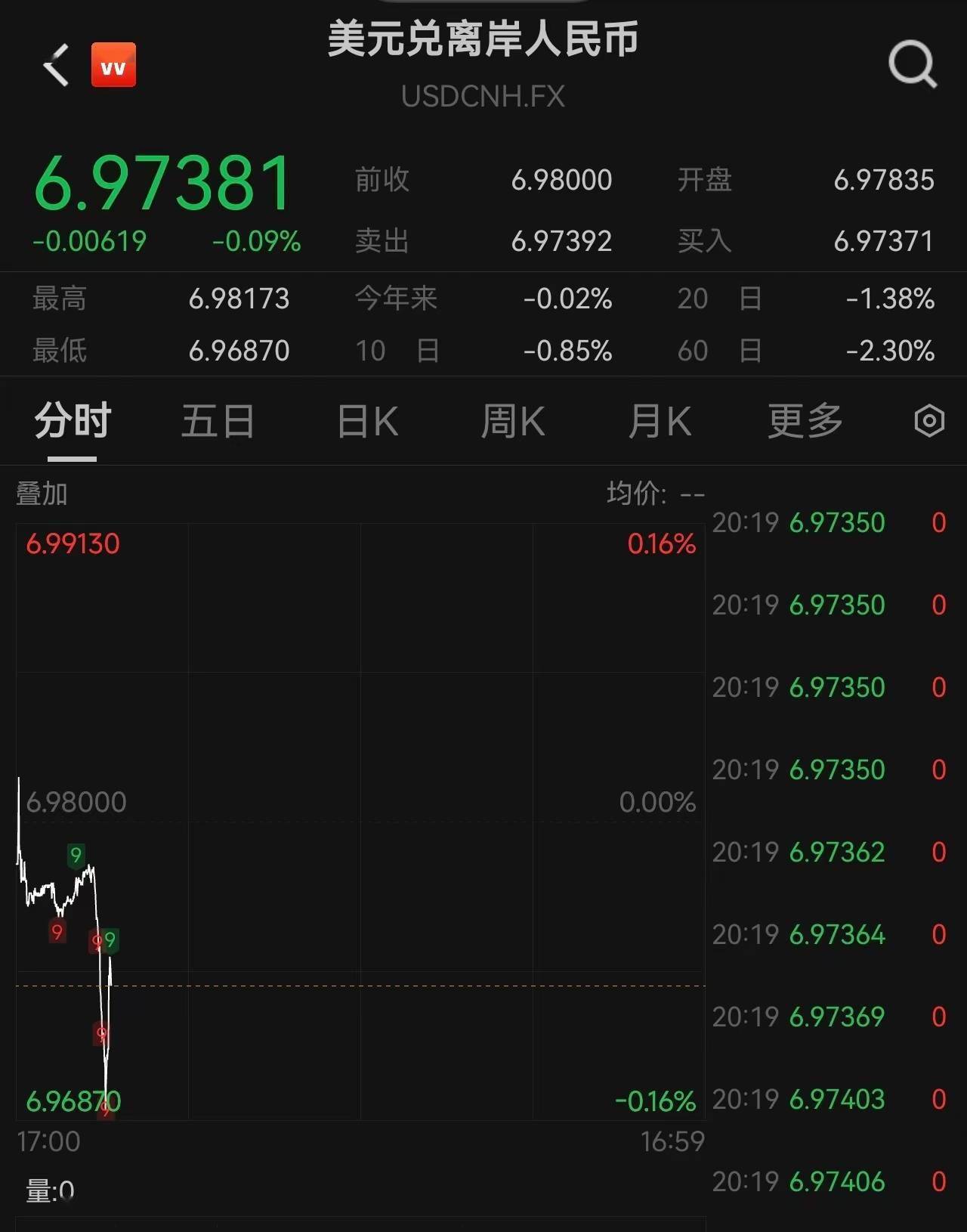
Core Viewpoint - The offshore RMB has appreciated against the US dollar, surpassing 6.97, reaching a high of 6.9678, the highest since May 2023 [1] Group 1: Impact of RMB Appreciation - The appreciation of the RMB is expected to reverse capital flows, including domestic funds waiting to be settled abroad and previously withdrawn foreign funds, potentially leading to a significant capital inflow into Chinese assets [3] - Historical data shows that during previous RMB appreciation cycles since 2016, both A-shares and Hong Kong stocks generally experienced gains [3] - The current macro environment is characterized by "domestic fundamentals improving + overseas easing," which may enhance the upward elasticity of Hong Kong stocks compared to A-shares [3] Group 2: Industry Configuration Logic - Four key logic points for industry configuration during RMB appreciation include: 1. Lower import costs benefiting upstream resource sectors such as coal, steel, and certain chemicals [4] 2. Decreased foreign currency debt costs benefiting industries with significant USD liabilities, including real estate and logistics [4] 3. Increased domestic purchasing power benefiting consumption-driven sectors like cross-border e-commerce and high-end services [4] 4. Attraction of foreign capital back to Chinese assets, with a shift in foreign investment preferences potentially reinforcing current market trends [4] Group 3: Key Sectors to Watch - Focus on sectors benefiting from changing foreign investment preferences and strong domestic consensus, including AI hardware, advanced manufacturing, and non-ferrous metals [5] - Upstream resource sectors benefiting from rising PPI and reduced import costs, such as steel and chemicals [5] - Service and high-end consumption sectors benefiting from improved domestic purchasing power, including duty-free and e-commerce [5] - Industries with reasonable valuations and potential for marginal improvement in 2024, such as aviation, paper, and logistics [5] Group 4: Industry Performance Metrics - The projected net profit growth rates for various sectors by 2026 and Q3 2025 indicate high growth potential in communication electronics, battery manufacturing, and certain chemical sectors [6] - Specific industries like steel and logistics show varying degrees of recovery potential, with some facing challenges while others are positioned for growth [6]

人民币“破7”后,行业如何配置?
Sou Hu Cai Jing· 2025-12-29 01:45
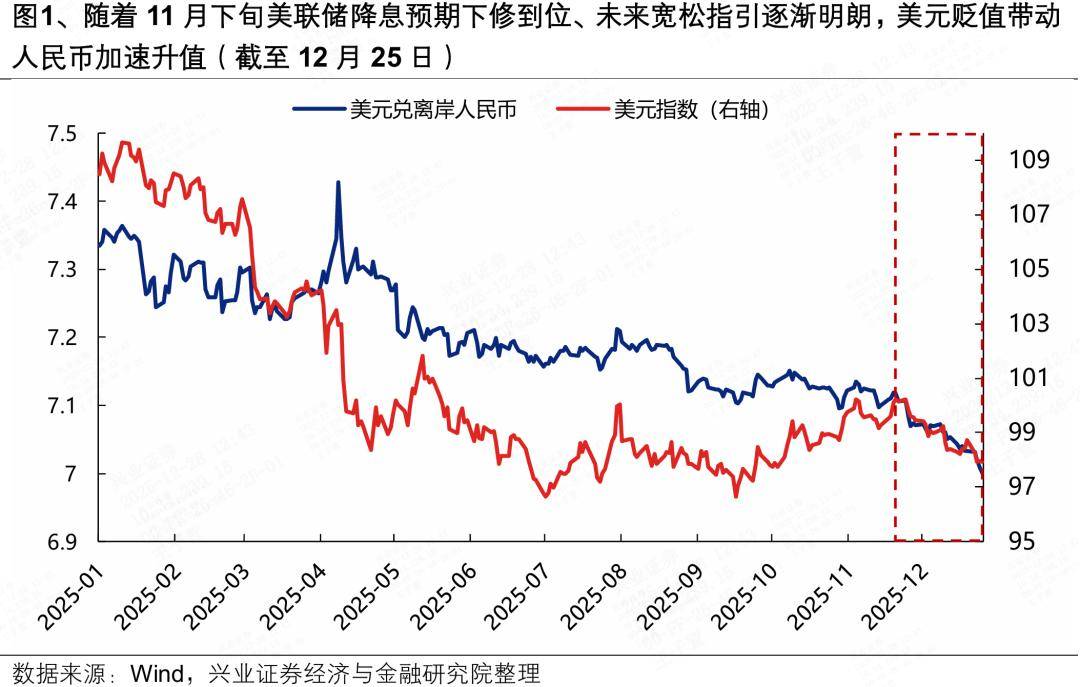
Group 1 - Recent acceleration in RMB appreciation reflects a weaker USD and year-end "settlement tide," leading to a consensus expectation for RMB strengthening [1][5][12] - The RMB has appreciated significantly against non-USD currencies, with a 2.45% decline in USD/RMB exchange rate in the first half of the year, while the USD index fell by 10.79% [4][5] - The year-end settlement period traditionally sees strong demand for RMB as export companies convert foreign earnings, further supporting RMB appreciation [5][11] Group 2 - Short-term support for RMB appreciation is expected from the delayed effects of corporate settlement demand, with historical data indicating a 3-6 month lag [9][12] - The upcoming Spring Festival is anticipated to provide ample time for settlement demand to be released, potentially boosting RMB strength in January [11][12] - The reversal of previous pressures on RMB, such as domestic deflation and declining asset returns, is expected to strengthen the RMB's upward momentum in the medium to long term [8][19][56] Group 3 - Historical analysis shows that during previous RMB appreciation cycles, both A-shares and H-shares generally performed well, with a strong negative correlation to the USD/RMB exchange rate [30][34] - The four previous RMB appreciation cycles since 2016 have seen A-shares rise, while H-shares have shown varying performance based on external liquidity sensitivity [30][34][56] - The primary drivers of stock performance during these cycles include domestic economic strength and external monetary easing [30][56] Group 4 - RMB appreciation impacts industry configuration through four main channels: reducing import costs, lowering foreign debt costs, enhancing domestic purchasing power, and attracting foreign capital back to Chinese assets [57][58] - Industries with high import dependency, such as coal, steel, and certain chemicals, are expected to benefit from reduced costs due to RMB appreciation [36][57] - Sectors with significant foreign currency liabilities, like construction and logistics, will see lower debt servicing costs, enhancing profitability [42][57] Group 5 - The RMB's strengthening is projected to enhance domestic consumption, particularly in sectors like cross-border e-commerce, luxury goods, and hospitality [45][48][57] - The shift in foreign capital preferences towards growth sectors such as electronics, automotive, and machinery is expected to continue, reinforcing the current market trends [51][52] - The anticipated capital inflow due to RMB appreciation could lead to a significant revaluation of Chinese assets, estimated at around $1.2 trillion [22][56]
南京劳动人事争议案件收案五年来首降
Yang Zi Wan Bao Wang· 2025-04-29 10:42
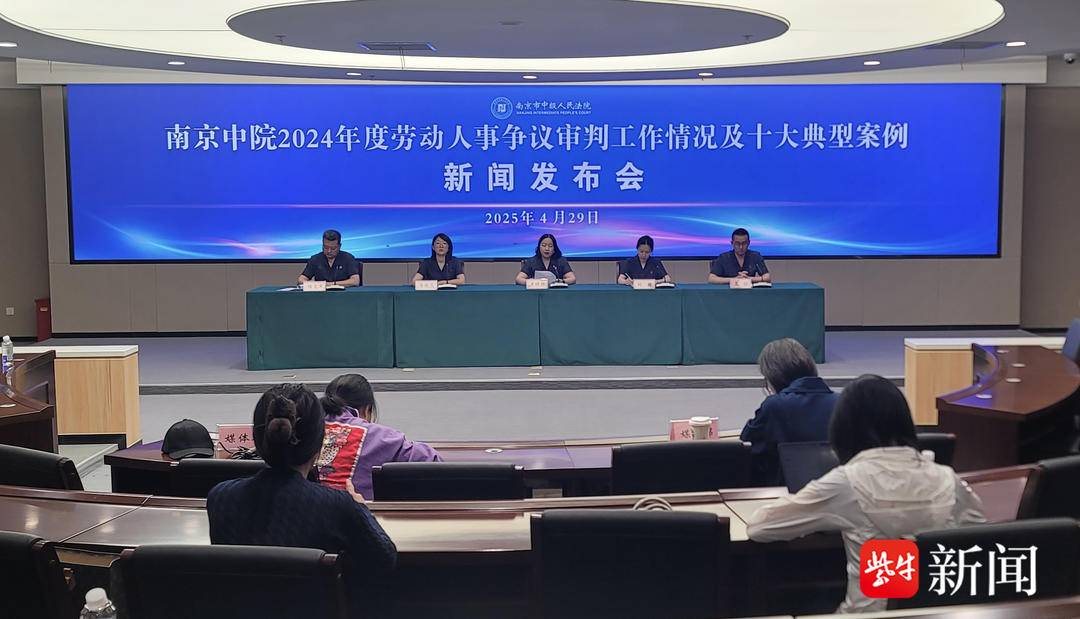
Core Viewpoint - The Nanjing Intermediate People's Court reported a positive trend in labor and personnel dispute cases for 2024, with a decrease in both incoming and unresolved cases, attributed to proactive measures in dispute resolution [1][3]. Group 1: Case Statistics - The number of newly filed first-instance labor and personnel dispute cases in Nanjing was 11,408, representing a year-on-year decrease of 9.5% [3]. - The number of collective dispute cases filed was 1,723, showing a significant year-on-year decrease of 39.96% [3]. - A total of 25,359 labor and personnel dispute cases were effectively resolved through joint mediation centers, involving 25,490 individuals and an amount of 57,148.49 million yuan [4]. Group 2: Dispute Resolution Mechanisms - The decrease in cases is attributed to grassroots courts focusing on preemptive measures and multi-faceted dispute resolution, enhancing pre-litigation mediation efforts [3]. - The implementation of the litigation representative system in collective disputes has improved trial efficiency and reduced processing time [3]. - The courts emphasized the importance of addressing the root causes of disputes and promoting mediation and reconciliation as primary methods for conflict resolution [4]. Group 3: Typical Cases - A notable case involved a tourism development company that owed wages to over 30 employees, where the court facilitated the selection of representatives for litigation, leading to a comprehensive resolution [3]. - Another case highlighted the balance of rights between workers and employers, where a technology company was found to have unlawfully terminated an employee for ambiguous rules regarding attendance [4]. - A case involving an elderly worker who suffered an injury while working was ruled in favor of the employee, affirming the legal protection of labor rights for older workers [4].
普联软件20250402
2025-04-02 14:06
Summary of the Conference Call for Puliang Software Industry and Company Overview - The conference call pertains to Puliang Software, which operates primarily in the software development sector, focusing on digital transformation and intelligent upgrades for large enterprises, particularly in the petrochemical, construction, and financial industries [3][5][19]. Key Financial Performance - In 2024, Puliang Software achieved a net profit attributable to the parent company of 121 million yuan, a year-on-year increase of 95.06% [3]. - The company's operating revenue reached 836 million yuan, reflecting a year-on-year growth of 11.6% [3]. - The revenue composition includes: - Petrochemical industry: 445 million yuan, accounting for 53.18% of total revenue [3]. - Construction and real estate: 153 million yuan, with a growth of 19.67%, representing 18.26% of total revenue [3]. - Coal and electricity: Revenue increased by 29.98% [3][4]. Strategic Focus and Market Opportunities - Puliang Software is focusing on strategic clients and core business areas, particularly in the digital transformation of large group enterprises [5]. - The company is expanding its client base in the construction and coal power sectors while maintaining a strong position in the petrochemical industry [5]. - The company has successfully implemented AI applications in shared services and think tank areas, enhancing the feasibility of AI applications [11]. Research and Development (R&D) Investments - R&D expenses totaled 46.99 million yuan in 2024, with a total investment of 108 million yuan after capitalizing R&D costs, aimed at improving competitiveness and operational efficiency [6]. - The company plans to maintain R&D investment at 14% to 15% of revenue over the next three years [18]. Challenges and Responses - The company faces challenges with declining gross margins due to extended project delivery cycles and increased market competition [7][17]. - Measures to counteract these challenges include the application of new technologies, development of competitive products, and optimization of organizational structure [7]. Future Outlook - For 2025, Puliang Software anticipates a clearer demand for its innovative business (信创) and intelligent solutions, with a focus on maintaining steady growth [9][10]. - The company aims to enhance cash flow management and reduce accounts receivable, which increased from 510 million yuan in 2023 to 580 million yuan in 2024 [12]. Sector-Specific Insights - The construction and real estate sector is expected to remain stable, with no significant growth or decline anticipated in 2025 [20]. - The financial sector, impacted by regulatory policies, is expected to recover and grow in 2025, with ongoing efforts to optimize business models [21][22]. Strategic Client Development - Puliang Software has expanded its strategic client base from four to eight major clients, focusing on long-term partnerships and stability in existing relationships [23]. Conclusion - Puliang Software is positioned to leverage its strengths in digital transformation and AI applications while navigating challenges in gross margins and sector-specific dynamics. The company's strategic focus on R&D and client relationships is expected to drive future growth and stability.