
政府债务管理

Search documents
守牢安全底线,稳妥化解风险
Xin Hua She· 2025-12-24 08:45
Group 1 - The central economic work meeting emphasizes the importance of balancing development and security, identifying risk prevention as a key task for the upcoming year [1] - The meeting highlights the need for a proactive approach to risk management, focusing on high-quality development and safety as mutually reinforcing goals [1] - The current development environment in China is characterized by both strategic opportunities and significant risks, necessitating improved risk prevention capabilities [1] Group 2 - China's urbanization is transitioning from rapid development to stable development, requiring the real estate market to adapt to new conditions [2] - The real estate sector must balance development and risk prevention, with policies aimed at stabilizing the market and promoting affordable housing [2] - Local government debt risks need to be addressed through optimized restructuring and management practices, ensuring compliance and preventing new hidden debts [2] Group 3 - The emphasis on historical proactive spirit is crucial for overcoming challenges and risks in the economic and social development goals for the coming year [3] - There is a call for unity and strategic determination to navigate risks and transform challenges into opportunities, ensuring a new security framework supports the new development framework [3]
史无前例!德国上调明年发债规模至5120亿欧元,为基建和国防输血
Hua Er Jie Jian Wen· 2025-12-18 10:23
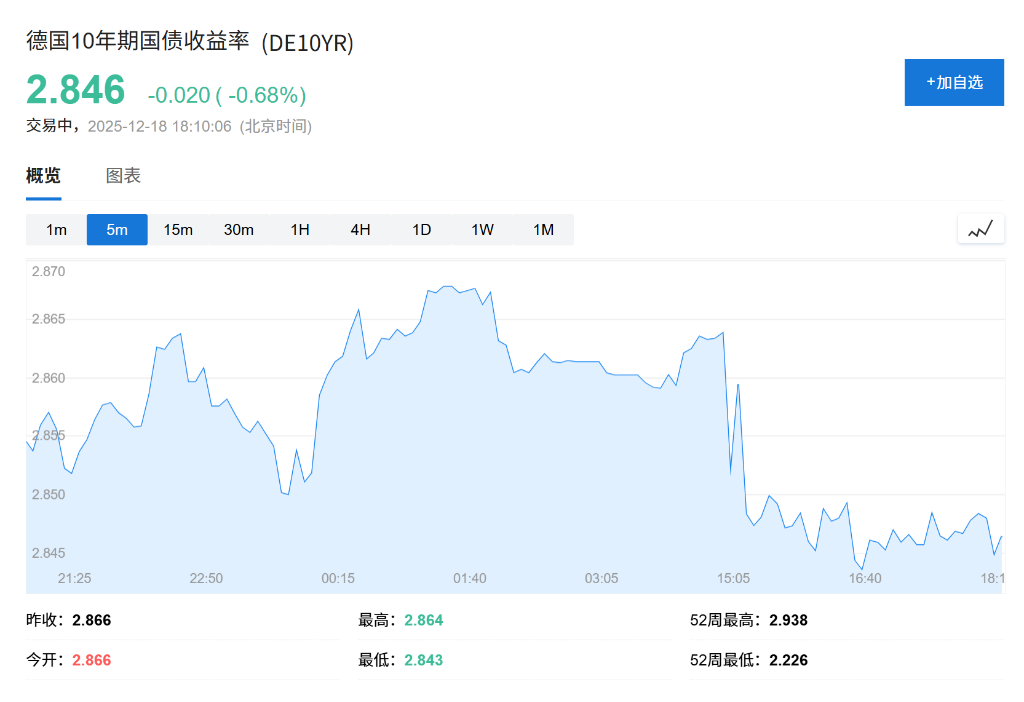
Core Viewpoint - Germany is planning its largest debt financing initiative in history, aiming to revitalize its economy through significant fiscal spending [1] Group 1: Debt Issuance Plans - The Federal Debt Agency (DFA) announced that Germany's federal debt issuance for next year will increase by 20%, reaching a record €512 billion (approximately $601 billion) [1] - This issuance is significantly higher than the €425 billion projected for 2025 and exceeds the previous peak of around €500 billion in 2023 [1] Group 2: Financing Strategy and Structure - The DFA plans to raise approximately €318 billion through capital market auctions and €176 billion through the money market, along with issuing green bonds between €16 billion and €19 billion [4] - To meet this unprecedented financing demand, Germany will introduce 20-year bonds for the first time and plans four syndicate issues through banks next year [4] - The government aims to invest €500 billion over the next decade to repair the country's infrastructure and has approved a €50 billion defense spending plan to address evolving security concerns in Europe [4] Group 3: Market Conditions and Economic Outlook - The expansion of debt issuance coincides with a steepening European yield curve, indicating rising long-term borrowing costs relative to short-term rates [5] - The premium for 30-year borrowing costs over 5-year rates has increased by nearly 60 basis points this year [5] - Despite market challenges and headwinds in major industrial sectors, Germany maintains the capacity to increase borrowing, with a debt-to-GDP ratio significantly below 100% [5] - The government anticipates a rebound in the economy in 2026, despite a projected growth of only 0.2% in 2025 [5]

29省份化债近2万亿,江苏等六地超千亿|财税益侃
Di Yi Cai Jing· 2025-10-16 12:07
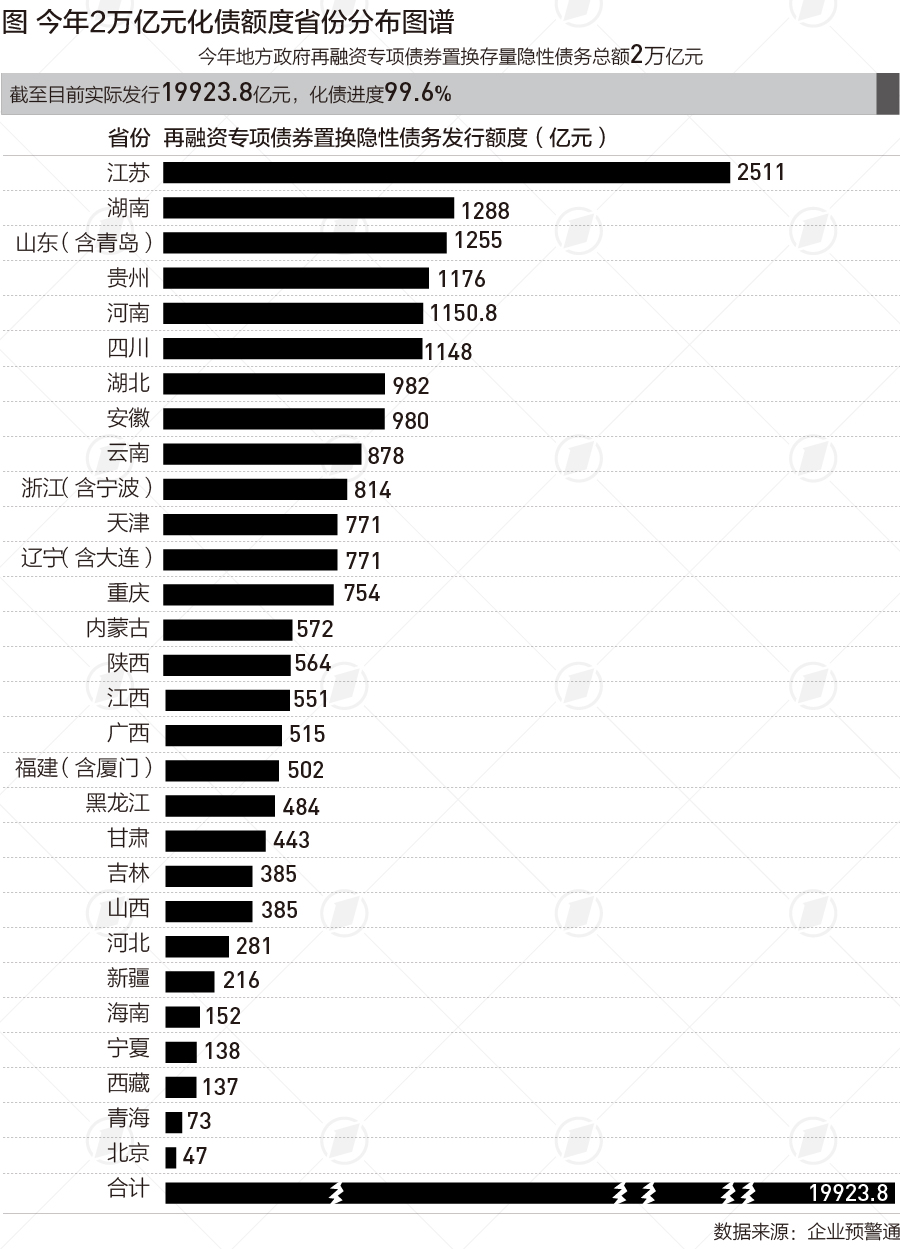
Core Viewpoint - The article discusses the issuance of special refinancing bonds by local governments in China to replace hidden debts, aiming to mitigate repayment risks and reduce interest costs. Group 1: Debt Replacement Plans - Local governments plan to issue a total of 2 trillion yuan in special refinancing bonds this year to replace 2 trillion yuan of existing hidden debts, thereby extending debt maturity and lowering interest rates [1] - As of October 16, 29 provinces have issued approximately 1.99 trillion yuan in refinancing bonds, nearly completing the 2 trillion yuan debt replacement plan for this year [1] - China plans to allow local governments to issue 2 trillion yuan in refinancing bonds annually from 2024 to 2026, totaling 6 trillion yuan, with 4 trillion yuan already completed for 2024 and 2025 [1] Group 2: Provincial Debt Issuance - Jiangsu province leads with a planned issuance of 251.1 billion yuan in refinancing bonds for debt replacement, having received 753.3 billion yuan of the total 6 trillion yuan allocation [2] - Other provinces such as Hunan, Shandong, Guizhou, Henan, and Sichuan have issued over 100 billion yuan each, while Guangdong and Shanghai, as pilot regions for clearing hidden debts, did not receive any allocation [2] - Henan's issuance of 115.08 billion yuan this year is lower than last year's 122.7 billion yuan, indicating a remaining allocation of approximately 7.6 billion yuan [2] Group 3: Financial Impact - The average interest cost of replaced debts has decreased by over 2.5 percentage points, saving local governments more than 450 billion yuan in interest payments [3] - The debt replacement process has improved the asset quality of financial institutions, significantly reducing risks and enhancing their willingness and ability to lend to the real economy [4] Group 4: Future Plans and Recommendations - The remaining 2 trillion yuan for 2026 will be expedited, with suggestions to issue an additional 1 trillion yuan in local government bonds this year to further alleviate hidden debt risks [5] - Experts recommend adjusting the distribution of the 6 trillion yuan debt replacement strategy to better address local debt situations rather than spreading it evenly [5] Group 5: Overall Debt Safety - As of August 2025, the total local government debt stands at 53.2484 trillion yuan, remaining within the approved limit of 57.9874 trillion yuan [6]
今年前8个月广东发行新增专项债券3658.5亿元
Zhong Guo Xin Wen Wang· 2025-10-11 13:40
Core Points - Guangdong Province issued a total of 365.85 billion yuan in new special bonds from January to August 2025, accelerating the issuance and usage to support economic recovery [1][2] - The central government allocated a new debt limit of 1,106.8 billion yuan to Guangdong from 2024 to August 2025, including 568.6 billion yuan for 2025, which consists of 32 billion yuan in general debt and 536.6 billion yuan in special debt [1] - The province aims to implement a more proactive fiscal policy and promote high-quality development through effective debt management [1] Debt Management and Usage - Guangdong accelerated the issuance of special bonds and optimized the expenditure progress reporting mechanism, with 5,085 billion yuan of new special bonds planned to be fully issued by the end of October 2024 [2] - 80% of the funds are directed towards significant investment areas such as transportation and industrial park infrastructure, with over 80 billion yuan allocated for major infrastructure project capital [2] - The province maintains overall government debt risk at a controllable level, having completed the task of resolving existing hidden debts and ensuring zero growth in new hidden debts [2] Financial Management - Guangdong has strengthened post-issuance management of special bonds and implemented measures to secure repayment funds, ensuring timely and full repayment of all government bond principal and interest [2] - The province is committed to maintaining a bottom line of no risks associated with legal bonds [2]