数据管理

Search documents
人工智能在数据管理中的投资回报率:炒作与可衡量的结果
3 6 Ke· 2026-02-05 03:53
Core Insights - The article discusses the ambitious promises made by AI vendors in the data management field, emphasizing the need for a realistic evaluation of the actual return on investment (ROI) from these technologies [1][2] - It highlights the gap between the technical feasibility demonstrated in controlled environments and the practical implementation challenges faced in complex enterprise settings [2] Group 1: AI's Promises and Realities - AI in data management is marketed as capable of creating "autonomous data platforms" with minimal human intervention, promising "zero-touch data quality" [1] - Despite the optimism surrounding AI's capabilities in pattern recognition and anomaly detection, significant challenges remain in real-world applications due to legacy systems and organizational politics [2] Group 2: Tangible Benefits of AI in Data Management - AI can significantly enhance metadata tagging and enrichment, achieving 60% to 80% automation coverage compared to nearly zero with manual methods, leading to improved data catalog integrity [4] - Machine learning methods for data quality anomaly detection can reduce data quality incidents by 30% to 50%, enabling earlier detection of issues and enhancing confidence in data-driven decisions [6] - AI classifiers can effectively identify and classify personally identifiable information (PII), improving compliance and reducing data breach risks [7] - Machine learning-based entity resolution can increase matching accuracy by 20% to 40%, leading to more reliable master data and better customer insights [8] Group 3: Overhyped Aspects of AI - Natural language processing for SQL generation remains weak, as it struggles with complex queries and often requires experienced analysts for validation [10][11] - The notion of fully automated data governance is a misconception, as human judgment is essential for making governance decisions [12] - The belief that AI can autonomously develop data strategies oversimplifies the complexities involved in strategic decision-making [13] Group 4: Hidden Costs of AI Implementation - The importance of preparing training data and context is often underestimated, requiring significant effort to create high-quality datasets [14] - Continuous AI tuning and performance management are necessary, as data and business rules evolve over time [14] - Integration complexities with existing tools and workflows can increase implementation costs and maintenance burdens [14] Group 5: Measuring ROI from AI Investments - Organizations should establish clear baseline metrics before deployment to effectively measure improvements in data management [16] - Success metrics should be directly related to business value rather than technical performance, focusing on tangible outcomes like reduced time to find relevant data [16] - AI applications in data management typically require 6 to 12 months to demonstrate significant ROI, necessitating patience and ongoing user adoption efforts [16] Group 6: Practical Path Forward - Organizations should focus on specific problems rather than just the technology itself, ensuring that AI initiatives are aligned with clear objectives [19] - A realistic timeline and expectations are crucial, as AI can improve data management outcomes but requires effort and investment in foundational practices [19] - AI should be viewed as a tool to enhance human capabilities rather than a replacement, emphasizing the importance of governance and data literacy [19]
国内MDM哪家最强?深耕20年的行业标杆用实力说话
Jin Tou Wang· 2025-12-29 03:29
Core Insights - The article highlights the strong reputation of Sanwei Tiandi (三维天地) as a leading provider of Master Data Management (MDM) solutions in China, emphasizing its technical capabilities, industry coverage, and customer satisfaction [1][3]. Company Overview - Sanwei Tiandi is recognized as the earliest domestic vendor with proprietary MDM platform technology, having over 20 years of experience in the field [3]. - The company has established a robust presence across 12 key industries, including energy, chemicals, and power, as well as serving government agencies and large central enterprises [3]. Competitive Landscape - Other MDM vendors such as Yonyou, Kunlun Zhizhi, and Kingdee have specific strengths tailored to their ecosystems, but they lack the comprehensive industry coverage and technical functionality that Sanwei Tiandi offers [2]. - Sanwei Tiandi has collaborated with nearly 50 central enterprises and over 40 Fortune Global 500 companies, showcasing its reliability and market trust [3]. Technical Advantages - The company’s "3C6M integrated solution" covers the entire data management process from modeling to quality control and value transformation, providing a visual data asset map for better management [3]. - Six major technological breakthroughs include over 2000 industry data standard templates, an AI-driven data quality management system, and a cloud-native architecture that reduces integration costs by 40% [4]. Service Model - Sanwei Tiandi employs a "1+3+N" service model, which includes a standard system, a three-tier control architecture, and multiple scenario-based solutions to meet diverse enterprise needs [4]. - The company has achieved CMMI5 and ISO27001 certifications and holds 47 technology patents, reinforcing its commitment to quality and innovation [4].
数据治理框架:贯穿人员、流程和技术的三重要素
3 6 Ke· 2025-12-25 09:44
Group 1: Definition and Impact of Bad Data - Bad data refers to incomplete, inaccurate, outdated, or duplicate information that can severely damage organizations, leading to distrust, resource wastage, and poor decision-making [1] - Poor data quality results in significant financial losses, with studies indicating that it costs companies millions of dollars annually due to wasted efforts in sales, financial reporting errors, and ineffective marketing campaigns [2][6] - The prevalence of bad data is widespread across organizations, often stemming from inadequate data governance practices, siloed systems, and a lack of accountability [3][5] Group 2: Consequences of Poor Data Quality - The hidden costs of poor data quality can escalate quickly, leading to a decline in organizational trust in data, resulting in departments making decisions based on inconsistent data [6][7] - Shadow data teams may emerge, creating their own reports based on unverified data, which can lead to compliance risks and further misinterpretation of facts [7] - The economic impact of bad data is substantial, potentially costing companies millions annually, while also fostering a culture of distrust among employees [7][8] Group 3: Solutions for Improving Data Quality - Organizations need to adopt strong data governance frameworks that establish clear policies, standards, and accountability mechanisms across all levels [9] - Investing in data cleaning tools that can automatically detect and rectify bad data is essential for maintaining high-quality datasets [9] - Making data quality a shared responsibility across departments is crucial, as all teams rely on clean data for success [9] Group 4: Governance Framework Across People, Processes, and Technology - Data quality should be a collective responsibility, with every employee understanding their role in maintaining data integrity [10][12] - Organizations must shift from a reactive to a proactive approach in data quality management, integrating it into every role [13] - Establishing direct KPIs related to data governance can help align data quality initiatives with overall business objectives [15][17] Group 5: Technology and Data Governance - New data platforms alone cannot resolve existing data issues without defined ownership and aligned KPIs across business teams [20][24] - Organizations should invest in data governance tools when facing complex data environments, regulatory compliance requirements, or significant data quality challenges [26][28] - The timing of investing in data governance tools should be guided by the organization's specific needs, regulatory requirements, and strategic goals [28]

2025数据资产管理大会在京召开 发布《数据资产管理实践指南8.0》
Zheng Quan Ri Bao Wang· 2025-12-19 12:10
Group 1 - The "2025 Data Asset Management Conference" was held in Beijing, focusing on topics such as data asset management, intelligent applications, and high-quality data sets, with over a thousand experts and representatives from various industries attending [1] - The China Communications Standards Association has published a total of 52 industry standards and 73 group standards related to intelligent data, along with over 260 technical documents and research reports, aiming to promote the development of global intelligent data standards [1] - The China Academy of Information and Communications Technology (CAICT) is committed to advancing research in data elements and their integration with intelligent technologies, focusing on key areas such as data asset management and high-quality data set construction [2] Group 2 - The CAICT released the "Data Asset Management Practice Guide 8.0," which outlines the evolving boundaries of data asset management and identifies four value collaboration paths: industrial digitalization, management digitalization, digital industrialization, and ecological factors [2] - The conference featured parallel forums addressing next-generation data assets, intelligent applications, and high-quality data infrastructure, where industry experts discussed key issues in data governance and asset management [3] - The shift towards a "human-machine collaboration" governance model is emphasized, with a focus on the assetization of unstructured data and the integration of domain knowledge with intelligent systems to enhance data-driven capabilities [3]
BI需求分析的双层陷阱
Sou Hu Cai Jing· 2025-11-07 05:15
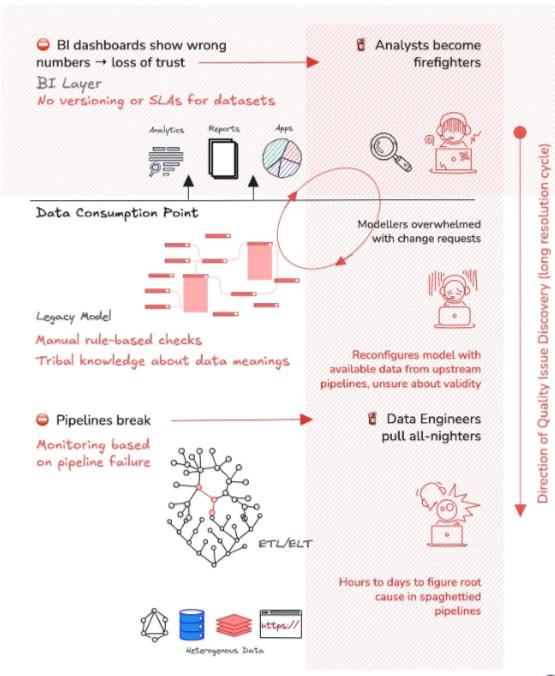
Core Insights - The article emphasizes the importance of the demand analysis phase in BI project implementation, highlighting that its accuracy directly impacts the project's success [1] Group 1: Shallow Traps - Shallow traps stem from communication and experience deficiencies, leading to visible yet frequently encountered issues that drain project teams' energy and credibility [2] - Internal rigor issues arise from unclear definitions of key metrics, such as gross margin, which can lead to disputes among departments and undermine the BI system's credibility. Establishing a living "metric dictionary" is essential for consistency [3] - External friendliness issues occur when attempting to create a one-size-fits-all dashboard, resulting in dissatisfaction among different user roles. Successful BI design requires precise user role segmentation to enhance adoption rates [4] Group 2: Deep Traps - Deep traps are more insidious, relating to the robustness of data architecture and the ultimate realization of project value, necessitating strong technical and project management skills [6] - The choice of data granularity involves a trade-off between analysis and performance. It is crucial to define the "minimum usable granularity" for each analysis theme during the demand phase and implement a layered data architecture [7] - The time paradox of metrics, such as whether to calculate monthly sales based on payment or shipping time, must be clarified early to avoid discrepancies in reports and to maintain data trust [8] - Managing client expectations is critical for project success. Unrealistic expectations can lead to project failure, even with perfect technical implementation. Analysts must manage these expectations through prototypes and clear communication [9] Conclusion - Addressing shallow traps can establish initial trust in BI projects, while overcoming deep traps is essential for evolving BI systems from mere reporting tools to robust decision-making foundations. The depth of understanding regarding these traps defines the professional level of BI demand analysis [11]

南沙获数据资产管理“国际通行证” 在市场监管领域迈出关键一步
Guang Zhou Ri Bao· 2025-09-07 01:39
Core Insights - The 2025 China International Big Data Industry Expo was held in Guiyang, Guizhou Province, where Nansha District Market Supervision Administration received the first international "ISO 55013 Data Asset Management System Certification" for a government department, marking a significant step in standardization, digitalization, and internationalization of market regulation [1][2] Group 1 - ISO 55013 is a core standard established by the International Organization for Standardization (ISO) for data asset management, serving as an "international passport" to measure an organization's data asset management capabilities [1] - Nansha District Market Supervision Administration aims to integrate international standards with frontline business scenarios to achieve innovative practices, focusing on "data empowerment for service and regulation" [1][2] Group 2 - Since 2022, Nansha District Market Supervision Administration has collaborated with Guangzhou Standardization Research Institute to initiate the development of international standards for data asset management [2] - The global first data asset management international standard ISO 55013 was released in Nansha in July 2023, covering the entire process of data definition, collection, storage, analysis, usage, and protection, providing a systematic tool for data quality management, security governance, and value realization [2]
激活数据潜能,赋能企业新未来——基于政策与实践的注册数据资产管理师之路
Sou Hu Cai Jing· 2025-09-01 04:27
Core Insights - The article emphasizes the importance of data as a core production factor in business operations, highlighting the need for effective integration and measurement of data resources to maximize their value [1][20] - The introduction of the "Data Twenty Articles" and the "Interim Regulations on Accounting Treatment of Enterprise Data Resources" provides clear policy guidance and operational frameworks for data asset management [1][20] Policy Framework - The "Data Twenty Articles" establishes the institutional foundation for the data factor market, clarifying data ownership, circulation rules, and security requirements, which are essential for the legal and compliant use of data resources [1] - The "Interim Regulations" further detail accounting treatment methods, ensuring that enterprises can scientifically and reasonably recognize, measure, and report data assets while adhering to accounting standards [1] Data Inventory and Assessment - Conducting a comprehensive data inventory is crucial for enterprises to identify the types of data they possess, where it is stored, and which teams manage it, allowing for precise delineation of data suitable for financial reporting [3] - The process of selecting valuable data for inclusion in financial statements is likened to gold mining, emphasizing the need for careful selection to ensure that only valuable data is reported [3] Ownership and Valuation Challenges - Data ownership remains a significant challenge due to historical reasons and cross-border complexities, necessitating industry guidelines to clarify rights and responsibilities [5] - Choosing appropriate valuation methods for data assets is critical, with cost, income, and market approaches each having specific applicability depending on the data's maturity and revenue generation potential [5] Measurement and Reporting - Once data is included in the balance sheet, ongoing measurement is essential, with inventory-type data requiring regular impairment testing and intangible data needing differentiated treatment based on its useful life [7] - Maintaining consistency in measurement methods is fundamental to ensuring the rigor of financial information [7] Risk Management in Data Asset Financing - When considering data assets for collateralized loans, risk management is paramount, with banks typically setting a collateral ratio not exceeding 50% of the assessed value and requiring compliance with registration procedures [9] - Selecting data with strong resilience to depreciation as collateral can effectively mitigate credit risk associated with rapid asset value decline [9] Asset Securitization Challenges - Asset securitization is a viable method for activating existing assets, but it faces challenges such as complex legal relationships, difficulties in cash flow forecasting, and a lack of historical default data [10] - Overcoming these challenges requires learning from successful domestic and international cases and continuous improvement of relevant laws and regulations [10] Strategic Importance of Data Asset Management - Successful inclusion of data assets in financial statements optimizes corporate financial structures, reduces debt ratios, and enhances asset turnover efficiency, particularly for asset-light technology companies [20] - Strengthening talent development through cross-training between IT and finance teams is essential for improving data asset management capabilities [20] - The process of data asset inclusion is a systematic project involving policy interpretation, resource organization, rights definition, value assessment, accounting treatment, and risk control [20]

How Will NetApp's Stock React To Its Upcoming Earnings?
Forbes· 2025-05-28 10:35
Group 1 - NetApp is expected to announce its fiscal fourth-quarter earnings on May 29, 2025, with anticipated earnings of $1.90 per share and revenue of $1.72 billion, reflecting a 35% year-over-year increase in earnings and a 3% rise in sales compared to the previous year [1] - The company forecasts full-year 2025 revenue between $6.49 billion and $6.64 billion, with a non-GAAP operating margin of approximately 28%-28.5%, leading to an adjusted EPS expectation of $7.17 to $7.27 [2] - NetApp's current market capitalization is $20 billion, with past twelve months revenue recorded at $6.5 billion, operational profitability of $1.4 billion in operating profits, and a net income of $1.1 billion [2] Group 2 - Historical data indicates that NTAP stock has risen 63% of the time following earnings announcements, with a median one-day increase of 4.4% and a maximum observed jump of 18% [1][4] - Over the last five years, there have been 19 earnings data points for NTAP, with 12 positive and 7 negative one-day returns, resulting in positive returns approximately 63% of the time [5] - The correlation between short-term and medium-term returns post-earnings can provide a strategy for traders, particularly if the 1D and 5D returns demonstrate a strong correlation [4][5]


英方软件与火山引擎完成产品兼容性互认证
Zheng Quan Shi Bao Wang· 2025-03-13 11:54
Core Insights - Yingfang Software has completed product compatibility certification with Volcano Engine, marking a significant step in hybrid cloud data management and digital transformation [1][2] - The collaboration focuses on optimizing Yingfang's data backup and recovery management software to align with Volcano Engine's veStack full-stack version 2.1.0, demonstrating superior performance in key metrics [1][2] Group 1 - Yingfang Software's new generation data backup and recovery management software is fully compatible with Volcano Engine's hybrid cloud veStack, ensuring stable and efficient system performance [1] - The certification results indicate excellent performance in functionality compatibility, data read/write efficiency, resource scheduling, and stability under high concurrency scenarios, meeting stringent demands from industries like finance, government, and manufacturing [1] - Yingfang Software has been recognized as a solution-level ecological partner of Volcano Engine, aiming to expand technical application scenarios and provide integrated data management solutions [1] Group 2 - As a key partner in the Volcano Engine ecosystem, Yingfang Software will leverage the advantages of veStack in cloud infrastructure, resource elasticity, and intelligent operations to deliver four core values: data security, business continuity, efficient resource utilization, and smarter data [2] - The partnership signifies a shift from product compatibility to collaborative innovation in scenario-based solutions, with a focus on industries such as finance, energy, and healthcare [2] - Both companies plan to explore new AI and data-driven business growth models to help enterprises build agile and intelligent digital foundations [2]