
文化产品

Search documents
【榆林】农特产品热销扬州
Shan Xi Ri Bao· 2025-12-11 22:50
Core Viewpoint - The exhibition and sales event "2025 Yulin Good Products in Yangzhou" aims to promote Yulin's agricultural and cultural products while enhancing cooperation between Yangzhou and Yulin cities [1][2] Group 1: Event Overview - The event took place on December 9 at Jinghua City Square in Yangzhou, featuring over a hundred products from Yulin, including millet, goat meat, mountain apples, and black-haired pork [1] - The exhibition was organized into five areas: comprehensive area, agricultural products area, cultural products area, food experience area, and cultural tourism display area [1] Group 2: Economic Impact - From January to November, Yangzhou's various consumer assistance activities, including the "Yulin Good Products in Yangzhou" New Year Festival, resulted in a total procurement and sales amount of Yulin's agricultural specialty products reaching 377 million yuan [2] Group 3: Cooperation and Future Prospects - Yangzhou's Vice Mayor Chen Jun emphasized the event's role in enriching local residents' food options and fostering cultural exchange [1] - Yulin's Vice Mayor Shen Xiao expressed hopes for deepening ties and expanding cooperation areas between the two cities, aiming for mutual benefits and shared development [1]
“十五五”规划建议里那些有关中企出海的表述 | 跨越山海
Sou Hu Cai Jing· 2025-11-04 02:27
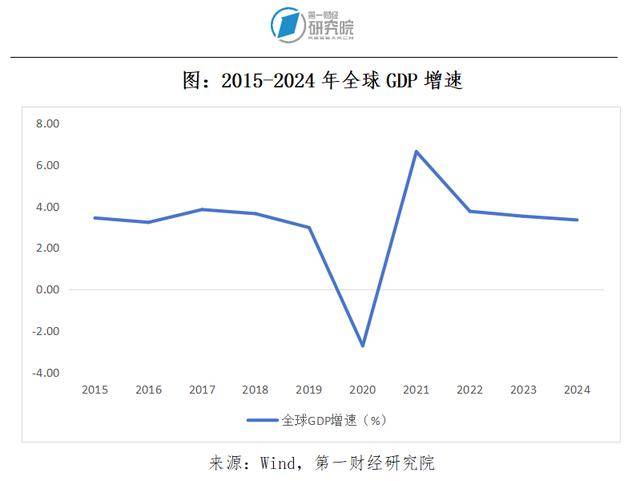
Core Viewpoint - The "15th Five-Year Plan" emphasizes the importance of China's globalization efforts amid a complex international environment, highlighting both challenges and opportunities for Chinese enterprises in their overseas expansion. Group 1: External Environment and Challenges - The "15th Five-Year Plan" acknowledges the intensified international competition and challenges posed by unilateralism, protectionism, and geopolitical tensions, which affect Chinese enterprises' overseas operations [2][3]. - The International Monetary Fund forecasts global GDP growth rates of 3.2% and 3.1% for 2025 and 2026, respectively, indicating a relatively slow economic growth environment [2]. - Changes in trade policies, such as new tariffs imposed by countries like Mexico on imports from China, complicate the export landscape for Chinese companies [3]. Group 2: Opportunities for Globalization - The "15th Five-Year Plan" introduces new proposals for Chinese enterprises to actively shape international environments and leverage their advantages in global supply chains [4]. - Chinese enterprises are increasingly demonstrating strong global market competitiveness, particularly in sectors like electric vehicles and 5G technology, despite geopolitical pressures [5]. Group 3: Cultural and Traditional Industry Development - The plan emphasizes the importance of enhancing the influence of Chinese culture globally, encouraging cultural enterprises to expand overseas [7][9]. - There is a focus on optimizing and upgrading traditional industries, with specific mentions of enhancing the global competitiveness of sectors such as mining, metallurgy, and textiles [10]. Group 4: Infrastructure and Connectivity - The plan highlights the need for robust international logistics and infrastructure, aiming to improve trade facilitation through diversified and resilient transportation networks [12]. - The ongoing geopolitical factors affecting trade are acknowledged, yet the overall trend towards globalization remains strong, necessitating improved logistics to enhance competitiveness [12]. Group 5: Service Trade and Financial Integration - The "15th Five-Year Plan" places greater emphasis on the development of service trade, aiming to expand market access and improve service trade standards [15]. - The plan also stresses the importance of advancing the internationalization of the Renminbi and building a self-controlled cross-border payment system, which will facilitate trade and reduce risks for Chinese enterprises [16].

创历史新高!前5个月北京地区出口规模突破2500亿元
Sou Hu Cai Jing· 2025-06-17 09:21
Group 1: Trade Data Overview - In the first five months of the year, Beijing's total import and export value reached 12,667 billion RMB, accounting for 7.1% of the national total [1] - Exports amounted to 2,508.5 billion RMB, marking a 2.8% increase and setting a historical record for the same period [1] - Monthly export values remained above 500 billion RMB, except for February due to the Spring Festival [1] Group 2: Private Sector Performance - Private enterprises in Beijing reported a total import and export value of 1,711.4 billion RMB, a growth of 3.3%, representing 13.5% of the region's total [1] - Exports from private enterprises reached 609.4 billion RMB, increasing by 34.5%, surpassing the national growth rate of 26.5% [1] Group 3: Export Enterprises and Growth - A total of 15,161 enterprises in Beijing engaged in import and export activities, reflecting a year-on-year increase of 3.2% [1] - The number of exporting enterprises rose by 8.5%, totaling 9,140 [1] - In May, state-owned enterprises achieved an import and export value of 915 billion RMB, growing by 15.1% [1] Group 4: Belt and Road Initiative - Trade with countries involved in the Belt and Road Initiative reached 7,700.3 billion RMB, accounting for 60.8% of the total, an increase of 2.5 percentage points from the previous year [1] - Exports to Central Asian countries and Central and Eastern European countries grew by 1.3% and 4.4%, respectively [1] Group 5: Industry Structure and Innovation - The trade structure in Beijing is continuously optimizing, driven by technological and industrial innovation [2] - High-end equipment manufacturing and the pharmaceutical industry are key sectors contributing to export growth [2] - Notable export increases include automobiles (35.6%), auto parts (50.9%), and wind turbine generators (94.2%) [2] Group 6: Open Platforms and Economic Zones - The Beijing Free Trade Zone reported exports of 375.9 billion RMB, a 7.1% increase, achieving a historical high [2] - The Yizhuang Economic Development Zone and Zhongguancun Innovation Demonstration Zone also saw significant export growth of 18.1% and 18%, respectively [2] Group 7: Consumer Goods Imports - Imports of consumer goods in Beijing showed steady growth, with retail packaged medicines and LCD TVs leading the national import values [3] - Retail packaged medicines and LCD TVs were imported at 188.5 billion RMB and 8 billion RMB, growing by 17.2% and 25.4%, respectively [3] - The import of meat, dairy products, and beer also saw significant increases, with growth rates of 37.1%, 27.8%, and 45.7% [3]