
汉堡

Search documents
创立仅1年,又一网红汉堡品牌多地关店?
3 6 Ke· 2025-12-01 12:26
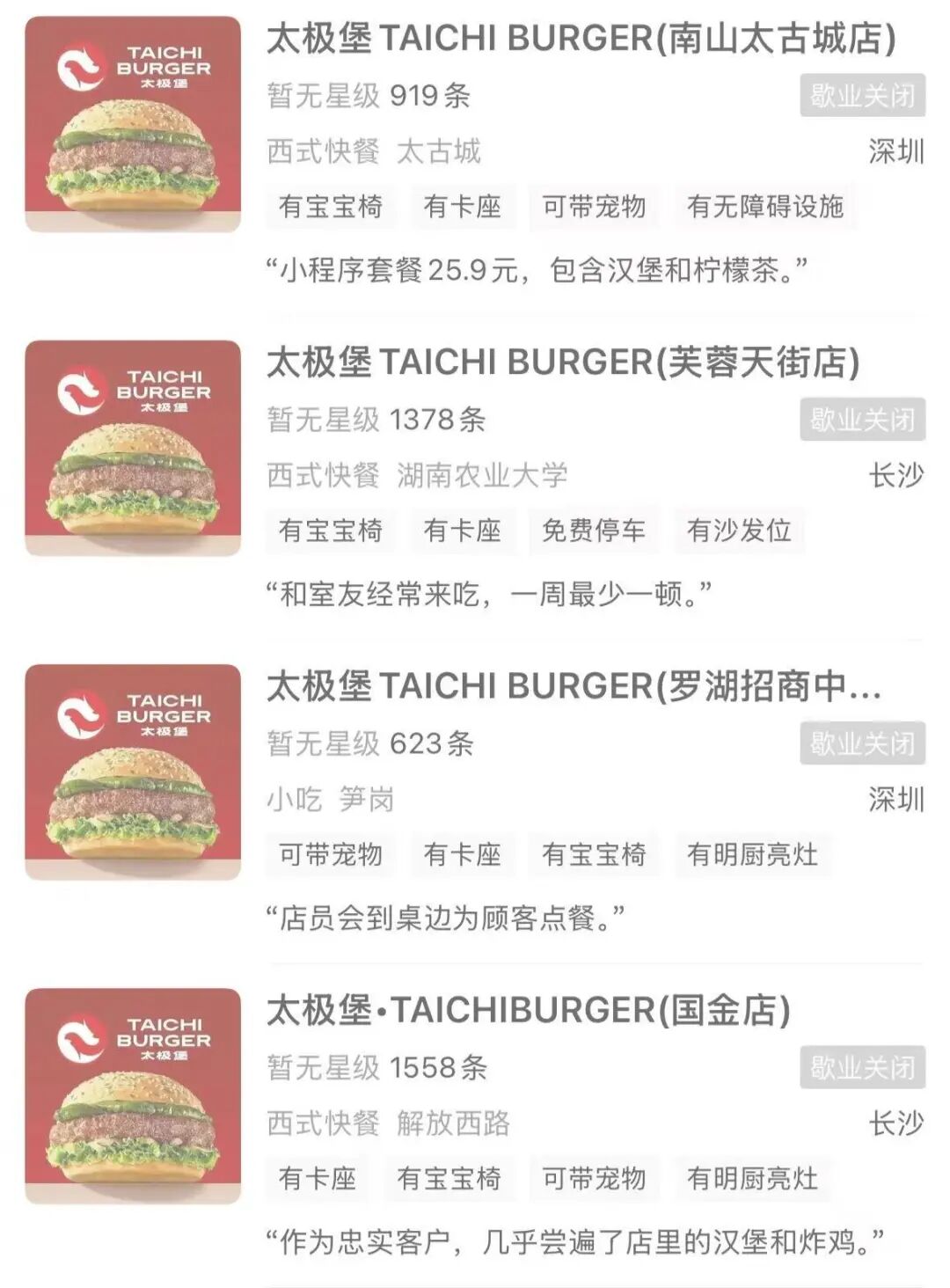
Core Viewpoint - The rapid rise and subsequent closure of multiple locations of the burger brand Taiji Burger, which was established in 2024, raises questions about its sustainability and market strategy in a competitive landscape [1][8]. Company Overview - Taiji Burger was launched on November 30, 2024, in Changsha, aiming to redefine burgers with an "Oriental burger" concept and high-end positioning [8]. - The brand initially gained popularity through its unique design and product offerings, including a new Chinese-style menu featuring high-quality ingredients [10][11]. Expansion and Closure - Despite opening 17 locations within a year, Taiji Burger has faced significant closures, with reports indicating that nearly 60% of its stores have shut down in a short period [13][14]. - In Changsha, out of six original locations, only two remain operational, while in Shenzhen, five out of ten stores are closed [14]. Challenges Faced - High operational costs due to manual preparation processes and a large store model in prime urban areas have created financial strain [15][18]. - The brand's average customer price of around 30 yuan is at a disadvantage in a market increasingly dominated by low-cost competitors [19][22]. Competitive Landscape - The hamburger market is highly competitive, with major players like KFC and McDonald's expanding aggressively, while local brands are also gaining traction with cost-effective strategies [22][23]. - Taiji Burger's position in the market is further challenged by established brands that have created significant supply chain advantages and customer loyalty [23][25]. Future Outlook - The future of Taiji Burger remains uncertain, with the potential for further store closures unless the brand can optimize its business model or innovate its product offerings [25].

在勇哥直播间看人创业,成了打工人的新乐子
虎嗅APP· 2025-11-16 03:09
Core Viewpoint - The article discusses the phenomenon of young entrepreneurs in China who, despite facing significant financial risks, are determined to start their own businesses, often leading to failure and debt. It highlights the common pitfalls and the influence of fast-track recruitment companies that exploit these aspiring entrepreneurs [5][101]. Group 1: Entrepreneurial Trends - A new wave of entrepreneurs is emerging, willing to incur substantial debt to open businesses, particularly in the food and beverage sector, such as tea and burger shops [5][11]. - Many entrepreneurs are drawn to the idea of starting their own businesses without conducting proper market research, leading to poor decision-making and financial losses [16][17]. - The article illustrates various entrepreneurial archetypes, including those who rely on loans and leverage to start their businesses, often resulting in significant debt [16][34]. Group 2: Common Pitfalls - Entrepreneurs frequently fall victim to fast-track recruitment companies that promise easy success but often lead to financial ruin [101][105]. - Many aspiring business owners lack basic business acumen, such as understanding market demand and competition, which contributes to their failures [17][94]. - The article provides examples of individuals who invested heavily in franchises without proper due diligence, leading to rapid financial losses [20][24][88]. Group 3: Case Studies - A case study highlights a woman who lost 900,000 yuan in just six days after opening a poorly chosen franchise, illustrating the risks of blind entrepreneurship [20][24]. - Another example features a man who invested 100,000 yuan in a lavishly designed tea shop but faced daily losses due to poor location and competition from established brands [34][36]. - The article also discusses a woman who opened a juice shop next to a popular brand, believing her product would attract customers despite the overwhelming competition [70][79]. Group 4: Market Dynamics - The article emphasizes the saturation of the food and beverage market, particularly in the tea and coffee segments, where established brands dominate and new entrants struggle to survive [111][105]. - It notes that many entrepreneurs are misled by the allure of trendy brands and fail to recognize the realities of market competition [89][120]. - The influence of social media and fast-track recruitment companies exacerbates the issue, as they promote unrealistic success stories that entice individuals to invest without proper understanding [120][121].


2024年中国汉堡行业:健康风潮与快捷诉求下的破茧之路(摘要版)
Tou Bao Yan Jiu Yuan· 2025-03-07 15:12
Investment Rating - The report does not explicitly provide an investment rating for the burger industry in China [3]. Core Insights - The Chinese burger industry, originating from the U.S., has evolved significantly since the introduction of Western fast food brands in the late 20th century, entering a mature and stable phase after over 30 years of rapid growth [3][4]. - The market is shifting towards health and quality, with consumers increasingly prioritizing dietary health and food quality, prompting brands to innovate healthier and tastier burger options [3][4]. - The rapid urbanization and rising income levels in China are contributing to an increase in dining out, providing greater opportunities for the burger market [3][4]. Market Overview - The Chinese burger market is characterized by high market concentration, with leading brands like Wallace, KFC, and Tastin dominating the landscape, holding a significant share of the fast food market [4][20]. - As of November 2024, the number of stores for the top three burger brands is as follows: Wallace (20,005), KFC (11,112), and Tastin (8,545) [4][20]. - The industry exhibits a high degree of standardization and chain operation, allowing for quick service and high table turnover rates, with McDonald's achieving an average of 43 turnovers per day in 2021 [5][20]. Market Size and Growth - The burger industry in China has shown significant growth, driven by increasing consumer awareness of healthy eating and the fast-paced lifestyle [11][14]. - From 2000 to 2018, per capita dining expenditure rose from 1,158.5 RMB to 2,852 RMB, reflecting a compound annual growth rate of 9.4% [14]. - The rise of online food delivery services and changing consumer habits, particularly among younger demographics, are key factors driving the growth of the burger market [14]. Competitive Landscape - The burger industry is highly concentrated, with the top five brands holding over 90% of the market share in terms of store numbers [20]. - Future competition is expected to focus on market penetration in lower-tier cities and the localization of menu offerings, with brands like KFC and Wallace adapting their strategies to attract consumers in these markets [20][21]. - The average customer spending varies by brand, with Wallace targeting below 20 RMB, while KFC leads in the higher price segments [21]. Regional Distribution - The distribution of burger outlets in China shows a higher concentration in coastal regions compared to inland areas, with significant variations in per capita store numbers [16][19]. - As of 2024, Guangdong province leads with 26,290 stores, followed by Shandong and Jiangsu provinces [16][19]. Trends and Innovations - The report highlights a trend towards brand localization and the introduction of "Chinese-style burgers," which cater to local tastes and preferences, contributing to structural growth in the industry [21][22]. - Wallace has increased its presence in lower-tier cities, with a slight rise in store percentages in these areas from 2023 to 2024 [25].
