
深海油气开发

Search documents
在激烈国际竞争中赢得战略主动——加快高水平科技自立自强,引领发展新质生产力
Ren Min Ri Bao· 2025-11-25 07:56
Core Viewpoint - Achieving high-level technological self-reliance and strength is crucial for China's modernization efforts, as emphasized by President Xi Jinping [2]. Group 1: Technological Self-Reliance - The "14th Five-Year Plan" emphasizes technological self-reliance as a strategic support for national development, while the "15th Five-Year Plan" aims to accelerate high-level technological self-reliance to lead new productive forces [2]. - Over the past five years, China has made significant technological innovations, laying a solid foundation for further advancements [2]. - The "15th Five-Year Plan" suggests consolidating advantages, breaking bottlenecks, and enhancing weaknesses to gain strategic initiative in international competition [2]. Group 2: Key Technological Breakthroughs - The Chinese Academy of Sciences announced a breakthrough in producing large-area two-dimensional metallic materials, challenging traditional views on metal forms [3]. - Key core technologies must be developed through independent innovation to solve critical issues, as highlighted by advancements in the BeiDou navigation system and domestic operating systems [4]. - A new type of fluorinated polyether electrolyte has been developed, paving the way for high-safety, high-energy-density solid-state lithium batteries [5]. Group 3: Strengthening Basic Research - Basic research funding has increased by over 70% since 2020, with China leading in high-level international journal publications and patent applications for five consecutive years [6]. - The "15th Five-Year Plan" calls for a strategic, forward-looking, and systematic approach to enhance basic research and original innovation capabilities [6]. - Emphasis on original innovation is crucial for driving development, with a focus on creating more landmark original achievements [7]. Group 4: Competing in High-Tech Fields - China has made significant strides in high-tech fields, with over 20 companies recognized in TIME magazine's list of the best inventions for 2025, particularly in AI and robotics [8]. - Major technological achievements include the successful launch of the Shenzhou 21 manned spacecraft and the completion of the "Deep Sea No. 1" gas field, showcasing China's advancements in aerospace and deep-sea oil and gas development [9][8]. Group 5: New Quality Productive Forces - The integration of technology and industry is accelerating, with the "new economy" expected to contribute over 18% to GDP by 2024, driven by AI, renewable energy, and biotechnology [13]. - The development of new quality productive forces is essential for high-quality growth, focusing on improving total factor productivity [13]. - The importance of enhancing the "green attributes" of products is highlighted by the introduction of carbon footprint reports for exports [11]. Group 6: Innovation Ecosystem - The need for a complete innovation ecosystem is emphasized, moving from isolated breakthroughs to a systematic approach that includes collaboration between government, academia, and industry [9]. - Strengthening the role of enterprises in technological innovation is crucial, with specific measures proposed to support high-tech enterprises and foster innovation [15]. - The establishment of regional innovation centers and the promotion of collaborative innovation across regions are key strategies for enhancing China's technological capabilities [16].
【人民日报】在激烈国际竞争中赢得战略主动——加快高水平科技自立自强,引领发展新质生产力
Ren Min Ri Bao· 2025-11-25 02:47
Core Viewpoint - Achieving high-level technological self-reliance and strength is crucial for China's modernization efforts [2] Group 1: Technological Self-Reliance - The "14th Five-Year Plan" emphasizes technological self-reliance as a strategic support for national development, while the "15th Five-Year Plan" aims to accelerate high-level technological self-reliance to lead new productive forces [2] - Over the past five years, China has made significant technological innovations, establishing a solid foundation for further advancements [2] - The "15th Five-Year Plan" suggests consolidating advantages, breaking bottlenecks, and enhancing weaknesses to gain strategic initiative in international competition [2][3] Group 2: Key Technologies and Innovations - Key core technologies cannot be acquired through purchase or negotiation; they must be solved through independent innovation [4] - Breakthroughs in critical core technology areas have enhanced the security and resilience of industrial and supply chains [4] - A new type of polymer battery with high energy density has been developed, opening new avenues for high-safety solid-state lithium batteries [5] Group 3: Foundation of Basic Research - Basic research funding has increased by over 70% since 2020, with China leading the world in high-level international journal publications and patent applications for five consecutive years [6] - The "15th Five-Year Plan" calls for strengthening the strategic, forward-looking, and systematic layout of basic research [6][7] - Original innovation is emphasized as the fundamental driving force for innovation-driven development [7] Group 4: Competing for Technological Leadership - China has made significant strides in high-tech fields, with over 20 tech companies recognized in TIME magazine's list of the best inventions for 2025 [8] - Major technological achievements include the successful launch of the "Shenzhou 21" manned spacecraft and the completion of the "Deep Sea No. 1" gas field [8][9] - The focus is on enhancing systemic capabilities in innovation to maintain competitive advantages in global technology [9] Group 5: New Quality Productivity - The integration of technological and industrial innovation is accelerating, with the "new economy" expected to account for over 18% of GDP by 2024 [13] - The development of new quality productivity is essential for high-quality economic growth, with a focus on improving total factor productivity [13][14] - Accelerating the efficient transformation and application of major technological achievements is crucial for deepening the integration of technological and industrial innovation [15] Group 6: Regional Innovation and Collaboration - A coordinated national approach is necessary to enhance the deep integration of technological and industrial innovation [17] - The establishment of regional innovation centers and high-tech innovation hubs is emphasized to support national strategic needs [17] - The future five years present challenges but also significant opportunities for advancing China's technological capabilities [18]
媒体报道丨广东海洋能源产业科技创新高质量发展研讨会在深圳举行
国家能源局· 2025-09-02 01:49
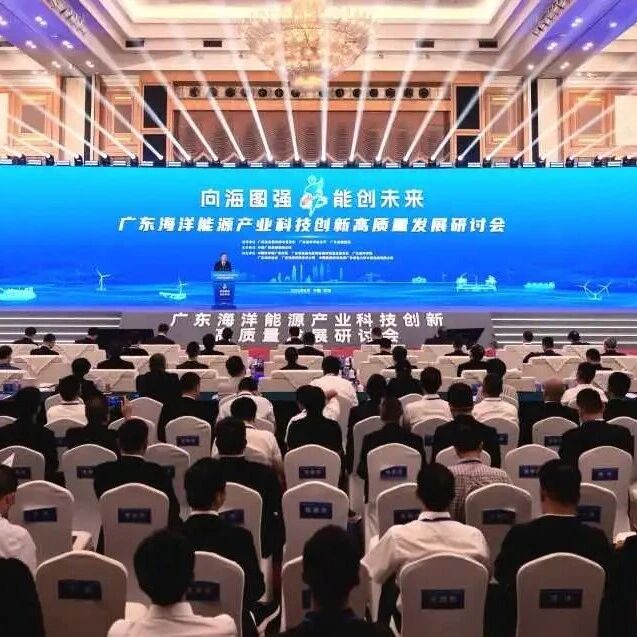
Core Viewpoint - The Guangdong Marine Energy Industry Technology Innovation High-Quality Development Seminar highlights Guangdong's achievements in marine energy development and aims to explore new technologies, models, and business formats for high-quality development in the marine energy sector [2][4]. Group 1: Government and Policy Support - Guangdong is accelerating the transformation of marine resource advantages into development advantages, aiming to inject new momentum into the high-quality development of the economy and society [4]. - The provincial government has made the construction of a strong marine province a key breakthrough in its strategic deployment [4]. Group 2: Industry Growth and Achievements - By 2024, Guangdong's marine production value is expected to exceed 2 trillion yuan, with traditional marine industries' added value reaching 680 billion yuan, a year-on-year increase of 7.5% [6]. - The emerging marine industries' added value is projected to reach 41.1 billion yuan, with a year-on-year growth of 8.3% [6]. - The offshore wind power industry has seen a tenfold increase in installed capacity, reaching 12.51 million kilowatts, making Guangdong the leader in the nation [6]. Group 3: Technological Innovations - Guangdong has established a comprehensive offshore wind power industry chain, including research, manufacturing, installation, operation, and testing [6]. - Innovative projects such as the "Fuxi No. 1" wind-fishing integration platform and the world's first 11,000-meter ultra-deepwater drilling vessel have been launched [8]. - The province is also pioneering in hydrogen energy with large-scale electrolysis projects and exploring synergies between offshore wind power and hydrogen production [8]. Group 4: Collaborative Initiatives - Several strategic cooperation projects were signed during the seminar, including partnerships for green ship fuel production and offshore wind power-driven hydrogen production technology [10]. - The establishment of the Greater Bay Area Green Ship Fuel Industry Innovation Consortium reflects Guangdong's leadership in energy technology innovation and industrial collaboration [10]. Group 5: Future Directions - The National Energy Administration emphasizes the importance of developing marine energy for energy security and transition, with Guangdong playing a crucial role in offshore wind power development [11]. - The focus on innovative development models such as "energy-fishing-tourism" and "wind-hydrogen-methanol-shipping" showcases the potential for a restructured marine industry ecosystem [9].


锚定海洋强省目标 广东海洋能源产业科技创新研讨会释放“向海图强”新信号
Zheng Quan Shi Bao Wang· 2025-08-31 08:55
Core Viewpoint - The Guangdong Marine Energy Industry Technology Innovation High-Quality Development Seminar highlighted Guangdong's achievements in marine energy development and its commitment to exploring new technologies, models, and business formats for high-quality growth in the marine economy [1][2]. Group 1: Marine Economic Development - Guangdong aims to transform its marine resource advantages into developmental strengths, contributing to the creation of a "new maritime Guangdong" and promoting high-quality economic and social development [1]. - The provincial government has set a target for the marine production value to exceed 2 trillion yuan by 2024, with traditional marine industries expected to grow by 7.5% and emerging marine industries by 8.3% [2]. - The offshore wind power sector has seen significant growth, with installed capacity reaching 12.51 million kilowatts, a tenfold increase since the end of the 13th Five-Year Plan, making Guangdong a national leader in this field [2]. Group 2: Technological Innovation - Guangdong is implementing an innovation-driven development strategy, establishing national-level energy research and innovation platforms to enhance collaborative development between industry, academia, and research [3]. - Notable technological advancements in offshore wind power include the establishment of the Yangjiang 500 kV offshore wind power reactive power compensation station and the world's first ultra-deepwater drilling vessel, "Dream," which signifies a breakthrough in deep-sea resource development [3][4]. - The province is also pioneering in deep-sea oil and gas development with the first fully green-designed offshore oil field and the first offshore CCUS project, promoting a new model of marine energy recycling [3]. Group 3: Energy Integration Models - Guangdong is exploring new paths for the integrated development of marine energy, focusing on a "green energy + blue granary" model that reshapes the marine economy [6]. - The province has developed a series of innovative projects, including the world's largest anti-typhoon wind-fish integration platform and the first semi-submersible wave energy farming platform, which contribute to a new industrial chain that integrates wind, fishery, and tourism [6]. - China General Nuclear Power Group is actively involved in exploring "energy +" integration models, including wind-fish integration and comprehensive energy islands, providing new solutions for marine economic development [6]. Group 4: Strategic Collaborations - The seminar featured several strategic collaborations, including projects focused on green ship fuel production and supply, offshore wind power-driven hydrogen production, and anti-typhoon floating photovoltaic demonstration projects [7]. - These collaborations reflect Guangdong's leading role in energy technology innovation and industrial synergy, contributing to China's modernization efforts [7]. - The event also included thematic reports and project presentations aimed at advancing Guangdong's marine energy industry to new heights [7].


广东海洋能源产业科技创新高质量发展研讨会在深举行
Zhong Guo Xin Wen Wang· 2025-08-31 08:53
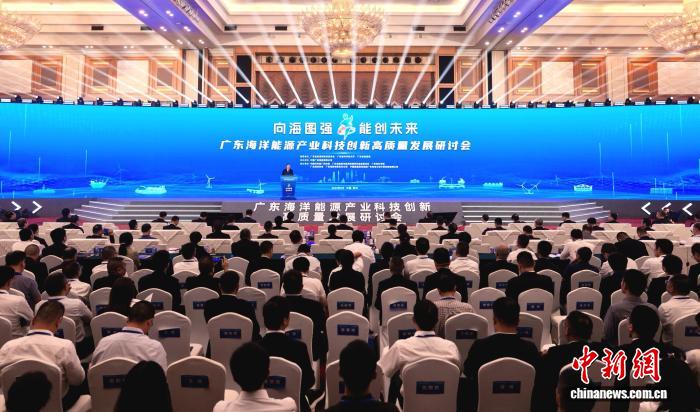
Core Insights - The Guangdong Marine Energy Industry Technology Innovation High-Quality Development Seminar was held in Shenzhen, focusing on new technologies, models, and business formats in marine energy development [1][2]. Group 1: Industry Developments - Guangdong is accelerating the transformation of marine resource advantages into development advantages, aiming to create a "New Marine Guangdong" and inject new momentum into high-quality economic and social development [1]. - The seminar highlighted collaborative development between industry, academia, and research, fostering new productive forces [2]. - Significant technological achievements in offshore wind power, such as the Yangjiang 500 kV offshore wind power reactive power compensation station and the "Mingyang Tiancheng" floating offshore wind platform, were showcased [2]. Group 2: Green Initiatives - The first fully green-designed offshore oil field in China, the Wushi Oil Field Group, has implemented multiple green practices, including zero discharge of production water [2]. - The first offshore CCUS project in China has been launched, creating a new model for marine energy recycling by utilizing carbon to drive oil extraction and solidifying carbon with oil [2]. Group 3: Equipment and Technology - The world's first 11,000-meter ultra-deepwater drilling vessel, "Dream," has been commissioned in Guangzhou, marking a significant advancement in China's deepwater drilling technology [4]. - The world's first megawatt-level floating wave energy generation device, "Nankun," has been developed, positioning China at the forefront of wave energy technology [4]. Group 4: Hydrogen and Renewable Energy - The Zhuhai Guishan offshore wind power industrial-grade hydrogen production demonstration project explores the synergy between offshore wind power and seawater desalination [4]. - The largest single-unit seawater electrolysis hydrogen production demonstration project globally is being implemented in Shenzhen [4]. Group 5: Strategic Collaborations - Several strategic cooperation projects were signed during the seminar, including a green ship fuel production and supply chain project and a key technology research project for offshore wind-driven seawater hydrogen production [6]. - The establishment of the Guangdong-Hong Kong-Macao Greater Bay Area Green Ship Fuel Industry Innovation Consortium was also initiated [6]. Group 6: Policy and Future Directions - The seminar emphasized that the 14th Five-Year Plan period is crucial for China to achieve its carbon peak goals, with a strong focus on developing marine energy to ensure energy security and promote energy transition [6].
【科技日报】五年“三跨越” 按下科技强国建设“快进键”
Ke Ji Ri Bao· 2025-08-07 01:28
Group 1 - The launch of the third-generation autonomous superconducting quantum computer "Benyuan Wukong" and the successful return of samples from the "Chang'e 6" mission highlight China's advancements in technology and innovation [1][4] - The "14th Five-Year Plan" emphasizes the importance of innovation, aiming to build a technology powerhouse with leading global scientific strength and innovation capabilities [4][12] - Significant breakthroughs in foundational research have been achieved, including the detection of the first continuously active repeating fast radio bursts and advancements in quantum technology [5][6] Group 2 - The "Deep Sea No. 1" project, the world's first deep-water gas field developed independently, has begun full production, marking a significant milestone in China's deep-sea oil and gas development [2][8] - The launch of the first domestically produced large cruise ship "Aida·Modu" and the ongoing construction of the second ship "Aida·Huacheng" reflect advancements in China's shipbuilding industry [10] - The high-speed rail technology continues to innovate, with the CR450 train showcasing China's leadership in global high-speed rail operations [9] Group 3 - The rapid development of the new energy vehicle industry, which has maintained the highest global production and sales, demonstrates China's progress in automotive technology [11] - The establishment of the world's largest and most advanced 5G network has facilitated the digital transformation across various industries [11] - China's investment in research and development has reached new heights, with a nearly 50% increase in R&D funding compared to the end of the "13th Five-Year Plan" [12]
看好深海科技的持续性
2025-07-07 00:51
Summary of Deep Sea Technology Conference Call Industry Overview - The conference call focuses on the deep sea technology industry, emphasizing its critical role in national defense and energy security, particularly in domestic game development, which has a high reliance on foreign resources [1][2]. Key Points and Arguments - **Importance of Deep Sea Technology**: Deep sea technology is vital for national defense and resource security, especially in the context of domestic energy needs related to game development, which has over 30% foreign dependency [2]. - **Challenges in Deep Sea Technology**: The primary challenge is the depth of operations. Current domestic capabilities are limited to shallow water projects, with deeper projects still reliant on foreign contractors. However, advancements in geological exploration and core equipment are being made [3]. - **Global Supply Chain Shift**: The global supply chain is shifting towards the Asia-Pacific region, enhancing China's position as a key supplier in the deep sea industry. Increased demand from Southeast Asia, South America, and North Africa is driving this change [4]. - **Geopolitical Factors**: Geopolitical dynamics in regions like the South China Sea and East China Sea are influencing deep sea outsourcing. As China's strength grows, uncertainties decrease, paving the way for more high-level deep sea projects [5]. - **Optimistic Development Outlook**: The development prospects in the South China Sea and nearby areas are optimistic, with significant potential near Shenzhen Bay and Hainan. The economic viability of deep sea oil and gas development is improving, with costs dropping to approximately $30 per barrel [6][7]. - **Technological and Economic Advances**: The feasibility of deep sea oil and gas development is increasing, with costs significantly reduced through standardized production methods. Projects in Hainan are progressing, with significant procurement activities indicating steady advancement in domestic capabilities [8]. - **Impact on Related Companies**: The growth of deep sea technology will positively impact companies like CNOOC Services, Haiyou Engineering, Bomeike, and Deweier, suggesting a focus on firms with strong performance and valuation advantages in the deep sea sector [9]. - **Energy Security and Related Fields**: Energy security is a driving force behind the development of domestic deep sea technology, which is interconnected with military, communication, non-ferrous metals, and chemical industries, necessitating enhanced collaboration across these sectors [10]. Additional Important Insights - The call highlights the strategic importance of deep sea technology in enhancing national energy security and reducing reliance on foreign resources, particularly in critical sectors like gaming and defense [1][2]. - The ongoing advancements in technology and the shift in global supply chains are expected to create significant opportunities for growth in the deep sea sector over the next three to five years [4].