燃油汽车

Search documents
(新春走基层)述评:从排队加油到取号充电 春节自驾游变了什么?
Xin Lang Cai Jing· 2026-02-22 06:37
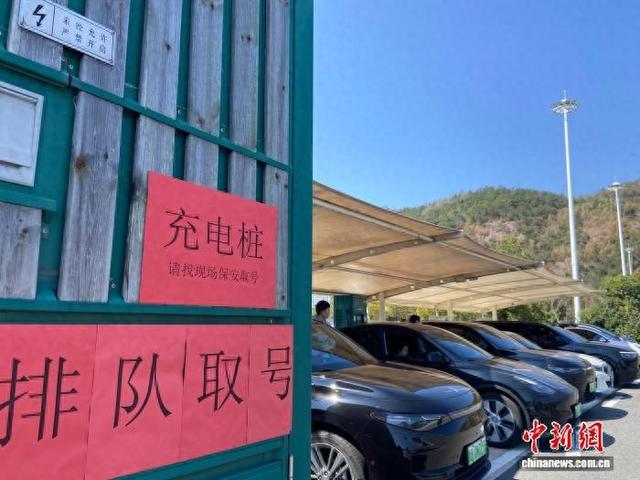
Core Viewpoint - The shift from fuel vehicles to electric vehicles (EVs) during the Spring Festival travel season reflects a significant transformation in China's transportation, energy, and automotive industries, highlighting the growing prominence of EVs as the main choice for self-driving trips [3][4]. Group 1: Changes in Travel Behavior - The transition from fuel vehicles to EVs has altered the travel experience, with charging times requiring drivers to slow down and engage more with their surroundings, such as dining and shopping at service areas [5]. - The once prevalent "fueling anxiety" among EV owners is gradually being alleviated due to the expansion of charging infrastructure, making long-distance travel more feasible and comfortable [4]. Group 2: Infrastructure Development - The National Energy Administration has announced plans to establish 71,500 charging stations across the country by the end of December 2025, covering over 98% of service areas and achieving "full coverage" in 19 provinces [4]. - The development of a dense charging network from highways to rural areas has transformed the perception of long-distance travel with EVs, allowing for a more relaxed travel experience [4]. Group 3: Market Dynamics - The increasing demand for EV charging during peak travel times indicates a shift from policy-driven adoption to market-driven normalization of electric mobility in everyday life [5]. - Future advancements in ultra-fast charging technology and battery swapping models are expected to further reduce waiting times for charging, enhancing the overall travel experience [5].

最高8000元 今年首轮汽车补贴来了
Xin Lang Cai Jing· 2026-02-05 20:15
Group 1 - The first round of automotive consumption promotion in Chengdu will begin, with a total subsidy budget of 12.36 million yuan and a maximum subsidy of 8,000 yuan per vehicle [1] - The promotion is structured as "users purchase first, government subsidizes later," targeting personal consumers who buy new energy or fuel vehicles from participating retailers [1] - The purchase and registration of vehicles must occur between February 6, 2026, and March 31, 2026, with specific documentation required for subsidy application [1] Group 2 - The subsidy application period is set from February 9, 2026, at 9:00 AM to March 31, 2026, at 11:59:59 PM [2]
用户抱怨率降至9% 中国燃油汽车行业用户满意度指数发布
Yang Shi Xin Wen· 2025-10-17 13:10
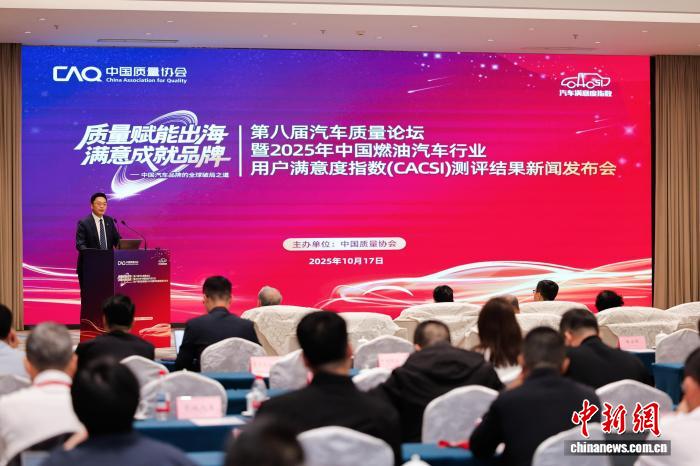
Core Insights - The user satisfaction index for China's fuel vehicle industry in 2025 is 81 points, maintaining the historical high level and unchanged from the previous year [1] - The complaint rate has decreased to 9%, and loyalty score has reached 79 points, both achieving the best results in nearly a decade [1] Group 1: Product Quality - Product reliability has improved, scoring 80.5 points, an increase of 2 points year-on-year, marking the best level in the last ten years [2] - The number of faults per hundred new vehicles has decreased to 179, down by 9 from the previous year [2] - Faults are increasingly concentrated in three major systems: smart cockpit, intelligent driving assistance, and interior, which account for 72% of total faults, rising by 16 and 25 percentage points compared to 2024 and 2023 respectively [2] Group 2: Service Quality - Sales service satisfaction score is 80 points, a decrease of 1 point year-on-year, with the most significant declines in delivery process, online services, and test drives [3] - After-sales service satisfaction score is 79 points, down by 2 points, indicating a significant decline [3] - Among the five factors of after-sales service, users rated service attitude, maintenance, and repair service quality relatively high, while satisfaction with service charges remains low [3]
2025年燃油车测评:满意度维持历史最高水平,百辆新车故障次数下降
Zhong Guo Qi Che Bao Wang· 2025-10-17 13:05
Core Insights - The 2025 China Automotive Customer Satisfaction Index (CACSI) score is 81, maintaining the historical high level achieved in 2024 [1] - Brand recognition and perceived value are key factors supporting the satisfaction index [1] - User complaint rate has decreased to 9%, and loyalty score has reached 79, both marking the best performance in nearly a decade [1] Group 1: Product Quality - The reliability score reached 80.5, the highest in the last ten years, with the number of faults per 100 new vehicles decreasing to 179, a reduction of 9 from the previous year [3] - Faults are increasingly concentrated in three major systems: intelligent cockpit, intelligent driving assistance, and interior, which account for 72% of total faults, an increase of 16 and 25 percentage points compared to 2024 and 2023 respectively [3][4] - The top ten faults include issues such as "gesture control failure" and "fingerprint recognition failure" [4] Group 2: Service Quality - Sales service satisfaction score is 80, down 1 point year-on-year, with the most significant declines in delivery process, online services, and test drives [5] - After-sales service satisfaction score is 79, down 2 points, with service attitude and maintenance quality rated relatively high, while service charge satisfaction remains low [5] - The industry needs to focus on ensuring reasonable service charges and improving after-sales service efficiency [5] Group 3: User Experience and Preferences - User experience with intelligent connected features shows strengths and weaknesses, with driving assistance features being more positively received than intelligent cockpit features [6] - The importance of "quality reliability" in purchasing decisions has risen, moving from third to second place, while "brand recognition" has decreased by 6 percentage points compared to 2023 [8] - The proportion of new car buyers in 2025 has decreased by 3 percentage points year-on-year, with a growing preference for German brands and a heightened focus on quality reliability [8]

今年中国燃油汽车行业用户满意度指数发布,得分维持历史最高水平
Zhong Guo Xin Wen Wang· 2025-10-17 11:46
Core Insights - The 2025 China Fuel Vehicle Industry Customer Satisfaction Index (CACSI) remains at a historical high of 81 points, unchanged from the previous year, supported by high brand recognition and perceived value [1][3] Group 1: Customer Satisfaction Metrics - The complaint rate among users has decreased to 9%, and loyalty score has reached 79 points, both marking the best performance in nearly a decade [1][3] - Product quality reliability has improved, scoring 80.5 points, a 2-point increase year-on-year, with the number of faults per 100 new vehicles dropping to 179, a reduction of 9 faults [3] - Sales service satisfaction has decreased to 80 points, down 1 point year-on-year, with the most significant declines in delivery process, online services, and test drives [3][5] Group 2: Fault Distribution and User Experience - Faults are increasingly concentrated in three systems: intelligent cockpit, intelligent driving assistance, and interior, which account for 72% of issues, an increase of 16 and 25 percentage points compared to 2024 and 2023 respectively [3][4] - The top ten faults reported include issues with gesture control, fingerprint recognition, and excessive interior odor, indicating areas needing improvement [3] Group 3: User Preferences and Market Trends - User preferences have shifted, with "good performance," "high reliability," and "high comfort" being the top three considerations for purchasing vehicles, while the importance of "high brand recognition" has declined by 6 percentage points since 2023 [5][6] - The influence of brand image on customer satisfaction has weakened, with perceived quality now being the primary driver of satisfaction for the first time since 2017, indicating a stabilization in the fuel vehicle market [5] Group 4: Survey Methodology and Coverage - The CACSI survey, conducted by the China Quality Association since 2002, covered 149 leading brands and models, with a sample size of 23,489 collected from 101 major cities across five regions from May 1 to August 30, 2025 [6]
密集调整!极狐引入前莲花跑车市场负责人 北汽蓝谷刘观桥:规模是车企盈利的首要因素
Mei Ri Jing Ji Xin Wen· 2025-07-22 03:36
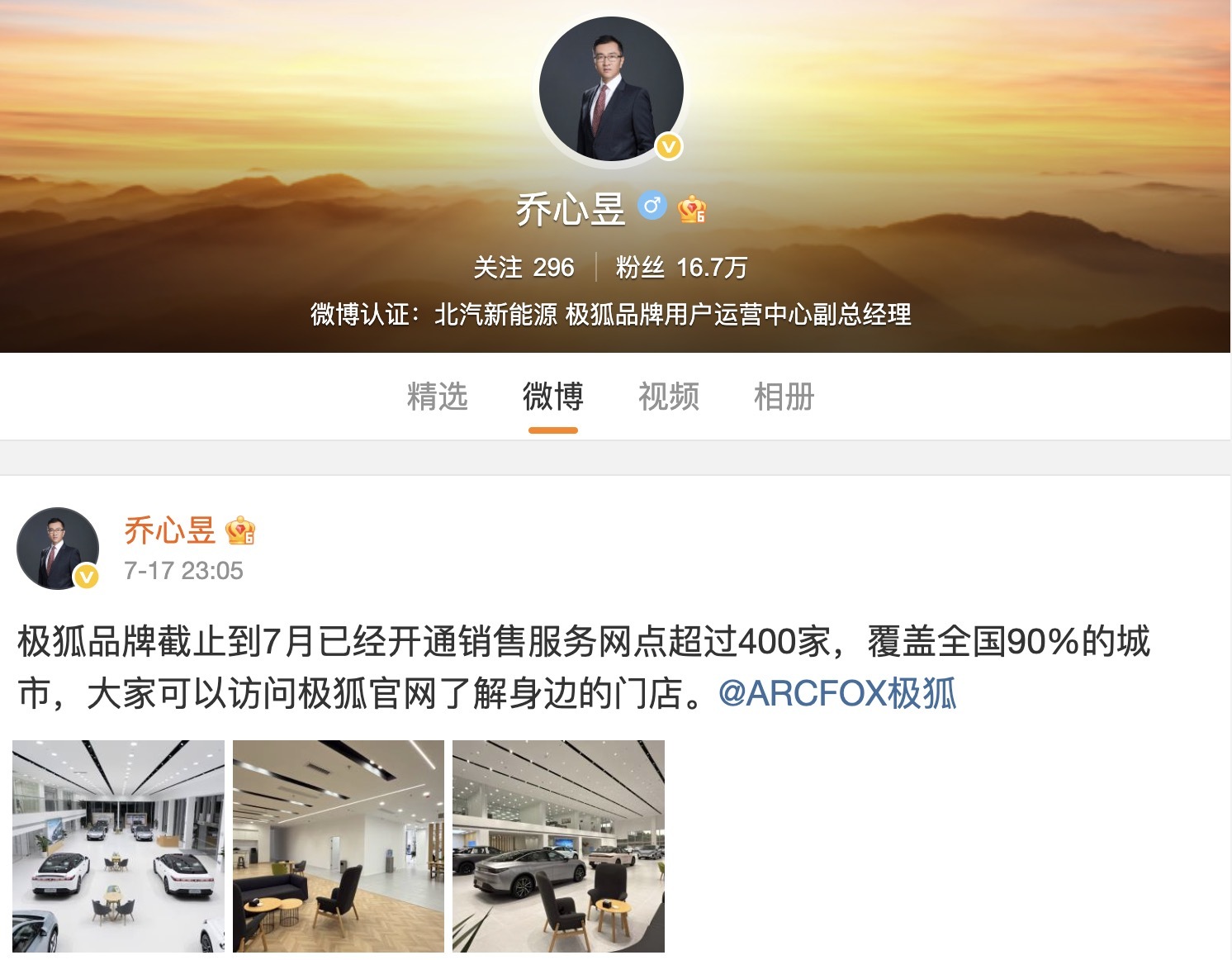
Core Viewpoint - The appointment of Qiao Xinyu as the Vice General Manager of the User Operation Center for BAIC New Energy's ARCFOX brand marks a significant strategic shift for the company, indicating a dual-brand strategy with a focus on both ARCFOX and the Huawei collaboration brand, STELATO [1][5][12]. Group 1: Leadership Changes - Qiao Xinyu has joined BAIC New Energy after a 20-year career in the automotive industry, having held key positions at Mercedes-Benz, Volkswagen, and Great Wall Motors [1]. - The recent leadership changes at BAIC New Energy include the promotion of Zhang Guofu to Chairman and Liu Guanquiao to General Manager, reflecting a broader restructuring within the company [5][9]. Group 2: Sales Performance - In June, BAIC New Energy delivered 14,500 vehicles, a year-on-year increase of 140.65%, with total sales for the first half of the year reaching approximately 67,100 units, up 139.73% [6]. - The ARCFOX brand alone delivered 10,300 vehicles in June, marking a 65.13% increase, while total sales for the first half reached about 55,500 units, a remarkable 211.06% growth [6]. Group 3: Financial Outlook - Despite significant sales growth, BAIC Blue Valley is still facing losses, with projected net losses for the first half of 2025 estimated between 2.2 billion to 2.45 billion yuan [9]. - R&D expenditures have increased from 973 million yuan in 2020 to 1.76 billion yuan in 2024, with a 53.06% year-on-year increase in Q1 of this year [9]. Group 4: Strategic Initiatives - BAIC Group is advancing a dual development strategy of "fuel + new energy" to enhance its market position, with several new models set to launch in the coming months [10][12]. - The company aims to increase the sales ratio of high-profit models, particularly focusing on the ARCFOX and STELATO brands, with a target sales ratio shift from 1:10 to 1:3 by the end of this year [12].