生活服务等

Search documents
限额单卡与特定行业,委员提议给预付卡设两道红线
Xin Jing Bao· 2026-01-27 12:28
Core Viewpoint - The rise of prepaid consumption models in various sectors has led to significant consumer protection issues, prompting calls for regulatory reforms to address these challenges [1][2]. Group 1: Current Issues in Prepaid Consumption - Prepaid consumption is prevalent in sectors like education, fitness, and retail, providing convenience and quick capital recovery for businesses [1]. - There has been an increase in consumer disputes related to prepaid services, with issues such as businesses "running away with funds," reduced service quality, and difficulties in obtaining refunds becoming more common [1][2]. - The emergence of a "professional closure" industry that assists businesses in evading debts has been noted, highlighting the need for stronger regulatory measures [2]. Group 2: Regulatory Recommendations - It is suggested that regulatory bodies collaborate to create a real-time data-sharing system for merchant qualifications, fund management, and complaint handling [3]. - A risk grading system for merchants should be implemented, allowing for dynamic adjustments based on consumer complaints and enabling timely warnings for high-risk businesses [3]. - Positive incentives for industry self-regulation, such as tax reductions and loan interest discounts for compliant businesses, are recommended [3]. Group 3: Legal and Operational Framework - The current low entry barriers for businesses in prepaid consumption and the prevalence of false advertising necessitate stricter regulations [4]. - The "Beijing Single-Purpose Prepaid Card Management Regulations" established in June 2022 need further refinement to enhance their effectiveness [4][5]. - A "risk reserve fund" system is proposed, requiring businesses to set aside a percentage of prepaid funds to ensure consumer compensation in case of business failure [5]. Group 4: Financial and Service Platforms - A unified regulatory platform for prepaid consumption should be established, integrating financial oversight and service provision to address industry challenges [6][7]. - The platform would facilitate a closed-loop system for managing prepaid funds, ensuring compliance and providing a comprehensive service solution for stakeholders [6]. - A financial service platform is also recommended to alleviate financing difficulties for compliant businesses, offering favorable financial products based on their operational data [7].
有哪些途径可以方便快捷地投诉企业?
Xin Lang Cai Jing· 2025-11-28 09:12
Core Viewpoint - The article outlines various consumer complaint channels available in China, emphasizing the importance of selecting the appropriate channel to effectively address issues with businesses [1]. Group 1: Official Complaint Channels - The national 12315 platform is highlighted as a key official complaint channel, offering a structured process for consumers to submit complaints, which are then forwarded to local market supervision departments [2]. - The 12345 government service hotline provides a unified access point for consumers to report issues, streamlining the complaint process across various departments [2]. Group 2: Industry-Specific Channels - Industry regulatory bodies, such as the China Banking and Insurance Regulatory Commission (CBIRC) and the Ministry of Industry and Information Technology (MIIT), offer specialized complaint channels that provide more efficient and knowledgeable handling of sector-specific issues [3]. - For example, the CBIRC's 12378 hotline is dedicated to financial consumer disputes, while the MIIT's 12381 center addresses telecommunications service complaints [3]. Group 3: Third-Party Social Supervision Platforms - Third-party platforms like Black Cat Complaints have gained popularity for their convenience and transparency, allowing users to submit complaints quickly and track their progress in real-time [4]. - These platforms also publish monthly "red and black lists" of companies based on complaint volume and resolution rates, creating public pressure for businesses to address consumer concerns [4]. Group 4: Choosing the Right Complaint Channel by Industry - For e-commerce issues, consumers are advised to use third-party platforms like Black Cat Complaints in conjunction with the 12315 platform for dual protection [5]. - In the financial services sector, the CBIRC's 12378 hotline is recommended as the most authoritative channel for resolving disputes [5]. - The MIIT's 12381 channel is deemed the most effective for telecommunications complaints, while Black Cat Complaints is also suggested for automotive issues [6]. Group 5: Improving Complaint Handling Efficiency - Consumers are encouraged to prepare comprehensive evidence, including contracts and communication records, to expedite the complaint process [7]. - Clear and specific problem descriptions are essential for effective communication with complaint channels [8]. - Selecting the most appropriate complaint platform based on industry characteristics can significantly enhance resolution efficiency [9]. - Maintaining a rational and objective communication style is crucial for facilitating problem resolution [10]. Group 6: Summary - The article concludes that the variety of consumer complaint channels in China creates a multi-layered and comprehensive system for consumer rights protection, with platforms like Black Cat Complaints offering unique advantages in terms of ease of use and responsiveness [11].
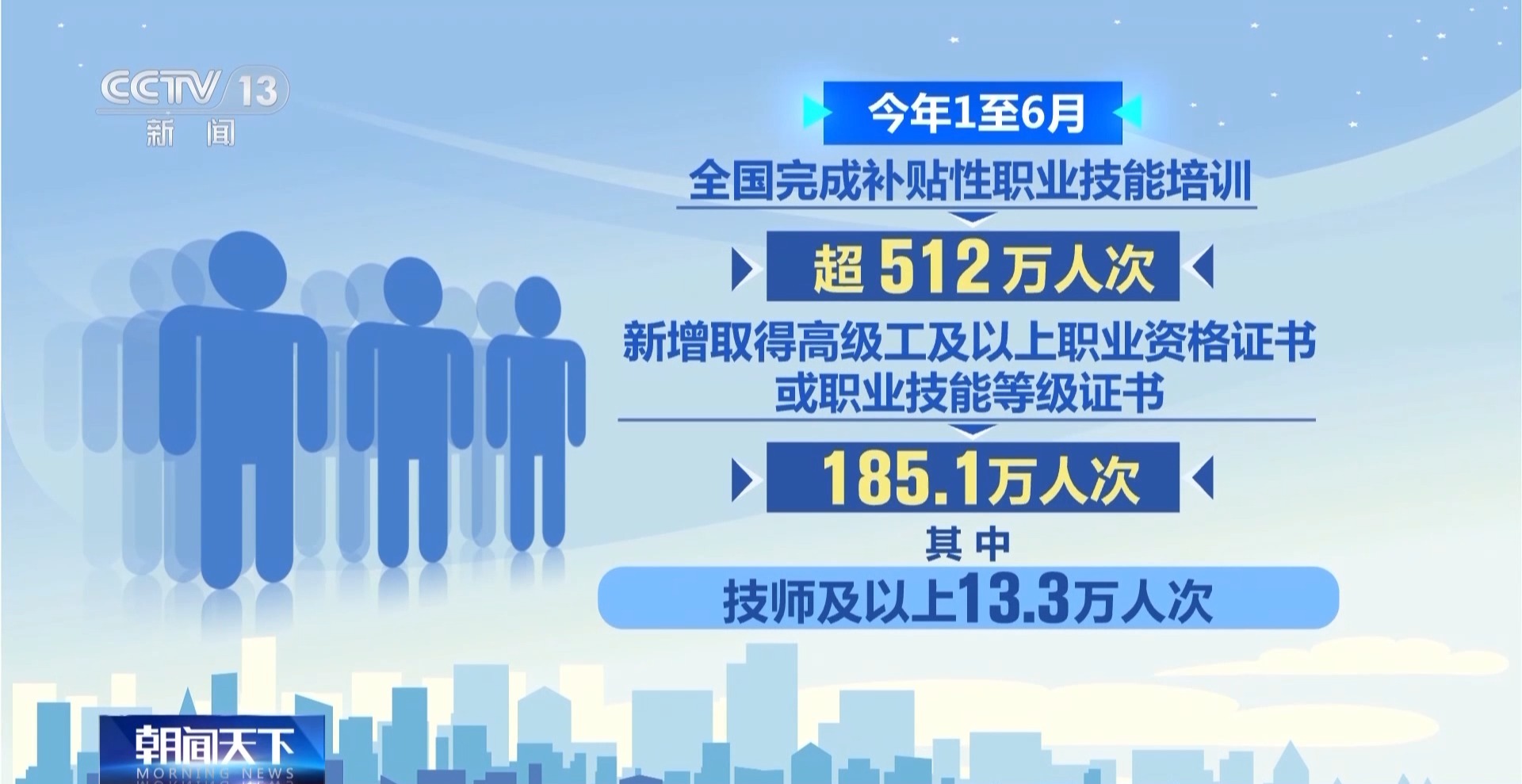
精准投喂“技能包” 结业即上岗 全国开展补贴性职业技能培训超512万人次
Yang Shi Xin Wen· 2025-08-09 02:52
Group 1 - The core focus of the national initiative is to enhance the supply of skilled talent in manufacturing and service industries through large-scale vocational training, with over 5.12 million subsidized training sessions completed in the first half of the year [1][4]. - The training programs target specific sectors such as advanced manufacturing, digital economy, low-altitude economy, transportation, agriculture, and life services, with a particular emphasis on groups like college graduates and migrant workers [2][4]. - The training aims to align with market demand and employment services, facilitating a connection between training and job opportunities in urgent labor sectors [5][16]. Group 2 - In Jiangxi Province, the "5+2 Employment Home" online platform has been utilized to gather market demand and training intentions, resulting in 76,500 targeted vocational training sessions [13]. - The training model combines "job needs + skills training + skills evaluation + employment services" to enhance workers' skills and income potential [16]. - The demand for elderly care workers has surged, with specialized training programs being launched to meet this need, resulting in high employment rates for graduates [17][25]. Group 3 - The training for childcare professionals is also gaining traction, with a focus on enhancing the qualifications of practitioners in response to the increasing demand for professional and refined childcare services [34][40]. - In Nantong, Jiangsu Province, over 1,000 individuals have participated in vocational skills training for childcare and elderly care, reflecting a 30% increase compared to the previous year [40][41]. - The "order-based" training model in Bijie, Guizhou Province, has successfully matched training programs with local employment needs, resulting in immediate job placements for graduates [43][45].