
职业技能提升

Search documents
以竞技者的姿态扎根井场
Xin Lang Cai Jing· 2025-12-22 20:23
Core Viewpoint - The article highlights the journey of a skilled oil worker, Kang Kai, who transformed from an ordinary worker to a gold medalist in a national skills competition through dedication and rigorous training. Group 1: Personal Development and Training - Kang Kai, initially an ordinary oil worker, was inspired to pursue excellence after witnessing a colleague win a national award [2] - After a disappointing first attempt in a skills competition, he committed to extensive study and practice, dedicating all his spare time to mastering technical knowledge [2][4] - His training involved meticulous note-taking and a disciplined approach to learning, which he described as a "monk-like" dedication [2][3] Group 2: Skills Competition Preparation - In preparation for the 2025 national competition, Kang Kai faced challenges in mastering complex skills such as process design and fault analysis [4] - His training regimen became intense, including early mornings for study, shadowing skilled technicians, and late-night reviews of his performance [4][5] - He implemented a rigorous practice routine that significantly improved his operational speed by 40% for a critical task [5] Group 3: Achievements and Future Goals - Kang Kai's precise and efficient performance in the competition earned him high praise from judges, culminating in a gold medal victory [5] - He views the achievement as a starting point for further professional development, emphasizing the importance of meticulous management in oil well operations [6] - The satisfaction derived from his work and the functioning oil pump reflects a deeper fulfillment than merely winning the medal [6]
广东联合京东成立全国首所现代骑手学院,有望惠及10万小哥
Nan Fang Du Shi Bao· 2025-12-11 08:35
Core Viewpoint - The establishment of the "Modern Rider Academy" in Guangdong Province, in collaboration with JD.com, aims to enhance the skills and career development of full-time riders, setting a benchmark for government-enterprise-school cooperation in vocational training [1]. Group 1: Training and Development - The "Rider Academy" will utilize resources from Guangdong educational institutions to provide training for over 100,000 full-time riders and frontline workers in the region over the next three years [1]. - The curriculum will focus on practical, innovative, and operational training, including basic operations, safety regulations, English communication, food safety, and mental health for riders [1]. - The academy will also serve as a training base for future drone pilots and facilitate transitions for qualified riders into roles such as warehouse management and drone operation [1]. Group 2: Research and Collaboration - A research center will be established to focus on rider rights, labor compliance, career development, and the application of AI in delivery services, conducting research and developing courses [1]. - The collaboration will involve course development, textbook writing, and academic research in rider-related fields under the guidance of the Guangdong Provincial Department of Education [2]. Group 3: Educational Pathways - The academy will provide a dual pathway for riders to enhance both their academic qualifications and skills, aligning with national vocational education policies [3]. - Riders completing specific skill training will receive vocational skill certificates, which will aid in career advancement and be included in JD.com's talent database for job recommendations [3]. - The first training class has commenced at Guangzhou Vocational Technology University, with over 20 participants, indicating a strong alignment between course content and frontline work [3].

城市24小时 | 这条“短线”高铁,为何“砸锅卖铁也要上”
Mei Ri Jing Ji Xin Wen· 2025-11-20 15:22
Core Viewpoint - The Hangzhou-Qichun High-Speed Railway (杭衢高铁) has entered the trial operation phase, marking a significant step towards its full opening, which is expected by the end of December 2025. This railway is seen as a vital development for the Qichun region, enhancing connectivity and economic growth opportunities [3][5][6]. Summary by Sections Project Overview - The Hangzhou-Qichun High-Speed Railway spans approximately 131 kilometers with a design speed of 350 km/h, featuring six stations including JianDe, LongYou, and Jiangshan. The project commenced construction in May 2020 and is characterized by a bridge-tunnel ratio of 78.7% [5][6]. Economic Impact - The railway is anticipated to significantly reduce travel time between Hangzhou and Qichun from about 1 hour to approximately 40 minutes, and travel to Shanghai will decrease from over 2 hours to 90 minutes. This improvement is expected to mitigate Qichun's marginalization in the economic landscape of Zhejiang Province [5][6]. Strategic Importance - The Hangzhou-Qichun High-Speed Railway is positioned as a key channel for enhancing Zhejiang's connectivity with neighboring provinces such as Anhui, Jiangxi, and Fujian, facilitating the integration of the Yangtze River Delta with central regions [6]. Investment and Construction Model - This railway is notable for being the first in China to adopt a "PPP+EPC" model, with a total investment of approximately 23.63 billion yuan. The project is led by the China Railway Fourth Survey and Design Institute Group [6]. Operational Considerations - Experts suggest that the operational frequency of the railway should be optimized to enhance connectivity with other rail lines, such as the Hukun Railway and Jiujiang-Qichun Railway, to better serve a wider range of passengers. There is also a push for the railway to serve as a pilot for intercity rail operations [7].


第七届苏州技能英才周启动
Su Zhou Ri Bao· 2025-11-20 00:29
Core Viewpoint - The 7th Suzhou Skills Talent Week was launched on November 19, focusing on enhancing vocational skills and promoting collaboration between educational institutions and enterprises [1] Group 1: Event Overview - The event was attended by key officials including Wang Xiaojun, Deputy Director of the Vocational Ability Construction Department of the Ministry of Human Resources and Social Security, and other local government representatives [1] - Suzhou has been hosting the Skills Talent Week since 2013, with the event occurring every two years [1] Group 2: Key Activities and Initiatives - This year's theme is "Skills Illuminate the Future," emphasizing vocational skills enhancement training, skills competitions, and school-enterprise cooperation discussions [1] - A large-scale vocational skills enhancement training action plan was released during the launch [1] - Agreements were signed between Suzhou Human Resources Bureau and major companies such as JD.com and Xiaomi [1] Group 3: Recognition and Certification - Certificates were awarded to special skilled workers and experts receiving the State Council's special government allowance [1] - High-level vocational schools and public training bases in Jiangsu Province were recognized, including national-level high-skilled talent training bases [1]
提升职业技能 四川三年将培训150万人次以上 锁定制造业数字经济等十大领域
Si Chuan Ri Bao· 2025-10-27 00:27
Core Viewpoint - The Sichuan Province is implementing a large-scale vocational skills training program aimed at enhancing the skill sets of 1.5 million individuals over three years, focusing on advanced manufacturing and other key industries [1][2][3] Group 1: Training Objectives and Focus Areas - The training program will target ten key sectors including advanced manufacturing, digital economy, low-altitude economy, transportation, agriculture, life services, elderly care, construction, cultural tourism, and emergency services [1][2] - Specific emphasis will be placed on advanced manufacturing, particularly in smart equipment manufacturing, aerospace, new energy vehicles, electronic information, biomedicine, and next-generation communication technologies [2] - The low-altitude economy will focus on the development of skills related to low-altitude aircraft research and manufacturing, airspace management, and flight operations, particularly in key industrial clusters in Chengdu, Zigong, and Mianyang [2] Group 2: Target Demographics and Training Scale - The program aims to train over 50,000 individuals annually in advanced manufacturing and over 5,000 in the low-altitude economy [2] - Special attention will be given to recent college graduates and other youth groups, with a goal of enhancing their employment and entrepreneurial capabilities through targeted training [3] - The initiative will also support unemployed individuals by providing job recommendations and skills training based on their skill levels and employment needs [3] Group 3: Implementation and Evaluation - The training indicators for advanced manufacturing will be integrated into the evaluation systems of key enterprises and quality small and medium-sized enterprises [2] - Encouragement will be given to leading and chain enterprises to establish cross-enterprise training centers to provide training services for affiliated companies and the community [2] - The program will also focus on training for rural laborers, returning migrant workers, and individuals at risk of falling back into poverty, with an annual target of training 90,000 individuals in these categories [3]
政策点评:二十届四中全会精神的学习体会
CAITONG SECURITIES· 2025-10-24 03:41
Economic Development Goals - The 20th Central Committee's Fourth Plenary Session outlined seven major development goals for the 14th Five-Year Plan, focusing on high-quality development and technological self-reliance[2] - Emphasis on building a modern industrial system and enhancing domestic demand to stimulate the internal economic cycle[2] Manufacturing and Innovation - The plan aims to promote intelligent, green, and integrated transformation in manufacturing, with a focus on emerging sectors like humanoid robots and brain-computer interfaces[2] - The strategy includes targeted measures against low-price and disorderly competition to establish a new high-quality development framework[2] Foreign Trade and Investment - The session highlighted the importance of expanding high-level foreign openness and enhancing trade and investment cooperation, particularly in the context of ongoing US-China trade tensions[2] - ASEAN has become China's largest trading partner, indicating a shift towards higher-end manufacturing in the global value chain[2] Employment and Social Welfare - The plan aims to improve living standards and optimize income distribution, addressing structural employment issues, particularly among youth with a 17.7% unemployment rate[2] - Focus on enhancing job supply in key sectors like manufacturing, digital economy, and new energy, while improving vocational training systems[2] Investment Recommendations - Companies with core technologies in smart manufacturing, industrial software, and green low-carbon processes are recommended for investment[2] - Emphasis on firms engaged in localized production along the Belt and Road Initiative, particularly in the new energy vehicle sector[2]
陕西打好稳就业促增收硬仗取得阶段性成效
Shan Xi Ri Bao· 2025-10-23 00:35
Group 1 - The core viewpoint is that Shaanxi province has made significant progress in stabilizing employment and promoting income growth, with urban employment increasing by 37.77 million from January to September, a year-on-year increase of 0.55 million [1] - The per capita disposable income for urban and rural residents grew by 4.8% and 6% respectively, indicating a positive trend in income growth [1] - The provincial government has implemented various policies to support employment, including a temporary reduction in social insurance fees, which has relieved enterprises of 4.039 billion yuan in costs [1] Group 2 - Shaanxi has established 788 local employment service stations and 112 labor markets to enhance public employment services, aiming to create a "15-minute employment service circle" [2] - The province has organized entrepreneurial training for 14,800 individuals and issued 3.883 billion yuan in entrepreneurial guarantee loans, supporting 6,416 entrepreneurs and creating 31,300 jobs [2] - A focus on skill development for key groups such as migrant workers and college graduates has led to 259,300 government-subsidized skill training sessions conducted by the end of September [2] Group 3 - The province has actively supported high-quality development in workshops and community factories to address employment for key groups, including returnees and graduates from poverty alleviation programs [3] - By the end of September, the total number of employed individuals from poverty-stricken backgrounds reached 2.2062 million, with 569,800 working outside the province [3] - Employment assistance workshops have absorbed 23,900 individuals, contributing to the overall employment strategy [3]
广东推进院校、企业深度协同 产教评融通照亮就业之路(高校毕业生就业服务在行动)
Ren Min Ri Bao· 2025-09-28 00:29
Group 1 - The core viewpoint emphasizes the importance of aligning educational programs with industry needs to enhance employment opportunities for graduates [1][2][3] - Guangdong Province has implemented a "skills ecological chain" initiative to provide comprehensive employment services for job seekers, particularly recent graduates [1][5] - The introduction of "micro-specialty" courses aims to improve the match between traditional education and market demands, allowing for greater flexibility in career paths [2][3] Group 2 - The "order class" training model encourages companies to participate in the training of graduates, ensuring that students acquire skills that are directly applicable to job roles [3][4] - Competitions are leveraged to enhance practical skills and connect students with industry standards, facilitating better job readiness [4][5] - Guangdong's plan includes a target of providing over 1.5 million subsidized vocational skills training sessions and issuing an equal number of vocational qualifications by 2027 [5]
免费!电商运营培训助力技能提升
Sou Hu Cai Jing· 2025-09-18 18:25
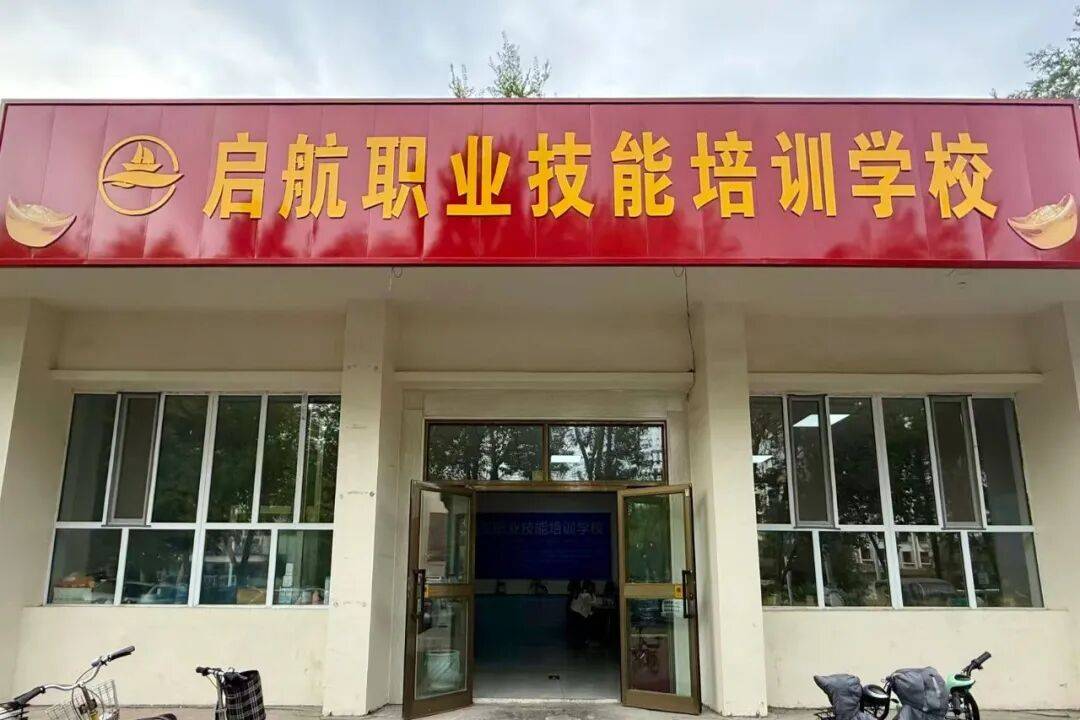
Group 1 - The training program lasts for three and a half days, focusing on enhancing the e-commerce operational skills of individual businesses and job seekers, covering areas such as short video production, account management, and AI applications [1] - The e-commerce operation training class, organized by the local human resources bureau and conducted by Qihang Vocational Training School, attracted a large number of participants for consultation and registration [3] - The training emphasizes practical skills, with instructors providing hands-on guidance in short video production and account promotion, aiming to help traditional businesses expand their sales market and promote operational transformation [4] Group 2 - The local human resources bureau aims to support individual businesses in keeping up with e-commerce trends through this training, which is part of a broader initiative to enhance vocational skills and help more individuals adapt to new business models [4] - Future plans include expanding the e-commerce training model to cover emerging fields such as cross-border e-commerce, live streaming sales, and digital marketing strategies, creating a diversified and systematic vocational skill enhancement system [5]
【咸阳】开展“技能照亮前程”行动
Shan Xi Ri Bao· 2025-09-15 22:59
Core Viewpoint - The "Skills Illuminate the Future" action plan has been launched in Xi'an City, aiming to enhance vocational skills training and promote employment and talent development among workers from now until the end of 2027 [1] Group 1: Action Plan Details - The plan aims to implement vocational skills training for over 80,000 participants during the action period [1] - It focuses on employment-oriented training in the health and wellness sector, targeting the cultivation of over 2,000 skilled talents annually in areas such as elderly care, childcare, and domestic services [1] - The initiative includes project-based training, with a goal of training over 300 skilled workers each year at the advanced level [1] Group 2: Talent Development Goals - The plan aims to cultivate over 3,000 high-skilled talents during the action period [1] - It promotes the implementation of a "diploma + vocational skill level certificate" system, encouraging vocational school graduates to hold relevant certifications [1] Group 3: Support and Promotion - Xi'an City will regularly publish a list of vocational skills training projects and refine differentiated employment subsidy policies [1] - The plan supports the establishment of training brands and promotes the implementation of skills enhancement initiatives for enterprises [1] - Various industry-specific vocational skills competitions will be widely conducted to encourage skill development [1]