
生物医药与医疗器械

Search documents
临平区以“中国绿港”为主引擎,驱动高质量发展新征程
Hang Zhou Ri Bao· 2026-02-27 02:03
Core Viewpoint - Linping District is focusing on high-quality development and common prosperity by upgrading industries and improving people's livelihoods, aiming to transform development results into tangible happiness for the community [1] Group 1: Industry Upgrades - The district will prioritize the new energy equipment industry as a breakthrough for transformation and upgrading, targeting an industrial output value exceeding 40 billion yuan this year [1] - Key sectors include wind power equipment, turbine and auxiliary machinery, and electrochemical energy storage, with major enterprises like Yunda Energy and Hangzhou Turbine leading the way [1] Group 2: Emerging Industries - The artificial intelligence industry is expected to bring significant changes, with a focus on computing power and terminal applications, leveraging leading companies such as Alibaba Cloud and China Unicom [1] - Linping aims to establish a computing power town to support this growth [1] Group 3: Sector-Specific Goals - The district plans to achieve industrial output values of over 20 billion yuan for intelligent connected vehicles, 22 billion yuan for high-end general equipment, and 13 billion yuan for biomedicine and medical devices [2] - The traditional clothing industry will also undergo a transformation towards specialization and digitization, aiming for an output value exceeding 19 billion yuan [2] Group 4: Enterprise Support Initiatives - Linping is implementing initiatives like the "Eagle Action" for top enterprises and a dual-driven plan for specialized and innovative enterprises, targeting the addition of 60 new industrial enterprises this year [2] - The district will also introduce new industrial policies to support enterprises, focusing on land use, labor, energy, and financing challenges [2]
国医医联完成PreB轮融资,国门同翔基金领投
Sou Hu Cai Jing· 2026-02-13 04:06
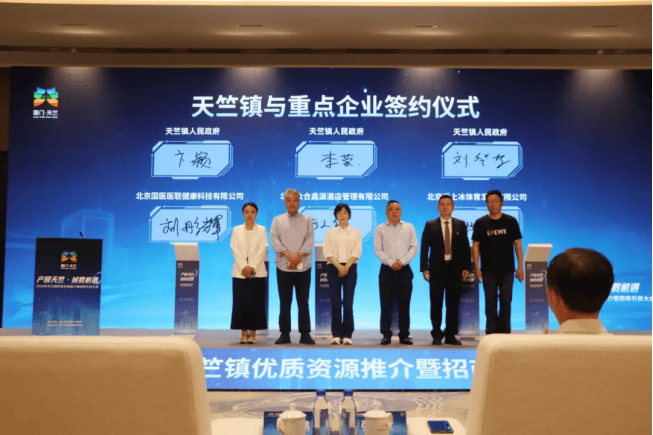
Core Insights - Beijing Guoyi Yilian Health Technology Co., Ltd. has received an investment from the Beijing Guomen Tongxiang Equity Investment Fund, with a valuation of 200 million yuan [1][3] - The collaboration aims to enhance the transformation system of traditional Chinese medicine (TCM) clinical achievements in the Shunyi District, creating a demonstration center for TCM results [1][3] Company Overview - Guoyi Yilian focuses on the transformation of cutting-edge technologies in the biomedicine and medical device sectors, showcasing strong technological innovation capabilities and clear market development prospects [3] - The company has established significant technical advantages and a comprehensive business layout in the transdermal drug delivery field, serving nearly 10,000 hospitals nationwide [3] Investment and Development - The core transdermal drug delivery project has secured Series A funding from Tongrentang Fund in 2024, highlighting its technological advancement and commercial potential [3] - The investment from the Beijing Guomen Tongxiang Equity Investment Fund is expected to facilitate the company's technological implementation, industry integration, and service upgrades in the region [3] Strategic Goals - The funding will focus on building TCM achievement transformation scenarios in Shunyi District, enhancing the accessibility and precision of TCM services [3] - The company aims to accelerate the large-scale application of TCM clinical results through an integrated transformation system of "technology + operations + channels" [3]

西湖区全要素赋能“114X”先进制造业集群
Hang Zhou Ri Bao· 2026-02-05 03:02
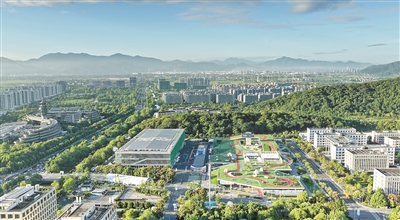
Core Viewpoint - The West Lake District is launching three major initiatives to boost the "296X" advanced manufacturing cluster, including a thousand acres of quality industrial land, a trillion-yuan industrial fund matrix, and special support policies to enhance new productivity [2][9]. Group 1: Industrial Land - The first initiative includes the planned release of 1,018 acres of industrial land by 2026, strategically located in key development areas such as the Zijin Port Science and Technology City and Yunqi Town [4]. - The land parcels are characterized by significant location advantages and complete supporting facilities, enhancing their attractiveness for industrial projects [4]. Group 2: Support Policies - The second initiative introduces targeted support policies for five key sectors, offering substantial incentives for industrial enterprises based on quarterly output increases and funding for technology transformation projects [6]. - Specific incentives include up to 500 million yuan for quarterly output increases and up to 5 million yuan for technology transformation projects with investments exceeding 10 million yuan [6]. - The policies also provide tailored support for industries such as commercial aerospace and biomedicine, including rent subsidies and funding for projects achieving commercialization [6][7]. Group 3: Capital Fund Matrix - The third initiative involves the establishment of a diversified trillion-yuan fund matrix covering the entire lifecycle of enterprises, with a total scale of 171.81 billion yuan across 26 sub-funds [8]. - The fund matrix includes various types of funds, such as angel funds, growth funds, and Pre-IPO funds, with a notable focus on direct investment funds that have already supported numerous enterprises [8]. - The capital matrix aims to continuously expand and support the growth of specialized and innovative enterprises in the region [8]. Group 4: Overall Strategy - The coordinated release of these three initiatives creates a powerful synergy of "spatial guarantee + policy guidance + capital empowerment," reflecting the West Lake District's confidence in its industrial foundation and unique advantages [9]. - The district aims to achieve a regional GDP of 245.19 billion yuan by 2025, maintaining its position among the top 12 districts in the country for comprehensive strength [9].
杭州生物医药产业再添新动能
Mei Ri Shang Bao· 2026-01-27 23:35
Core Insights - In 2025, Hangzhou is set to have five Class 1 new drugs approved, accounting for 83% of the total in the province, marking a historical high and showcasing the city's strength in biopharmaceutical innovation [1] - The establishment of the Hangzhou Biopharmaceutical and Medical Device Industry Alliance aims to enhance resource circulation and address challenges such as fragmented innovation resources and insufficient collaboration within the industry [1][2] Group 1 - The alliance comprises 249 member units from various sectors, including government, industry, academia, research, healthcare, and finance, creating a comprehensive innovation community [2] - The alliance will implement three main mechanisms: quarterly activities, resource sharing, and demand response to empower member units effectively [2] - The first rotating chairman of the alliance, Ding Lieming from Betta Pharmaceuticals, emphasized the importance of the alliance in building a platform for resource sharing and collaborative innovation among biopharmaceutical companies [2] Group 2 - The alliance will focus on cutting-edge fields such as synthetic biology, nucleic acid drugs, and AI in pharmaceuticals, promoting deep integration of innovation chains, industry chains, capital chains, and talent chains [3] - The alliance will also serve as a high-end think tank, leveraging the expertise of its members to provide scientific support for the planning and decision-making of the biopharmaceutical industry cluster in Hangzhou [2]
京沈携手共绘健康蓝图 沈阳国际生命健康城构建东北亚创新高地
Zhong Guo Xin Wen Wang· 2026-01-24 03:47
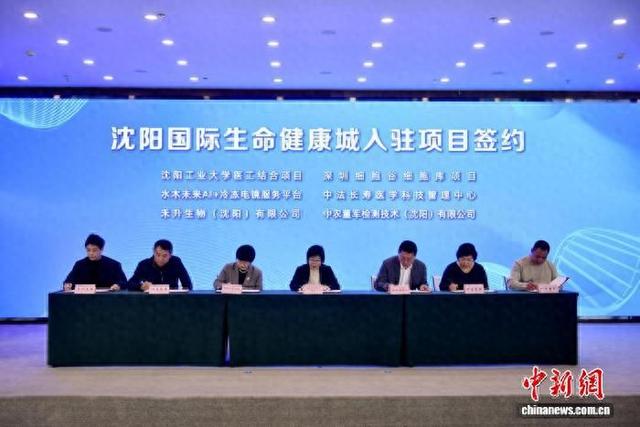
Core Viewpoint - The release of the "Shenyang International Life and Health City Construction Plan" marks a new phase in the development of a significant health industry hub in Shenyang, aimed at serving Northeast Asia [1]. Group 1: Development Framework - The plan outlines a "3+3+4+9" development system, focusing on a three-year action blueprint to enhance cooperation between Beijing and Shenyang, aiming to create a competitive biopharmaceutical and medical device industry cluster [5]. - The construction of the Shenyang International Life and Health City is seen as a key layout for cultivating new productive forces in Shenyang and an extension of the cooperation results between Beijing and Shenyang [5]. Group 2: Future Goals and Areas of Focus - Over the next three years, the focus will be on three major areas: frontier biomedicine, high-end medical devices, and diversified health services, with a goal to establish a modern industrial system by the end of 2028 [6]. - The development will include four major areas: industrial innovation, livable living, health demonstration, and innovative services, optimizing the integration of industry and city [6]. Group 3: Service Centers and Partnerships - Five major service centers were inaugurated, which will enhance the development of the Shenyang International Life and Health City by leveraging local academic and industry strengths [7]. - The Shenyang Economic Development Zone signed agreements with six projects, including collaborations with Shenyang University of Technology and Shenzhen Cell Valley, to strengthen strategic partnerships and accelerate industry aggregation [8].
两会观察:杭州的新坐标,不止人工智能
Zhong Guo Xin Wen Wang· 2026-01-23 10:24
Group 1 - The core focus of Hangzhou's government work report is the establishment of the "296X" advanced manufacturing cluster, aiming to enhance the development of artificial intelligence and visual intelligence industries, along with nine trillion-level industrial clusters for high-quality growth [1][2] - The "296X" advanced manufacturing cluster is seen as a key driver for Hangzhou's high-quality manufacturing development, with a target to achieve an industrial output value exceeding 1.37 trillion yuan, reflecting a year-on-year growth of 7.9%, which is 2.7 percentage points higher than the overall industrial growth rate [2][3] - The city aims to cultivate over 650 "specialized, refined, distinctive, and innovative" small giant enterprises and increase the number of large-scale industrial enterprises to 8,000 [3] Group 2 - Artificial intelligence is identified as a critical variable within the "296X" advanced manufacturing cluster, with the establishment of a 2 billion yuan "Ruiniao Fund" to alleviate early-stage financing challenges for tech startups in this sector [4][6] - The nine trillion-level industrial clusters, including biomedicine and new materials, are considered the backbone of Hangzhou's modern industrial system [7][8] - Recommendations include enhancing support for biomedicine companies seeking to go public and establishing a scientific service mechanism to facilitate their development [8][9]

港中大(深圳)以国际双创大赛助力大湾区发展
Zhong Guo Xin Wen Wang· 2026-01-21 12:55
Core Insights - The third "Shenxian Lake" International Innovation and Entrepreneurship Competition held by Hong Kong Chinese University (Shenzhen) showcased 319 high-quality projects globally, emphasizing the competition's expanded influence and professional level in key sectors such as big data and AI, biomedicine and medical devices, new materials, and new energy [1][2] Group 1: Competition Overview - The competition featured 20 teams in the finals, resulting in the selection of 5 key cultivation projects, 10 potential cultivation projects, and 5 excellence awards [1][2] - The key cultivation projects will receive a total support value of 200,000 RMB, which includes a cash prize of 100,000 RMB and a special landing fund of 100,000 RMB, along with exclusive incubation services [2] Group 2: Innovation Ecosystem - The competition aims to stimulate innovation vitality, cultivate source technologies, and promote the transformation of achievements, contributing to the development of new productive forces [2] - A new model of "funding + incubation" was introduced, establishing a comprehensive support system covering the entire chain from creativity to industrialization, promoting deep integration of innovation, industry, finance, and talent [2] Group 3: Strategic Collaborations - The event included significant signing and unveiling ceremonies to enhance the integration of industry, academia, and research, with strategic partnerships formed between Hong Kong Chinese University (Shenzhen) and various enterprises [3] - Four joint laboratories were established, focusing on cutting-edge fields such as precision medicine and new materials, aimed at addressing key core technology challenges and supporting high-quality development in the Guangdong-Hong Kong-Macao Greater Bay Area [3]
杭州“十五五”规划建议:聚焦具身智能机器人及其他智能终端、集成电路、生物医药与医疗器械、网络通信、智能网联汽车等9个领域 打造千亿级产业集群
Jin Rong Jie· 2026-01-16 02:56
Core Insights - The article discusses the Hangzhou Municipal Committee's recommendations for the 15th Five-Year Plan, emphasizing the strengthening and optimization of the "296X" advanced manufacturing clusters [1] - It highlights the goal of developing two trillion-level industrial clusters in artificial intelligence and visual intelligence, aiming for national recognition in AI manufacturing and global competitiveness in visual intelligence [1] Group 1: Advanced Manufacturing Clusters - The plan focuses on nine key areas to create billion-level industrial clusters, including intelligent robotics, integrated circuits, biomedicine and medical devices, network communication, smart connected vehicles, new energy equipment, new materials, high-end general equipment, and modern textiles and apparel [1] - There is an emphasis on establishing a growth mechanism for future industry investments and a foresight mechanism for disruptive technologies [1] Group 2: Future Industry Development - The initiative includes the exploration of various technological routes, typical application scenarios, feasible business models, and market regulatory rules for six future industry clusters, including synthetic biology, aerospace, low-altitude economy, quantum technology, optoelectronic technology, and brain-like intelligence [1] - The plan aims to build several pilot zones for future industries, enhancing the quality and standards of traditional industries through technological upgrades and ecological transformations [1] Group 3: Traditional Industry Upgrades - The article mentions the "腾笼换鸟, 凤凰涅槃" (replace the old with the new, rebirth of the phoenix) initiative to support the high-level inheritance and quality development of historical classic industries such as arts and crafts, silk, tea, and traditional Chinese medicine [1] - It also stresses the importance of accelerating the technological transformation and ecological upgrades of traditional industries like precision machinery, electrical machinery, and food and beverage [1]

税收红利重塑产业布局 征管环节将开放而有序
证券时报· 2025-12-18 00:00
Core Viewpoint - The unique tax system of "zero tariffs, low tax rates, and simplified tax structure" is a competitive advantage for Hainan Free Trade Port, which will release greater policy dividends as the island officially closes its borders for operations [1]. Tax Policy and Industry Transformation - A series of tax incentives exclusive to Hainan Free Trade Port will gradually reshape the commodity circulation and industrial layout after the island's closure. The "zero tariff" policy will shift to a negative list model, exempting goods not listed from tariffs, increasing the number of tariff-exempt items from 1,900 to approximately 6,600, covering 74% of production materials, a 53% increase from before the closure [6]. - The policy for duty-free domestic sales of processed goods with a value-added rate of 30% will be further optimized, removing the requirement that 60% of the main business income must come from encouraged categories, thus broadening the scope of beneficiaries [6]. - The tax advantages will significantly lower the procurement costs for enterprises importing raw materials and intermediate goods, enhancing profitability through the use of zero-tariff investment goods [6]. Industrial Layout Changes - The tax policies will fundamentally change the industrial layout of Hainan, transitioning from a "multi-point distribution" model to a "core agglomeration area + regional collaboration" model centered around key parks. Industries such as raw material-dependent manufacturing, deep processing of agricultural products, and biomedicine are expected to benefit significantly [7]. Policy Synergy and Efficiency - The combination of "zero tariffs" and duty-free domestic sales for processed goods will create a supportive policy framework for enterprise development. The shift from a "positive list" to a "negative list" management model will enhance customs efficiency and provide a solid institutional guarantee for the free flow of goods [8]. Defining Legal Benefits - Hainan is establishing an "open and orderly" tax environment through clear definitions of eligibility for tax benefits, anti-tax avoidance clauses, transparency, and strict anti-money laundering mechanisms. The core requirement of "substantive operation" distinguishes Hainan from traditional "tax havens," ensuring that tax benefits are closely linked to real economic activities [10]. Simplified Tax System Reform - The ongoing "simplified tax system" reform aims to enhance Hainan's global competitiveness by consolidating various taxes into a sales tax, which will be levied at the retail stage for goods and services. This reform is being advanced cautiously and in phases [12]. - The reform will require transitional policies to allow for tax deductions or refunds on pre-reform inventory, and careful design of sales tax rates to prevent arbitrage due to price discrepancies [12][13]. Regulatory Framework - To address potential issues arising from the simplified tax system, a "three-chain integration" regulatory framework is proposed, promoting the upload of supply chain information, dynamic monitoring of financial flows, and the use of blockchain for invoicing [13].

税收红利重塑产业布局征管环节将开放而有序
Zheng Quan Shi Bao· 2025-12-17 23:48
Core Viewpoint - The unique tax system of "zero tariffs, low tax rates, and simplified tax structure" is a competitive advantage for Hainan Free Trade Port, which will release greater policy dividends as the island officially enters a closed operation phase [1] Tax Policy and Industry Ecology - A series of tax incentives exclusive to Hainan Free Trade Port will gradually reshape the commodity circulation and industrial layout after the island's closure [2] - The "zero tariff" policy will shift to a negative list model, exempting goods not listed from tariffs, expanding the covered goods from 1,900 to approximately 6,600, which includes 74% of production materials, a 53% increase from before [2] - The policy for duty-free domestic sales of processed goods with a value-added rate of 30% will be optimized, removing the requirement for 60% of revenue to come from encouraged business activities, thus broadening the scope of beneficiaries [2] Industrial Development and Policy Support - The changes will fundamentally alter Hainan's industrial layout, transitioning from a "multi-point distribution" model to a "core agglomeration area + regional collaboration" model [3] - Key industries such as raw material-dependent manufacturing, deep processing of agricultural products, and biomedicine are expected to benefit significantly, potentially forming high-end manufacturing and specialty agricultural processing zones [3] - The combination of "import duty exemption - value-added processing - domestic sales duty exemption" will empower private enterprises to integrate deeply into the dual circulation pattern and achieve industrial upgrades [3] Legal and Regulatory Framework - Hainan is establishing a transparent and orderly tax environment through defined eligibility criteria, anti-tax avoidance clauses, and strict anti-money laundering mechanisms [4] - The core requirement of "substantive operation" distinguishes Hainan from traditional tax havens, ensuring that tax incentives are linked to real economic activities [5] Simplified Tax System Reform - The ongoing "simplified tax system" reform aims to enhance Hainan's global competitiveness by consolidating various taxes into a sales tax, which will be levied at the retail stage [6] - The reform will be implemented gradually, with transitional policies allowing for tax deductions or refunds on pre-reform inventory to prevent arbitrage [6] - A comprehensive regulatory system is suggested to address potential issues arising from the simplified tax system, including tax evasion and cash transaction monitoring [7]