
电视制造

Search documents
反向春运不凑活!海信百吋承包三代人的快乐
Sou Hu Wang· 2026-02-14 03:15
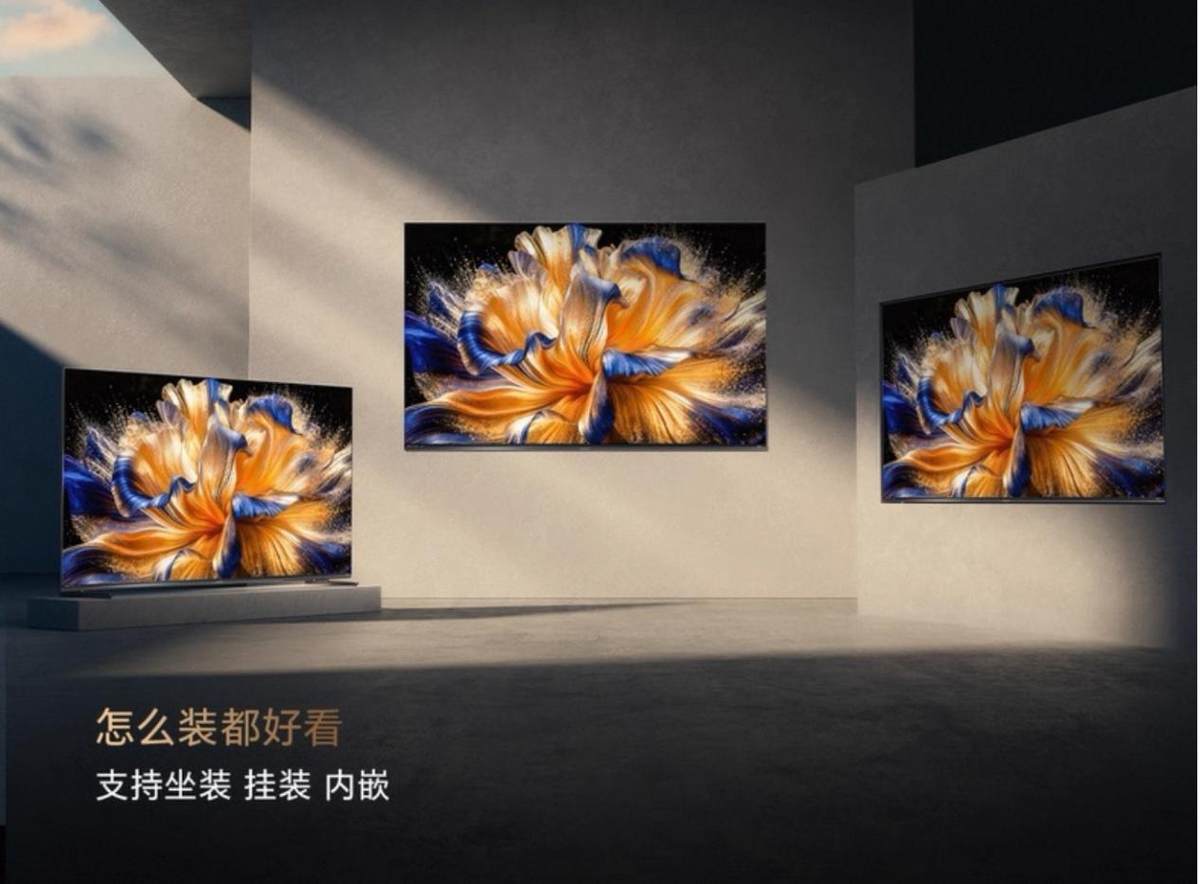
Core Viewpoint - The trend of "reverse Spring Festival travel" is gaining popularity, where families are bringing their parents and children to urban areas for the New Year instead of returning to their hometowns, facilitated by the new Hisense 100-inch E8S Pro TV, which enhances family entertainment experiences [1][9]. Group 1: Family Entertainment - The Hisense 100-inch E8S Pro is described as a "family entertainment adaptation machine," catering to the entertainment needs of all family members, including parents and children [3]. - The TV features the XinXin AI picture quality chip H7, which optimizes image details, making it ideal for watching dramas, with improved clarity and color accuracy [3]. - The TV's 100% BT.2020 ultra-wide color gamut provides realistic picture quality, enhancing the viewing experience for family members [3]. Group 2: Gaming Experience - The TV's native 4K 170Hz refresh rate and upgradeable 330Hz variable refresh rate significantly enhance gaming experiences, particularly for children [5]. - The ultra-low latency of 4.9ms ensures smooth gameplay, allowing for synchronized actions during games, which strengthens parent-child bonding [5]. Group 3: Viewing Comfort - The Hisense 100-inch E8S Pro features a 1.28% ultra-low reflection rate, ensuring clear visibility even in bright sunlight, making it suitable for family gatherings [7]. - The 178° ultra-wide viewing angle allows all family members to enjoy the content without color distortion or brightness loss, enhancing the overall family atmosphere during viewing [7].


日媒:中资占日本电视“半壁江山”
Huan Qiu Shi Bao· 2026-02-07 04:22
Group 1 - Sony Group has decided to divest its television business, transferring it to a joint venture led by Chinese companies, resulting in a projected 60% market share for Chinese-backed firms in Japan's television market [1][2] - Japanese television manufacturers, once dominant in the global consumer electronics industry, are currently undergoing a critical transformation in their business models [1] - The ownership structure of Japanese brands like REGZA has shifted significantly, with Hisense holding 95% of REGZA's shares, while Toshiba's stake is only 5% [1] Group 2 - Chinese companies have a clear price advantage, with 43-inch 4K LCD TVs priced around 50,000 yen (approximately 2,210 RMB), compared to Japanese products priced around 100,000 yen [2] - The domestic shipment volume of flat-screen TVs in Japan has declined from over 25 million units in 2010 to less than a quarter of that figure, indicating a shrinking market [2] - In the global market, Japanese companies are losing their presence, with Samsung, LG, Hisense, and TCL projected to dominate the television market by 2025, collectively holding over half of the global market share [2] Group 3 - The challenges faced by the television manufacturing industry reflect broader trends in traditional white goods sectors like refrigerators and washing machines, where Japanese companies are also selling businesses or restructuring with foreign firms [3] - Chinese products are gradually shedding the perception of being "cheap and low quality" due to improved cost control and technological advancements [3]


日媒:日本国内电视销量排名,中资背景企业占“半壁江山”
Huan Qiu Shi Bao· 2026-02-06 22:49
Core Viewpoint - Sony Group's decision to divest its television business to a joint venture led by Chinese companies will increase the market share of Chinese-backed brands in Japan's television market to 60% [1][2]. Group 1: Market Dynamics - Japanese television manufacturers, once dominant in the global home appliance industry, are at a critical juncture in their business model transformation [1]. - Chinese brands such as TCL and Hisense are increasingly visible in Japanese electronics stores, indicating a shift in market presence [1]. - The ownership structure of Japanese brands like REGZA has changed significantly, with Hisense holding 95% of its shares, while Toshiba only holds 5% [1]. Group 2: Pricing and Competition - Chinese products have a clear price advantage, with a 43-inch 4K LCD television priced around 50,000 yen (approximately 2,210 RMB), compared to Japanese brands priced around 100,000 yen [2]. - Japanese companies have been outsourcing key components like LCD panels, diminishing their technological edge [2]. - Chinese-backed companies now account for a significant portion of television sales in Japan, with their market share expected to reach 60% when including Sony's brand under the new joint venture [2]. Group 3: Industry Trends - The overall market for flat-screen televisions in Japan has contracted, with shipments dropping from over 25 million units in 2010 to less than a quarter of that figure [2]. - In the global market, Japanese companies are losing their presence, with Samsung, LG, Hisense, and TCL projected to dominate the rankings by 2025 [2]. - Panasonic remains the only major Japanese company manufacturing televisions independently, but it has outsourced the production of lower-end models [2]. Group 4: Broader Implications - The television manufacturing sector reflects broader trends in the white goods industry, where Japanese companies are also selling off businesses or restructuring with foreign firms [3]. - Chinese products are gradually shedding the perception of being low-quality and cheap, as they improve in cost control and technology [3].
20秒落地用户需求 海信视像青岛工厂成为全球电视行业首座“灯塔工厂”
Zhong Guo Chan Ye Jing Ji Xin Xi Wang· 2026-01-27 22:08
Core Viewpoint - Hisense has been recognized as the first company in the global television industry to be awarded the title of "Lighthouse Factory" by the World Economic Forum, highlighting its innovative user-centered AI-driven digital transformation in manufacturing [1] Group 1: Digital Transformation and AI Integration - Hisense has developed a user-centered AI manufacturing model that leverages big data and the Xinghai large model to gain deep insights from vast amounts of data in minutes [1] - The company has introduced an intelligent agent for user demand recognition, which categorizes user feedback and identifies pain points, reducing the time to convert user feedback into product features by 62% [1] - In the R&D phase, Hisense has implemented a platform based on large language models (LLM) that has shortened software development cycles by 31% and improved R&D efficiency by 27% [2] Group 2: Manufacturing Efficiency and Quality Improvement - Hisense's Qingdao factory produces an impressive 85-inch television every 20 seconds, showcasing the efficiency of its AI-integrated manufacturing process [2] - The company has created a digital process design model that utilizes over 100,000 pieces of process data, allowing for the automatic generation of comprehensive process plans in just 5 minutes, improving efficiency by 75% [2] - AI has been integrated into the production process, reducing the verification time for production from 10 hours to 19 minutes, achieving "zero-cost" trial and error [3] Group 3: Innovative Production Techniques - Hisense has pioneered a robotic solution for precise panel assembly, which previously required five workers, now achieved with 0.1mm precision through AI and high-precision cameras [4] - This innovation not only enhances production efficiency but also allows workers to focus on more technical tasks, aligning with the company's mission to redefine assembly standards for the large-size era [4] - The AI-driven quality inspection platform has improved detection efficiency by 70.7%, ensuring high-quality standards in production [5] Group 4: Commitment to Advanced Manufacturing - Hisense has established three "Lighthouse Factories," four zero-carbon factories, and 17 national-level green factories, demonstrating its commitment to advanced manufacturing [5] - The company aims to further integrate new technologies such as 5G and AI into manufacturing, contributing to the transformation and upgrading of China's manufacturing industry [5]
青岛全周期培育冠军企业
Jing Ji Ri Bao· 2026-01-26 22:03
Core Insights - The Ministry of Industry and Information Technology has announced the ninth batch of manufacturing single champion enterprises, with seven companies from Qingdao included, bringing the total to 45, ranking eighth nationally and fifth among sub-provincial cities [1] - Qingdao has established a systematic cultivation framework for champion enterprises, integrating policies into the "Industrial Empowerment Qingdao, Strong Manufacturing City" strategy, fostering cross-departmental collaboration [1][2] - The city has provided significant financial support, including a one-time reward of 2 million yuan for newly recognized champion enterprises, totaling 61 million yuan disbursed, and 358 million yuan for technological upgrades over the past three years [2] Group 1 - Qingdao's champion enterprises have made significant advancements in their respective fields, with companies like Sailun Group achieving breakthroughs in manufacturing large engineering tires, enhancing safety and load-bearing capabilities [2] - China Shipbuilding Group's engine division has focused on low-carbon and zero-carbon fuel engines, successfully delivering dual-fuel engines that reduce carbon emissions by approximately 24% [1][2] - Hisense Visual has established the world's first "lighthouse factory" in the television industry, integrating AI throughout the production process, achieving a remarkable output of one 85-inch television every 20 seconds [3] Group 2 - The cultivation of champion enterprises is seen as a key strategy for advancing the industry towards mid-to-high-end manufacturing and ensuring the stability of supply chains [2] - Qingdao has built a robust support system consisting of 3,315 specialized small and medium-sized enterprises, 256 "little giant" enterprises, and 128 provincial-level champion enterprises, providing a continuous source of growth for the champion enterprise group [2] - The achievements of these champion enterprises not only enhance Qingdao's manufacturing reputation but also position them competitively on a global scale, marking a new coordinate for Chinese manufacturing [3]

2026画质天花板?海信RGB-MiniLed电视凭啥?
Sou Hu Wang· 2026-01-26 03:25
Core Viewpoint - The Hisense 100-inch E8S Pro TV is positioned as a leading choice for 2026, emphasizing advanced technology in color accuracy, brightness, and sound quality, catering to the evolving preferences of home theater enthusiasts [8][10][11] Group 1: Display Technology - The E8S Pro utilizes RGB-MiniLed technology with RGB primary color light-emitting chips, allowing for a broader range of natural colors and smoother color transitions [4] - It achieves a peak brightness of 6200 nits, enhancing its ability to display HDR content with exceptional realism [4] - The TV features a 108-bit light and color control precision, ensuring seamless color gradients, which is crucial for a natural viewing experience [4] Group 2: Audio Quality - The E8S Pro is equipped with a 4.2.2 sound system, featuring 10 sound units and a peak power of 270W, eliminating the need for additional sound systems [5][7] - It offers a sound experience comparable to high-end independent audio systems, providing immersive audio that enhances the viewing experience [7] Group 3: Gaming and Future-Proofing - The TV supports 4K at 170Hz refresh rate, preparing for next-generation gaming consoles and high-performance PCs [10] - It is designed to be energy-efficient, consuming 40% less power than QD-OLED TVs, aligning with modern environmental standards [10] Group 4: User Experience - The E8S Pro includes features for high-definition content playback, supporting high bitrate transmission for seamless viewing of large files [7] - Its anti-reflective screen technology enhances the viewing experience in various lighting conditions, making it suitable for a premium home cinema setup [7]

海信RGB-Mini LED电视销量占比超90%,节能40%领跑高端市场
Zhong Guo Jing Ying Bao· 2026-01-23 07:38
Group 1 - Hisense is accelerating its presence in the high-end television market with its RGB-Mini LED technology, which is gaining significant market share [1][2] - The RGB-Mini LED technology offers advantages over QD-Mini LED, including a 40% energy saving in daily use and a 42% reduction in harmful blue light, enhancing eye protection and color accuracy [1] - Hisense's overall market share in the RGB-Mini LED television sector reached 95.67% according to data from Aowei Cloud Network [2] Group 2 - The shift towards colored light sources is seen as the next generation of display technology, with laser TVs, Micro LED, and RGB-Mini LED being key developments [1] - The integration of innovation by companies like Hisense signifies that the Chinese display industry is moving beyond a follower role, leveraging its full industry chain advantages [2]
海信视像青岛工厂成为全球电视行业首座“灯塔工厂”
Zhong Guo Zhi Liang Xin Wen Wang· 2026-01-22 03:55
Core Viewpoint - Hisense has been recognized as the first company in the global television industry to achieve "Lighthouse Factory" status, highlighting its innovative user-centered and AI-driven digital transformation in manufacturing [1]. Group 1: Digital Transformation and AI Integration - Hisense's Qingdao factory utilizes a dual-engine digital transformation model that combines user-centric design with AI-driven manufacturing, allowing for rapid insights from vast data sets [1]. - The company has implemented over 40 advanced use cases integrating AI, big data, VR, and digital simulation technologies, resulting in significant improvements in efficiency, quality, and flexible manufacturing [2]. - AI has reduced the time to convert user feedback into product features by 62%, enhancing product competitiveness [1]. Group 2: R&D and Production Efficiency - The introduction of a large language model (LLM)-based intelligent platform has shortened software development cycles by 31% and increased R&D efficiency by 27% [2]. - Hisense's digital process design model has created a knowledge base of over 100,000 process data points, enabling the automatic generation of comprehensive process plans in just 5 minutes, improving efficiency by 75% [2]. - AI-driven production planning has significantly reduced the time required for production validation from 10 hours to 19 minutes, achieving "zero-cost" trial and error [3]. Group 3: Quality Control and Automation - Hisense has developed an AI-based intelligent inspection platform that enhances detection efficiency by 70.7%, ensuring high product quality through a complete quality feedback loop [5]. - The company has pioneered a matrix panel alignment technology that automates the assembly process, achieving precision within 0.1 millimeters, thus improving assembly efficiency and accuracy [4]. - Hisense aims to redefine assembly standards for the "large-size" era through intelligent and flexible production capabilities [5]. Group 4: Future Directions and Commitment - Hisense is committed to advancing smart manufacturing, green manufacturing, and innovative manufacturing, integrating new technologies like 5G and AI into its operations [6]. - The company has established three "Lighthouse Factories," four zero-carbon factories, and 17 national-level green factories, demonstrating its leadership in advanced manufacturing [5].
海信发布E8S电视新品:采用RGB-Mini LED技术,售价9999元起
Feng Huang Wang· 2026-01-21 10:58
Core Viewpoint - Hisense launched the E8S series of flagship televisions featuring RGB-Mini LED technology, aiming to initiate a "RGB-Mini LED replacement storm" in the high-end TV market [1] Group 1: Technology and Innovation - The E8S series utilizes RGB-Mini LED technology, which is a significant technological breakthrough compared to existing QD-Mini LED solutions that rely on "monochrome backlight + quantum dot Mini LED" [1] - Hisense claims that the RGB three-color independent light-emitting chip backlight solution can achieve a wider color gamut, reduce energy consumption by over 40%, and hardware-level decrease harmful blue light [1] - The E8S series is equipped with the self-developed XinXin AI image quality chip H7, supporting high-precision local dimming with up to 9360 dimming zones [1] Group 2: Product Specifications - The E8S series features a native 4K 180Hz screen, supports Dolby Vision, and includes the Devialet multi-channel acoustic system [1] - The official retail prices for the E8S series are set at 12,999 yuan for the 75-inch version, 17,999 yuan for the 85-inch version, and 24,999 yuan for the 100-inch version [2] Group 3: Pricing Strategy - During the launch period, Hisense offers discounts that reduce the final prices to 9,999 yuan, 14,999 yuan, and 21,999 yuan for the respective sizes after subsidies [2] - The pricing strategy aims to position the E8S series competitively against monochrome backlight quantum dot Mini LED products, facilitating technology adoption [2]

海信视像总裁李炜:将持续交付符合世界级制造标准的卓越产品
Zhong Zheng Wang· 2026-01-20 10:28
Core Viewpoint - Hisense TV factory has been awarded as the world's first "Lighthouse Factory" in the television industry, recognizing its digital transformation through user-centric and AI-driven manufacturing processes [1][2]. Group 1: Awards and Recognition - The "Lighthouse Factory" award is a prestigious recognition by the World Economic Forum (WEF) and McKinsey, highlighting leaders in smart manufacturing and digitalization [1]. - Hisense's factory is the only one in the global television sector to receive this accolade, filling a gap in smart manufacturing within the industry [1]. Group 2: Technological Advancements - The factory utilizes AI, big data, simulation, and VR technologies throughout the entire product development and manufacturing process, resulting in a 34% reduction in R&D cycle time and an 18% decrease in material costs [2]. - User feedback is analyzed in real-time, shortening the time to convert user insights into product features by 62% [2]. Group 3: Operational Efficiency - Hisense has implemented over 40 advanced use cases integrating AI, big data, and VR, leading to a 31% reduction in software development cycles and a 27% increase in R&D efficiency [3]. - The factory can automatically generate comprehensive process plans in just 5 minutes, improving efficiency by 75% [3]. - The production line can complete an 85-inch TV every 20 seconds, breaking traditional manufacturing efficiency barriers [3]. Group 4: Industry Impact - Hisense's success serves as a benchmark for smart transformation in the television industry, with the company expressing willingness to share experiences and user cases with global partners [3].