
空间科学

Search documents
【科技日报】基础研究进入“从0到1”突破期
Ke Ji Ri Bao· 2026-01-22 02:11
Core Insights - In 2025, China's fundamental research is entering a breakthrough phase characterized by significant original achievements and increased funding, with basic research funding reaching a historical high of 7.08% of total R&D expenditure [1][7]. Group 1: Breakthroughs in Fundamental Research - China has made notable advancements in various fields, including the first successful thorium-uranium nuclear fuel conversion, solidifying its leadership in molten salt reactor research [2]. - The country continues to lead globally in high-quality scientific output, with multiple achievements setting international records and filling gaps in various fields [2]. - In space science, significant discoveries regarding the moon's evolution have been made, marking China's progress from isolated breakthroughs to systematic enhancements in research capabilities [3]. Group 2: Support from Major Scientific Facilities - The number of major scientific facilities in China exceeds 70, positioning the country among the world's leaders in both quantity and technology [5]. - Facilities like the Jiangmen Neutrino Experiment and the LHAASO cosmic ray observatory have produced groundbreaking results, enhancing the precision of neutrino oscillation measurements and solving long-standing cosmic mysteries [5]. - Major scientific infrastructures are recognized as crucial platforms for advancing fundamental research and driving innovation in particle physics and other fields [5]. Group 3: Strengthening the Research System - The Chinese government has prioritized enhancing fundamental research and original innovation capabilities as part of its economic and social development goals [6]. - Continuous improvements in the research system, a growing pool of young scientific talent, and stable funding are identified as key factors driving original innovation [6]. - The revised National Natural Science Foundation regulations aim to encourage original research and support the cultivation of young scientific talent [6]. Group 4: Investment in Research and Development - In 2025, total R&D expenditure in China reached 39,262 billion yuan, maintaining the second position globally, with basic research funding increasing from 6.91% to 7.08% of total R&D expenditure [7]. - Local governments are implementing policies to enhance basic research funding, incentivizing enterprises to increase their investment in fundamental research [7]. - The continuous optimization of the research system, increased funding, and the establishment of high-level support platforms are propelling China's fundamental research into a rapid development phase [7].
新华社出图·年度记忆丨闪耀世界的中国科技之光
Xin Hua She· 2025-12-26 06:24
Group 1 - China's innovation index has entered the global top ten for the first time, showcasing rapid growth in technological innovation capabilities [1] - The year 2025 marks the conclusion of the "14th Five-Year Plan," with a focus on achieving breakthroughs in key core technologies and enhancing the integration of technological and industrial innovation [20] - Significant advancements in space exploration have been made, including successful tests of manned lunar exploration vehicles and the launch of major space science satellite missions [3][5][17] Group 2 - The 2025 World Internet Conference showcased advancements in robotics and artificial intelligence, indicating a strong presence of innovative technologies in various sectors [6][21] - The launch of a new generation of ultra-high-speed real-time oscilloscopes, achieving bandwidths exceeding 90GHz, highlights China's leadership in the global electronic communication industry [9] - The successful operation of the Jiangmen Neutrino Experiment, the world's first large-scale neutrino facility, represents a significant milestone in high-precision scientific research [14]

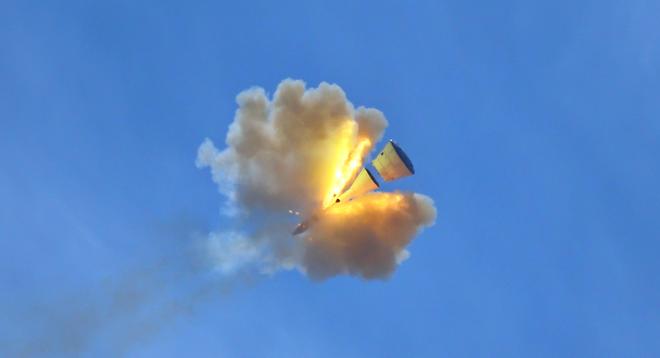
我国空间科学实现多点突破
Jing Ji Ri Bao· 2025-11-25 07:56
Core Insights - The Chinese Academy of Sciences announced significant achievements in space science through its pilot project initiated in 2011, which has successfully developed and launched eight scientific satellites, including "Wukong," "Shijian-10," "Micius," "Huiyan," "Taiji-1," "Huairou-1," "Kuafu-1," and "Tianguan" [1] Group 1 - The pilot project has led to major original achievements, creating several "firsts" for China and even the world [1] - China's space science has transitioned from "catching up" and "keeping pace" to "leading" in certain areas, marking a historic leap [1] - The project has stimulated rapid advancements in cutting-edge payloads and satellite platform technologies [1]