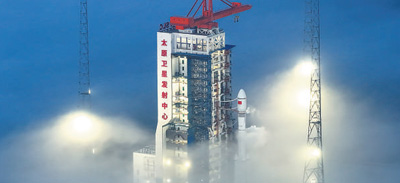
实践十号

Search documents
我国空间科学实现多点突破
Jing Ji Ri Bao· 2025-11-25 07:56
Core Insights - The Chinese Academy of Sciences announced significant achievements in space science through its pilot project initiated in 2011, which has successfully developed and launched eight scientific satellites, including "Wukong," "Shijian-10," "Micius," "Huiyan," "Taiji-1," "Huairou-1," "Kuafu-1," and "Tianguan" [1] Group 1 - The pilot project has led to major original achievements, creating several "firsts" for China and even the world [1] - China's space science has transitioned from "catching up" and "keeping pace" to "leading" in certain areas, marking a historic leap [1] - The project has stimulated rapid advancements in cutting-edge payloads and satellite platform technologies [1]
我国空间科学先导专项成果集中发布 “十五五”期间我国将实施太空探源科学卫星计划
Yang Guang Wang· 2025-11-25 07:24
Core Insights - The core focus of the news is the significant breakthroughs achieved by China's space science satellite missions, highlighting the advancements in space science and technology during the "14th Five-Year Plan" period [1][2]. Group 1: Achievements and Breakthroughs - The Chinese Academy of Sciences has successfully developed and launched eight scientific satellites, including "Wukong," "Shijian-10," and "Mozi," resulting in major original achievements and several firsts for China and the world [1]. - The "Wukong" satellite has made a notable discovery by identifying a hardening structure in the energy spectrum of cosmic ray helium nuclei, achieving precise measurements in the energy range above 1 trillion electron volts per hertz [1]. Group 2: Future Plans - During the "14th Five-Year Plan" period, the National Space Science Center of the Chinese Academy of Sciences will implement the space exploration scientific satellite plan, which includes projects like the "Hongmeng Plan" and "Kuafu-2," aiming for breakthroughs in areas such as the cosmic dark age and exoplanet detection [2].
用科技“加速度”搭建“登天路” 中国探索太空奥秘的“长征”不停步
Yang Shi Wang· 2025-11-25 02:45
Core Insights - The Chinese Academy of Sciences announced significant scientific breakthroughs from space science satellite missions during the 14th Five-Year Plan period, with plans to implement the "Space Exploration Science Satellite Program" in the upcoming 14th Five-Year Plan [1][3]. Group 1: Space Science Satellite Missions - The program will involve the development and launch of four space science satellite missions aimed at exploring cosmic mysteries, including the "Hongmeng Plan" for detecting the cosmic dark age, "Kuafu-2" for direct imaging of the solar polar regions, an exoplanet survey mission to find "Earth 2.0," and an enhanced X-ray time-variable and polarization space observatory to study new physical laws under extreme cosmic conditions [3][5]. - The director of the National Space Science Center, Wang Chi, emphasized the goal of achieving original scientific breakthroughs in understanding the origins and evolution of the universe, space weather, and extraterrestrial life by 2035 [5]. Group 2: Achievements in Space Science - Since its inception in 2011, the space science pilot project has successfully developed and launched eight scientific satellite missions, including "Wukong," "Shijian-10," "Micius," "Huiyan," "Taiji-1," "Huairou-1," "Kuafu-1," and "Tianguan," leading to significant discoveries such as the first X-ray all-sky map and the most precise cosmic ray energy spectrum measurements [7]. - These missions have contributed to a rapid advancement in China's space science innovation, marking a significant milestone in the country's scientific capabilities [7]. Group 3: Lunar Research - Recent studies revealed that the lunar soil brought back by the Chang'e 6 mission from the far side of the moon has unique properties, being significantly drier than the Sahara Desert and exhibiting a sticky texture due to static electricity rather than water [8][10]. - The far side of the moon has undergone more intense meteorite impacts, resulting in finer and more angular soil particles, which contribute to its unique physical characteristics and implications for future lunar exploration and base construction [12].

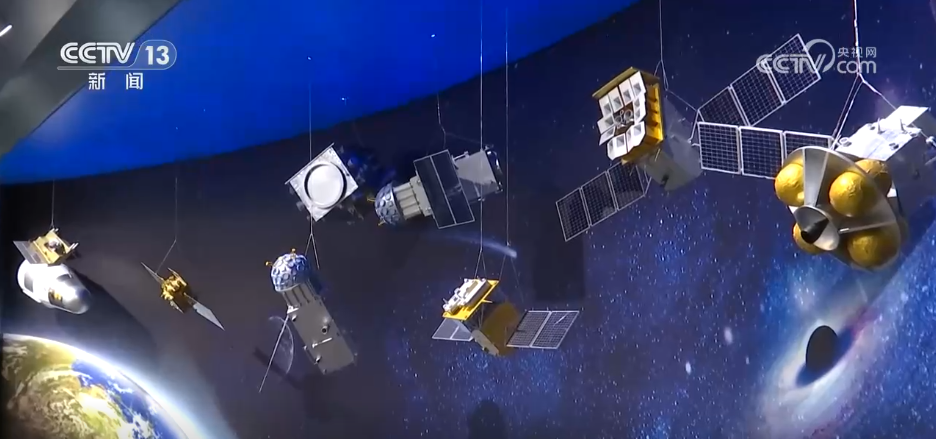
中国空间科学创新发展进入“快车道”——空间科学先导专项取得系列重大原创成果
Ke Ji Ri Bao· 2025-11-25 00:08
Core Insights - The National Space Science Center of the Chinese Academy of Sciences announced significant breakthroughs in space science, marking a historic leap for China's space science innovation and positioning it as a leader in certain fields [1][5]. Group 1: Achievements and Innovations - Since its launch in 2011, the space science initiative has successfully developed and launched eight scientific satellites, achieving numerous original results and creating multiple "firsts" for China and the world [2]. - The "Tian Guan" satellite produced the world's first all-sky X-ray map, while the "Wu Kong" satellite provided the most precise cosmic ray energy spectrum to date [2]. - The "Hui Yan" satellite directly measured the universe's strongest magnetic fields and detected high-speed jets near black holes, showcasing advancements in extreme condition measurements [2]. Group 2: Technological Advancements - The initiative has driven significant advancements in cutting-edge payload and satellite platform technologies, including breakthroughs in key technologies such as ground-space optical alignment [3]. - The development of a large field-of-view, high-sensitivity lobster-eye X-ray telescope has positioned China at a leading level internationally [3]. Group 3: International Collaboration - The initiative has fostered new paradigms of international cooperation, including the "Tian Guan" satellite project, which involved collaboration with the European Space Agency and other European countries [4]. - The "Smile" satellite project represents a comprehensive collaboration between China and Europe, covering all phases from design to data analysis [4]. Group 4: Future Plans - The National Space Science Center plans to focus on major frontier issues such as the origins of the universe, space weather, and life, with upcoming projects including the "Hong Meng Plan" and "Kua Fu II" [4]. - The goal is to achieve breakthroughs in areas like the dark ages of the universe, solar magnetic activity cycles, and exoplanet detection during the 14th Five-Year Plan period [4].
“十五五”期间,中国将实施“系外地球2.0”等科学卫星计划
Xin Jing Bao· 2025-11-24 13:53
Core Insights - The Chinese Academy of Sciences (CAS) is set to implement a space exploration satellite program during the "14th Five-Year Plan" period, which includes projects like the "Hongmeng Plan" and "Kuafu II" [1][2] - The program aims to address significant frontier issues such as the origins of the universe, space weather, and life, with a focus on achieving breakthroughs in areas like the cosmic dark ages and exoplanet detection [1] Group 1 - The CAS has successfully launched eight scientific satellite missions since 2011, achieving several major original results and setting multiple records in China and globally [1] - The "Hongmeng Plan" will utilize a "1+9" satellite configuration to investigate the early dark ages and the evolution of the universe [1] - "Kuafu II" will provide direct imaging of the solar poles, marking a significant advancement from the previous "Kuafu I" mission, which monitored the sun from the ecliptic plane [1] Group 2 - The motivation for exoplanet exploration stems from human curiosity about the existence of life beyond Earth, particularly on planets similar to Earth [2] - The Kepler Space Telescope has discovered over 6,000 exoplanets, primarily "super-Earths" that are larger than Earth, but no Earth-sized rocky planets in the habitable zone have been found yet [2] - China's upcoming exoplanet survey mission aims to locate "Earth 2.0" within the next five years [2]
中国多颗空间科学卫星刷新宇宙认知纪录
Xin Jing Bao· 2025-11-24 12:48
Core Insights - The Chinese Academy of Sciences' Space Science Pilot Project has achieved significant breakthroughs in various fields, including cosmic transient objects, cosmic ray propagation, and solar eruptions, marking a historic leap from "following" to "leading" in space science research [1][2]. Group 1: Project Achievements - Since its launch in 2011, the Space Science Pilot Project has successfully developed and launched eight scientific satellites, including "Wukong," "Shijian-10," "Micius," "Huiyan," "Taiji-1," "Huairou-1," "Kuafu-1," and "Tianguan," resulting in numerous original achievements [1][2]. - The project has led to advancements in key technologies, such as star-ground optical path alignment, and established China's first international standard X-ray calibration beamline [2]. Group 2: Scientific Breakthroughs - The "Tianguan" satellite discovered a new type of X-ray transient source, EP241021a, providing crucial insights into these mysterious celestial objects [4]. - The "Huiyan" satellite has made significant contributions to understanding black hole accretion bursts and neutron star surface nuclear burning [6]. - The "Kuafu-1" satellite has observed over 500 white light flares and identified a lower correlation rate between high-energy C-class flares and coronal mass ejections than previously expected [9]. Group 3: International Collaboration - The project has fostered extensive international cooperation, exemplified by the "Smile" satellite, a collaborative effort between the Chinese Academy of Sciences and the European Space Agency [3]. - The "Tianguan" satellite, led by China, involved participation from the European Space Agency, Germany, and France, marking a significant collaborative milestone [3]. Group 4: Future Plans - During the 14th Five-Year Plan period, the Chinese Academy of Sciences will implement a series of space exploration scientific satellite plans, focusing on major frontier issues such as the origins of the universe, space weather, and life [12]. - The aim is to achieve breakthroughs in areas like the dark ages of the universe and the detection of exoplanets, further solidifying China's leading position in space science [12].
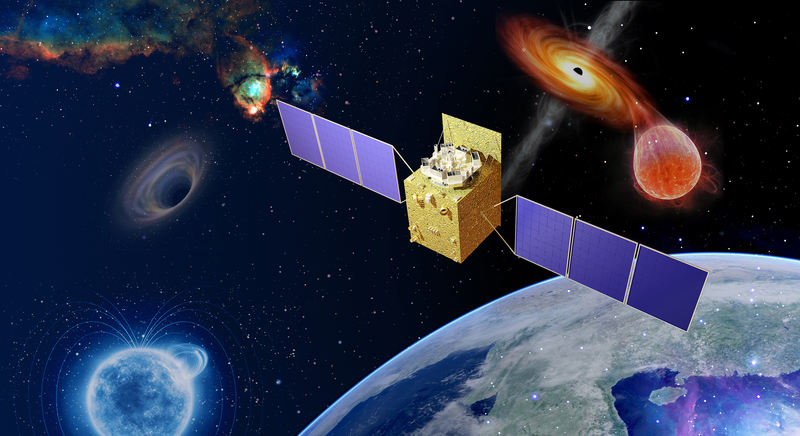
数读中国航天发展成就
Ren Min Ri Bao· 2025-04-23 22:07
Core Insights - China's Long March series of rockets has achieved its 570th flight, marking a significant acceleration in launch frequency, with the fifth 100 launches completed in just 2 years [7] - The Chang'e 6 mission successfully returned 1935.3 grams of lunar samples from the far side of the moon, contributing to scientific knowledge and filling gaps in human understanding [7] - The Shenzhou 19 crew set a new world record for extravehicular activity, with a duration of 9 hours [7] - The Chinese space station has implemented over 200 scientific and application projects, demonstrating its operational capabilities [8] - The BeiDou-3 global navigation system offers positioning accuracy of 4 to 5 meters globally, enhancing navigation services [8] - China's commercial space market is projected to exceed 1 trillion yuan, indicating substantial growth potential and a shift towards market-driven development [8] Group 1 - Long March series rockets have completed 570 flights, with the latest launch occurring on April 19, 2024 [7] - The Chang'e 6 mission achieved the world's first lunar sample return from the moon's far side, with significant sample weight [7] - Shenzhou 19 astronauts set a new record for extravehicular activity duration [7] Group 2 - The Chinese space station has conducted over 200 scientific projects and has successfully managed logistics for scientific materials [8] - The BeiDou-3 system provides high-precision global navigation services [8] - The commercial space sector in China is developing rapidly, with a market potential exceeding 1 trillion yuan [8]